Results by title
208 books match the query 'Ohio' and 11 start with w

WELCOME TO HEIGHTS HIGH
THE CRIPPLING POLITICS OF RESTRUCTURINGDiana Tittle
The Ohio State University Press, 1995
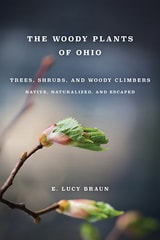
WOODY PLANTS OF OHIO
Trees, Shrubs, and Woody Climbers: Native, Naturalized, and EscapedE. Lucy Braun
The Ohio State University Press, 1989
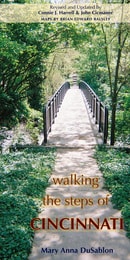
Walking the Steps Of Cincinnati
A Guide to the Queen City’s Scenic and Historic SecretsMary Anna DuSablon
Ohio University Press, 2014
Walking the Steps of Cincinnati: A Guide to the Queen City’s Scenic and Historic Secrets is a revised and updated version of Mary Anna DuSablon’s original guidebook, first published in 1998. This new edition describes and maps thirty-four walks of varying lengths and levels of difficulty around the neighborhoods of Cincinnati, following scenic or historic routes and taking in many of the city’s more than four hundred sets of steps. Some of these walks follow the same routes laid out by DuSablon in the first edition of the guide; others have been revised to reflect changes in the city and its neighborhoods, the physical condition of the steps, and the scenic views of Cincinnati that they afford; and still others are altogether new.
In writing their descriptions of the walks, authors Connie J. Harrell and John Cicmanec have retraced each path and taken all new photographs of the steps as well as architectural and natural landmarks along the way. Cartographer Brian Balsley has drawn a fresh set of maps, and Roxanne Qualls, vice-mayor of Cincinnati, has graciously written a new foreword.
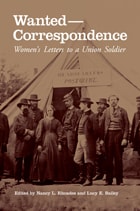
Wanted—Correspondence
Women’s Letters to a Union SoldierNancy L. Rhoades
Ohio University Press, 2009
A unique collection of more than 150 letters written to an Ohio serviceman during the American Civil War that offers glimpses of women’s lives as they waited, worked, and wrote from the Ohio home front. The letters reveal fascinating details of the lives of mostly young, single women—friends, acquaintances, love interests, and strangers who responded to one Union soldier’s advertisement for correspondents. Almost all of the women who responded to Lieutenant Edwin Lewis Lybarger’s lonely-hearts newspaper advertisement lived in Ohio and supported the Union. Lybarger carried the collection of letters throughout three years of military service, preserved them through his life, and left them to be discovered in an attic trunk more than a century after Lee’s surrender.
Women’s letter writing functioned as a form of “war work” that bolstered the spirits of enlisted men and “kinship work” that helped forge romantic relationships and sustain community bonds across the miles. While men’s letters and diaries abound in Civil War history, less readily available are comprehensive collections of letters from middle-class and rural women that survived the weathering of marches, camp life, and battles to emerge unscathed from men’s knapsacks at war’s end.
The collection is accompanied by a detailed editorial introduction that highlights significant themes in the letters. Together, they contribute to the still-unfolding historical knowledge concerning Northern women’s lives and experiences during this significant period in American history.

Way Up North in Dixie
A Black Family's Claim to the Confederate AnthemHoward L. Sacks and Judith Rose Sacks
University of Illinois Press, 2003
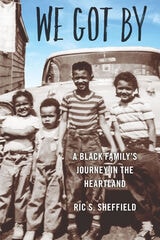
We Got By
A Black Family’s Journey in the HeartlandRic S. Sheffield
The Ohio State University Press, 2022
Spanning four generations and assessing the legacies of traumatic events (arrests, murders, suicide) that are inextricable from the racial dynamics of the small community his family called home, this gripping memoir is a heartfelt, clear-eyed, and rare chronicle of Black life in the rural Midwest. Experiencing the burden of racism among people who refused to accept that such a thing existed only made the isolation feel that much worse to Sheffield and his relatives. And yet, they overcame the obstacles and managed to persist: they got by.
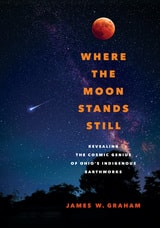
Where the Moon Stands Still
Revealing the Cosmic Genius of Ohio’s Indigenous EarthworksJames W. Graham
The Ohio State University Press, 2026
How did people two millennia ago achieve the stunning architectural and scientific accomplishment that in 2023 became Ohio’s only UNESCO World Heritage Site? In Where the Moon Stands Still, James W. Graham recounts the inspiring true story of two small-town college professors who, without funds or training in archaeology, helped unlock secrets behind an ancient monumental work of land art—the Hopewell Ceremonial Earthworks—all but hidden in plain sight on a local golf course. Ever since the arrival of Europeans, thousands of Native earthworks east of the Mississippi were neglected, vandalized, bulldozed, and plundered. Their origins and purposes baffled scholars. How did ancient people build monuments of such grand scale and geometric sophistication? Why? Crucial answers emerged in the 1980s when philosopher Bob Horn and astronomer Ray Hively, driven by curiosity and a tireless devotion to truth-seeking, made a decades-long effort to conquer the skepticism of experts and unmask the ??astronomical genius behind the Indigenous earthworks. As he recounts Hively and Horn’s investigation, Graham refutes exploitative mythical interpretations and explains the history around these earthworks and of US treatment of its Indigenous people, including the long quest for tribes to regain authority over stories, ancestors, and places. Where the Moon Stands Still signals a global reawakening to the greatness of Indigenous achievement in America’s heartland.
Whose School Is It?
Women, Children, Memory, and Practice in the CityBy Rhoda H. Halperin
University of Texas Press, 2006
Whose School Is It?: Women, Children, Memory, and Practice in the City is a success story with roadblocks, crashes, and detours. Rhoda Halperin uses feminist theorist and activist Gloria Anzaldúa's ideas about borderlands created by colliding cultures to deconstruct the creation and advancement of a public community charter school in a diverse, long-lived urban neighborhood on the Ohio River. Class, race, and gender mix with age, local knowledge, and place authenticity to create a page-turning story of grit, humor, and sheer stubbornness. The school has grown and flourished in the face of daunting market forces, class discrimination, and an increasingly unfavorable national climate for charter schools. Borderlands are tense spaces. The school is a microcosm of the global city.
Many theoretical strands converge in this book—feminist theory, ideas about globalization, class analysis, and accessible narrative writing—to present some new approaches in urban anthropology. The book is multi-voiced and nuanced in ways that provide authenticity and texture to the real circumstances of urban lives. At the same time, identities are threatened as community practices clash with rules and regulations imposed by outsiders.
Since it is based on fifteen years of ethnographic fieldwork in the community and the city, Whose School Is It? brings unique long-term perspectives on continuities and disjunctures in cities. Halperin's work as researcher and advocate also provides insider perspectives that are rare in the literature of urban anthropology.
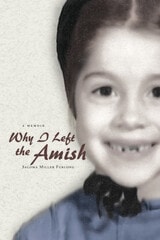
Why I Left the Amish
A MemoirSaloma Miller Furlong
Michigan State University Press, 2011
There are two ways to leave the Amish—one is through life and the other through death. When Saloma Miller Furlong’s father dies during her first semester at Smith College, she returns to the Amish community she had left twenty four years earlier to attend his funeral. Her journey home prompts a flood of memories. Now a mother with grown children of her own, Furlong recalls her painful childhood in a family defined by her father’s mental illness, her brother’s brutality, her mother’s frustration, and the austere traditions of the Amish—traditions Furlong struggled to accept for years before making the difficult decision to leave the community. In this personal and moving memoir, Furlong traces the genesis of her desire for freedom and education and chronicles her conflicted quest for independence. Eloquently told, Why I Left the Amish is a revealing portrait of life within—and without—this frequently misunderstood community.

World Film Locations
ClevelandEdited by Alberto Zambenedetti
Intellect Books, 2016
This new entry in the World Film Locations series offers the first-ever extended look at Cleveland on screen. Richly illustrated with images from dozens of productions, it reveals Cleveland to be usefully chameleonic, appealing to some filmmakers for its modern downtown’s ability to mimic more prominent (and more expensive) cities, to others for the way its shuttered factories and decaying docks signify contemporary urban distress. With entries on such classics as The Fortune Cookie, The Deer Hunter, A Christmas Story, and Marvel’s The Avengers, as well as lesser-known films, the volume reveals Cleveland to be a far more compelling, and far more varied, on-screen presence than even most film buffs would expect.
Like all the books in this series, World Film Locations: Cleveland is designed to appeal to cinephiles and scholars alike, while also serving as a silver screen souvenir for those who make the city their home as well as for those who visit it.
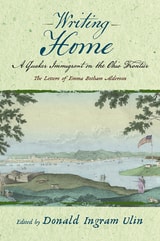
Writing Home
A Quaker Immigrant on the Ohio Frontier; the Letters of Emma Botham AldersonDonald Ingram Ulin
Bucknell University Press, 2020
Introductions and notes situate the letters in relation to their critical, biographical, literary, and historical contexts. Editor Donald Ulin discusses the relationship between Alderson’s letters and her sister Mary Howitt’s Our Cousins in Ohio (1849), a remarkable instance of transatlantic literary collaboration.
Writing Home offers an unparalleled opportunity for studying immigrant correspondence due to Alderson’s unusually well-documented literary and religious affiliations. The notes and introductions provide background on nearly all the places, individuals, and events mentioned in the letters.
Published by Bucknell University Press. Distributed worldwide by Rutgers University Press.