Results by title
85 books match the query 'Pacific Northwest (OR, WA)' and 5 start with w
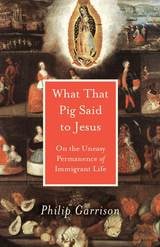
What That Pig Said to Jesus
On the Uneasy Permanence of Immigrant LifePhilip Garrison
University of Utah Press, 2017
Philip Garrison says his book of essays is “in praise of mixed feelings,” particularly the mixed feelings he and his neighbors have toward the places they came from. His neighborhood is the Columbia Plateau, one of many North American nodes of immigration. Following a meandering, though purposeful trail, Garrison catches hillbillies and newer Mexican arrivals in ambiguous, wary encounters on a set four hundred years in the making, built on a foundation of Native American displacement. Garrison is the product of the earlier surge of new arrivals: from the 1930s to the 1970s, those he calls hillbillies left such mid-nation states as Arkansas, Missouri, Oklahoma, Kansas, and the Dakotas for the West. The more recent wave, from 1990 to 2010, came mostly from the central plateau of Mexico. These are folks with whom Garrison communes in multiple ways. Anecdotes from sources as varied as pioneer diaries, railroad promotions, family Bibles, Wikipedia, and local gossip “portray the region's immigration as a kind of identity makeover, one that takes the form first of breakdown, then of reassembly, and finally of renewal.” Garrison’s mix of slangy memoir and anthropological field notes shines light on the human condition in today’s West.
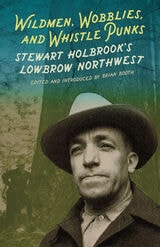
Wildmen, Wobblies, and Whistle Punks
Stewart Holbrook's Lowbrow NorthwestBrian Booth
Oregon State University Press, 0
Stewart Holbrook was a high school dropout who emerged from logging camps to become the author of three dozen books, the Pacific Northwest’s foremost storyteller, one of the nation’s most popular historians, and a satirical painter known as “Mr. Otis.”
Today readers are rediscovering Holbrook’s colorful and irreverent accounts of Pacific Northwest history. Wildmen, Wobblies, and Whistle Punks collects twenty-six of Holbrook’s best writings about the region. Combining solid scholarship with humor and a gift for celebrating the offbeat, Holbrook’s stories record a vibrant, often overlooked side of Northwest history. Here are forgotten scandals and murders; stories of forest fires, floods, and other calamities; tales of loggers and life in the logging camps; and profiles of various lowbrow characters—radicals, do-gooders, dreamers, schemers, and zealots.
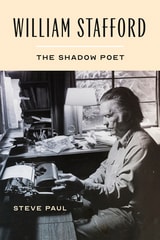
William Stafford
The Shadow PoetSteve Paul
Oregon State University Press, 2027
From the Kansas outdoors to Oregon classrooms, William Stafford (1914–1993) led a vibrantly original life navigated with ambition and mission. In poetry crafted in everyday language, a conversational tone, and richly accessible introspection, he invited readers to question and explore nature, humanity, and the American West. After he won the National Book Award in poetry and the Shelley Memorial Award from the Poetry Society of America and served as the Consultant in Poetry to the Library of Congress (a role known today as US Poet Laureate), his talent became recognized around the world. The accolades and achievements continued, including Stafford later spending fifteen years as the Poet Laureate of Oregon.
A character shaped by duty, adventure, a sharp sense of humor, and a strong moral compass, Stafford remains a beloved American poet. In William Stafford: The Shadow Poet, the first comprehensive biography, Steve Paul shares fascinating stories and frequently surprising accounts of Stafford’s life and work. The book traces Stafford from his humble origins through periods of social courage, the complications of his wartime alternative service, dedication to writing, and family tragedy. It explores how his pacifist world views and eco-consciousness continue to inspire those returning to his work or discovering it for the first time. Paul uncovers various layers of the poet’s life—through his philosophy, friends, family, teaching, and writing—and contemplates how Stafford’s metaphoric shadows, found frequently in his poems, figure into his life and career.

Wood Works
Edwin Bingham
Oregon State University Press, 1997
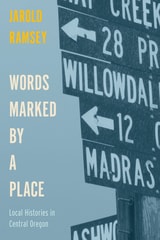
Words Marked by a Place
Local Histories in Central OregonJarold Ramsey
Oregon State University Press, 2018
While telling these local stories, Jarold Ramsey explores alternative ways of engaging history in the act of writing, breaking new ground by discovering and exploring primary sources that bear on the region’s colorful but little-known past. Throughout the collection, he interrogates “local history” as a subject. What is local history? How is it related to mainstream academic history? What are legitimate ways of doing it? How do the details of what we call local history inform “history-at-large,” and vice-versa?
From the opening narrative concerning Lieutenant Henry Larcom Abbot’s “Railroad Survey” of the region in 1855 to the concluding account of Lieutenant Robert Cranston’s last months and dramatic death, when his “Airacobra” fighter plane crashed near Madras in 1944, Words Marked by a Place sheds new light on the ongoing story of central Oregon by illuminating forgotten corners of its past. Through both theory and example, it represents an important contribution to the history of the region and the endeavors of local historians, wherever they happen to work.