Results by title
179 books match the query 'Past' and 5 start with w

Warping Time
How Contending Political Forces Manipulate the Past, Present, and FutureBenjamin Ginsberg and Jennifer Bachner
University of Michigan Press, 2023
Warping Time shows how narratives of the past influence what people believe about the present and future state of the world. In Benjamin Ginsberg and Jennifer Bachner’s simple experiments, in which the authors measured the impact of different stories their subjects heard about the past, these “history lessons” moved contemporary policy preferences by an average of 16 percentage points; forecasts of the future moved contemporary policy preferences by an average of 12 percentage points; the two together moved preferences an average of 21 percentage points. And, in an Orwellian twist, the authors estimate that the “history lessons” had an average “erasure effect” of 8.5 percentage points—the difference between those with long-held preferences and those who did not recall that they previously held other opinions before participating in the experiment. The fact that the past, present, and future are subject to human manipulation suggests that history is not simply the product of impersonal forces, material conditions, or past choices. Humans are the architects of history, not its captives. Political reality is tenuous. Changes in our understanding of the past or future can substantially alter perceptions of and action in the present. Finally, the manipulation of time, especially the relationship between past and future, is a powerful political tool.
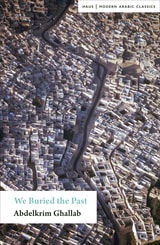
We Have Buried the Past
Abdelkrim Ghallab
Haus Publishing, 2018
Written after the country gained independence, the historical novel follows two generations of al-Tihamis, a well-to-do family residing in Fez’s ancient medina. The family members’ lives reflect the profound social changes taking place in Morocco during that time. Bridging two worlds, We Buried the Past begins during the quieter days of the late colonial period, a world of seemingly timeless tradition, in which the patriarch, al-Haj Muhammad, proudly presides over the family. Here, religion is unquestioned and permeates all aspects of daily life. But the coming upheaval and imminent social transition are reflected in al-Haj’s three sons, particularly his second son, Abderrahman, who eventually defies his father and comes to symbolize the break between the old ways and the new.
Noted for marrying classical Arabic style and European literary form, this book also offers insight into the life of Ghallab himself, who was deeply involved in the nationalist movement that led to Moroccan independence. A pioneering work, We Buried the Past beautifully characterizes an influential period in the history of Morocco.
Web as History
Using Web Archives to Understand the Past and the PresentEdited by Niels Brügger and Ralph Schroeder
University College London, 2017
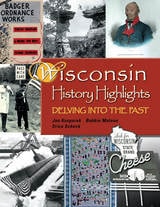
Wisconsin History Highlights
Delving into the PastJon Kasparek, Bobbie Malone, and Erica Schock
Wisconsin Historical Society Press, 2004
Wisconsin History Highlights encourages middle and high school students, including National History Day participants, to use Wisconsin topics and resources as they research American history. The book guides students on their way, drawing them in with the topics most likely to spur their curiosity and enthusiasm. Wisconsin History Highlights introduces students to essential skills for historical research, including locating primary and secondary materials, choosing and narrowing a topic, and avoiding plagiarism.
The text includes nine chapters: Discovering the Past; Immigration; Agriculture; Industry; Environment; Social Issues; Government; Tourism; and Arts, Entertainment, and Sports. Each chapter has a variety of concise historical vignettes about specific events, people, or places in Wisconsin history, and within each vignette, students will find hints to get started with research on that or a related topic. The chapters contain many illustrations of sample source materials, and each closes with a detailed bibliography of available primary and secondary resources.
Students will find ample guidance in many places, from the helpful introductory material, the table of contents, and the topical chapters to the thorough index, which together make Wisconsin History Highlights an essential tool for expanding students' conceptions of history and refining their research skills.
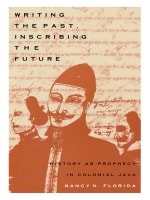
Writing the Past, Inscribing the Future
History as Prophecy in Colonial JavaNancy K. Florida
Duke University Press, 1995
Babad Jaka Tingkir, the historical prophecy that Writing the Past, Inscribing the Future translates and reads, is uniquely suited for such a study. Composing an engaging history of the emergence of Islamic power in central Java around the turn of the sixteenth century, Babad Jaka Tingkir was written from the vantage of colonial exile to contest the more dominant dynastic historical traditions of nineteenth-century court literature. Florida reveals how this history’s episodic form and focus on characters at the margins of the social order work to disrupt the genealogical claims of conventional royal historiography—thus prophetically to open the possibility of an alternative future.