Results by title
3258 books match the query 'Performing Arts' and 107 start with w
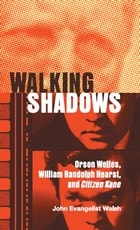
Walking Shadows
Orson Welles, William Randolph Hearst, and Citizen KaneJohn Evangelist Walsh
University of Wisconsin Press, 2004
Citizen Kane portrayed the ruthless career of an all-powerful magnate bearing (not accidentally) a striking resemblance to Hearst, who immediately tried to kill the picture. John Evangelist Walsh here illuminates the conflict between these two outsize personalities and for the first time brings Hearst’s vengeful anti-Kane campaign to the fore. Walsh provides thorough documentation, supplemental notes, and an extended bibliography.
Walking on Fire
The Shaping Force of Emotion in Writing DramaJim Linnell
Southern Illinois University Press, 2011
Walking on Fire opens up new conversations about content and emotion for writers and offers exciting answers to the questions of why we make drama and why we connect to it. Linnell’s userfriendly theory and passionate approach create a framework for understanding the links between the writer’s work in creating the text, the text itself, and the audience’s engagement.

Walking, Writing and Performance
Autobiographical Texts by Deirdre Heddon, Carl Lavery and Phil SmithEdited by Roberta Mock
Intellect Books, 2009
This collection charts three projects by performers who generate autobiographical writing by walking through inspirational landscapes. Included in the book are the full texts of The Crab Walks and Crab Steps Aside by Phil Smith, Mourning Walk by Carl Lavery, and Tree by Deirdre Heddon, each accompanied by photographs and contextual essays. Taken together or separately, the work of all three artist-scholars raises important issues about memory, the ethics of autobiographical performance, ritual, life writing, and site-specific performance.
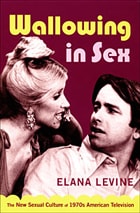
Wallowing in Sex
The New Sexual Culture of 1970s American TelevisionElana Levine
Duke University Press, 2007
Wallowing in Sex is a lively analysis of the key role of commercial television in the new sexual culture of the 1970s. Elana Levine explores sex-themed made-for-TV movies; female sex symbols such as the stars of Charlie’s Angels and Wonder Woman; the innuendo-driven humor of variety shows (The Sonny and Cher Comedy Hour, Laugh-In), sitcoms (M*A*S*H, Three’s Company), and game shows (Match Game); and the proliferation of rape plots in daytime soap operas. She also uncovers those sexual topics that were barred from the airwaves. Along with program content, Levine examines the economic motivations of the television industry, the television production process, regulation by the government and the tv industry, and audience responses. She demonstrates that the new sexual culture of 1970s television was a product of negotiation between producers, executives, advertisers, censors, audiences, performers, activists, and many others. Ultimately, 1970s television legitimized some of the sexual revolution’s most significant gains while minimizing its more radical impulses.
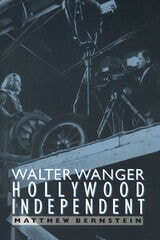
Walter Wanger, Hollywood Independent
Matthew Bernstein
University of Minnesota Press, 2000
A portrait of the trailblazing film producer whose career spanned five decades.
The long, colorful career of Walter Wanger (1894-1968) is one of Hollywood’s greatest untold stories. An intellectual and a socially conscious movie executive who produced provocative message movies and glittering romantic melodramas, Wanger’s career started at Paramount studios in the 1920s and led him to work at virtually every major studio as either a contract producer or an independent. He produced a series of American film classics, including Queen Christina, Stagecoach, Foreign Correspondent, and Invasion of the Body Snatchers, as well as a few notable flops, such as Cleopatra. This comprehensive biography brings to life a distinctive film personality and offers a new appreciation of the role of the producer in the history of American cinema.
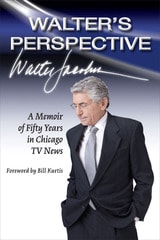
Walter's Perspective
A Memoir of Fifty Years in Chicago TV NewsWalter Jacobson, Foreword by Bill Kurtis
Southern Illinois University Press, 2012
This highly readable book provides a unique glimpse into the rough-and-tumble Chicago news business as seen through the eyes of one of its legendary players. From his first news job working as a legman for Daily News columnist Jack Mabley in the 1950s to his later role as a news anchor and political commentator at CBS-owned WBBM, Walter Jacobson battled along the front lines of an industry undergoing dramatic changes. While it is ultimately Jacobson’s story, a memoir of a long and distinguished (and sometimes highly controversial) career, it is also an insider’s account of the inner workings of Chicago television news, including the ratings games, the process of defining news and choosing stories, the media’s power and its failures, and the meddling by corporate and network executives.
As a reporter, Jacobson was regularly contentious and confrontational. He was fired on a number of occasions and was convicted of libeling tobacco company Brown and Williamson, resulting in a multimillion-dollar federal court judgment against him and CBS. Yet it was this gutsy attitude that put him at the top of the news game. With an engaging writing style, Jacobson recollects his interactions with Chicago mayors Richard J. and Richard M. Daley, Jane Byrne, Harold Washington, and Rahm Emanuel; recounts his coverage of such fascinating news stories as the violent 1968 Democratic National Convention and the execution of convicted mass murderer John Wayne Gacy; and recalls his reporting on and interviews with Louis Farrakhan, governors George Ryan and Rod Blagojevich, and Barack Obama. More than a memoir, Walter’s Perspective is the extraordinary journey of one reporter whose distinctive career followed the changing face of Chicago’s local news.
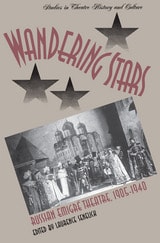
Wandering Stars
Russian Emigré Theatre, 1905-1940Laurence Senelick
University of Iowa Press, 1992

Wandering
Philosophical Performances of Racial and Sexual FreedomSarah Jane Cervenak
Duke University Press, 2014
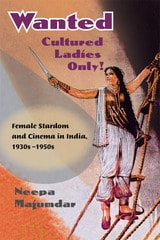
Wanted Cultured Ladies Only!
Female Stardom and Cinema in India, 1930s-1950sNeepa Majumdar
University of Illinois Press, 2008
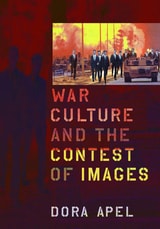
War Culture and the Contest of Images
Apel, Dora
Rutgers University Press, 2012
War Culture and the Contest of Images analyzes the relationships among contemporary war, documentary practices, and democratic ideals. Dora Apel examines a wide variety of images and cultural representations of war in the United States and the Middle East, including photography, performance art, video games, reenactment, and social media images. Simultaneously, she explores the merging of photojournalism and artistic practices, the effects of visual framing, and the construction of both sanctioned and counter-hegemonic narratives in a global contest of images.
As a result of the global visual culture in which anyone may produce as well as consume public imagery, the wide variety of visual and documentary practices present realities that would otherwise be invisible or officially off-limits. In our digital era, the prohibition and control of images has become nearly impossible to maintain. Using carefully chosen case studies—such as Krzysztof Wodiczko’s video projections and public works in response to 9/11 and the wars in Iraq and Afghanistan, the performance works of Coco Fusco and Regina Galindo, and the practices of Israeli and Palestinian artists—Apel posits that contemporary war images serve as mediating agents in social relations and as a source of protection or refuge for those robbed of formal or state-sanctioned citizenship.
While never suggesting that documentary practices are objective translations of reality, Apel shows that they are powerful polemical tools both for legitimizing war and for making its devastating effects visible. In modern warfare and in the accompanying culture of war that capitalism produces as a permanent feature of modern society, she asserts that the contest of images is as critical as the war on the ground.
War Games
Jonna Eagle
Rutgers University Press, 2020
This Quick Take considers how various war games and simulations shape the ways we imagine war. Paradoxically, these games grant us a sense of mastery and control as we strategize and scrutinize the enemy, yet also allow us the thrilling sense of being immersed in the carnage and chaos of battle. But as simulations of war become more integrated into both popular culture and military practice, how do they shape our apprehension of the traumatic realities of warfare?
Covering everything from chess to football, from Saving Private Ryan to American Sniper, and from Call of Duty to drone interfaces, War Games is an essential guide for anyone seeking to understand the militarization of American culture, offering a compact yet comprehensive look at how we play with images of war.
Warhol's Working Class
Pop Art and EgalitarianismAnthony E. Grudin
University of Chicago Press, 2017
Having propelled himself from an impoverished childhood in Pittsburgh to the heights of Madison Avenue, Warhol knew both sides of this equation: the intense appeal that popular culture held for working-class audiences and the ways in which the advertising industry hoped to harness this appeal in the face of growing middle-class skepticism regarding manipulative marketing. Warhol was fascinated by these promises of egalitarian individualism and mobility, which could be profound and deceptive, generative and paralyzing, charged with strange forms of desire. By tracing its intersections with various forms of popular culture, including film, music, and television, Grudin shows us how Warhol’s work disseminated these promises, while also providing a record of their intricate tensions and transformations.
Washed in Blood
Male Sacrifice, Trauma, and the CinemaKing, Claire S
Rutgers University Press, 2012
Will Smith in I Am Legend. Leonardo DiCaprio in Titanic. Charlton Heston in just about everything.
Viewers of Hollywood action films are no doubt familiar with the sacrificial victim-hero, the male protagonist who nobly gives up his life so that others may be saved. Washed in Blood argues that such sacrificial films are especially prominent in eras when the nation—and American manhood—is thought to be in crisis. The sacrificial victim-hero, continually imperiled and frequently exhibiting classic symptoms of post-traumatic stress disorder, thus bears the trauma of the nation.
Claire Sisco King offers an in-depth study of three prominent cycles of Hollywood films that follow the sacrificial narrative: the early–to–mid 1970s, the mid–to–late 1990s, and the mid–to–late 2000s. From Vietnam-era disaster movies to post-9/11 apocalyptic thrillers, she examines how each film represents traumatized American masculinity and national identity. What she uncovers is a cinematic tendency to position straight white men as America’s most valuable citizens—and its noblest victims.
Watching Films
New Perspectives on Movie-Going, Exhibition and ReceptionEdited by Albert Moran and Karina Aveyard
Intellect Books, 2013
Watching Jim Crow
The Struggles over Mississippi TV, 1955–1969Steven D. Classen
Duke University Press, 2004
During the 1990s, Classen conducted extensive interviews with more than two dozen African Americans living in Jackson, several of whom, decades earlier, had fought to integrate television programming. He draws on these interviews not only to illuminate their perceptions—of the civil rights movement, what they accomplished, and the present as compared with the past—but also to reveal the inadequate representation of their viewpoints in the legal proceedings surrounding WLBT’s licensing. The story told in Watching Jim Crow has significant implications today, not least because the Telecommunications Act of 1996 effectively undid many of the hard-won reforms achieved by activists—including those whose stories Classen relates here.
Watching Race
Television and the Struggle for BlacknessHerman Gray
University of Minnesota Press, 1997
Watching Television Come of Age
The New York Times Reviews by Jack GouldEdited by Lewis L. Gould
University of Texas Press, 2002
Providing video companionship for isolated housewives, afternoon babysitting for children, and nonstop evening entertainment for the whole family, television revolutionized American society in the post-World War II years. Helping the first TV generation make sense of the new medium was the mission of Jack Gould, television critic of The New York Times from 1947 to 1972. In columns noteworthy for crisp writing, pointed insights, and fair judgment, he highlighted both the untapped possibilities and the imminent perils of television, becoming "the conscience of the industry" for many people.
In this book, historian Lewis L. Gould, Jack Gould's son, collects over seventy of his father's best columns. Grouped topically, they cover a wide range of issues, including the Golden Age of television drama, McCarthy-era blacklisting, the rise and fall of Edward R. Murrow, quiz show scandals, children's programming, and the impact of television on American life and of television criticism on the medium itself. Lewis Gould also supplies a brief biography of his father that assesses his influence on the evolution of television, as well as prefaces to each section.
Watching While Black Rebooted!
The Television and Digitality of Black AudiencesBeretta E. Smith-Shomade
Rutgers University Press, 2024
Chapters rethink such historically significant programs as Roots and Underground, such seemingly innocuous programs as Soul Food, and such contemporary and culturally complicated programs as Being Mary Jane and Atlanta. The book makes a case for the centrality of these programs while always recognizing the racial dynamics that continue to shape Black representation on the small screen. Painting a decidedly introspective portrait across forty years of Black television, Watching While Black Rebooted sheds much-needed light on under examined demographics, broadens common audience considerations, and gives deference to the preferences of audiences and producers of Black-targeted programming.
Watching While Black
Centering the Television of Black AudiencesSmith-Shomade, Beretta E
Rutgers University Press, 2013
2013 Choice Outstanding Academic Title
Television scholarship has substantially ignored programming aimed at Black audiences despite a few sweeping histories and critiques. In this volume, the first of its kind, contributors examine the televisual diversity, complexity, and cultural imperatives manifest in programming directed at a Black and marginalized audience.
Watching While Black considers its subject from an entirely new angle in an attempt to understand the lives, motivations, distinctions, kindred lines, and individuality of various Black groups and suggest what television might be like if such diversity permeated beyond specialized enclaves. It looks at the macro structures of ownership, producing, casting, and advertising that all inform production, and then delves into television programming crafted to appeal to black audiences—historic and contemporary, domestic and worldwide.
Chapters rethink such historically significant programs as Roots and Black Journal, such seemingly innocuous programs as Fat Albert and bro’Town, and such contemporary and culturally complicated programs as Noah’s Arc, Treme, and The Boondocks. The book makes a case for the centrality of these programs while always recognizing the racial dynamics that continue to shape Black representation on the small screen. Painting a decidedly introspective portrait across forty years of Black television, Watching While Black sheds much-needed light on under-examined demographics, broadens common audience considerations, and gives deference to the the preferences of audiences and producers of Black-targeted programming.
Watching Wildlife
Cynthia Chris
University of Minnesota Press, 2006
Watching Women's Liberation, 1970
Feminism's Pivotal Year on the Network NewsBonnie J. Dow
University of Illinois Press, 2014
In Watching Women's Liberation, 1970: Feminism's Pivotal Year on the Network News, Bonnie J. Dow uses case studies of key media events to delve into the ways national TV news mediated the emergence of feminism's second wave. First legitimized as a big story by print media, the feminist movement gained broadcast attention as the networks’ eagerness to get in on the action was accompanied by feminists’ efforts to use national media for their own purposes. Dow chronicles the conditions that precipitated feminism's new visibility and analyzes the verbal and visual strategies of broadcast news discourses that tried to make sense of the movement.
Groundbreaking and packed with detail, Watching Women's Liberation, 1970 shows how feminism went mainstream--and what it gained and lost on the way.
Watching the Traffic Go By
Transportation and Isolation in Urban AmericaBy Paul Mason Fotsch
University of Texas Press, 2007
2007 — Jane Jacobs Urban Communication Publication Award – Urban Communication Foundation
As twentieth-century city planners invested in new transportation systems to deal with urban growth, they ensured that the automobile rather than mass transit would dominate transportation. Combining an exploration of planning documents, sociological studies, and popular culture, Paul Fotsch shows how our urban infrastructure developed and how it has shaped American culture ever since.
Watching the Traffic Go By emphasizes the narratives underlying our perceptions of innovations in transportation by looking at the stories we have built around these innovations. Fotsch finds such stories in the General Motors "Futurama" exhibit at the 1939 World's Fair, debates in Munsey's magazine, films such as Double Indemnity, and even in footage of the O. J. Simpson chase along Los Angeles freeways.
Juxtaposed with contemporaneous critiques by Lewis Mumford, Theodor Adorno, and Max Horkheimer, Fotsch argues that these narratives celebrated new technologies that fostered stability for business and the white middle class. At the same time, transportation became another system of excluding women and the poor, especially African Americans, by isolating them in homes and urban ghettos.
A timely, interdisciplinary analysis, Watching the Traffic Go By exposes the ugly side of transportation politics through the seldom-used lens of popular culture.
Waves of Opposition
Labor and the Struggle for Democratic RadioElizabeth Fones-Wolf
University of Illinois Press, 2006
Radio sparked the massive upsurge of organized labor during the Great Depression. The powerful new medium became an important weapon in the ideological war between labor and business. Corporations used radio to sing the praises of individualism and consumerism, while unions emphasized equal rights, industrial democracy, and social justice.
Elizabeth Fones-Wolf analyzes the battle to utilize, and control, the airwaves in radio's early era. Working chronologically, she explores the advent of local labor radio stations such as WCFL and WEVD, labor's campaigns against corporate censorship, and union experiments with early FM broadcasting. Using union archives and broadcast industry records, Fones-Wolf demonstrates radio's key role in organized labor's efforts to fight business's domination of political discourse throughout the 1930s, 1940s, and 1950s. She concludes with a look at how labor's virtual disappearance from today's media helps explain why unions have become so marginalized, and offers important historical lessons for revitalizing organized labor.
We Are Having This Conversation Now
The Times of AIDS Cultural ProductionAlexandra Juhasz and Theodore Kerr
Duke University Press, 2022
Weavers of Dreams, Unite!
Actors' Unionism in Early Twentieth-Century AmericaSean P. Holmes
University of Illinois Press, 2013
Welcome to the Dreamhouse
Popular Media and Postwar SuburbsLynn Spigel
Duke University Press, 2001
The volume considers not only how the media portrayed suburban family life, but also how both middle-class ideals and a perceived division between private and public worlds helped to shape the visual forms, storytelling practices, and reception of postwar media and consumer culture. Spigel also explores those aspects of suburban culture that media typically render invisible. She looks at the often unspoken assumptions about class, nation, ethnicity, race, and sexual orientation that underscored both media images (like those of 1960s space missions) and social policies of the mass-produced suburb. Issues of memory and nostalgia are central in the final section as Spigel considers how contemporary girls use television reruns as a source for women’s history and then analyzes the current nostalgia for baby boom era family ideals that runs through contemporary images of new household media technologies.
Containing some of Spigel’s well-known essays on television’s cultural history as well as new essays on a range of topics dealing with popular visual culture, Welcome to the Dreamhouse is important reading for students and scholars of media and communications studies, popular culture, American studies, women’s studies, and sociology.
Wendy Wasserstein
Jill Dolan
University of Michigan Press, 2017
Wendy Wasserstein provides a critical introduction and a feminist reappraisal of the significant plays of one of the most famous contemporary American women playwrights. Following a biographical introduction, chapters address each of her important plays, situating Wasserstein’s work in the history of the US feminist movement and in a historical moment in which women artists continue to struggle for recognition.
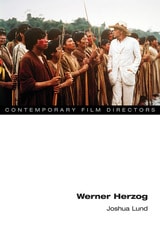
Werner Herzog
Joshua Lund
University of Illinois Press, 2020
Joshua Lund offers the first systematic interpretation of Werner Herzog's Americas-themed works, illuminating the director's career as a political filmmaker—a label Herzog himself rejects. Lund draws on materialist and post-colonial approaches to argue that Herzog's American work confronts us with the circulation, distribution, accumulation, application, and negotiation of power that resides, quietly, at the center of his films. By operating beyond conventional ideological categories, Herzog renders political ideas in radically unfamiliar ways while fearlessly confronting his viewers with questions of world-historical significance. His maddeningly opaque viewpoint challenges us to rethink discovery and conquest, migration and exploitation, resource extraction, slavery, and other foundational traumas of the contemporary human condition.
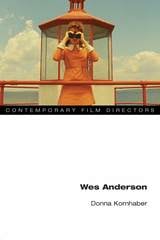
Wes Anderson
Donna Kornhaber
University of Illinois Press, 2017
Donna Kornhaber approaches Anderson's style as the necessary product of the narrative and thematic concerns that define his body of work. Using Anderson's focus on collecting, Kornhaber situates the director as the curator of his filmic worlds, a prime mover who artfully and conscientiously arranges diverse components into cohesive collections and taxonomies. Anderson peoples each mise-en-scéne in his ongoing ""Wesworld"" with characters orphaned, lost, and out of place amidst a riot of handmade clutter and relics. Within, they seek a wholeness and collective identity they manifestly lack, with their pain expressed via an ordered emotional palette that, despite being muted, cries out for attention. As Kornhaber shows, Anderson's films offer nothing less than a fascinating study in the sensation of belonging--told by characters who possess it the least.
Westerns
Making the Man in Fiction and FilmLee Clark Mitchell
University of Chicago Press, 1996
Few genres are so closely identified with America as the Western. In this wide-ranging examination of the Western and its appeal, Lee Clark Mitchell ranges from the novels of James Fenimore Cooper to Louis L'Amour, and from classic films like Stagecoach to spaghetti Westerns like A Fistful of Dollar to show how Westerns helped assuage a series of crises in American culture. This landmark book shows that the Western owes its perennial appeal not to unchanging conventions but to the deftness with which it responds to the obsessions and fears of its audience. And no obsession, Lee Mitchell argues, has figured more prominently in the Western than what it means to be a man.

What Doesn't Kill Me Makes Me Weirder and Harder to Relate To
A MemoirMary Lucia
University of Minnesota Press, 2025
An iconic rock DJ of the Twin Cities tells her harrowing story of being stalked while living her very public life
What’s it like to be in the public spotlight when it just might get you killed? For Mary Lucia, becoming a wildly popular rock DJ meant connecting with a multitude of fans through a shared love of music and deep cuts. But for one listener, that connection became a dangerous obsession, catapulting Lucia into the terrifying three-year nightmare that she chronicles in this raw, wry, and profoundly courageous memoir. With electrifying wit and anger, Lucia shares her experience of navigating constant terror while life absurdly goes on: interview rock stars, curate a radio show song list, judge high school battles of the band, kick a drug addiction cold turkey . . . all while fearing what might be waiting in her mailbox or who might be waiting on her front step or at her back door.
Lucia was no stranger to inappropriate or weird contact from fans, but things turned sinister when ten pounds of raw meat were delivered to her at work, followed by a steady stream of ominous letters, cards, packages, and messages. When the letters included threats to her dogs’ safety, she tried to get help, but without a name and return address on these communications there was nothing she could do. As the stalker’s actions escalated, Lucia felt more and more isolated. Police responding to her 911 calls were insensitive and dismissive, and even her friends implied that being stalked was just a hazard of her high-profile job and her high-energy personality. No one seemed to take seriously the danger she faced.
Inseparable from this ordeal is the story of how Mary Lucia became the notorious radio malcontent known by so many avid listeners. From the good, bad, and weird of growing up in her eccentric family to drugs, death, and dogs, Lucia finally shares her life on her own terms in What Doesn’t Kill Me Makes Me Weirder and Harder to Relate To. Applying her signature dark humor to her own traumatic experiences, Lucia’s memoir is idiosyncratic, bold, and—ironically—relatable.
Retail e-book files for this title are screen-reader friendly with images accompanied by short alt text and/or extended descriptions.
What Dreams Were Made Of
Movie Stars of the 1940sGriffin, Sean
Rutgers University Press, 2011
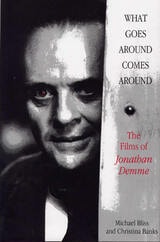
What Goes Around Comes Around
The Films of Jonathan DemmeMichael Bliss and Christina Banks
Southern Illinois University Press, 1996
This first book on the director of The Silence of the Lambs and Philadelphia is comprehensive, analyzing each of Jonathan Demme’s thirteen films.
Demme received the 1980 New York Film Critics Award as Best Director for Melvin and Howard. Subsequent Demme films such as Something Wild and the Talking Heads concert film Stop Making Sense, which won the National Society of Film Critics Award for Best Documentary, made Demme a cult favorite in the league of Roger Corman.
With 199l’s The Silence of the Lambs, Demme moved into a different league. The top-grossing film of the year, Silence won five Academy Awards, becoming the first film to sweep the Best Director, Actor, Actress, and Picture categories since 1975’s One Flew Over the Cuckoo’s Nest. Philadelphia also has been a top-grossing film, with Tom Hanks winning 1994’s Best Actor Oscar.
Michael Bliss and Christina Banks include a wealth of biographical and critical data; an exclusive interview with Demme; the only on-set report on the filming of The Silence of the Lambs; an interview with Craig McKay, Demme’s Emmy-winning film editor; a bibliography; and a Demme filmography. Many of the book’s movie still illustrations have never been published.
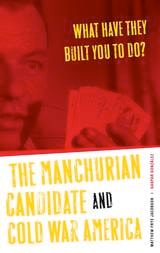
What Have They Built You to Do?
The Manchurian Candidate and Cold War AmericaMatthew Frye Jacobson
University of Minnesota Press, 2006
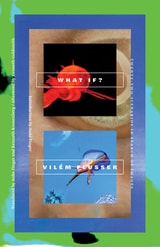
What If?
Twenty-Two Scenarios in Search of ImagesVilém Flusser
University of Minnesota Press, 2022
An imagination of possibilities, of miscalculations, of futures off-kilter
“Probability is a chimera, its head is true, its tail a suggestion. Futurologists attempt to compel the head to eat the tail (ouroboros). Here, though, we will try to wag the tail.” —Vilém Flusser
Two years after his Vampyroteuthis Infernalis, the philosopher Vilém Flusser engaged in another thought experiment: a collection of twenty-two “scenarios for the future” to be produced as computer-generated media, or technical images, that would break the imaginative logjam in conceiving the social, political, and economic future of the universe. What If? is not just an “impossible journey” to which Flusser invites us in the first scenario; it functions also as a distorting mirror held up to humanity.
Flusser’s disarming scenarios of an Anthropocene fraught with nightmares offer new visions that range from the scientific to the fantastic to the playful and whimsical. Each essay reflects our present sense of understanding the world, considering the exploitation of nature and the dangers of global warming, overpopulation, and blind reliance on the promises of scientific knowledge and invention. What If? offers insight into the radical futures of a slipstream Anthropocene that have much to do with speculative fiction, with Flusser’s concept of design as “crafty” or slippery, and with art and the immense creative potential of failure versus reasonable, “good” computing or calculability. As such, the book is both a warning and a nudge to imagine what we may yet become and be.

What Is Performance Studies?
Diana Taylor and Marcos Steuernagel, editors
Duke University Press, 0
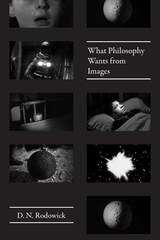
What Philosophy Wants from Images
D. N. Rodowick
University of Chicago Press, 2017
Rodowick here explores work by artists such as Ken Jacobs, Ernie Gehr, Victor Burgin, Harun Farocki, and others—artists who are creating forms that express a new historical consciousness of images. These forms acknowledge a complex relationship to the disappearing past even as they point toward new media that will challenge viewers’ confidence in what the images they see are or are becoming. What philosophy wants from images, Rodowick shows, is to renew itself conceptually through deep engagement with new forms of aesthetic experience.
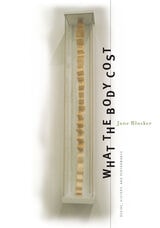
What The Body Cost
Desire, History, And PerformanceJane Blocker
University of Minnesota Press, 2004
Reexamines rebelliousness and desire in the history of performance art
Because performance is by its very nature ephemeral, it elicits a desire for what is lost more than any other form of art making. But what is the nature of that desire, and on what models has it been structured? How has it affected the ways in which the history of performance art gets told?
In What the Body Cost, Jane Blocker revisits key works in performance art by Carolee Schneemann, Vito Acconci, Hannah Wilke, Yves Klein, Ana Mendieta, and others to challenge earlier critiques that characterize performance, or body art, as a purely revolutionary art form and fail to recognize its reactionary—and sometimes damaging—effects. The scholarship to date on performance art has not, she finds, gone far enough in locating the body at the center of the performance, nor has it acknowledged the psychic, emotional, or social costs exacted on that body. Drawing on the work of critical theorists such as Roland Barthes and Catherine Belsey, as well as queer theory and feminism, What the Body Cost reads against patriarchal and heteronormative tendencies in art history while providing a corrective to the established view that performance art is necessarily transgressive. Instead, Blocker suggests that the historiography of performance art is a postmodern lovers’s discourse in which practitioners, historians, and critics alike fervently seek the body while doubting it can ever be found.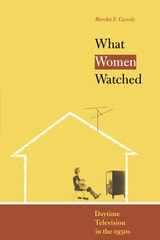
What Women Watched
Daytime Television in the 1950sBy Marsha F. Cassidy
University of Texas Press, 2005
In this pathfinding book, based on original archival research, Marsha F. Cassidy offers the first thorough analysis of daytime television's earliest and most significant women's genres, appraising from a feminist perspective what women watched before soap opera rose to prominence.
After providing a comprehensive history of the early days of women's programming across the nation, Cassidy offers a critical discussion of the formats, programs, and celebrities that launched daytime TV in America—Kate Smith's variety show and the famed singer's unsuccessful transition from patriotic radio star to 1950s TV idol; the "charm boys" Garry Moore, Arthur Godfrey, and Art Linkletter, whose programs honored women's participation but in the process established the dominance of male hosts on TV; and the "misery shows" Strike It Rich and Glamour Girl and the controversy, both critical and legal, they stirred up.
Cassidy then turns to NBC's Home show, starring the urbane Arlene Francis, who infused the homemaking format with Manhattan sophistication, and the ambitious daily anthology drama Matinee Theater, which strove to differentiate itself from soap opera and become a national theater of the air. She concludes with an analysis of four popular audience participation shows of the era—the runaway hit Queen for a Day; Ralph Edwards's daytime show of surprises, It Could Be You; Who Do You Trust?, starring a youthful Johnny Carson; and The Big Payoff, featuring Bess Myerson, the country's first Jewish Miss America. Cassidy's close feminist reading of these shows clearly demonstrates how daytime TV mirrored the cultural pressures, inconsistencies, and ambiguities of the postwar era.
What You See in the Dark
A NovelManuel Muñoz and Charles Taylor
Northwestern University Press, 2025
A doomed love story unfolds alongside the production of Psycho in 1950s Bakersfield, California
Muñoz’s debut novel tells the story of Teresa, an aspiring singer too far away from Los Angeles to share the city’s glamour. In Dan Watson, the most desirable man in town, she believes she has found someone to help her realize those dreams. But when a famous actress arrives from Hollywood with a legendary director in tow, local gossip about Teresa and Dan turns to speculation about the celebrity visitors there to work on what will become an iconic, groundbreaking film of madness and murder at a roadside motel: Alfred Hitchcock’s Psycho. Framed by a foreword from film critic Charles Taylor, Muñoz’s haunting tale reflects “the slow winding down of everything that once seemed certain.”
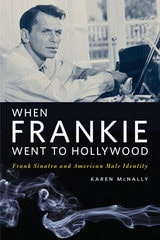
When Frankie Went to Hollywood
Frank Sinatra and American Male IdentityKaren McNally
University of Illinois Press, 2007
This first in-depth study of Frank Sinatra’s film career explores his iconic status in relation to his many performances in postwar Hollywood cinema. When Frankie Went to Hollywood considers how Sinatra’s musical acts, television appearances, and public commentary impacted his screen performances in Pal Joey, The Tender Trap, Some Came Running, The Man with the Golden Arm, and other hits. A lively discussion of sexuality, class, race, ethnicity, and male vulnerability in postwar American culture illuminates Karen McNally’s investigation into Sinatra’s cinematic roles and public persona. This entertainment luminary, she finds, was central in shaping debates surrounding definitions of American male identity in the 1940s and ’50s.
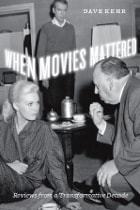
When Movies Mattered
Reviews from a Transformative DecadeDave Kehr
University of Chicago Press, 2011
If you have ever wanted to dig around in the archives for that perfect Sunday afternoon DVD and first turned to a witty weekly column in the New York Times, then you are already familiar with one of our nation’s premier film critics. If you love movies—and the writers who engage them—and just happen to have followed two of the highest circulating daily papers in the country, then you probably recognize the name of the intellectually dazzling writer who has been penning pieces on American and foreign films for over thirty years. And if you called the City of the Big Shoulders home in the 1970s or 1980s and relied on those trenchant, incisive reviews from the Chicago Reader and the Chicago Tribune to guide your moviegoing delight, then you know Dave Kehr.
When Movies Mattered presents a wide-ranging and illuminating selection of Kehr’s criticism from the Reader—most of which is reprinted here for the first time—including insightful discussions of film history and his controversial Top Ten lists. Long heralded by his peers for both his deep knowledge and incisive style, Kehr developed his approach to writing about film from the auteur criticism popular in the ’70s. Though Kehr’s criticism has never lost its intellectual edge, it’s still easily accessible to anyone who truly cares about movies. Never watered down and always razor sharp, it goes beyond wry observations to an acute examination of the particular stylistic qualities that define the work of individual directors and determine the meaning of individual films.
From current releases to important revivals, from classical Hollywood to foreign fare, Kehr has kept us spellbound with his insightful critical commentaries. When Movies Mattered will secure his place among our very best writers about all things cinematic.
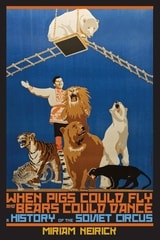
When Pigs Could Fly and Bears Could Dance
A History of the Soviet CircusMiriam Neirick
University of Wisconsin Press, 2012
For more than seven decades the circuses enjoyed tremendous popularity in the Soviet Union. How did the circus—an institution that dethroned figures of authority and refused any orderly narrative structure—become such a cultural mainstay in a state known for blunt and didactic messages? Miriam Neirick argues that the variety, flexibility, and indeterminacy of the modern circus accounted for its appeal not only to diverse viewers but also to the Soviet state. In a society where government-legitimating myths underwent periodic revision, the circus proved a supple medium of communication.
Between 1919 and 1991, it variously displayed the triumph of the Bolshevik revolution, the beauty of the new Soviet man and woman, the vulnerability of the enemy during World War II, the prosperity of the postwar Soviet household, and the Soviet mission of international peace—all while entertaining the public with the acrobats, elephants, and clowns. With its unique ability to meet and reconcile the demands of both state and society, the Soviet circus became the unlikely darling of Soviet culture and an entertainment whose usefulness and popularity stemmed from its ambiguity.
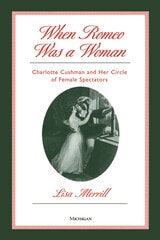
When Romeo Was a Woman
Charlotte Cushman and Her Circle of Female SpectatorsLisa Merrill
University of Michigan Press, 2000
Lisa Merrill examines Cushman's personal correspondence to shed new light on the actress's relationships and in turn on our understandings of the nature of women's "romantic friendships." She demonstrates how Cushman's androgynous presence served as a symbol to many of her contemporaries, and revealed their multiple and often contradictory attitudes toward female performers, women, and the unspeakable possibilities of same-sex desire.
The biography draws upon unpublished archival material as well as on current critical work to view Cushman's career, relationships, and posthumous reception. When Romeo Was a Woman examines as autobiographical performance Cushman's own narratives, the stories she authorized others to write, and the letters she wrote to intimates. The book is richly illustrated with many previously unpublished portraits of Cushman in her various stage roles, including Romeo and Lady Macbeth, and other revealing photographs of her family, lovers and friends.
When Romeo Was a Woman will find an appreciative audience among general readers as well as specialists in gay/lesbian history, women's history, theater and performance, popular culture, Victorian studies, and American studies.
"A fascinating story, and a major contribution to our understanding of lesbian history. . . . The work done on archival resources is both impressive in its extent and wholly convincing in its effect." --Jacky Bratton, University of London
Lisa Merrill is Associate Professor of Communication and Performance Studies, Hofstra University. She is the coauthor of The Power to Communicate: Gender Differences as Barriers, and the author of Untying the Tongue: Power, Gender, and the Word, forthcoming.
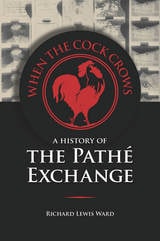
When the Cock Crows
A History of the Pathé ExchangeRichard Lewis Ward
Southern Illinois University Press, 2016
Ward traces the company’s turbulent evolution from its roots as an American distributor for Pathé Frères, its French parent studio, through its many subsequent changes in ownership, to its final years under the controversial leadership of Joseph P. Kennedy and the eventual merger of the company’s production department with RKO. Included are the stories of the unlikely survival of Pathé’s nonproduction assets, such as Pathé Industries, Inc., Pathé-America Distributing Co., Inc., and Pathé Communications Corporation, which continued to operate as part of the industry long after the Exchange had ceased to exist. Ward also provides a fascinating glimpse into the silent movie era and the business and creative decisions that led the Exchange to fail.
Film historians have largely ignored the Pathé Exchange, despite its having produced some of the most famous early serials (including the series that began with The Perils of Pauline) and distributed the first films of comedy legends Harold Lloyd, Harry Langdon, Laurel and Hardy, and Our Gang. When the Cock Crows reveals the promise and peril of early Hollywood and establishes the company’s vital place in film history, creating a more vivid picture of this era.

When the Ocean Holds the Stage
Moby-Dick and Archipelagic WorldsMaurya Wickstrom
University of Michigan Press, 2027
When the Ocean Holds the Stage is a work in which Moby-Dick and Melville’s ocean dramaturgy is the deep thru-current and archipelagic structure, forming his brilliant watery excavation of the forces of containment and continentalization, capitalization, racialization, enslavement, species destruction, and white Christian supremacism. As such, it is an original and challenging political and aesthetic engagement with Melville and Moby-Dick. Melville’s Benito Cereno, Homer’s The Odyssey, and Dereck Walcott’s Omeros are also central studies. Wickstrom argues that the ocean and the ship emerge in these texts as new kinds of performance stages on which there is a unique freedom to bring critical thought to bear on many harmful systems, and to offer visions of ways to live differently. Introducing new practices in academic writing, Wickstrom works against the constraints of linear argumentation and toward archipelagic and poetic openness. Gatherings replace chapters and, in addition to the main texts, bring many artists, historical situations, contemporary crises, and political proposals into loose, archipelagic correspondences. Finally, the book is an important contribution from Theatre and Performance Studies to the vital and broad coalition of scholars, artists, and activists whose focus is on water.
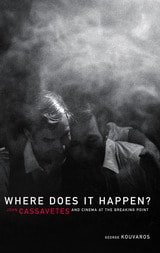
Where Does It Happen
John Cassavetes And Cinema At The Breaking PointGeorge Kouvaros
University of Minnesota Press, 2004
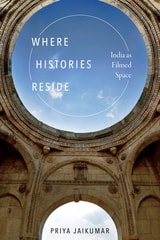
Where Histories Reside
India as Filmed SpacePriya Jaikumar
Duke University Press, 2019
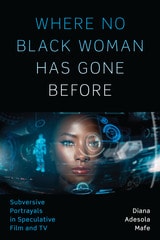
Where No Black Woman Has Gone Before
Subversive Portrayals in Speculative Film and TVBy Diana Adesola Mafe
University of Texas Press, 2018
When Lieutenant Uhura took her place on the bridge of the Starship Enterprise on Star Trek, the actress Nichelle Nichols went where no African American woman had ever gone before. Yet several decades passed before many other black women began playing significant roles in speculative (i.e., science fiction, fantasy, and horror) film and television—a troubling omission, given that these genres offer significant opportunities for reinventing social constructs such as race, gender, and class. Challenging cinema’s history of stereotyping or erasing black women on-screen, Where No Black Woman Has Gone Before showcases twenty-first-century examples that portray them as central figures of action and agency.
Writing for fans as well as scholars, Diana Adesola Mafe looks at representations of black womanhood and girlhood in American and British speculative film and television, including 28 Days Later, AVP: Alien vs. Predator, Children of Men, Beasts of the Southern Wild, Firefly, and Doctor Who: Series 3. Each of these has a subversive black female character in its main cast, and Mafe draws on critical race, postcolonial, and gender theories to explore each film and show, placing the black female characters at the center of the analysis and demonstrating their agency. The first full study of black female characters in speculative film and television, Where No Black Woman Has Gone Before shows why heroines such as Lex in AVP and Zoë in Firefly are inspiring a generation of fans, just as Uhura did.
Where Social Identities Converge
Latin American and Latinx Youth on ScreenTraci Roberts-Camps
Vanderbilt University Press, 2024