Results by title
111 books match the query 'Personal narratives, American' and 11 start with w
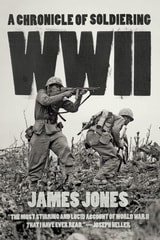
WWII
A Chronicle of SoldieringJames Jones
University of Chicago Press, 1975
Moving chronologically and thematically through the complex history of the conflict, Jones interweaves his own vivid memories of soldiering in the Pacific—from the look on a Japanese fighter pilot’s face as he bombed Pearl Harbor, so close that Jones could see him smile and wave, to hitting the beach under fire in Guadalcanal—while always returning to resounding larger themes. Much of WWII can be read as a tribute to the commitment of American soldiers, but Jones also pulls no punches, bluntly chronicling resentment at the privilege of the officers, questionable strategic choices, wartime suffering, disorganization, the needless loss of life, and the brutal realization that a single soldier is ultimately nothing but a replaceable cog in a heartless machine. As the generation that fought and won World War II leaves the stage, James Jones’s book reminds us of what they accomplished—and what they sacrificed to do so.
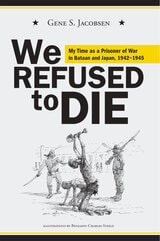
We Refused to Die
My time as a prisoner of war in Bataan and Japan, 1942-1945Gene S Jacobsen
University of Utah Press, 2004
In engaging, direct prose, Jacobsen’s three-and-a-half year experience as a prisoner of war takes the reader on a brutal and harrowing march through hatred and forgiveness, fortitude and freedom. We Refused to Die is an honest memoir that shines light on one of history’s darkest moments.
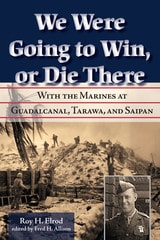
We Were Going to Win, or Die There
Roy H. Elrod
University of North Texas Press, 2017

We Were Innocents
AN INFANTRYMAN IN KOREAWilliam D. Dannenmaier
University of Illinois Press, 1999
William Dannenmaier served in Korea with the U.S. Army from December 1952 to January 1954, first as a radioman and then as a radio scout with the Fifteenth Infantry Regiment. Eager to serve a cause in which he fervently believed—the safeguarding of South Korea from advancing Chinese Communists—he enlisted in the army with an innocence that soon evaporated. His letters from the front, most of them to his sister, Ethel, provide a springboard for his candid and wry observations of the privations, the boredom, and the devastation of infantry life. At the same time these letters, designed to disguise the true danger of his tasks and his dehumanizing circumstances, reflect a growing failure to communicate with those outside the combat situation.
Woven through the letters is Dannenmaier's narrative account of his combat experiences, including a vivid re-creation of the bloody battle for Outpost Harry, which he describes as "trivial and insignificant—except to the men who fought it."A high-intensity, eight-day battle for a hill American forces would abandon three months later with the signing of the truce, Outpost Harry was largely ignored by the press despite heavy casualties and many official citations for heroism.
From his vantage point as an Everyman, Dannenmaier describes the frustration of men on the front lines who never saw their commanding superiors, the exhaustion of soldiers whose long-promised leaves never materialized, the transitory friendships and shared horrors that left indelible memories. Endangered by minefields and artillery fire, ground down by rumors and constant tension, these men returned—if they returned at all—profoundly and irrevocably changed.
This intimate, revealing memoir, a rare account by a common soldier, is a tribute to the Americans who served in a conflict that has only recently begun to gain a place in official public memory.
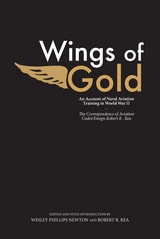
Wings of Gold
An Account of Naval Aviation Training in World War II, The Correspondence of Aviation Cadet/Ensign Robert R. ReaWesley Phillips Newton
University of Alabama Press, 1987
Millions of Americans underwent military training during World War II, and contemporary historians and readers have begun to recognize the significance and value of primary sources related not only to combat but also to training and preparedness.
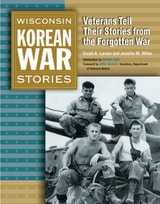
Wisconsin Korean War Stories
Veterans Tell Their Stories from the Forgotten WarSarah Larsen
Wisconsin Historical Society Press, 2008
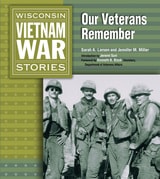
Wisconsin Vietnam War Stories
Our Veterans RememberSarah Larsen
Wisconsin Historical Society Press, 2010
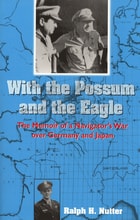
With the Possum and the Eagle
The Memoir of a Navigator's War over Germany and JapanRalph Nutter
University of North Texas Press, 2005
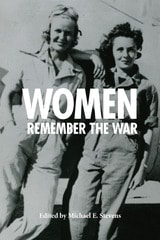
Women Remember the War, 1941-1945
Michael E. Stevens
Wisconsin Historical Society Press, 1993
Women Remember the War, 1941-1945 offers a brief introduction to the experiences of Wisconsin women in World War II through selections from oral history interviews in which women addressed issues concerning their wartime lives.
In this volume, more than 30 women describe how they balanced their more traditional roles in the home with new demands placed on them by the biggest global conflict in history. This book provides a rich mix of insights, incorporating the perspectives of workers in factories, in offices, and on farms as well as those of wives and mothers who found their work in the home. In addition, the volume contains accounts by women who served overseas in the military and the Red Cross. These accounts provide readers with a vivid picture of how women coped with the stresses created by their daily lives and by the additional burden of worrying about loved ones fighting overseas.
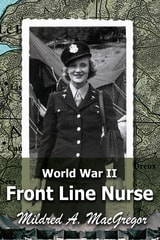
World War II Front Line Nurse
Mildred A. MacGregor
University of Michigan Press, 2008
In late 1942, along with so many others who signed up to support the war effort, thirty-year-old Mildred Radawiec left a comfortable position as a nurse at the University of Michigan Hospital and postponed her marriage to a soon-to-be doctor to volunteer as a surgical nurse in the major battle theaters of the war. Radawiec was one of thirty volunteers from the hospital surgical staff that comprised the University of Michigan Unit, the 298th General Hospital, as the University of Michigan Hospital was called.
Radawiec's first-person history recounts her wartime experience with sharp detail and grace and sets the stage for a you-are-there experience---from the thrill of signing up and shipping out; to the harrowing ocean crossing and the arduous trip through the Sahara; to dangerous air raids and moving at a moment's notice, often at night with the lights off to avoid attacks. Radawiec was near Omaha Beach in France soon after D-Day, June 6, 1944, and details stories of marathon stints assisting the injured on the front lines as they poured in by the hundreds. Radawiec also traveled to Belgium and Germany and set up in the area near Aachen in the fall of 1944. In Germany she experienced Buzz Bombs---pilotless flying bombs---and even witnessed the death of a fellow nurse in a bombing attack in which medics brought in wounded soldiers by the truckload. Radawiec also leavens her story with uplifting tales of heroism and courage and intersperses the narrative with poignant letters from her family and fiancé.
This stirring personal account of war will mesmerize anyone interested in World War II history and women's too-often-overlooked role in it.
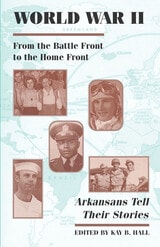
World War II
From the Battle Front to the Home Front, Thirty-Five Arkansans Tell their StoriesKay B. Hall
University of Arkansas Press, 1995