58 books match the query 'Photoessays & Documentaries' and 5 start with w
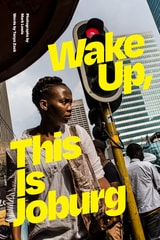
cover of Wake Up, This Is Joburg

Wake Up, This Is Joburg

Words by Tanya Zack, Photographs by Mark Lewis

Duke University Press, 2022
A single image taken from a high-rise building in inner-city Johannesburg uncovers layers of history—from its premise and promise of gold to its current improvisations. It reveals the city as carcass and as crucible, where informal agents and processes spearhead its rapid reshaping and transformation. In Wake Up, This Is Joburg, writer Tanya Zack and photographer Mark Lewis offer a stunning portrait of Johannesburg and personal stories of some of the city’s ordinary, odd, and outrageous residents. Their photos and essays take readers into meat markets where butchers chop cow heads; the eclectic home of an outsider artist that features turrets and full of manikins; long-abandoned gold pits beneath the city, where people continue to mine informally; and lively markets, taxi depots, and residential high-rises. Sharing people’s private and work lives and the extraordinary spaces of the metropolis, Zack and Lewis show that Johannesburg’s urban transformation occurs not in a series of dramatic, wide-scale changes but in the everyday lives, actions, and dreams of individuals.
[more]
cover of What Kind of Island in What Kind of Sea?

What Kind of Island in What Kind of Sea?

Franz Fühmann

Lever Press, 2021

The dignity of cognitively disabled people and the ethics of representing their lives are at the heart of an extraordinary yet little-known book first published in the former German Democratic Republic. Was für eine Insel in was für einem Meer, or What Kind of Island in What Kind of Sea (Rostock, Hinstorff, 1986) depicts residents of a church-run institution for people with cognitive disabilities in astonishing black-and-white photographs by Dietmar Riemann and in a probing, poignant essay by esteemed German writer Franz Fühmann. This important text, which moved from a medical model to a historical and cultural view of disability as an aspect of human identity and experience, is translated into English for the first time by Elizabeth Hamilton and includes reflections on the book and its impact. As fuller, global histories of disability are now being written, What Kind of Island in What Kind of Sea opens an essential window onto a formerly shuttered world, demonstrating the power of the arts to hone our capacity to perceive and appreciate human difference.
[more]
cover of Witnesses to the Struggle: Imaging the 1930s California Labor Movement

Witnesses to the Struggle

Imaging the 1930s California Labor Movement

Anne Loftis

University of Nevada Press, 2014

In this groundbreaking interdisciplinary study, Loftis examines the artists who put a human face on the farmworkers’ plight in California during the Great Depression, focusing on writer John Steinbeck, photographer Dorothea Lange, sociologist and author Paul Taylor, and journalist Carey McWilliams. Loftis probes the interplay between journalism and art in the 1930s, when both academics and artists felt an urgent need to be relevant in the face of enormous misery. The power of their work grew out of their personal involvement in both the labor struggles and the hardships endured by workers and their families. Steinbeck, Lange, and the other artists and intellectuals in their circles created the public images of their times. Works such as The Grapes of Wrath or Lange’s Migrant Mother actually helped mold public opinion and form government policies. Even today these works remain icons in our shared perception of that era. Loftis helps us understand why this art still seems the truest representation of those desperate times, three-quarters of a century later.
 

[more]
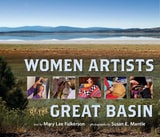
cover of Women Artists of the Great Basin

Women Artists of the Great Basin

Mary Lee Fulkerson

University of Nevada Press, 2017

Thirty-two women artists scattered over 200,000 square miles introduce a powerhouse of three-dimensional art in Women Artists of the Great Basin. A wave of women’s art has begun to paint the land with a giant brush, and nowhere have the winds of change been more evident than in the Great Basin, where a sense of freedom and rugged individualism has swept across the playas and through cities and towns. This book is a stunning visual rendering of a wide range of visionary women artists of all ages and backgrounds, and readers will discover their dynamic works and get to know them on a personal level. Sculptors, painters, fabric artists, glassblowers, marble and stone workers, and even a renowned Twinkie artist are represented here, all producing artwork that is jam-packed with originality.
 
Fulkerson and Mantle, longtime artists and residents of the Great Basin themselves, offer a behind-the-scenes intimate glimpse into these women’s lives and artwork—showing not only what they create, but why they create it. Too often overlooked, the women covered here prove there is much richness, life, and creativity in what has often been dismissed as a barren desert. Their stories of overcoming great obstacles unfold right alongside images of their art. Many circle outside the conventional world of galleries, museums, and art publications and have created varied paths to their success. They are indeed true originals, rooted in a land of unique geography, a stew of cultures, and stories like no other.
[more]
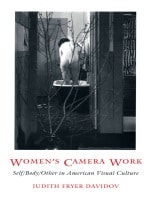
cover of Women's Camera Work: Self/Body/Other in American Visual Culture

Women's Camera Work

Self/Body/Other in American Visual Culture

Judith Fryer Davidov

Duke University Press, 1998

Women’s Camera Work explores how photographs have been and are used to construct versions of history and examines how photographic representations of otherness often tell stories about the self. In the process, Judith Fryer Davidov focuses on the lives and work of a particular network of artists linked by time, interaction, influence, and friendship—one that included Gertrude Käsebier, Imogen Cunningham, Dorothea Lange, and Laura Gilpin.

Women’s Camera Work
ranges from American women’s photographic practices during the nineteenth and early twentieth centuries to a study of landscape photography. Using contemporary cultural studies discourse to critique influential male-centered historiography and the male-dominated art world, Davidov exhibits the work of these women; tells their absorbing stories; and discusses representations of North American Indians, African Americans, Asian Americans, and the migrant poor. Evaluating these photographers’ distinct contributions to constructions of Americanness and otherness, she helps us to discover the power of reading images closely, and to learn to see through these women’s eyes.

In presenting one of the most important strands of American photography, this richly illustrated book will interest students of American visual culture, women’s studies, and general readers alike.


[more]