Results by title
314 books match the query 'Plants' and 26 start with w
WOODY PLANTS OF OHIO
Trees, Shrubs, and Woody Climbers: Native, Naturalized, and EscapedE. Lucy Braun
The Ohio State University Press, 1989

Walden Warming
Climate Change Comes to Thoreau's WoodsRichard B. Primack
University of Chicago Press, 2014
In Walden Warming, Richard B. Primack uses Thoreau and Walden, icons of the conservation movement, to track the effects of a warming climate on Concord’s plants and animals. Under the attentive eyes of Primack, the notes that Thoreau made years ago are transformed from charming observations into scientific data sets. Primack finds that many wildflower species that Thoreau observed—including familiar groups such as irises, asters, and lilies—have declined in abundance or have disappeared from Concord. Primack also describes how warming temperatures have altered other aspects of Thoreau’s Concord, from the dates when ice departs from Walden Pond in late winter, to the arrival of birds in the spring, to the populations of fish, salamanders, and butterflies that live in the woodlands, river meadows, and ponds.
Primack demonstrates that climate change is already here, and it is affecting not just Walden Pond but many other places in Concord and the surrounding region. Although we need to continue pressuring our political leaders to take action, Primack urges us each to heed the advice Thoreau offers in Walden: to “live simply and wisely.” In the process, we can each minimize our own contributions to our warming climate.

Weaving Nature
Basketry from Plants to PeopleMark Nesbitt and Ruth Stungo
Royal Botanic Gardens, Kew, 2024
Basketry is a sustainable expression of human ingenuity, and Weaving Nature takes a holistic and interdisciplinary view of the journey from plant to basket. It explains why certain plants are favored by makers and shows how the raw materials are worked to achieve the desired use. This book covers a vast array of basketry types, ranging from netting to quivers from all parts of the world and dating from ancient Egypt to the current day.
Heavily illustrated with approximately three hundred baskets from the historic ethnobotanical collections of the Royal Botanic Gardens, Kew, this book is rich in stories of people, from the communities that made and used basketry to those that collected objects and brought them to Kew over the last two hundred years.
New discoveries in Kew’s archives shed light on the complex web of empire, trade, and exploration that brought so many baskets to Kew in Victorian times. Rich in stories, historical context, and images, Weaving Nature offers new ways of appreciating one of humankind’s oldest art forms.
Weeds of North America
Richard Dickinson and France Royer
University of Chicago Press, 2014
Encyclopedic in scope, the book is the first to cover North American weeds at every stage of growth. The book is organized by plant family, and more than five hundred species are featured. Each receives a two-page spread with images and text identification keys. Species are arranged within family alphabetically by scientific name, and entries include vital information on seed viability and germination requirements.
Whether you believe, like Donald Culross Peattie, that “a weed is a plant out of place,” or align with Elizabeth Wheeler Wilcox’s “weeds are but unloved flowers,” Dickinson and Royer provide much-needed background on these intrusive organisms. In the battle with weeds, knowledge truly is power. Weeds of North America is the perfect tool for gardeners, as well as anyone working in the business of weed ecology and control.
Wetlands in Your Pocket
A Guide to Common Plants and Animals of Midwestern WetlandsMuller, Mark
University of Iowa Press, 2005
What Have Plants Ever Done for Us?
Western Civilization in Fifty PlantsStephen Harris
Bodleian Library Publishing, 2015
With What Have Plants Ever Done for Us?, Stephen Harris takes readers step by chronological step through the role of plants in the rise of the Western world, with sojourns through the history of trade, travel, politics, chemistry, and medicine. Plants are our most important food source. Some, such as barley, have been staples since the earliest times. Others, like the oil palm, are relative newcomers to the Western world. Over time, the ways we use some plants has also dramatically changed: Beets, a familiar sight on the dinner plate, were once thought to be an effective treatment for leprosy and now show significant promise as a sustainable biofuel. What, one wonders, might the future thus hold for the mandrake or woad? Plants have also held potent cures to some of our most prevalent diseases. An extract from the bark of the yew tree, for instance, is commonly used in the treatment of cancer.
Wide-ranging and thoroughly engaging, What Have Plants Ever Done for Us? will help readers cultivate a deeper appreciation for our branched and rooted friends who ask little in return for their vast contributions save for a little care and water.
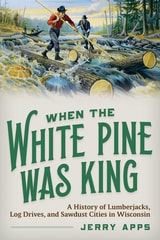
When the White Pine Was King
A History of Lumberjacks, Log Drives, and Sawdust Cities in WisconsinJerry Apps
Wisconsin Historical Society Press, 2020
For more than half a century, logging, lumber production, and affiliated enterprises in Wisconsin’s Northwoods provided jobs for tens of thousands of Wisconsinites and wealth for many individuals. The industry cut through the lives of nearly every Wisconsin citizen, from an immigrant lumberjack or camp cook in the Chippewa Valley to a Suamico sawmill operator, an Oshkosh factory worker to a Milwaukee banker.
When the White Pine Was King tells the stories of the heyday of logging: of lumberjacks and camp cooks, of river drives and deadly log jams, of sawmills and lumber towns and the echo of the ax ringing through the Northwoods as yet another white pine crashed to the ground. He explores the aftermath of the logging era, including efforts to farm the cutover (most of them doomed to fail), successful reforestation work, and the legacy of the lumber and wood products industries, which continue to fuel the state’s economy.
Enhanced with dozens of historic photos, When the White Pine Was King transports readers to the lumber boom era and reveals how the lessons learned in the vast northern forestlands continue to shape the region today.

Wielding the Ax
State Forestry and Social Conflict in Tanzania, 1820–2000Thaddeus Sunseri
Ohio University Press, 2009
Forests have been at the fault lines of contact between African peasant communities in the Tanzanian coastal hinterland and outsiders for almost two centuries. In recent decades, a global call for biodiversity preservation has been the main challenge to Tanzanians and their forests.
Thaddeus Sunseri uses the lens of forest history to explore some of the most profound transformations in Tanzania from the nineteenth century to the present. He explores anticolonial rebellions, the world wars, the depression, the Cold War, oil shocks, and nationalism through their intersections with and impacts on Tanzania’s coastal forests and woodlands. In Wielding the Ax, forest history becomes a microcosm of the origins, nature, and demise of colonial rule in East Africa and of the first fitful decades of independence.
Wielding the Ax is a story of changing constellations of power over forests, beginning with African chiefs and forest spirits, both known as “ax–wielders,” and ending with international conservation experts who wield scientific knowledge as a means to controlling forest access. The modern international concern over tropical deforestation cannot be understood without an awareness of the long–term history of these forest struggles.
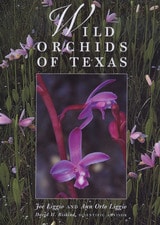
Wild Orchids of Texas
By Joe Liggio and Ann Orto Liggio
University of Texas Press, 1999
Best of Show Award, Society for Technical Communication International
From the East Texas swamps and forests to the Edwards Plateau canyons and the Trans-Pecos mountains, Texas hosts a surprising number of native orchids. Their exquisite beauty endears them to everyone from wildflower lovers to professional botanists and conservationists.
This beautifully illustrated book presents all 54 wild orchids of Texas. The species descriptions that accompany Joe Liggio's lovely color photos discuss the plant's flowers, blooming season, pollinators, typical habitats, and range (also shown by map), including its distribution within and beyond Texas. The species are grouped by genus and also listed by color, county, and habitat for easy reference.
In addition to the species accounts, the authors offer a general natural history of Texas orchids that discusses such topics as pollination and reproduction, special growing requirements, and threats to orchids from loss of habitats and careless collecting. They also describe the many orchid habitats in Texas and the species that grow in each. This wide variety of information, which has never before been collected in one volume for a general readership, makes this book the essential guide to Texas' wild orchids.
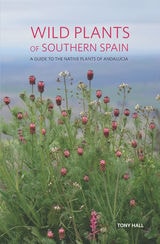
Wild Plants of Southern Spain
A Guide to the Native Plants of AndaluciaTony Hall
Royal Botanic Gardens, Kew, 2017
Drawing on more than fifteen years of fieldwork in the region, Tony Hall details over five hundred different species in this volume, presenting all essential botanical information alongside more than six hundred photographs and distribution maps. No one interested in the plants of this region will be able to forego this book.
Wild Plants of the Sierra Nevada
Ray S. Vizgirdas
University of Nevada Press, 2009
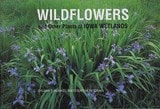
Wildflowers and Other Plants of Iowa Wetlands
Sylvan T. Runkel
University of Iowa Press, 1999
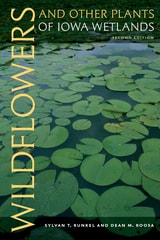
Wildflowers and Other Plants of Iowa Wetlands, 2nd edition
Sylvan T. Runkel, Dean M. Roosa, Thomas Rosburg
University of Iowa Press, 2015
In clear and accessible prose, authors Sylvan Runkel and Dean Roosa provide common, scientific, and family names; the Latin or Greek meaning of the scientific names; habitat and blooming times; and a complete description. Plants are presented by habitat (terrestrial or aquatic), then refined by habit (e.g., emergent, floating, or submerged) or taxonomic group (e.g., ferns and allies or trees, shrubs, and vines). Particularly interesting is the information on the many ways in which Native Americans and early pioneers used these plants for everything from pain relief to tonics to soup and the ways that wildlife today use them for food and shelter. Each of the more than 150 species accounts is accompanied by a brilliant full-page color photograph by botanist Thomas Rosburg, who has also updated the nomenclature and descriptions for certain species.
After decades of being considered an enemy of the settler, the farmer, and the citizen, Iowa’s wetlands have come into their own. We are finally caring for these important habitats. Runkel and Roosa’s updated field companion will be a valuable guide to today’s preservation and restoration initiatives.
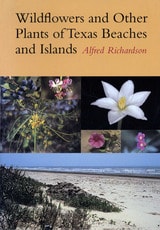
Wildflowers and Other Plants of Texas Beaches and Islands
By Alfred Richardson
University of Texas Press, 2002
Winner, Carroll Abbott Memorial Award, Native Plant Society of Texas, 2002
Many visitors to Texas beaches see only the sands between the surf and the first low dunes. Because few plants grow there, it's easy to get the impression that Texas beaches consist mostly of barren sand—while just the opposite is true. Beyond the dunes grow an amazing variety and abundance of native plants. Many of them, like Indian Blanket, Goldenrod, and Seaside Gerardia, produce great splashes of flowering color. Others display more modest flowers or are interesting for their growing habits. In all, over seven hundred species of flowering plants grow on Texas beaches and islands.
This handy field guide will aid you in identifying some 275 common and/or noteworthy flowering plants of the Texas beaches and islands from the Rio Grande to the Louisiana border. Each plant is illustrated by a color photograph, accompanied by a description of its appearance, habitat, and blooming time. The plants are grouped by families, which in turn are arranged according to relationships and similarities for easy reference. An introduction to beach habitats and plant life, references for further reading, and a glossary of terms make this book fully useful for everyone who wants a good, general understanding of beach plant life and wildflowers.
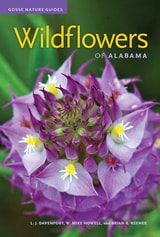
Wildflowers of Alabama
L. J. Davenport, W. Mike Howell, and Brian R. Keener
University of Alabama Press, 2027
A modern, beautifully illustrated guide revealing the hidden relationships, stories, and dazzling diversity of Alabama’s wildflowers across every corner of the state’s landscapes
Wildflowers of Alabama is a comprehensive, visually rich field guide to the state’s naturally occurring flowering plants, showcasing both familiar favorites and remarkable discoveries. Covering 125 plant families and more than 400 species, the book pairs clear, authoritative text with more than 500 color photographs that highlight the beauty, structure, and fine details of each plant across Alabama’s diverse ecosystems.
Organized using a modern, genetics-based classification system, this guide presents flowering plants according to their evolutionary relationships. Each family opens with an accessible overview, followed by detailed species accounts featuring botanical descriptions, insightful photographs, and contextual notes on names, natural history, and plant-human connections when available. A separate color key and native species list offer additional pathways for identification and discovery.
Building on decades of botanical expertise, authors L. J. Davenport, W. Mike Howell, and Brian R. Keener deliver an up-to-date, engaging resource that reflects the current state of plant science. More than a simple identification manual, Wildflowers of Alabama is an educational and inspiring celebration of the state’s extraordinary botanical diversity, designed for enthusiasts, students, and educators alike.
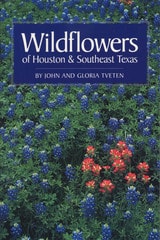
Wildflowers of Houston and Southeast Texas
By John and Gloria Tveten
University of Texas Press, 1997
You'll find them throughout the year in Houston—lyre-leaf sage, Drummond skullcap, silver-leaf nightshade, snow-on-the-prairie, lemon beebalm, scarlet pimpernel, plains wild indigo, spring ladies'-tresses, deer pea vetch.
These wildflowers and hundreds of other species flourish in this part of Texas, but until this book was published in 1993 no guide had focused exclusively on the Houston area. John and Gloria Tveten spent years seeking out both the common and the rare flowers. They describe here more than 200 plants. A color photograph of each one will make identification easy.
The guide is arranged by color, with each entry tracing the history and lore of a species. Many plants—for example, prairie Indian plantain and self-heal—were used by Native Americans for medicinal purposes. Others, like poke-weed and wapato, are edible. Southern dewberry and giant ragweed are used as natural dyes. And some, like rattlebush and milkweed, are poisonous.
At the end of each species account is a list of key identifying characteristics for quick reference in the field. Summaries of plant families are also included, as well as tips on where and when to look for wildflowers.
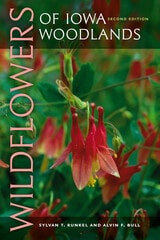
Wildflowers of Iowa Woodlands
Sylvan T. Runkel
University of Iowa Press, 2009
The species accounts are accompanied by brilliant full-page color photographs by Larry Stone, Thomas Rosburg, and Carl Kurtz. In clear, straightforward, and accessible prose, authors Sylvan Runkel and Alvin Bull provide common, scientific, and family names; the Latin or Greek meaning of the scientific names; habitat and blooming times; and a complete description of plant, flower, and fruit. Particularly interesting is the information on the many ways in which Native Americans and early pioneers used these plants for everything from pain relief to insecticides to tonics.
Iowa’s original savannas, woodlands, and forests were cleared with amazing thoroughness, yet enough beauty and diversity remain to give joy to hikers, birders, and mushroomers. Wildflowers of Iowa Woodlands will inspire both amateurs and professionals with the desire to learn more about the wonders of today’s woodlands.
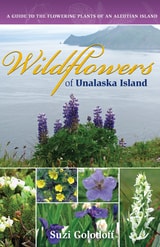
Wildflowers of Unalaska Island
A Guide to the Flowering Plants of an Aleutian Island, Second EditionSuzi Golodoff
University of Alaska Press, 2013
Each species is introduced and clearly defined and is accompanied by a photograph and line drawings. Many of these plants occur across a wide range of coastal Alaska; others are unique to the Aleutians. The introduction includes background on the unique geologic history, climate, and habitats of the archipelago to fully round out the user’s appreciation of the dramatic environment in which these hardy plants thrive.
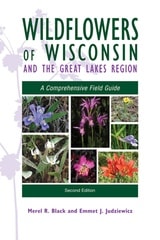
Wildflowers of Wisconsin and the Great Lakes Region
A Comprehensive Field GuideMerel R. Black and Emmet J. Judziewicz
University of Wisconsin Press, 2009
• more than 1,100 species from 459 genera in 100 families
• many rare and previously overlooked species
• 2,100 color photographs and 300 drawings
• Wisconsin distribution maps for almost all plants
• brief descriptions including distinguishing characteristics of the species
• Wisconsin status levels for each species of wildflower (native, invasive, endangered, etc.)
• derivation of Latin names.
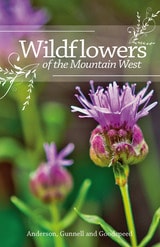
Wildflowers of the Mountain West
Richard M. Anderson, Jay Dee Gunnell, Jerry L. Goodspeed
Utah State University Press, 2012
Many recreational hikers have stopped along the trail to admire a wildflower only to wonder what, exactly, they are looking at. Wildflowers of the Mountain West is a useful field guide that makes flower identification easy for the general outdoor enthusiast.
Many available plant guides are too technical or cumbersome for non-specialists to embrace. Covering New Mexico, Colorado, Wyoming, Idaho, Utah, Nevada and Oregon, this book is perfect for the enthusiasts who has little botanical knowledge but would like to know more about the wildflowers they are seeing. Organized by flower color for easy reference, plant records include the common and scientific names, a description of typical characteristics, habitat information and distribution maps, look-alike species, color photographs, and informative commentary. In addition, the book provides a useful introduction to the Mountain West region, along with line drawings to illustrate basic flower parts, shapes, and arrangements; a glossary of common botanical terms; a quick search key; and an index.
The book is spiral-bound, making it easy to bring along while hiking, backpacking, or biking, and stunning full color photographs make visual confirmation of flower type simple and straightforward.
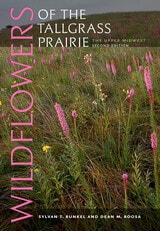
Wildflowers of the Tallgrass Prairie
The Upper MidwestSylvan T. Runkel
University of Iowa Press, 2009
This classic of midwestern natural history is back in print with a new format and new photographs. Originally published in 1989, Wildflowers of the Tallgrass Prairie introduced many naturalists to the beauty and diversity of the native plants of the huge grasslands that once stretched from Manitoba to Texas. Now redesigned with updated names and all-new photographs, this reliable field companion will introduce tallgrass prairie wildflowers to a new generation of outdoor enthusiasts in the Upper Midwest.
Each species account is accompanied by a brilliant full-page color photograph by botanist Thomas Rosburg. In clear, straightforward, and accessible prose, authors Sylvan Runkel and Dean Roosa provide common, scientific, and family names; the Latin or Greek meaning of the scientific names; habitat and blooming times; and a complete description of plant, flower, and fruit. Particularly interesting is the information on the many ways in which Native Americans and early pioneers used these plants for everything from pain relief to dyes to hairbrushes.
Runkel and Roosa say that prairies can be among the most peaceful places on earth; certainly they are among the most beleaguered. Wildflowers of the Tallgrass Prairie will inspire both amateurs and professionals with the desire to learn more about the wonders of the prairie landscape.
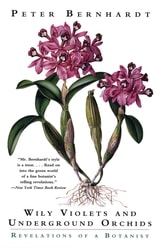
Wily Violets and Underground Orchids
Revelations of a BotanistPeter Bernhardt
University of Chicago Press, 2003

Wind Power Modelling
Power plants and grid integration, Volume 3Paul Veers
The Institution of Engineering and Technology, 2019
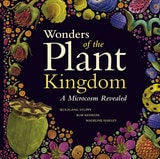
Wonders of the Plant Kingdom
A Microcosm RevealedWolfgang Stuppy, Rob Kesseler, and Madeline Harley
University of Chicago Press, 2015
With Wonders of the Plant Kingdom, the naked eye gets an unforgettable boost. A stunning collaboration between science and art, this gorgeous book presents hundreds of images of plants taken with a scanning electron microscope and hand-colored by artist Rob Kesseler to reveal the awe-inspiring adaptations all around us. The surface of a peach—with its hairs, or trichomes, and sunken stomata, or breathing pores—emerges from these pages in microscopic detail. The dust-like seeds of the smallest cactus species in the world, the Blossfeldia liliputana—which measures just twelve millimeters fully grown—explode here with form, color, and character, while the flower bud of a kaffir lime, cross-sectioned, reveals the complex of a flower bud with the all-important pistil in the center.
Accompanying these extraordinary images are up-to-date explanations of the myriad ways that these plants have ensured their own survival—and, by proxy, our own. Gardeners and science buffs alike will marvel at this wholly new perspective on the world of plant diversity.
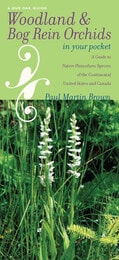
Woodland and Bog Rein Orchids in Your Pocket
A Guide to Native Platanthera Species of the Continental United States and CanadaPaul Martin Brown
University of Iowa Press, 2010
Native orchids are increasingly threatened by pressure from population growth and development but, nonetheless, still present a welcome surprise to observant hikers in every state and province. Compiled and illustrated by long-time orchid specialist Paul Martin Brown, this pocket guide to the woodland and bog rein orchids forms part of a series that will cover all the wild orchids of the continental United States and Canada.
Brown provides a description, general distributional information, time of flowering, and habitat requirements for each species as well as a complete list of hybrids and the many different growth and color forms that can make identifying orchids so challenging. For the woodland and bog rein orchids, which make up some of the most delicate and subtly colored of all wild orchids, he includes information on nineteen species, four subspecies and varieties, and seven hybrids.
The genus Platanthera is the largest genus of orchids to be found in North America north of Mexico; the woodland and bog rein orchids comprise a significant group of species found throughout much of temperate U.S. and Canada. The luminously green rein orchids, so-called because of the resemblance of some of the flowers to the reins used on horses, are especially abundant in rich woodlands, wetlands, and bogs in the more northerly and cooler habitats. Most are easy to identify based upon their general appearance, range, and time of flowering. Answering three simple questions—when, where, and how does it grow?—and comparing the living plants with the striking photos in this backpack-friendly laminated guide and the information in the simple key should enable both professional and amateur naturalists to achieve the satisfaction of identifying a specific orchid.
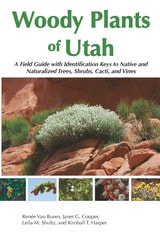
Woody Plants of Utah
A Field Guide with Identification Keys to Native and Naturalized Trees, Shrubs, Cacti, and VinesRenée Van Buren, Janet G. Cooper, Leila M. Shultz, and Kimball T. Harper
Utah State University Press, 2011
A comprehensive guide that includes a vast range of species and plant communities and employs thorough, original keys. Based primarily on vegetative characteristics, the keys don't require that flowers or other reproductive features be present, like many plant guides. And this guide's attention to woody plants as a whole allows one to identify a much greater variety of plants. That especially suits an arid region such as Utah with less diverse native trees. Woody plants are those that have stems that persist above ground even through seasons that don't favor growth, due to low precipitation or temperatures.
Woody Plants of Utah employs dichotomous identification keys that are comparable to a game of twenty questions. They work through a process of elimination by choosing sequential alternatives.
Detailed, illustrated plant descriptions complement the keys and provide additional botanical and environmental information in relation to a useful introductory categorization of Utah plant communities. Supplementary tools include photos, distribution maps, and an illustrated glossary.