137 books match the query 'Poverty' and 3 start with w
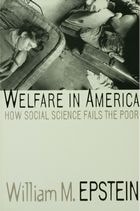
cover of Welfare in America: How Social Science Fails the Poor

Welfare in America

How Social Science Fails the Poor

William M. Epstein

University of Wisconsin Press, 1997

William M. Epstein charges that most current social welfare programs are not held to credible standards in their design or their results. Rather than spending less on such research and programs, however, Epstein suggests we should spend much more, and do the job right.
     The American public and policymakers need to rely on social science research for objective, credible information when trying to solve problems of employment, affordable housing, effective health care, and family integrity. But, Epstein contends, politicians treat welfare issues as ideological battlegrounds; they demand immediate results from questionable data and implement policies long before social researchers can complete their analyses. Social scientists often play into the political agenda, supporting poorly conceived programs and doing little to test and revise them. Analyzing Aid to Families with Dependent Children (AFDC) and the recent welfare reform act, Food Stamps, Medicaid, job training, social services, and other programs, Epstein systematically challenges the conservative’s vain hope that neglect is therapeutic for the poor, as well as the liberal’s conceit that a little bit of assistance is sufficient.
[more]
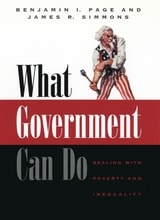
cover of What Government Can Do: Dealing with Poverty and Inequality

What Government Can Do

Dealing with Poverty and Inequality

Benjamin I. Page and James R. Simmons

University of Chicago Press, 2000
It is often said that the federal government cannot or should not attempt to address America's problems of poverty and inequality—because its bureaucracy is wasteful or its programs ineffective. But is this true? In this book, Benjamin I. Page and James R. Simmons examine a number of federal and local programs, detailing what government action already does for its citizens and assessing how efficient it is at solving the problems it seeks to address. Their conclusion, surprisingly, is the polar opposite of the prevailing rhetoric—What Government Can Do is an insightful and compelling argument that it both can and should do more.
[more]
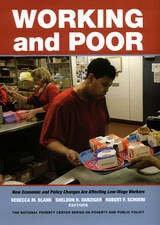
cover of Working and Poor: How Economic and Policy Changes Are Affecting Low-Wage Workers

Working and Poor

How Economic and Policy Changes Are Affecting Low-Wage Workers

Rebecca M. Blank

Russell Sage Foundation, 2006

Over the last three decades, large-scale economic developments, such as technological change, the decline in unionization, and changing skill requirements, have exacted their biggest toll on low-wage workers. These workers often possess few marketable skills and few resources with which to support themselves during periods of economic transition. In Working and Poor, a distinguished group of economists and policy experts, headlined by editors Rebecca Blank, Sheldon Danziger, and Robert Schoeni, examine how economic and policy changes over the last twenty-five years have affected the well-being of low-wage workers and their families. Working and Poor examines every facet of the economic well-being of less-skilled workers, from employment and earnings opportunities to consumption behavior and social assistance policies. Rebecca Blank and Heidi Schierholz document the different trends in work and wages among less-skilled women and men. Between 1979 and 2003, labor force participation rose rapidly for these women, along with more modest increases in wages, while among the men both employment and wages fell. David Card and John DiNardo review the evidence on how technological changes have affected less-skilled workers and conclude that the effect has been smaller than many observers claim. Philip Levine examines the effectiveness of the Unemployment Insurance program during recessions. He finds that the program's eligibility rules, which deny benefits to workers who have not met minimum earnings requirements, exclude the very people who require help most and should be adjusted to provide for those with the highest need.  On the other hand, Therese J. McGuire and David F. Merriman show that government help remains a valuable source of support during economic downturns.  They find that during the most recent recession in 2001, when state budgets were stretched thin, legislatures resisted political pressure to cut spending for the poor. Working and Poor provides a valuable analysis of the role that public policy changes can play in improving the plight of the working poor. A comprehensive analysis of trends over the last twenty-five years, this book provides an invaluable reference for the public discussion of work and poverty in America. A Volume in the National Poverty Center Series on Poverty and Public Policy
[more]