160 books match the query 'Poverty & Homelessness' and 5 start with w

cover of Welfare Discipline: Discourse, Governance and Globalization

Welfare Discipline

Discourse, Governance and Globalization

Sanford F. Schram

Temple University Press, 2005

For the past decade, political scientist Sanford Schram has led the academic effort to understand how Americans and their political officials talk about poverty and welfare and what impact that discourse has on policy and on the global society.

In Welfare Discipline, Schram argues that it is time to take stock of the new forms of welfare and to develop even better methods to understand them. He argues for a more contextualized approach to examining welfare policy, from the use of the idea of globalization to justify cutbacks, to the increasing employment of U.S. policy discourse overseas, to the development of asset-based approaches to helping the poor.

Stressing the importance of understanding the ways we talk about welfare, how we study it, and, critically, what we do not discuss and why, Schram offers recommendations for making welfare policy both just and effective.
[more]
cover of Welfare Reform and Political Theory

Welfare Reform and Political Theory

Lawrence M. Mead

Russell Sage Foundation, 2005
During the 1990s, both the United States and Britain shifted from entitlement to work-based systems for supporting their poor citizens. Much research has examined the implications of welfare reform for the economic well-being of the poor, but the new legislation also affects our view of democracy—and how it ought to function. By eliminating entitlement and setting behavioral conditions on aid, welfare reform challenges our understanding of citizenship, political equality, and the role of the state. In Welfare Reform and Political Theory, editors Lawrence Mead and Christopher Beem have assembled an accomplished list of political theorists, social policy experts, and legal scholars to address how welfare reform has affected core concepts of political theory and our understanding of democracy itself. Welfare Reform and Political Theory is unified by a common set of questions. The contributors come from across the political spectrum, each bringing different perspectives to bear. Carole Pateman argues that welfare reform has compromised the very tenets of democracy by tying the idea of citizenship to participation in the marketplace. But William Galston writes that American citizenship has in some respects always been conditioned on good behavior; work requirements continue that tradition by promoting individual responsibility and self-reliance—values essential to a well-functioning democracy. Desmond King suggests that work requirements draw invidious distinctions among citizens and therefore destroy political equality. Amy Wax, on the other hand, contends that ending entitlement does not harm notions of equality, but promotes them, by ensuring that no one is rewarded for idleness. Christopher Beem argues that entitlement welfare served a social function—acknowledging the social value of care—that has been lost in the movement towards conditional benefits. Stuart White writes that work requirements can be accepted only subject to certain conditions, while Lawrence Mead argues that concerns about justice must be addressed only after recipients are working. Alan Deacon is well to the left of Joel Schartz, but both say government may actively promote virtue through social policy—a stance some other contributors reject. The move to work-centered welfare in the 1990s represented not just a change in government policy, but a philosophical change in the way people perceived government, its functions, and its relationship with citizens. Welfare Reform and Political Theory offers a long overdue theoretical reexamination of democracy and citizenship in a workfare society.
[more]
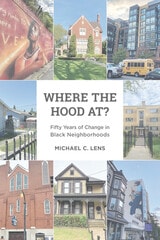
cover of When the Wolf Camped at Our Door: My Childhood in the Great Depression

When the Wolf Camped at Our Door

My Childhood in the Great Depression

Aileen Kilgore Henderson

University of Alabama Press, 2022

Recounts the hardships and joys the Kilgore family and their neighbors experienced in a close-knit southern rural community during the Great Depression

As the Great Depression tightened its grip on the world, six members of the Kilgore family were living in a cramped farmhouse in Brookwood, Alabama. Crops didn’t grow well, food was scarce, shoes were in short supply, and the few clothes they had were all hand-me-downs. The Kilgores struggled to make ends meet, cobbling together odd jobs and working the land by hand.

Despite all of this, young Aileen thought life was full of hope. She longed to hold on to it and scribbled down daily events on whatever odds and ends of paper she could find. In her new memoir, When the Wolf Camped at Our Door, Aileen Kilgore Henderson creates a vivid portrait of what life was like for so many living in the rural South during the Depression. The book begins when Aileen is ten years old and follows her into her teenage years over the course of twenty-seven episodic chapters. Drawing on her girlhood diaries and told through the charismatic voice of her younger self, Henderson’s nuanced storytelling sheds light on the common struggle for survival during a time when people were at their most vulnerable.

Against the backdrop of a world where hard work and harsh conditions like hunger, privation, sickness, and early death were everyday realities, Henderson’s stories are nevertheless tinged with young Aileen’s lively sense of humor and optimistic faith in people and in the promise of life despite trying circumstances. We follow her rambles in the woods, her visits with friends, a trip to a fortune teller, and a search for the Howton Horror, a mysterious monster rumored to live deep in the Alabama backwoods.
 

[more]
cover of Where the Hood At?: Fifty Years of Change in Black Neighborhoods

Where the Hood At?

Fifty Years of Change in Black Neighborhoods

Michael C. Lens

Russell Sage Foundation, 2024

Substantial gaps exist between Black Americans and other racial and ethnic groups in the U.S., most glaringly Whites, across virtually all quality-of-life indicators. Despite strong evidence that neighborhood residence affects life outcomes, we lack a comprehensive picture of Black neighborhood conditions and how they have changed over time. In Where the Hood At? urban planning and public policy scholar Michael C. Lens examines the characteristics and trajectories of Black neighborhoods across the U.S. over the fifty years since the Fair Housing Act.
 
Hip hop music was born out of Black neighborhoods in the 1970s and has evolved alongside them. In Where the Hood At? Lens uses rap’s growth and influence across the country to frame discussions about the development and conditions of Black neighborhoods. Lens finds that social and economic improvement in Black neighborhoods since the 1970s has been slow. However, how well Black neighborhoods are doing varies substantially by region. Overall, Black neighborhoods in the South are doing well and growing quickly. Washington D.C. and Atlanta, in particular, stand out as centers of Black affluence. Black neighborhoods in the Midwest and the Rust Belt, on the other hand, are particularly disadvantaged. The welfare of Black neighborhoods is related not only to factors within neighborhoods, such as the unemployment rate, but also to characteristics of the larger metropolitan area, such as overall income inequality. Lens finds that while gentrification is increasingly prevalent, it is growing slowly, and is not as pressing an issue as public discourse would make it seem. Instead, concentrated disadvantage is by far the most common and pressing problem in Black neighborhoods.
 
Lens argues that Black neighborhoods represent urban America’s greatest policy failures, and that recent housing policies have only had mild success. He provides several suggestions for policies with the goal of uplifting Black neighborhoods. One radical proposal is enacting policies and programs, such as tax breaks for entrepreneurs or other small business owners, that would encourage Black Americans to move back to the South. Black Americans migrating South would have a better chance at moving to an advantaged Black neighborhood as improving neighborhood location is higher when moving across regions. It would also help Black Americans expand their political and economic power. He also suggests a regional focus for economic development policies, particularly in the Midwest where Black neighborhoods are struggling the most. One way to boost economic development would be to move federal agencies to the area. He also calls for building more affordable housing in Black suburbs. Black poverty is lower in suburbs than in central cities, so increasing housing in Black suburbs would allow Black households to relocate to more advantaged neighborhoods, which research has shown leads to improved life outcomes.
 
Where the Hood At? is a remarkable and comprehensive account of Black neighborhoods that helps us to better understand the places and conditions that allow them flourish or impedes their advancement.
 
 
[more]
cover of Working and Poor: How Economic and Policy Changes Are Affecting Low-Wage Workers

Working and Poor

How Economic and Policy Changes Are Affecting Low-Wage Workers

Rebecca M. Blank

Russell Sage Foundation, 2006

Over the last three decades, large-scale economic developments, such as technological change, the decline in unionization, and changing skill requirements, have exacted their biggest toll on low-wage workers. These workers often possess few marketable skills and few resources with which to support themselves during periods of economic transition. In Working and Poor, a distinguished group of economists and policy experts, headlined by editors Rebecca Blank, Sheldon Danziger, and Robert Schoeni, examine how economic and policy changes over the last twenty-five years have affected the well-being of low-wage workers and their families. Working and Poor examines every facet of the economic well-being of less-skilled workers, from employment and earnings opportunities to consumption behavior and social assistance policies. Rebecca Blank and Heidi Schierholz document the different trends in work and wages among less-skilled women and men. Between 1979 and 2003, labor force participation rose rapidly for these women, along with more modest increases in wages, while among the men both employment and wages fell. David Card and John DiNardo review the evidence on how technological changes have affected less-skilled workers and conclude that the effect has been smaller than many observers claim. Philip Levine examines the effectiveness of the Unemployment Insurance program during recessions. He finds that the program's eligibility rules, which deny benefits to workers who have not met minimum earnings requirements, exclude the very people who require help most and should be adjusted to provide for those with the highest need.  On the other hand, Therese J. McGuire and David F. Merriman show that government help remains a valuable source of support during economic downturns.  They find that during the most recent recession in 2001, when state budgets were stretched thin, legislatures resisted political pressure to cut spending for the poor. Working and Poor provides a valuable analysis of the role that public policy changes can play in improving the plight of the working poor. A comprehensive analysis of trends over the last twenty-five years, this book provides an invaluable reference for the public discussion of work and poverty in America. A Volume in the National Poverty Center Series on Poverty and Public Policy
[more]