Results by title
194 books match the query 'Practice' and 11 start with w
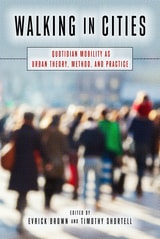
Walking in Cities
Quotidian Mobility as Urban Theory, Method, and PracticeEvrick Brown
Temple University Press, 2015
Walking connects the rhythms of urban life to the configuration of urban spaces. As the contributors and editors show in Walking in Cities, walking also reflects the systematic inequalities that order contemporary urban life. Walking has different meanings because it can be a way of temporarily “taking possession” of urban space, or it can make the relatively powerless more vulnerable to crime. The essays in Walking in Cities explore how walking intersects with sociological dimensions such as gender, race and ethnicity, social class, and power.
Various chapters explorethe flâneuse, or female urban drifter, in Tehran’s shopping malls; Hispanic neighborhoods in New York, San Diego, and El Paso; and the intra-neighborhood and inter-class dynamics of gentrification in Greenpoint, Brooklyn.The essays in Walking in Cities provide important lessons about urban life.
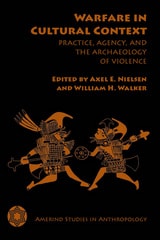
Warfare in Cultural Context
Practice, Agency, and the Archaeology of ViolenceEdited by Axel E. Nielsen and William H. Walker
University of Arizona Press, 2009
However, contributors argue, this model-and-evidence approach has given rise to multiple competing hypotheses and ambiguity rather than to full, coherent explanations of what turns out to be surprisingly complex acts of war. The chapters in Warfare in Cultural Context contend that agency and culture, inherited values and dispositions (such as religion and other cultural practices), beliefs, and institutions are always woven into the conduct of war.
This revealing book focuses on the ways that specific people construed their interests and life projects, and their problems and possibilities, and consequently chose among alternative courses of action. Using archaeological and ethnohistorical data from various parts of the world, the contributors explore the multiple avenues for the cultural study of warfare that these ideas make possible. Contributions focus on cultural aspects of warfare in Mesoamerica, South America, North America, and Southeast Asia. Case studies include warfare among the Maya, Inca, southwestern Pueblos, Mississippian cultures, and the Enga of Papua New Guinea.
What Matters in Medicine
Lessons from a Life in Primary CareDavid Loxterkamp, MD
University of Michigan Press, 2013
Primary care has come into the limelight with the passage of the Patient Protection and Affordable Care Act, the unchecked and unsustainable rise in American health care expenditures, and the crest of Baby Boomers who are now Medicare-eligible and entering the most health care–intensive period of their lives. Yet how much is really known about primary care? What Matters in Medicine: Lessons from a Life in Primary Care is a look at the past, present, and future of general practice, which is not only the predecessor to the modern primary care movement, but its foundation. Through memoir and conversation, Dr. David Loxterkamp reflects on the heroes and role models who drew him to family medicine and on his many years in family practice in a rural Maine community, and provides a prescription for change in the way that doctors and patients approach their shared contract for good health and a happy life. This book will be useful to those on both sides of primary care, doctors and patients alike.
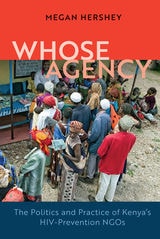
Whose Agency
The Politics and Practice of Kenya's HIV-Prevention NGOsMegan Hershey
University of Wisconsin Press, 2019
By focusing on one particular type of NGO—those organized to help prevent the spread and transmission of HIV in Kenya—Megan Hershey interrogates the ways these organizations achieve (or fail to achieve) their planned outcomes. Along the way, she examines the slippery slope that is often used to define “success” based on meeting donor-set goals versus locally identified needs. She also explores the complex network of bureaucratic requirements at both the national and local levels that affect the delicate relationships NGOs have with the state. Drawing on extensive, original quantitative and qualitative research, Whose Agency serves as a much-needed case study for understanding the strengths and shortcomings of participatory development and community engagement.
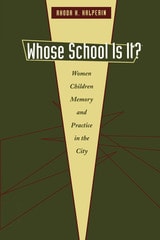
Whose School Is It?
Women, Children, Memory, and Practice in the CityBy Rhoda H. Halperin
University of Texas Press, 2006
Whose School Is It?: Women, Children, Memory, and Practice in the City is a success story with roadblocks, crashes, and detours. Rhoda Halperin uses feminist theorist and activist Gloria Anzaldúa's ideas about borderlands created by colliding cultures to deconstruct the creation and advancement of a public community charter school in a diverse, long-lived urban neighborhood on the Ohio River. Class, race, and gender mix with age, local knowledge, and place authenticity to create a page-turning story of grit, humor, and sheer stubbornness. The school has grown and flourished in the face of daunting market forces, class discrimination, and an increasingly unfavorable national climate for charter schools. Borderlands are tense spaces. The school is a microcosm of the global city.
Many theoretical strands converge in this book—feminist theory, ideas about globalization, class analysis, and accessible narrative writing—to present some new approaches in urban anthropology. The book is multi-voiced and nuanced in ways that provide authenticity and texture to the real circumstances of urban lives. At the same time, identities are threatened as community practices clash with rules and regulations imposed by outsiders.
Since it is based on fifteen years of ethnographic fieldwork in the community and the city, Whose School Is It? brings unique long-term perspectives on continuities and disjunctures in cities. Halperin's work as researcher and advocate also provides insider perspectives that are rare in the literature of urban anthropology.
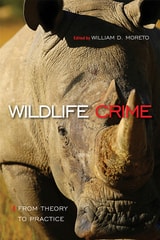
Wildlife Crime
From Theory to PracticeWilliam D.Moreto
Temple University Press, 2018
The editors and contributors to Wildlife Crime examine topical issues from extinction to trafficking in order to understand the ecological, economic, political, and social costs and consequences of these crimes. Drawing from diverse theoretical perspectives, empirical and methodological developments, and on-the-ground experiences of practitioners, this comprehensive volume looks at how conservationists and law enforcement grapple with and combat environmental crimes and the profitable market for illegal trade.
Chapters cover criminological perspectives on species poaching, unregulated fishing, the trading of ivory and rhino horns, the adoption of conservation technologies, and ranger workplaces and conditions. The book includes firsthand experiences and research from China, Indonesia, Kenya, Madagascar, Morocco, Peru, Russia, South Africa, Tanzania, and the United States. The result is a significant book about the causes of and response to wildlife crime.
Contributors include: Johan Bergenas, Avi Brisman, Craig Forsyth, Meredith Gore, Georg Jaster, Alex Killion, Kasey Kinnard, Antony C. Leberatto, Barney Long, Nerea Marteache, Gohar Petrossian, Jonah Ratsimbazafy, Gary Roloff, Viviane Seyranian, Louise Shelley, Rohit Singh, Nicole Sintov, Nigel South, Milind Tambe, Daan van Uhm, Greg Warchol, Rodger Watson, Rob White, Madelon Willemsen, and the editor.
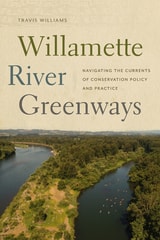
Willamette River Greenways
Navigating the Currents of Conservation Policy and PracticeTravis Williams
Oregon State University Press, 2021
Travis Williams, executive director of Willamette Riverkeeper, has spent countless hours paddling the Willamette, becoming familiar with its flora, fauna, and human neighbors. In Willamette River Greenways, he combines personal narrative about his experiences on the river with nuanced consideration of the controversies and challenges of the Greenway Program. Williams sheds light on current land stewardship practices, revealing the institutional and leadership failures that endanger the river’s water quality and habitat, and looks to the program’s future. He also takes readers with him onto the water, sharing what it’s like to travel the river by canoe, paying homage to the river’s natural beauty and the host of wildlife species that call it home.
Part policy analysis, part advocacy, and all love letter to one of Oregon’s great rivers, Willamette River Greenways offers valuable perspective to policymakers, land use managers, and recreational river users alike.
Women's Political Voice
How Women are Transforming the Practice and Study of PoliticsJanet Flammang
Temple University Press, 1997
This book accomplishes four major tasks:
*It provides a comprehensive critical history of the changing research on politics and the changing nature of the political science discipline.
*It analyzes the course of women's political activism in the United States.
*It develops a rich case study of women's politics in Northern California's Silicon Valley, an area once nicknamed "the feminist capital of the nation."
*It examines coalitions and divisions within the women's movement with sensitivity to minority politics, as in the chapter subtitled, "The Hard Work of Sisterhood."
Women's Political Voice record the transformative politics of the women's movement and, simultaneously, urges political scientists to ask new questions and to adopt new methods.
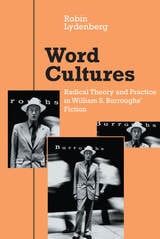
Word Cultures
Radical Theory and Practice in William S. Burroughs' FictionRobin Lydenberg
University of Illinois Press, 1987
Lydenberg focuses upon the stylistic accomplishments of this controversial and
experimental writer. In doing so, she skillfully demonstrates that the ideas
we now recognize as characteristic of post-structuralism and deconstruction
were being developed independently by Burroughs long ago.
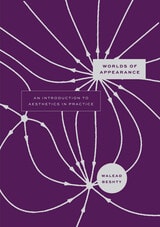
Worlds of Appearance
An Introduction to Aesthetics in PracticeWalead Beshty
University of Chicago Press, 2026
An accessible primer on aesthetics in art and everyday life, written by artist and scholar Walead Beshty.
In this general guide to the foundations of aesthetics, Walead Beshty introduces the complexities of aesthetics through succinct language and real-world examples, presenting an introductory theory of how the world becomes known to us through our senses and how that knowledge in turn builds our experience of everything around us.
Considering aesthetics on both a practical and a theoretical level, Worlds of Appearance asserts that art and aesthetics are inherently political, composing a fundamental form of communication and a means by which we can imagine the very nature of what can be experienced, sensed, and expressed. Aesthetics, argues Beshty, is a corporeal and material area of study, one that reveals how we perceive the world and how we develop technologies in response. With this book, he aims to fill a gap in existing writing about aesthetics, offering a clear explanation of how it acts as a dynamic force in our daily lives, how it functions on a concrete level, and how we can understand its possibilities.
Beginning with how we transform a flood of sensations into a coherent perception of the world, the book considers the basics of aesthetic production and reception, then moves on to look at specific examples of aesthetics in practice, with a focus on art, architecture, and performance. It concludes by laying out how aesthetic literacy is key to understanding the production of wide-ranging aspects of our lives, including digitization, mass media, systems of communications, and power relations.
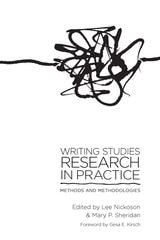
Writing Studies Research in Practice
Methods and MethodologiesEdited by Lee Nickoson and Mary P. Sheridan, Foreword by Gesa E. Kirsch
Southern Illinois University Press, 2012
An essential reference for students and scholars exploring the methods and methodologies of writing research.
What does it mean to research writing today? What are the practical and theoretical issues researchers face when approaching writing as they do? What are the gains or limitations of applying particular methods, and what might researchers be overlooking? These questions and more are answered by the writing research field’s leading scholars in Writing Studies Research in Practice: Methods and Methodologies.
Editors Nickoson and Sheridan gather twenty chapters from leaders in writing research, spanning topics from ethical considerations for researchers, quantitative methods, and activity analysis to interviewing and communitybased and Internet research. While each chapter addresses a different subject, the volume as a whole covers the range of methodologies, technologies, and approaches—both old and new—that writing researchers use, and examines the ways in which contemporary writing research is understood, practiced, and represented.
An essential reference for experienced researchers and an invaluable tool to help novices understand research methods and methodologies, Writing Studies Research in Practice includes established methods and knowledge while addressing the contemporary issues, interests, and concerns faced by writing researchers today.