Results by title
140 books match the query 'Queer theory' and 4 start with w

What's the Use?
On the Uses of UseSara Ahmed
Duke University Press, 2019
In What’s the Use? Sara Ahmed continues the work she began in The Promise of Happiness and Willful Subjects by taking up a single word—in this case, use—and following it around. She shows how use became associated with life and strength in nineteenth-century biological and social thought and considers how utilitarianism offered a set of educational techniques for shaping individuals by directing them toward useful ends. Ahmed also explores how spaces become restricted to some uses and users, with specific reference to universities. She notes, however, the potential for queer use: how things can be used in ways that were not intended or by those for whom they were not intended. Ahmed posits queer use as a way of reanimating the project of diversity work as the ordinary and painstaking task of opening up institutions to those who have historically been excluded.
[more]

When Monsters Speak
A Susan Stryker ReaderSusan Stryker. Edited by McKenzie Wark
Duke University Press, 2024
Susan Stryker is a foundational figure in trans studies. When Monsters Speak showcases the development of Stryker’s writing from the 1990s to the present. It combines canonical pieces, such as “My Words to Victor Frankenstein,” with her hard to find earlier work published in zines and newsletters. Brought together, they ground Stryker’s thought in 1990s San Francisco and its innovative queer, trans, and S/M cultures. The volume includes an introduction by editor McKenzie Wark, who highlights Stryker’s connections to developments in queer theory, media studies, and autotheory while foregrounding Stryker’s innovative writing style and scholarly methods. When Monsters Speak is an authoritative and essential collection by one of the most important and influential intellectuals of our time.
[more]
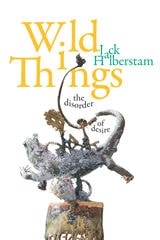
Wild Things
The Disorder of DesireJack Halberstam
Duke University Press, 2020
In Wild Things Jack Halberstam offers an alternative history of sexuality by tracing the ways in which wildness has been associated with queerness and queer bodies throughout the twentieth century. Halberstam theorizes the wild as an unbounded and unpredictable space that offers sources of opposition to modernity's orderly impulses. Wildness illuminates the normative taxonomies of sexuality against which radical queer practice and politics operate. Throughout, Halberstam engages with a wide variety of texts, practices, and cultural imaginaries—from zombies, falconry, and M. NourbeSe Philip's Zong! to Maurice Sendak's Where the Wild Things Are and the career of Irish anticolonial revolutionary Roger Casement—to demonstrate how wildness provides the means to know and to be in ways that transgress Euro-American notions of the modern liberal subject. With Wild Things, Halberstam opens new possibilities for queer theory and for wild thinking more broadly.
[more]
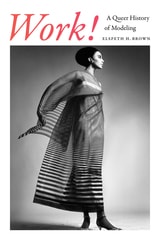
Work!
A Queer History of ModelingElspeth H. Brown
Duke University Press, 2019
From the haute couture runways of Paris and New York and editorial photo shoots for glossy fashion magazines to reality television, models have been a ubiquitous staple of twentieth- and twenty-first-century American consumer culture. In Work! Elspeth H. Brown traces the history of modeling from the advent of photographic modeling in the early twentieth century to the rise of the supermodel in the 1980s. Brown outlines how the modeling industry sanitized and commercialized models' sex appeal in order to elicit and channel desire into buying goods. She shows how this new form of sexuality—whether exhibited in the Ziegfeld Follies girls' performance of Anglo-Saxon femininity or in African American models' portrayal of black glamour in the 1960s—became a central element in consumer capitalism and a practice that has always been shaped by queer sensibilities. By outlining the paradox that queerness lies at the center of capitalist heteronormativity and telling the largely unknown story of queer models and photographers, Brown offers an out of the ordinary history of twentieth-century American culture and capitalism.
[more]