Results by title
144 books match the query 'Reading' and 3 start with w
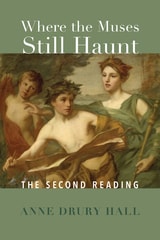
Where the Muses Still Haunt
The Second ReadingAnne Drury Hall
St. Augustine's Press, 2022
After leaving school and becoming lost in adulthood, can one return to these books and revive the quest to be great? For this is why we call such books "great". Yet as Hall says, "few people use the phrase 'great books' any more except ironically, because there is an odd view in the current intellectual fog that there is no such thing as 'greatness'". She is compelled, then, to reexamine the so-called great books and make the case for their eternal importance. It is a task that requires not only swimming against the disenchanted march of the post-modern reader into adulthood, but also asserting the unthinkable––namely, that great books were written by great men who achieved this status through their own labor and endurance.
Hall reintroduces the reader to Plato, Homer, Chaucer, Shakespeare, Milton and Melville and hopes this will expose the fraud of most of contemporary literature, and encourage taste and stamina for the works that promise to exhilarate. And Hall argues well that the thrill of these books draws from one shared feature: "The heart of these books is the drama of choice." If Roger Scruton is famous for showing us that ideas have consequences, Hall provides the reader the vision of himself as standing on the brink and the urgency of taking life seriously again. For many this means taking books seriously again.
This book is an important companion to the works treated therein, for teachers and students alike. Both need encouragement in the laboring of instruction or reading the impressive classics. Particularly apt is Hall's treatment of the difficulty of teaching Shakespeare. For the not-so-recent university graduate, perhaps this book will bring him once again to wander where the Muses still haunt. Indeed, even the well-read will enjoy Hall's keen interpretation of the glory of these stories. This is a book written by a true teacher.
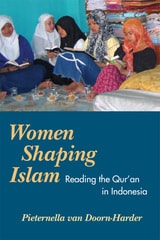
Women Shaping Islam
Reading the Qu'ran in IndonesiaPieternella van Doorn-Harder
University of Illinois Press, 2006
In Women Shaping Islam, Pieternella van Doorn-Harder explores the work of these contemporary women leaders, examining their attitudes toward the rise of radical Islamists; the actions of the authoritarian Soeharto regime; women's education and employment; birth control and family planning; and sexual morality. Ultimately, van Doorn-Harder reveals the many ways in which Muslim women leaders understand and utilize Islam as a significant force for societal change; one that ultimately improves the economic, social, and psychological condition of women in Indonesian society.
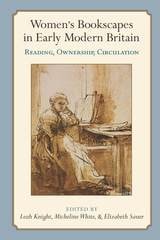
Women’s Bookscapes in Early Modern Britain
Reading, Ownership, CirculationLeah Knight, Micheline White, and Elizabeth Sauer, Editors
University of Michigan Press, 2018
Women in 16th- and 17th-century Britain read, annotated, circulated, inventoried, cherished, criticized, prescribed, and proscribed books in various historically distinctive ways. Yet, unlike that of their male counterparts, the study of women’s reading practices and book ownership has been an elusive and largely overlooked field.
In thirteen probing essays, Women’s Bookscapesin Early Modern Britain brings together the work of internationally renowned scholars investigating key questions about early modern British women’s figurative, material, and cultural relationships with books. What constitutes evidence of women’s readerly engagement? How did women use books to achieve personal, political, religious, literary, economic, social, familial, or communal goals? How does new evidence of women’s libraries and book usage challenge received ideas about gender in relation to knowledge, education, confessional affiliations, family ties, and sociability? How do digital tools offer new possibilities for the recovery of information on early modern women readers?
The volume’s three-part structure highlights case studies of individual readers and their libraries; analyses of readers and readership in the context of their interpretive communities; and new types of scholarly evidence—lists of confiscated books and convent rules, for example—as well as new methodologies and technologies for ongoing research. These essays dismantle binaries of private and public; reading and writing; female and male literary engagement and production; and ownership and authorship.
Interdisciplinary, timely, cohesive, and concise, this collection’s fresh, revisionary approaches represent substantial contributions to scholarship in early modern material culture; book history and print culture; women’s literary and cultural history; library studies; and reading and collecting practices more generally.