Results by title
201 books match the query 'Regional Studies' and 6 start with w

Walking on the Wild Side
Long-Distance Hiking on the Appalachian TrailFondren, Kristi M
Rutgers University Press, 2015
The most famous long-distance hiking trail in North America, the 2,181-mile Appalachian Trail—the longest hiking-only footpath in the world—runs along the Appalachian mountain range from Georgia to Maine. Every year about 2,000 individuals attempt to “thru-hike” the entire trail, a feat equivalent to hiking Mount Everest sixteen times. In Walking on the Wild Side, sociologist Kristi M. Fondren traces the stories of forty-six men and women who, for their own personal reasons, set out to conquer America’s most well known, and arguably most social, long-distance hiking trail.
In this fascinating in-depth study, Fondren shows how, once out on the trail, this unique subculture of hikers lives mostly in isolation, with their own way of acting, talking, and thinking; their own vocabulary; their own activities and interests; and their own conception of what is significant in life. They tend to be self-disciplined, have an unwavering trust in complete strangers, embrace a life of poverty, and reject modern-day institutions. The volume illuminates the intense social intimacy and bonding that forms among long-distance hikers as they collectively construct a long-distance hiker identity. Fondren describes how long-distance hikers develop a trail persona, underscoring how important a sense of place can be to our identity, and to our sense of who we are. Indeed, the author adds a new dimension to our understanding of the nature of identity in general.
Anyone who has hiked—or has ever dreamed of hiking—the Appalachian Trail will find this volume fascinating. Walking on the Wild Side captures a community for whom the trail is a sacred place, a place to which they have become attached, socially, emotionally, and spiritually.
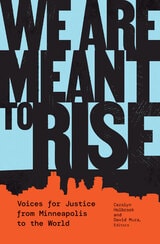
We Are Meant to Rise
Voices for Justice from Minneapolis to the WorldCarolyn Holbrook
University of Minnesota Press, 2021
A brilliant and rich gathering of voices on the American experience of this past year and beyond, from Indigenous writers and writers of color from Minnesota
In this significant collection, Indigenous writers and writers of color bear witness to one of the most unsettling years in the history of the United States. Essays and poems vividly reflect and comment on the traumas we endured in 2020, beginning with the arrival of the COVID-19 pandemic crisis, deepened by the blatant murder of George Floyd by Minneapolis police officers and the uprisings that immersed our city into the epicenter of passionate, worldwide demands for justice. In inspired and incisive writing these contributors speak unvarnished truths not only to the original and pernicious racism threaded through the American experience but also to the deeply personal, in essays about family, loss, food culture, economic security, and mental health. Their call and response is united here to rise and be heard.
We Are Meant to Rise lifts up the astonishing variety of BIPOC writers in Minnesota. From authors with international reputations to newly emerging voices, it features people from many cultures, including Indigenous Dakota and Anishinaabe, African American, Hmong, Somali, Afghani, Lebanese, Korean, Vietnamese, Japanese, Puerto Rican, Colombian, Mexican, transracial adoptees, mixed race, and LGBTQ+ perspectives. Most of the contributors have participated in More Than a Single Story, a popular and insightful conversation series in Minneapolis that features Indigenous and people of color speaking on what most concerns their communities.
We Are Meant to Rise meets the events of the day, the year, the centuries before, again and again, with powerful testament to the intrinsic and unique value of the human voice.
Contributors: Suleiman Adan, Mary Moore Easter, Louise Erdrich, Anika Fajardo, Safy-Hallan Farah, Said Farah, Sherrie Fernandez-Williams, Pamela R. Fletcher Bush, Shannon Gibney, Kathryn Haddad, Tish Jones, Ezekiel Joubert III, Douglas Kearney, Ed Bok Lee, Ricardo Levins Morales, Arleta Little, Resmaa Menakem, Tess Montgomery, Ahmad Qais Munhazim, Melissa Olson, Alexs Pate, Bao Phi, Mona Susan Power, Samantha Sencer-Mura, Said Shaiye, Erin Sharkey, Sun Yung Shin, Michael Torres, Diane Wilson, Kao Kalia Yang, and Kevin Yang.
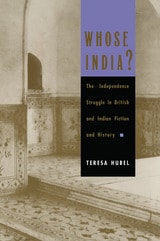
Whose India?
The Independence Struggle in British and Indian Fiction and HistoryTeresa Hubel
Duke University Press, 1996
Hubel collapses the boundary between literature and history by emphasizing the selected nature of the “facts” that comprise historical texts, and by demonstrating the historicity of fiction. In analyzing the orthodox construction of the British/Indian encounter, Hubel calls into question assumptions about the end of nationalism implicit in mainstream histories and fiction, which generally describe a battleground on which only ruling-class Indians and British meet. Marginalized texts by women, untouchables, and overt imperialists alike are, therefore, examined alongside the well-known work of figures such as Rudyard Kipling, Jawaharlal Nehru, E. M. Forster, and Mahatma Gandhi.
In Whose India? discursive ownership and resistance to ownership are mutually constructing categories. As a result, the account of Indian nationalism and British imperialism that emerges is much more complicated, multivocal, and even more contradictory than previous studies have imagined. Of interest to students and scholars engaged in literary, historical, colonial/postcolonial, subaltern, and Indian studies, Whose India? will also attract readers concerned with gender issues and the canonization of texts.
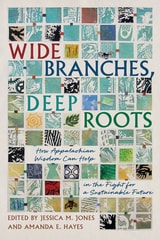
Wide Branches, Deep Roots
How Appalachian Wisdom Can Help in the Fight for a Sustainable FutureJessica M Jones
West Virginia University Press, 2026
To be Appalachian is to define oneself in terms of a place. Where we’re from plays a tremendous role in who we are, through storytelling about our homeplaces and the people who have loved them. However, what goes largely unaddressed is how this love of place can contribute to sustainability within the region, which has notoriously faced on-going environmental threats from extraction industries. The reality is that our relationship with the environment is thorny and intertwined with our identities, histories, and economic realities. The authors in the collection get down among the thorns to explore what sustainability means in Appalachia and how we can utilize the power of traditional folkways to achieve it.
This collection of over thirty pieces explores the connections between Appalachia’s stories, traditions, and modern events and the pathway to regional sustainability. The contributors — writers and scholars — examine how our definitions of sustainability have been formed, the power of education to encourage or inhibit it, and what moves are being made toward efficacy in the future. They also offer specific actions readers can take to better understand and build sustainability where they live.
Contributors: Greg Bealer, Luc Biscan-White, David Blackmore, Aysha Bodenhamer, Ivy Brashear, Matthew Calloway, Nicole Drewitz-Crockett, Christina Fisanick, Deborah Fleming, Amanda V. Garner, Karie Gunter-Seymour, Richard Hague, Amanda E. Hayes, Lockie Hunter, Jessica M. Jones, Kristen LeFevers, Sarah Long, Meghan Moore-Hubbard, Barbara Marie Minney, Jessica Radicic, Elizabeth Emmerth Rexroad, Barbara Sabol, Larry Smith, Patrice Stank, Taylor Nasim Stone, Paul Thomas, Elizabeth Tussey, and Betsy Weems.
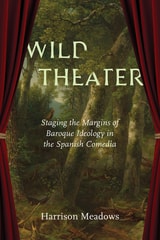
Wild Theater
Staging the Margins of Baroque Ideology in the Spanish ComediaHarrison Meadows
Vanderbilt University Press, 2025
In five compelling chapters, Meadows argues that a major shift occurred during the Baroque period, whereby the largely positive quality of previous iterations in the genealogy of wildness take on a negative character in the cultural ethos—and that this fundamental shift was representative of the influence of Spanish colonialism on racial thinking and a larger set of changes in how early modern people viewed gender and class. In this way, the book identifies the wild figure’s dramatic roots in the carnivalesque as an indispensable point of departure to plot the trajectory of wild representation in the theater of the Hispanic Baroque. From this guiding premise, Meadows traces the carryovers, transformations, and negations of the carnivalesque into early modern dramaturgy, specifically the Spanish comedia, which are emblematic of the poetic and ideological features of the emerging commercial theater in Iberia.
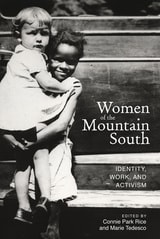
Women of the Mountain South
Identity, Work, and ActivismConnie Park Rice
Ohio University Press, 2015
Scholars of southern Appalachia have largely focused their research on men, particularly white men. While there have been a few important studies of Appalachian women, no one book has offered a broad overview across time and place. With this collection, editors Connie Park Rice and Marie Tedesco redress this imbalance, telling the stories of these women and calling attention to the varied backgrounds of those who call the mountains home.
The essays of Women of the Mountain South debunk the entrenched stereotype of Appalachian women as poor and white, and shine a long-overdue spotlight on women too often neglected in the history of the region. Each author focuses on a particular individual or group, but together they illustrate the diversity of women who live in the region and the depth of their life experiences. The Mountain South has been home to Native American, African American, Latina, and white women, both rich and poor. Civil rights and gay rights advocates, environmental and labor activists, prostitutes, and coal miners—all have lived in the place called the Mountain South and enriched its history and culture.