Results by title
70 books match the query 'Rehabilitation' and 5 start with w
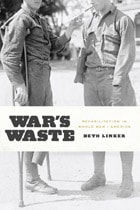
War's Waste
Rehabilitation in World War I AmericaBeth Linker
University of Chicago Press, 2011
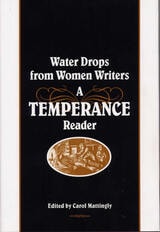
Water Drops from Women Writers
A Temperance ReaderEdited by Carol Mattingly
Southern Illinois University Press, 2001
The temperance movement was the largest single organizing force for women in American history, uniting and empowering women seeking to enact social change. By the end of the century, more than two hundred thousand women had become members of the Woman’s Christian Temperance Union (WCTU), and numerous others belonged to smaller temperance organizations. Despite the impact of the movement, its literature has been largely neglected.
In this collection of nineteen temperance tales, Carol Mattingly has recovered and revalued previously unavailable writing by women. Mattingly’s introduction provides a context for these stories, locating the pieces within the temperance movement as well as within larger issues in women’s studies.
The temperance movement was essential to women’s awareness of and efforts to change gender inequalities in the United States during the nineteenth and early twentieth centuries. In their fiction, temperance writers protested physical and emotional abuse at the hands of men, argued for women’s rights, addressed legal concerns, such as divorce and child custody, and denounced gender-biased decisions affecting the care and rights of children. Temperance fiction by women broadens our understanding of the connections between women’s rights and temperance, while shedding light on women’s thinking and behavior in the nineteenth century.
Water Drops from Women Writers features biographical sketches of each writer as well as thirteen illustrations.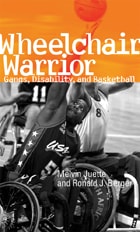
Wheelchair Warrior
Gangs, Disability, and BasketballMelvin Juette and Ronald J. Berger
Temple University Press, 2008
Melvin Juette has said that becoming paralyzed in a gang-related shooting was “both the worst and best thing that happened” to him. The incident, he believes, surely spared the then sixteen year-old African American from prison and/or an early death. It transformed him in other ways, too. He attended college and made wheelchair basketball his passion—ultimately becoming a star athlete and playing on the U.S. National Wheelchair Basketball Team.
In Wheelchair Warrior, Juette reconstructs the defining moments of his life with the assistance of sociologist Ronald Berger. His poignant memoir is bracketed by Berger’s thoughtful introduction and conclusion, which places this narrative of race, class, masculinity and identity into proper sociological context, showing how larger social structural forces defined his experiences. While Juette’s story never gives into despair, it does challenge the idea of the “supercrip.”
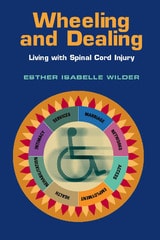
Wheeling and Dealing
Living with Spinal Cord InjuryEsther Isabelle Wilder
Vanderbilt University Press, 2006
Meghan is a high-level quadriplegic, living alone, who uses a power wheelchair and requires daily attendant care. She laments, "There are so many people who think we're asexual, we're not pretty, and we're creeps and weirdoes." To dispel this myth, she envisions a fashion show of women in wheelchairs parading down a runway. Meghan has been involved in a number of sexual relationships since sustaining her injury. While she doesn't think her disability has diminished her sexual pleasure, she feels that it has affected her sexual performance: "Well, you can't move it. You can't, like, bump and grind."
In 32 unusually frank in-depth interviews like these, the men and women in this book freely discuss their sex lives, their beliefs about God, how they want others to treat them, and whether they want to walk again. In each chapter the author presents their complex voices and comprehensive research about different facets of spinal cord injury (SCI).
Wheeling and Dealing explores the extent to which people with spinal cord injury locate their challenges in their physical impairments or in the social environment. Some disagree with those disability activists who focus almost exclusively on the latter, but the author examines this issue in depth.
Topics include:
--Physical health from degrees of loss of function to problems like pressure sores, temperature regulation, and bladder control.
--The stages of psychological adjustment and rehabilitation.
--Obstacles to sexual intimacy, treatment of erectile dysfunction, and new sources of sexual pleasure and emotional intimacy.
--Religion and spirituality.
--Social and political beliefs, with those with SCI weighing in on everything from welfare services to embryonic stem cell research.
--Dating, marriage, and parenting.
--Friendship networks and social supports; concerns about transportation and accessibility; stigma.
--Education, employment, and economic consequences.
This book is the recipient of the 2004 Norman L. and Roselea J. Goldberg Prize from Vanderbilt University Press for the best project in the area of medicine.
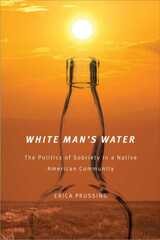
White Man's Water
The Politics of Sobriety in a Native American CommunityErica Prussing
University of Arizona Press, 2011
Erica Prussing provides the first in-depth assessment of the politics of Native sobriety by focusing on the Northern Cheyenne community in southeastern Montana, where for many decades the federally funded health care system has relied on the Twelve Step program of Alcoholics Anonymous. White Man’s Water provides a thoughtful and careful analysis of Cheyenne views of sobriety and the politics that surround the selective appeal of Twelve Step approaches despite wide-ranging local critiques. Narratives from participants in these programs debunk long-standing stereotypes about ”Indian drinking” and offer insight into the diversity of experiences with alcohol that actually occur among Native North Americans.
This critical ethnography employs vivid accounts of the Northern Cheyenne people to depict how problems with alcohol are culturally constructed, showing how differences in age, gender, and other social features can affect involvement with both drinking and sobriety. These testimonies reveal the key role that gender plays in how Twelve Step program participants engage in a selective and creative process of appropriation at Northern Cheyenne, adapting the program to accommodate local cultural priorities and spiritual resources. The testimonies also illuminate community reactions to these adaptations, inspiring deeper inquiry into how federally funded health services are provided on the reservation.
This book will appeal to readers with an interest in Native studies, ethnography, women’s studies, and medical anthropology. With its critical consideration of how cultural context shapes drinking and sobriety, White Man’s Water offers a multivocal perspective on alcohol’s impact on health and the cultural complexities of sobriety.