Results by title
598 books match the query 'Religious' and 21 start with w
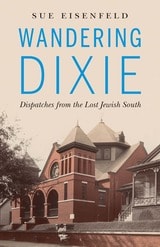
Wandering Dixie
Dispatches from the Lost Jewish SouthSue Eisenfeld
The Ohio State University Press, 2020
From South Carolina to Arkansas, she explores the small towns where Jewish people once lived and thrived. She visits the site of her distant cousin and civil rights activist Andrew Goodman’s murder during 1964’s Freedom Summer. She also talks with the only Jews remaining in some of the “lost” places, from Selma to the Mississippi Delta to Natchitoches, and visits areas with no Jewish community left—except for an old temple or overgrown cemetery. Eisenfeld follows her curiosity about Jewish Confederates and casts an unflinching eye on early southern Jews’ participation in slavery. Her travels become a journey of revelation about our nation’s fraught history and a personal reckoning with the true nature of America.
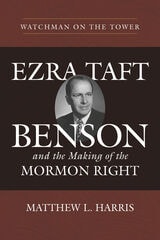
Watchman on the Tower
Ezra Taft Benson and the Making of the Mormon RightMatthew L. Harris
University of Utah Press, 2020
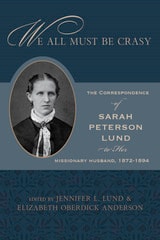
We All Must Be Crasy
The Correspondence of Sarah Peterson Lund to Her Missionary Husband, 1872–1894Jennifer L. Lund and Elizabeth Oberdick Anderson
University of Utah Press, 2026
While Latter-day Saint missionary work has been extensively studied, the experiences of the wives left behind remain relatively absent from the scholarship. We All Must Be Crasy helps fill this gap, offering a glimpse into the lived experiences of Mormon women and families during the late nineteenth century.
Through more than one hundred candid letters to her missionary husband, Sarah (Sanie) Peterson Lund reveals the private costs of missionization: strained marriages, economic hardship, shifting gender roles, and the constant need for community support. Sanie’s correspondence conveys her frustrations, anxieties, and fears alongside her pride in her children, devotion to her family, and longing for her absent husband. Her letters also show daily life in Ephraim, Utah: town gossip, vulnerabilities and ethnic tensions among residents, and reflections on plural marriage. This collection illuminates experiences only previously sketched in broad strokes, enriching our understanding of women, faith, and community in the American West.
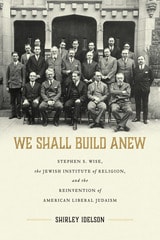
We Shall Build Anew
Stephen S. Wise, the Jewish Institute of Religion, and the Reinvention of American Liberal JudaismShirley Idelson
University of Alabama Press, 2022
Charting the reinvention of American Liberal Judaism through visionary leadership.
In 1922, Rabbi Stephen S. Wise, a leader of the Zionist movement, established the Jewish Institute of Religion (JIR), a nondenominational rabbinical seminary in New York City. Having already founded the thriving Free Synagogue movement and the American Jewish Congress, he intended to revolutionize American liberal Judaism. Wise believed mainstream American Jewish institutions had become outdated, and he championed a progressive Jewish nationalism that would fight alongside America’s leading proponents of social and economic justice.
We Shall Build Anew tells the little-known story of how Wise changed the trajectory of American Judaism for the next century. Through JIR, he trained a new cadre of young rabbis who shared his outlook, charged them with invigorating and reshaping Jewish life, and launched them into positions of leadership across the country. While Wise earned the ire of many mainstream Jewish leaders through his disregard for denominational distinctions, JIR became home to faculty and students of widely divergent religious and political viewpoints.
We Shall Build Anew is the first book dedicated exclusively to the history of the Jewish Institute of Religion. The story of Wise’s vision for American liberal Judaism is now more important than ever. As American Jewry becomes increasingly polarized around debates concerning religious doctrine as well as Zionism and Israel, the JIR model offers hope that progressives and conservatives, Zionists and non-Zionists, and Jews representing the full spectrum of religious life cannot only coexist but also work together in the name of a vibrant Judaism and a just and peaceful world.
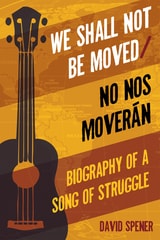
We Shall Not Be Moved/No nos moveran
Biography of a Song of StruggleDavid Spener
Temple University Press, 2016
The activist anthem “We Shall Not Be Moved” expresses resolve in the face of adversity; it helps members of social movements persevere in their struggles to build a better world. The exact origins of the song are unknown, but it appears to have begun as a Protestant revival song sung by rural whites and African slaves in the southeastern United States in the early nineteenth century. The song was subsequently adopted by U.S. labor and civil rights activists, students and workers opposing the Franco dictatorship in Spain, and by Chilean supporters of that country’s socialist government in the early 1970s.
In his fascinating biography, We Shall Not Be Moved, David Spener details the history and the role the song has played in each of the movements in which it has been sung. He analyzes its dissemination, function, and meaning through a number of different sociological and anthropological lenses to explore how songs can serve as an invaluable resource to participants in movements for social change.
We Who Battle Demons
Sober SonnetsRoger A.
Parkhurst Brothers, Inc., 2011
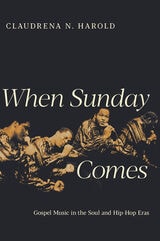
When Sunday Comes
Gospel Music in the Soul and Hip-Hop ErasClaudrena N. Harold
University of Illinois Press, 2020
Weaving insightful analysis into a collective biography of gospel icons, When Sunday Comes explores the music's essential place as an outlet for African Americans to express their spiritual and cultural selves.
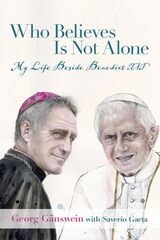
Who Believes Is Not Alone
My Life Beside Benedict XVIGeorg Gänswein
St. Augustine's Press, 2023
Written with the involvement of the regarded Vaticanista Saverio Gaeta, Mons. Gänswein offers an account of a particular decade in history and confronts false claims of intrigue and cover-up (Vatileaks, the Orlandi abduction case, the sexual abuse scandal, among other issues) to tell the real story of a pope who faced a changing landscape and a public who largely misunderstood him and his style of governance. Here we meet one of the most affable and intellectually formidable popes the Catholic Church has ever known, and a priest who might also be considered a prophet of the post-modern age. Gänswein brilliantly contextualizes many of Benedict's most poignant theological positions, and in giving us a sense of their origin reveals that Benedict seamlessly lived everything he promulgated. His faith was the single bulwark upon which his personality as both teacher and leader were built. No biography has yet to establish the integrity and heart of Joseph Ratzinger as well as his friend, Georg Gänswein, does here.
As a spiritual testament more than just a journalistic exposé, Gänswein provides something only he can give––namely, the candid intelligence and sanctity witnessed up close. This is a remarkable and singular contribution to the history of the papacy and the record of the life of a saint. As Gänswein asserts, knowing this man is to encounter heroic virtue and an invitation to meet God, the greatest lover of mankind. Pope Benedict's own friendship with God will continue to provide warmth for as long as there are people on this earth who believe.
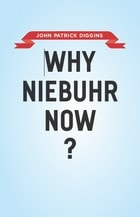
Why Niebuhr Now?
John Patrick Diggins
University of Chicago Press, 2011
Barack Obama has called him “one of my favorite philosophers.” John McCain wrote that he is “a paragon of clarity about the costs of a good war.” Andrew Sullivan has said, “We need Niebuhr now more than ever.” For a theologian who died in 1971, Reinhold Niebuhr is maintaining a remarkably high profile in the twenty-first century.
In Why Niebuhr Now? acclaimed historian John Patrick Diggins tackles the complicated question of why, at a time of great uncertainty about America’s proper role in the world, leading politicians and thinkers are turning to Niebuhr for answers. Diggins begins by clearly and carefully working through Niebuhr’s theology, which focuses less on God’s presence than his absence—and the ways that absence abets the all-too-human sin of pride. He then shows how that theology informed Niebuhr’s worldview, leading him to be at the same time a strong opponent of fascism and communism and a leading advocate for humility and caution in foreign policy.
Turning to the present, Diggins highlights what he argues is a misuse of Niebuhr’s legacy on both the right and the left: while neoconservatives distort Niebuhr’s arguments to support their call for an endless war on terror in the name of stopping evil, many liberal interventionists conveniently ignore Niebuhr’s fundamental doubts about power. Ultimately, Niebuhr’s greatest lesson is that, while it is our duty to struggle for good, we must at the same time be wary of hubris, remembering the limits of our understanding.
The final work from a distinguished writer who spent his entire career reflecting on America’s history and promise, Why Niebuhr Now? is a compact and perceptive book that will be the starting point for all future discussions of Niebuhr.
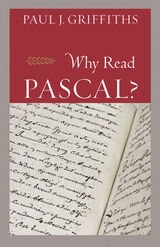
Why Read Pascal?
Paul J. Griffiths
Catholic University of America Press, 2021
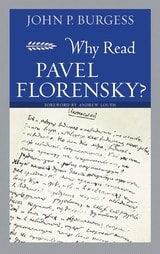
Why Read Pavel Florensky?
John Burgess
Catholic University of America Press, 2024
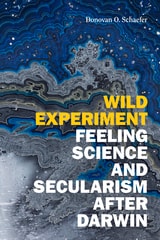
Wild Experiment
Feeling Science and Secularism after DarwinDonovan O. Schaefer
Duke University Press, 2022
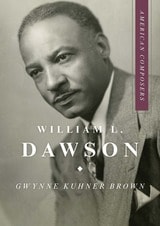
William L. Dawson
Gwynne Kuhner Brown
University of Illinois Press, 2024
Born in 1899, Dawson studied at the Tuskegee Institute in Alabama. He worked as a church, jazz, and orchestral musician in Kansas City and Chicago in the 1920s while continuing his education as a composer. He then joined the Tuskegee faculty, where for 25 years he led the Tuskegee Institute Choir to national prominence through performances of spirituals at the opening of Radio City Music Hall, on radio and television, and at the White House. The Philadelphia Orchestra conducted by Leopold Stokowski premiered Dawson’s Negro Folk Symphony in 1934.
Engaging and long overdue, William L. Dawson celebrates a pioneering Black composer whose contributions to African American music, history, and education inspire performers and audiences to this day.
Wine of Reunion
Arabic Poems of RumiNesreen Rumi
Michigan State University Press, 2017
Wisdom in Bonaventure's <i>Hexameron</i>
Philosophical Problems, Theological SolutionsBenjamin Winter
Catholic University of America Press, 2024
With the World at Heart
Studies in the Secular TodayThomas A. Carlson
University of Chicago Press, 2019
Words Made Flesh
The Sacramental Mission of Catholic EducationR. Jared Staudt
Catholic University of America Press, 2024
Worldview and Mind
Religious Thought and Psychological DevelopmentEugene Webb
University of Missouri Press, 2009
Writing Home
A Quaker Immigrant on the Ohio Frontier; the Letters of Emma Botham AldersonDonald Ingram Ulin
Bucknell University Press, 2020
Introductions and notes situate the letters in relation to their critical, biographical, literary, and historical contexts. Editor Donald Ulin discusses the relationship between Alderson’s letters and her sister Mary Howitt’s Our Cousins in Ohio (1849), a remarkable instance of transatlantic literary collaboration.
Writing Home offers an unparalleled opportunity for studying immigrant correspondence due to Alderson’s unusually well-documented literary and religious affiliations. The notes and introductions provide background on nearly all the places, individuals, and events mentioned in the letters.
Published by Bucknell University Press. Distributed worldwide by Rutgers University Press.
Writing on Water
The Sounds of Jewish PrayerJudit Niran Frigyesi
Central European University Press, 2018
Writing on Water grasps the phenomenon of sound in prayer, that is, a meaning in sounds and soundscapes, and a musical essence in the act of praying.
The impetus for the book arose from the author’s fieldwork among traditional Jews during the era of communism in Budapest and Prague. In that period the Jewish religion and Jewishness in general were supressed and rituals became semi-secret and turned inward. The book is a witness to these communities and their rituals, but it goes beyond documentation. The uniqueness of the sounds of the rituals compelled the author to try to comprehend how melodies and soundscapes became the sustaining/protective environment, as well as the vehicle, for the expression of a world-orientation—in a situation where open discourse was inconceivable.
The book is based on extensive interviews, musical recordings, photographs and scholarly analyses. It is unique in its choice of communities, its wealth of original documents, and its novel interpretation of sound.
Writing on Water is creative non-fiction. The presentation is evocative and poetic, but at the same time it transmits knowledge. The book can aid research and serve in courses in philosophy, religion, music, ethnomusicology, anthropology, aesthetics, Jewish studies, folklore, oral history, and performance studies. It is also a work of art and literature.

Www.Here I Am
Russell Stannard
Templeton Press, 2002
•Does belief in God play a part in that?
•Do you believe in evolution—that you came from animals?
•Do you think there is life on other planets?
•If so, does that make human beings less important?
•Do the world religions contradict each other, or are they simply talking about the same God in somewhat different ways?
•How should belief in an afterlife affect the way you live this life?