Results by title
70 books match the query 'Rock music' and 5 start with w

We Take Care of Our Own
Faith, Class, and Politics in the Art of Bruce SpringsteenJune Skinner Sawyers
Rutgers University Press, 2024
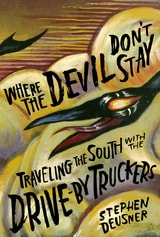
Where the Devil Don't Stay
Traveling the South with the Drive-By TruckersStephen Deusner
University of Texas Press, 2021
In 1996, Patterson Hood recruited friends and fellow musicians in Athens, Georgia, to form his dream band: a group with no set lineup that specialized in rowdy rock and roll. The Drive-By Truckers, as they named themselves, grew into one of the best and most consequential rock bands of the twenty-first century, a great live act whose songs deliver the truth and nuance rarely bestowed on Southerners, so often reduced to stereotypes.
Where the Devil Don’t Stay tells the band’s unlikely story not chronologically but geographically. Seeing the Truckers’ albums as roadmaps through a landscape that is half-real, half-imagined, their fellow Southerner Stephen Deusner travels to the places the band’s members have lived in and written about. Tracking the band from Muscle Shoals, Alabama, to Richmond, Virginia, to the author’s hometown in McNairy County, Tennessee, Deusner explores the Truckers’ complex relationship to the South and the issues of class, race, history, and religion that run through their music. Drawing on new interviews with past and present band members, including Jason Isbell, Where the Devil Don’t Stay is more than the story of a great American band; it’s a reflection on the power of music and how it can frame and shape a larger culture.
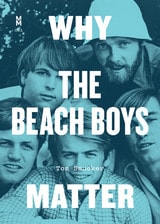
Why the Beach Boys Matter
By Tom Smucker
University of Texas Press, 2018
Of all the white American pop music groups that hit the charts before the Beatles, only the Beach Boys continued to thrive throughout the British Invasion to survive into the 1970s and beyond. The Beach Boys helped define both sides of the era we broadly call the sixties, split between their early surf, car, and summer pop and their later hippie, counterculture, and ambitious rock. No other group can claim the Ronettes and the Four Seasons as early 1960s rivals; the Mamas and the Papas and Crosby, Stills and Nash as later 1960s rivals; and the Beatles and the Temptations as decade-spanning counterparts.
This is the first book to take an honest look at the themes running through the Beach Boys’ art and career as a whole and to examine where they sit inside our culture and politics—and why they still grab our attention.
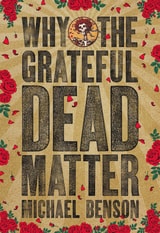
Why the Grateful Dead Matter
Michael Benson
University Press of New England, 2016
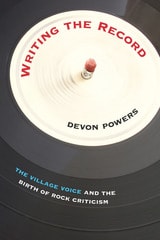
Writing the Record
The Village Voice and the Birth of Rock CriticismDevon Powers
University of Massachusetts Press, 2013
During the mid-1960s, a small group of young journalists made it their mission to write about popular music, especially rock, as something worthy of serious intellectual scrutiny. Their efforts not only transformed the perspective on the era's music but revolutionized how Americans have come to think, talk, and write about popular music ever since.
In Writing the Record, Devon Powers explores this shift by focusing on The Village Voice, a key publication in the rise of rock criticism. Revisiting the work of early pop critics such as Richard Goldstein and Robert Christgau, Powers shows how they stood at the front lines of the mass culture debates, challenging old assumptions and hierarchies and offering pioneering political and social critiques of the music. Part of a college-educated generation of journalists, Voice critics explored connections between rock and contemporary intellectual trends such as postmodernism, identity politics, and critical theory. In so doing, they became important forerunners of the academic study of popular culture that would emerge during the 1970s.
Drawing on archival materials, interviews, and insights from media and cultural studies, Powers not only narrates a story that has been long overlooked but also argues that pop music criticism has been an important channel for the expression of public intellectualism. This is a history that is particularly relevant today, given the challenges faced by criticism of all stripes in our current media environment. Powers makes the case for the value of well-informed cultural criticism in an age when it is often suggested that “everyone is a critic.”