Results by title
200 books match the query 'Second Edition' and 11 start with w
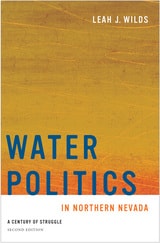
Water Politics in Northern Nevada
A Century of Struggle, Second EditionLeah J. Wilds
University of Nevada Press, 2014
Water Politics in Northern Nevada examines the Newlands Project, its unintended consequences, and decades of litigation over the abatement of these problems and fair allocation of water. Negotiations and federal legislation brought about the Truckee River Operating Agreement in 2008. This revised edition brings the reader up to date on the implementation of the agreement, including ongoing efforts to preserve and enhance Pyramid Lake. The second edition now also includes a discussion of the Walker River basin, following a major project undertaken to address concerns about the health and viability of Walker Lake. The approaches taken to save these two desert treasures, Pyramid Lake and Walker Lake, are offered as models for resolving similar water-resource conflicts in the West.
Leah J. Wilds’s study is crucial reading for students and scholars of water politics and environmental issues, not just in Nevada but throughout the western United States.
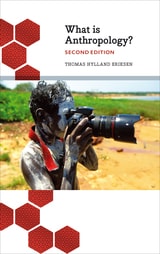
What Is Anthropology?
Second EditionThomas Hylland Eriksen
Pluto Press, 2017
The first section of the book presents the history of anthropology, and the second discusses core issues in greater detail, covering economics, morals, human nature, ecology, cultural relativism, and much more. Throughout, he reveals how seemingly enormous cultural differences actually conceal the deep unity of humanity. Perfect not only for students, but also for those who have never encountered anthropology before, What is Anthropology? presents the discipline in an exciting and innovative way.

Wild Mammals in Captivity
Principles and Techniques for Zoo Management, Second EditionEdited by Devra G. Kleiman, Katerina V. Thompson, and Charlotte Kirk Baer
University of Chicago Press, 2010
Zoos, aquaria, and wildlife parks are vital centers of animal conservation and management. For nearly fifteen years, these institutions have relied on Wild Mammals in Captivity as the essential reference for their work. Now the book reemerges in a completely updated second edition. Wild Mammals in Captivity presents the most current thinking and practice in the care and management of wild mammals in zoos and other institutions. In one comprehensive volume, the editors have gathered the most current information from studies of animal behavior; advances in captive breeding; research in physiology, genetics, and nutrition; and new thinking in animal management and welfare.
In this edition, more than three-quarters of the text is new, and information from more than seventy-five contributors is thoroughly updated. The standard text for all courses in zoo biology, Wild Mammals in Captivity will, in its new incarnation, continue to be used by zoo managers, animal caretakers, researchers, and anyone with an interest in how to manage animals in captive conditions.
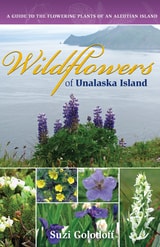
Wildflowers of Unalaska Island
A Guide to the Flowering Plants of an Aleutian Island, Second EditionSuzi Golodoff
University of Alaska Press, 2013
Each species is introduced and clearly defined and is accompanied by a photograph and line drawings. Many of these plants occur across a wide range of coastal Alaska; others are unique to the Aleutians. The introduction includes background on the unique geologic history, climate, and habitats of the archipelago to fully round out the user’s appreciation of the dramatic environment in which these hardy plants thrive.
Witch-Hunting in Seventeenth-Century New England
A Documentary History 1638-1693, Second EditionDavid D. Hall
Duke University Press, 2007
Primary sources include court depositions as well as excerpts from the diaries and letters of contemporaries. They cover trials for witchcraft, reports of diabolical possessions, suits of defamation, and reports of preternatural events. Each section is preceded by headnotes that describe the case and its background and refer the reader to important secondary interpretations. In his incisive introduction, David D. Hall addresses a wide range of important issues: witchcraft lore, antagonistic social relationships, the vulnerability of women, religious ideologies, popular and learned understandings of witchcraft and the devil, and the role of the legal system. This volume is an extraordinarily significant resource for the study of gender, village politics, religion, and popular culture in seventeenth-century New England.
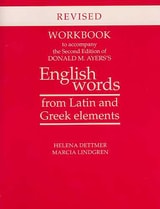
Workbook to Accompany the Second Edition of Donald M. Ayers's English Words from Latin and Greek Elements
Revised EditionHelena Dettmer and Marcia Lindgren
University of Arizona Press, 2005
The Workbook has now been revised to make it more relevant and useful. It features a new dictionary exercise and word analysis exercises, the replacement of true-false exercises that have caused the most difficulty for students, and the elimination of archaic words and other items that have become dated. The authors have also improved the clarity of the instructions for individual exercises, in some cases adding notes or providing sample answers. As part of the revised front matter, there is a new introduction written just for students to help them get the most out of the workbook. English Words and the Workbook have met with unqualified success in English and Classics courses at both the advanced secondary and college levels. This revision of the Workbook helps to ensure the continuing relevance of the roots approach to vocabulary building for tomorrow’s students.
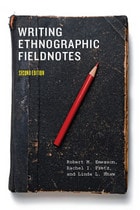
Writing Ethnographic Fieldnotes, Second Edition
Robert M. Emerson, Rachel I. Fretz, and Linda L. Shaw
University of Chicago Press, 2011
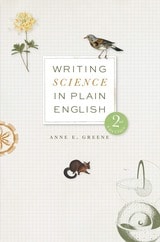
Writing Science in Plain English, Second Edition
Anne E. Greene
University of Chicago Press, 2025
Scientific writing is often dry, wordy, and difficult to understand. But, as biologist and experienced teacher of scientific writing Anne E. Greene shows in Writing Science in Plain English, writers from all scientific disciplines can learn to produce clear, concise prose by mastering just a few simple principles. This short, focused guide presents roughly a dozen such principles based on what readers need to understand complex information, including concrete subjects, strong verbs, consistent terms, organized paragraphs, and correct sentence structure. Greene illustrates each principle with real-life examples of both good and bad writing and shows how bad writing might be improved. She ends each chapter with revision exercises (and provides suggested answers in a separate key) so that readers can come away with new writing skills after just one sitting. To help readers understand the grammatical terms used in the book, an appendix offers a refresher course on basic grammar.
For this second edition, Greene has incorporated the latest research on what makes writing effective and engaging and has revised or replaced exercises and exercise keys where needed. She has also added new features that make it easier to navigate the book. A new resource for instructors who use Writing Science in Plain English in their classes is a free, online teacher’s guide. Drawn from Greene’s long experience teaching students how to write science clearly, the teacher’s guide provides additional lectures, assignments, and activities that will inform and enliven any class.
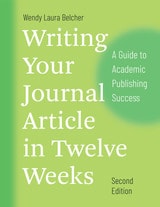
Writing Your Journal Article in Twelve Weeks, Second Edition
A Guide to Academic Publishing SuccessWendy Laura Belcher
University of Chicago Press, 2019
With this new edition, Belcher expands her advice to reach beginning scholars in even more disciplines. She builds on feedback from professors and graduate students who have successfully used the workbook to complete their articles. A new chapter addresses scholars who are writing from scratch. This edition also includes more targeted exercises and checklists, as well as the latest research on productivity and scholarly writing.
Writing Your Journal Article in Twelve Weeks is the only reference to combine expert guidance with a step-by-step workbook. Each week, readers learn a feature of strong articles and work on revising theirs accordingly. Every day is mapped out, taking the guesswork and worry out of writing. There are tasks, templates, and reminders. At the end of twelve weeks, graduate students, recent PhDs, postdoctoral fellows, adjunct instructors, junior faculty, and international faculty will feel confident they know that the rules of academic publishing and have the tools they need to succeed.
Writing in the Academic Disciplines, Second Edition
A Curricular HistoryDavid R. Russell. Foreword by Elaine P. Maimon
Southern Illinois University Press, 2002
“To understand the ways students learn to write, we must go beyond the small and all too often marginalized component of the curriculum that treats writing explicitly and look at the broader, though largely tacit traditions students encounter in the whole curriculum,” explains David R. Russell, in the introduction to this singular study. The updated edition provides a comprehensive history of writing instruction outside general composition courses in American secondary and higher education, from the founding public secondary schools and research universities in the 1870s, through the spread of the writing-across-the-curriculum movement in the 1980s, through the WAC efforts in contemporary curriculums.
Written on Bamboo and Silk
The Beginnings of Chinese Books and Inscriptions, Second EditionTsuen-Hsuin Tsien
University of Chicago Press, 2004