Results by title
53 books match the query 'Secondary' and 2 start with w
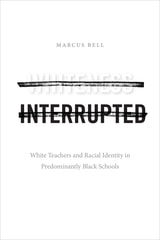
Whiteness Interrupted
White Teachers and Racial Identity in Predominantly Black SchoolsMarcus Bell
Duke University Press, 2021
In Whiteness Interrupted Marcus Bell presents a revealing portrait of white teachers in majority-black schools in which he examines the limitations of understandings of how white racial identity is formed. Through in-depth interviews with dozens of white teachers from a racially segregated, urban school district in Upstate New York, Bell outlines how whiteness is constructed based on localized interactions and takes a different form in predominantly black spaces. He finds that in response to racial stress in a difficult teaching environment, white teachers conceptualized whiteness as a stigmatized category predicated on white victimization. When discussing race outside majority-black spaces, Bell's subjects characterized American society as postracial, in which race seldom affects outcomes. Conversely, in discussing their experiences within predominantly black spaces, they rejected the idea of white privilege, often angrily, and instead focused on what they saw as the racial privilege of blackness. Throughout, Bell underscores the significance of white victimization narratives in black spaces and their repercussions as the United States becomes a majority-minority society.
[more]

Why Afterschool Matters
Nelson, Ingrid A.
Rutgers University Press, 2017
Increasingly, educational researchers and policy-makers are finding that extracurricular programs make a major difference in the lives of disadvantaged youth, helping to reduce the infamous academic attainment gap between white students and their black and Latino peers. Yet studies of these programs typically focus on how they improve the average academic performance of their participants, paying little attention to individual variation.
Why Afterschool Matters takes a different approach, closely following ten Mexican American students who attended the same extracurricular program in California, then chronicling its long-term effects on their lives, from eighth grade to early adulthood. Discovering that participation in the program was life-changing for some students, yet had only a minimal impact on others, sociologist Ingrid A. Nelson investigates the factors behind these very different outcomes. Her research reveals that while afterschool initiatives are important, they are only one component in a complex network of school, family, community, and peer interactions that influence the educational achievement of disadvantaged students.
Through its detailed case studies of individual students, this book brings to life the challenges marginalized youth en route to college face when navigating the intersections of various home, school, and community spheres. Why Afterschool Matters may focus on a single program, but its findings have major implications for education policy nationwide.
[more]