105 books match the query 'Self' and 6 start with w
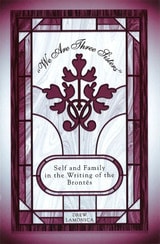
cover of We Are Three Sisters: Self and Family in the Writing of the Brontës

We Are Three Sisters

Self and Family in the Writing of the Brontës

Drew Lamonica

University of Missouri Press, 2003
While biographers have widely acknowledged the importance of family relationships to Charlotte, Emily, and Anne Brontë and to their writing processes, literary critics have yet to give extensive consideration to the family as a subject of the writing itself. In “We Are Three Sisters,” Drew Lamonica focuses on the role of families in the Brontës’ fictions of personal development, exploring the ways in which their writings recognize the family as a defining community for selfhood.
 
 
Drawing on extensive primary sources, including works by Sarah Ellis, Sarah Lewis, Ann Richelieu Lamb, Harriet Martineau, Thomas Carlyle, Charles Dickens, and Elizabeth Gaskell, Lamonica examines the dialogic relationship between the Brontës’ novels and a mid-Victorian domestic ideology that held the family to be the principal nurturer of subjectivity. Using a sociohistorical framework, “We Are Three Sisters” shows that the Brontës’ novels display a heightened awareness of contemporary female experience and the complex problems of securing a valued sense of selfhood not wholly dependent on family ties.
 
 
The opening chapters discuss the mid-Victorian “culture of the family,” in which the Brontës emerged as voices exploring the adequacy of the family as the site for personal, and particularly female, development. These chapters also introduce the Brontës’ early collaborative writings, showing that the sisters’ shared interest in the family’s formative role arose from their own experience as a family of authors. Lamonica also examines the seldom-recognized influences of Patrick and Branwell Brontë on the development of the sisters’ writing.
 
 
        Of the numerous studies on the Brontës, comparatively few consider all seven novels, and no previous study has undertaken to examine the Brontës’ writing in the context of mid-Victorian ideas regarding the family—its relationships, roles, and responsibilities. Lamonica explores in detail the various constructions of family in the sisters’ novels, concluding that the Brontës were attuned to complexities; they were not polemical writers with fixed feminist agendas.
The Brontës disputed the promotion of the family as the exclusive site for female development, morality, and fulfillment, without ever explicitly denying the possibility of domestic contentment. In doing so, the Brontës continue to challenge our readings and our understanding of them as mid-Victorian women. “We Are Three Sisters” is an important addition to the study of these fascinating women and their novels.
 
[more]
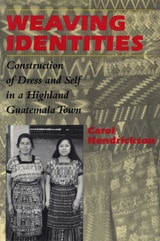
cover of Weaving Identities: Construction of Dress and Self in a Highland Guatemala Town

Weaving Identities

Construction of Dress and Self in a Highland Guatemala Town

By Carol Hendrickson

University of Texas Press, 1995

Traje, the brightly colored traditional dress of the highland Maya, is the principal visual expression of indigenous identity in Guatemala today. Whether worn in beauty pageants, made for religious celebrations, or sold in tourist markets, traje is more than "mere cloth"—it plays an active role in the construction and expression of ethnicity, gender, education, politics, wealth, and nationality for Maya and non-Maya alike.

Carol Hendrickson presents an ethnography of clothing focused on the traje—particularly women's traje—of Tecpán, Guatemala, a bi-ethnic community in the central highlands. She covers the period from 1980, when the recent round of violence began, to the early 1990s, when Maya revitalization efforts emerged.

Using a symbolic analysis informed by political concerns, Hendrickson seeks to increase the value accorded to a subject like weaving, which is sometimes disparaged as "craft" or "women's work." She examines traje in three dimensions—as part of the enduring images of the "Indian," as an indicator of change in the human life cycle and cloth production, and as a medium for innovation and creative expression.

From this study emerges a picture of highland life in which traje and the people who wear it are bound to tradition and place, yet are also actively changing and reflecting the wider world. The book will be important reading for all those interested in the contemporary Maya, the cultural analysis of material culture, and the role of women in culture preservation and change.

[more]
cover of Why I Buy: Self, Taste, and Consumer Society in America

Why I Buy

Self, Taste, and Consumer Society in America

Rami Gabriel

Intellect Books, 2013

Why do we buy? How do our acts of—and ideas about—consumption impact our selves, our institutions, and our societies? An incisive response to these questions, Why I Buy explains how consumption came to give meaning and value to social and personal life.
 
Balancing psychological, conceptual, and historical analyses with examples drawn from popular culture and mass media, Rami Gabriel traces the ways in which beliefs about the self—including dualism, individualism, and expressivism—influence consumer behavior. These understandings of the self, Gabriel argues, structure the values that Americans seek and find in consumer society; they therefore have structural consequences for our cultural, political, and economic lives. For example, Gabriel describes how imbalances in the institutions of participatory politics have directly resulted from a consumer society centered on powerful nongovernmental institutions and a scattered body of disengaged citizens whose social and individual needs are not primarily satisfied through civic involvement. By exploring the relationship between our individual needs and our institutions, Gabriel ultimately points the way toward transformations that could lead to a more sustaining and sustainable society.
[more]
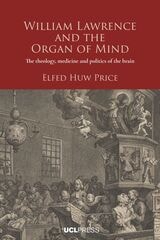
cover of William Lawrence and the Organ of Mind: The Theology, Medicine and Politics of the Brain

William Lawrence and the Organ of Mind

The Theology, Medicine and Politics of the Brain

Elfed Huw Price

University College London, 2025

The untold story of how a nineteenth-century medical controversy laid the groundwork for modern neuroscience and the science of the mind.

Elfed Huw Price studies the radical history behind the idea that thought and consciousness are rooted in the brain, tracing its emergence in early nineteenth-century Britain. Centered on the controversy surrounding Lawrence’s Lectures on Physiology, Zoology, and the Natural History of Man, this book reveals how his arguments on the sentient brain challenged both medical tradition and religious orthodoxy, provoking backlash from the establishment.

Drawing on archival sources including unpublished material from Bethlem Hospital, Price situates Lawrence’s work within the rise of Christian mortalist thought and the broader shift toward Victorian naturalism. Despite Lawrence’s silencing, his ideas endured, shaping a transformation that redefined human exceptionality through biology rather than theology.

Bridging science, medicine, philosophy, and religion, William Lawrence and the Organ of Mind illuminates a pivotal yet overlooked moment in the history of mind and brain studies, offering fresh insights into the intellectual struggles that helped reshape modern thought.

[more]
cover of Women Political Prisoners in Germany: Narratives of Self and Captivity, 1915-91

Women Political Prisoners in Germany

Narratives of Self and Captivity, 1915-91

Kim Richmond

University of London Press, 2016
One of the few major enquiries into women’s narratives of political incarceration, this volume examines first-person accounts written against a backdrop of momentous historical events in twentieth-century Germany. Rosa Luxemburg’s prison letters are the starting point for the study, which explores the ways in which writing is used as a response to incarceration: how does the writer ‘perform’ femininity within the de-feminizing context of prison? How does she negotiate a self-representation as a ‘good’ woman? Central to this investigation is an awareness of the role of language as a means of empowerment within the disempowering environment of prison. As a key female political figure in twentieth-century Germany, Luxemburg wrote letters from prison that encapsulate prevalent notions about womanhood, prison, and political engagement that are perceptible in the subsequent texts of the study. The diaries of Luise Rinser and Lore Wolf from National Socialist prisons show, in different ways, how the writer uses language to ‘survive’ prison, whilst Margret Bechler’s and Elisabeth Graul’s retrospective accounts of GDR incarceration give insight into the elastic concept of both the political prisoner and the ‘good’ woman. All narratives provide examples of the role of language in resisting an imposed identity as ‘prisoner’, ‘criminal’, and object of the prison system. Kim Richmond completed her PhD at the University of Edinburgh and is now an Associate Lecturer in Languages at the Open University.
[more]
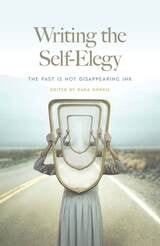
cover of Writing the Self-Elegy: The Past Is Not Disappearing Ink

Writing the Self-Elegy

The Past Is Not Disappearing Ink

Edited by Kara Dorris

Southern Illinois University Press, 2023

An innovative roadmap to facing our past and present selves
 
Honest, aching, and intimate, self-elegies are unique poems focusing on loss rather than death, mourning versions of the self that are forgotten or that never existed. Within their lyrical frame, multiple selves can coexist—wise and naïve, angry and resigned—along with multiple timelines, each possible path stemming from one small choice that both creates new selves and negates potential selves. Giving voice to pain while complicating personal truths, self-elegies are an ideal poetic form for our time, compelling us to question our close-minded certainties, heal divides, and rethink our relation to others.
 
In Writing the Self-Elegy, poet Kara Dorris introduces us to this prismatic tradition and its potential to forge new worlds. The self-elegies she includes in this anthology mix autobiography and poetics, blending craft with race, gender, sexuality, ability and disability, and place—all of the private and public elements that build individual and social identity. These poems reflect our complicated present while connecting us to our past, acting as lenses for understanding, and defining the self while facilitating reinvention. The twenty-eight poets included in this volume each practice self-elegy differently, realizing the full range of the form. In addition to a short essay that encapsulates the core value of the genre and its structural power, each poet’s contribution concludes with writing prompts that will be an inspiration inside the classroom and out. This is an anthology readers will keep close and share, exemplifying a style of writing that is as playful as it is interrogative and that restores the self in its confrontation with grief.
[more]