Results by title
546 books match the query 'Semiotics & Theory' and 14 start with w
Ways of Seeing After Dark
Kyle Parry
University of Minnesota Press, 2026
Rethinking darkness through the politics and possibilities of vision
Darkness is widely misunderstood, argues Kyle Parry. We take darkness as the enemy of sight, yet we can’t see without it. We call the worst parts of our lives dark, yet we wouldn’t be here without wombs, skulls, oceans, the moon, and other shadowed places. Ways of Seeing After Dark contends that darkness is not absence but presence, shaping how worlds are sensed, inhabited, and understood. Darkness brings peril, but it is also a fundamental, if increasingly threatened, condition of living together on this planet.
Tracing links between John Berger’s influential Ways of Seeing and his more poetic later writings, Parry recasts contemporary conditions defined by light pollution, digital mediation, and racialized regimes of seeing. In dialogue with artists, critics, and astronomers, Ways of Seeing After Dark examines how fear of darkness is built rather than universal and how such training intersects with broader social structures, including racism and capitalism. Showing how “felt darkness displaces physical darkness” and “brighter nights bring darker days,” Parry reveals the dark as a multifaceted phenomenon with political and perceptual significance, calling for new ways of seeing with and through the night.
Retail e-book files for this title are screen-reader friendly.
We-Narratives
Collective Storytelling in Contemporary FictionNatalya Bekhta
The Ohio State University Press, 2020
Natalya Bekhta’s We-Narratives: Collective Storytelling in Contemporary Fiction analyzes a storytelling form shaped by the pronoun “we,” probing the tensions between individuality and collectivity in more recent narratives in English. Despite a growing interest in collective characters and the we-form in narratology and beyond, narrative theory has not yet done justice to the plural voice in fiction. In fact, the formulation of a poetics of collective expression needs clear theoretical conventions and a reassessment of established concepts in order to approach plural voices and agents on their own terms. We-Narratives addresses this demand by distinguishing between indicative and performative uses of the first-person plural pronoun in fiction and by identifying formal and rhetorical possibilities of stories told by group narrators.
What does it mean for a multitude to speak as one? How can a truly collective narrative voice be achieved or lost? What are its aesthetic and political repercussions? In order to tackle these questions, Bekhta reads a range of contemporary novels and short stories by Jeffrey Eugenides, Joshua Ferris, Toby Litt, Zakes Mda, Joyce Carol Oates, and Julie Otsuka. She also focuses on narrative innovation by Margaret Atwood, William Faulkner, and Susan Sontag. These narratives feature group protagonists and narrators and therefore offer insight into collective narrative discourse and focalization, construction of communal knowledge and unreliability. We-narrative, taken as a distinct storytelling form, illuminates fiction’s expressive potential and nuances models of narrative analysis.
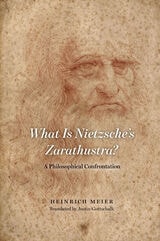
What Is Nietzsche's Zarathustra?
A Philosophical ConfrontationHeinrich Meier
University of Chicago Press, 2021
A masterful, nuanced, and novel examination of Nietzsche’s Zarathustra.
Thus Spoke Zarathustra is Nietzsche’s most famous and most puzzling work, one in which he makes the greatest use of poetry to explore the questions posed by philosophy. But in order to understand the movement of this drama, we must first understand the character of its protagonist: we must ask, What Is Nietzsche’s Zarathustra?
Heinrich Meier attempts to penetrate the core of the drama, following as a guiding thread the question of whether Zarathustra is a philosopher or a prophet, or, if he is meant to be both, whether Zarathustra is able to unite philosopher and prophet in himself. Via a close reading that uncovers the book’s hidden structure, Meier develops a highly stimulating and original interpretation of this much-discussed but still ill-understood masterwork of German poetic prose. In the process, he carefully overturns long-established canons in the academic discourse of Nietzsche interpretation. The result is a fresh and surprising grasp of Nietzsche’s well-known teachings of the overman, the will to power, and the eternal return.
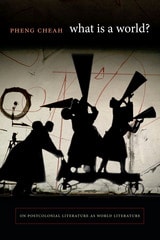
What Is a World?
On Postcolonial Literature as World LiteraturePheng Cheah
Duke University Press, 2016
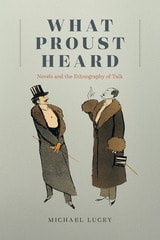
What Proust Heard
Novels and the Ethnography of TalkMichael Lucey
University of Chicago Press, 2022
What happens when we talk? This deceptively simple question is central to Marcel Proust’s monumental novel In Search of Lost Time. Both Proust’s narrator and the novel that houses him devote considerable energy to investigating not just what people are saying or doing when they talk, but also what happens socioculturally through their use of language. Proust, in other words, is interested in what linguistic anthropologists call language-in-use.
Michael Lucey elucidates Proust’s approach to language-in-use in a number of ways: principally in relation to linguistic anthropology, but also in relation to speech act theory, and to Pierre Bourdieu’s sociology. The book also includes an interlude after each of its chapters that contextualizes Proust’s social-scientific practice of novel writing in relation to that of a number of other novelists, earlier and later, and from several different traditions, including Honoré de Balzac, George Eliot, Virginia Woolf, Nathalie Sarraute, and Rachel Cusk. Lucey is thus able to show how, in the hands of quite different novelists, various aspects of the novel form become instruments of linguistic anthropological analysis. The result introduces a different way of understanding language to literary and cultural critics and explores the consequences of this new understanding for the practice of literary criticism more generally.
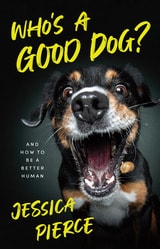
Who's a Good Dog?
And How to Be a Better HumanJessica Pierce
University of Chicago Press, 2023
A guide to cultivating a shared life of joy and respect with our dogs.
Who’s a Good Dog? is an invitation to nurture more thoughtful and balanced relationships with our canine companions. By deepening our curiosity about what our dogs are experiencing, and by working together with them in a spirit of collaboration, we can become more effective and compassionate caregivers.
With sympathy for the challenges met by both dogs and their humans, bioethicist Jessica Pierce explores common practices of caring for dogs, including how we provide exercise, what we feed, how and why we socialize and train, and how we employ tools such as collars and leashes. She helps us both to identify potential sources of fear and anxiety in our dogs’ lives and to expand practices that provide physical and emotional nourishment. Who’s a Good Dog? also encourages us to think more critically about what we expect of our dogs and how these expectations can set everyone up for success or failure. Pierce offers resources to help us cultivate attentiveness and kindness, inspiring us to practice the art of noticing, of astonishment, of looking with fresh eyes at these beings we think we know so well. And more than this, she makes her findings relatable by examining facets of her relationship with Bella, the dog in her life. As Bella shows throughout, all dogs are good dogs, and we, as humans and dog guardians, could be doing a little bit better to get along with them and give them what they need.
Why the Humanities Matter
A Commonsense ApproachBy Frederick Luis Aldama
University of Texas Press, 2008
Is there life after postmodernism? Many claim that it sounded the death knell for history, art, ideology, science, possibly all of Western philosophy, and certainly for the concept of reality itself. Responding to essential questions regarding whether the humanities can remain politically and academically relevant amid this twenty-first-century uncertainty, Why the Humanities Matter offers a guided tour of the modern condition, calling upon thinkers in a variety of disciplines to affirm essential concepts such as truth, goodness, and beauty.
Offering a lens of "new humanism," Frederick Aldama also provides a liberating examination of the current cultural repercussions of assertions by such revolutionary theorists as Said, Foucault, Lacan, and Derrida, as well as Latin Americanists such as Sommer and Mignolo. Emphasizing pedagogy and popular culture with equal verve, and writing in colloquial yet multifaceted prose, Aldama presents an enlightening way to explore what "culture" actually does—who generates it and how it shapes our identities—and the role of academia in sustaining it.
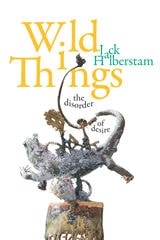
Wild Things
The Disorder of DesireJack Halberstam
Duke University Press, 2020
With Bodies
Narrative Theory and Embodied CognitionMarco Caracciolo and Karin Kukkonen
The Ohio State University Press, 2021
Writing Maternity
Medicine, Anxiety, Rhetoric, and GenreDara Rossman Regaignon
The Ohio State University Press, 2021
Writing for Dark Times
A Literary History of Human RightsHadji Bakara
University of Chicago Press, 2026
A history of human rights that places writers and their ideas at its center.
At Amnesty International’s headquarters in London hangs a large copy of Seamus Heaney’s “From the Republic of Conscience,” a poem that touches on neither imprisonment nor torture but instead suggests that acts of literary creation are themselves a form of human rights work, important for bringing new things into the world rather than removing evil from it. Why does a poem about the power of creation stand at the center of an organization known for publicizing atrocity? What can it tell us about human rights?
Hadji Bakara’s Writing for Dark Times tells the story of the writer’s distinct place in the history of human rights. It argues that the relationship between the creative work of writing and the pursuit of universal rights is an important but misunderstood dimension of both literary and human rights history over the past century. Following a diverse cast of writers from the First World War through the end of the Cold War, including Bertolt Brecht, Anna Seghers, Archibald MacLeish, Albert Camus, Czeslaw Milosz, Ngũgĩ wa Thiong’o, Seamus Heaney, Nadine Gordimer, and J.M. Coetzee, Bakara shows how their efforts to theorize and support human rights were bound up with changing ideas about the place of their own work in the world––the work of writing. And across the twentieth century, the book reveals, two central ideas about writing took shape around the politics of human rights. Writing creates something new and inspires the will for change.
For those who study human rights, Writing for Dark Times offers both an archive and a method for better understanding the influence of writers on the historical development of the concept. For those in literary studies, the book provides a new account of how human rights shaped the politics of twentieth-century literature. Few books have made as vivid a case for literature’s relevance to our most exalted ideals and institutions.
Writing in the Air
Heterogeneity and the Persistence of Oral Tradition in Andean LiteraturesAntonio Cornejo Polar
Duke University Press, 2013
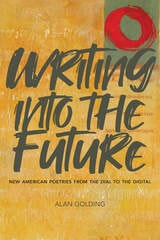
Writing into the Future
New American Poetries from "The Dial" to the DigitalAlan Golding
University of Alabama Press, 2022
Writing into the Future: New American Poetries from “The Dial” to the Digital collects Alan Golding’s essays on the futures (past and present) of poetry and poetics. Throughout the 13 essays gathered in this collection, Golding skillfully joins literary critique with a concern for history and a sociological inquiry into the creation of poetry. In Golding’s view, these are not disparate or even entirely distinct critical tasks. He is able to fruitfully interrogate canons and traditions, both on the page and in the politics of text, culture, and institution.
A central thread running through the chapters is a longstanding interest in how various versions of the “new” have been constructed, received, extended, recycled, resisted, and reanimated in American poetry since modernism. To chart the new, Golding contends with both the production and the reception of poetry, in addition to analyzing the poems themselves. In a generally chronological order, Golding reconsiders the meaning for contemporary poets of high modernists like Ezra Pound and William Carlos Williams, as well as the influential poetry venues The Dial and The Little Review, where less prominent but still vital poets contested what should come “next.” Subsequent essays track that contestation through The New American Poetry and later anthologies.
Mid-century major figures like Robert Creeley and George Oppen are discussed in their shared concern for the serial poem. Golding’s essays bring us all the way back to the present of the poetic future, with writing on active poets like Rachel Blau DuPlessis, Susan Howe, and Bruce Andrews and on the anticipation of digital poetics in the material texts of L=A=N=G=U=A=G=E writing. Golding charts the work of defining poetry’s future and how we rewrite the past for an unfolding present.
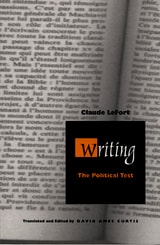
Writing
The Political TestClaude Lefort
Duke University Press, 2000
In Writing: The Political Test, France’s leading political philosopher, Claude Lefort, illuminates the process by which writers negotiate difficult path to free themselves from the ideological and contextual traps that would doom their attempts to articulate a new vision. Lefort examines writers whose works provide special insights into this problem of risk, both literary artists and political philosophers. Among them are Salman Rushdie, Sade, Tocqueville,m Machiavelli, Leo Strauss, Orwell, Kant, Robespierre, Guizot, and Pierre Clastres. In Tocqueville, for example, Lefort finds that the author’s improvisatory and open-ended expression represents the character of the democratic experience. Orwell’s work on totalitarianism shows up the totalitarian subject’s complicity in this political regime. And Rushdie is remarkable for his solid attack on relativism. With the character and fate of the political forms of modernity, democracy, and totalitarianism a central theme, Lefort concludes with some reflections on the collapse of the Soviet Union.
This intriguing and accessible exploration of literature’s political aspects and political philosophy’s literary ones will be welcomed by those who have been stymied by current efforts to bridge these two fields. Taken together, the essays in this volume also stand as an intellectual autobiography of Lefort, making it an excellent introduction to his work for less experience students of political theory or philosophy.