Results by title
94 books match the query 'Services for' and 5 start with w
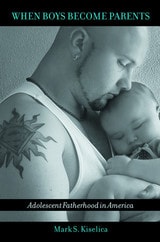
When Boys Become Parents
Adolescent Fatherhood in AmericaMark S. Kiselica
Rutgers University Press, 2011
In this informative book, Mark S. Kiselica draws on his many years of counseling teenage fathers to offer a compassionate look at the difficult life circumstances and the complicated hardships these young men experience. He dispels many of the myths surrounding teenage fatherhood and shows that, contrary to popular belief, these young men are often emotionally and physically involved in relationships with their partner and their child. But without support and guidance from adults, these relationships often deteriorate in the first year of the child-'s life. Kiselica offers advice for how professionals and policy makers can assist these young men and improve services for them.
When Boys Become Parents provides a moving portrait of teenage fathers to any reader who wants to understand and help these young men to become more competent and loving parents during their journey to adulthood.
When Care is Conditional
Immigrants and the U.S. Safety NetDani Carrillo
Russell Sage Foundation, 2024
Through in-depth interviews with Latinx immigrants in northern California, Carrillo examines three circumstances—place, gender, and immigration status—that intersect to influence an individual’s access to health care, food assistance, and other benefits. She demonstrates that place of residence affects undocumented immigrants’ ability to get care since more services are available in urban areas, where many immigrants cannot afford to live, than suburban areas, where public transportation is limited. She also shows that while both men and women who are undocumented have difficulty obtaining care, men often confront more challenges. Undocumented women who are pregnant or mothers are eligible for some government safety net programs and rely on informal coethnic networks or a “guiding figure”—a relative, friend, neighbor, or coworker—who explains how to get care and makes them feel confident in accessing it. Most undocumented men, in contrast, are not eligible for public programs except in a medical emergency and often lack someone to guide them directly to care. Men sometimes steer one another to jobs through worker centers—where they may learn about various services and take advantage of those that increase their employability, like English or computer classes—but a culture of masculinity leads them to downplay medical problems and seek health care only in a crisis.
As undocumented immigrants navigate this exclusionary system, Carrillo finds that they resist the rhetoric stigmatizing them as lawbreakers. Dismissing the importance of “papers” and highlighting their work ethic, they question the fairness of U.S. immigration policies and challenge ideas about who deserves care.
Carrillo offers concrete recommendations, such as improving labor conditions and reexamining benefit eligibility, to increase access to care for not only undocumented immigrants but also people who have been excluded because of their race, criminal record, gender identity, sexual orientation, or disability. She argues that working with and across populations creates a powerful form of solidarity in advocating for inclusive care.
When Care Is Conditional provides compelling insights into how safety net and immigration policies intersect to affect people’s everyday lives and calls for a cultural shift so that the United States can provide unconditional care for all.
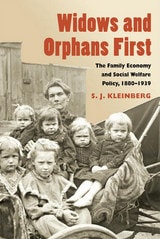
Widows and Orphans First
The Family Economy and Social Welfare Policy, 1880-1939S. J. Kleinberg
University of Illinois Press, 2005
The experiences of widows and their children during the Progressive Era and the New Deal depended on differences in local economies and values. How did these widely varied experiences impact the origins of the welfare state?
S. J. Kleinberg delves into the question by comparing widows' lives in three industrial cities with differing economic, ethnic, and racial bases. Government in Fall River, Massachusetts, saw employment as a solution to widows' poverty and as a result drastically limited public charity. In Pittsburgh, widows received sympathetic treatment. Few jobs existed for them or their children; indeed, the jobs for men were concentrated in "widowmaking" industries like steel and railroading. With a large African American population and a diverse economy that relied on inexpensive child and female labor, Baltimore limited funds for public services. African Americans adapted by establishing their own charitable institutions.
A fascinating comparative study, Widows and Orphans First offers a one-of-a-kind look at social welfare policy for widows and the role of children in society during a pivotal time in American history.
Women Reformed, Women Empowered
Poor Mothers and the Endangered Promise of Head StartLynda Ames
Temple University Press, 1996
Workforce Intermediaries
For The 21St Centuryedited by Robert P. Giloth, Published in association with The American Assembly, Columbia University
Temple University Press, 2003