Results by title
65 books match the query 'Ships & Boats' and 10 start with w
Warship 14
Dutch Leander Frigate Van SpeijkJantinus Mulder
Amsterdam University Press, 2023
Warship 1
Cruiser HNLMS TrompJantinus Mulder
Amsterdam University Press, 2012
Warship 3
Frigate HNLMS Jacob van HeemskerckRindert van Zinderen Bakker
Amsterdam University Press, 2017
Warship 4
Frigate USS ClarkRindert van Zinderen Bakker
Amsterdam University Press, 0
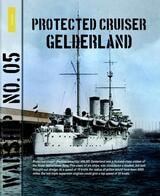
Warship 5
Protected Cruiser GelderlandJantinus Mulder
Amsterdam University Press, 0
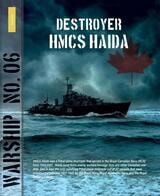
Warship 6
Destroyer HMCS HaidaRindert van Zinderen Bakker
Amsterdam University Press, 0
Nowadays she is the only surviving Tribal-class destroyer out of 27 units that were constructed between 1937-1945 for the Royal Navy, Royal Australian Navy, and the Royal Canadian Navy.
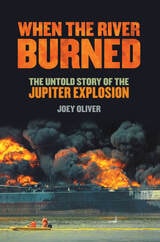
When the River Burned
The Untold Story of the Jupiter ExplosionJoey Oliver
Michigan State University Press, 2026
On September 16, 1990, the tanker ship Jupiter exploded while unloading gasoline at a Bay City pier on the Saginaw River. The blast killed one worker, injured eleven others, and triggered what the U.S. Coast Guard later described as an unprecedented crisis on the Great Lakes. For weeks, the disaster commanded national attention as officials worked to contain the damage and investigate the cause. Then, like so many industrial accidents, the story faded from public memory.
When the River Burned tells the story of this overlooked chapter in Great Lakes maritime history. Drawing on newspaper archives, Coast Guard investigations, and eyewitness accounts, Joey Oliver reconstructs how a series of small oversights—in equipment, procedure, and human judgment—aligned to produce catastrophe.
The book places the Jupiter explosion within a broader history of the Saginaw River, tracing its evolution into a vital artery of Michigan industry. Oliver examines the fragile interdependence of ships, piers, and river traffic, revealing how disasters emerge not from single causes but from the breakdown of complex systems. When the River Burned is not only the account of a deadly tanker explosion; it is a reflection on what caused it, on the safety changes that followed, and on changes that never came.
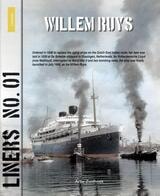
Willem Ruys
Arne Zuidhoek
Amsterdam University Press, 2014
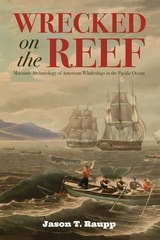
Wrecked on the Reef
Maritime Archaeology of American Whaleships in the Pacific OceanJason T. Raupp
University of Alabama Press, 2025
Take to the sea on this maritime archaeological exploration of nineteenth-century American whaling ships
American whaleships of the early nineteenth century were more than ocean-going vessels—they were complex workplaces, designed for long-term voyages, round-the-clock labor, and the large-scale extraction of marine resources. In Wrecked on the Reef, maritime archaeologist Jason T. Raupp presents a pioneering study of these ships as mobile production platforms, rooted in the logic of industrial capitalism operating far from land.
Drawing on shipwreck sites from the central Pacific region, Raupp offers a rare archaeological look at everyday life aboard nineteenth-century whaling vessels during the so-called “Golden Age” of whaling. He examines the tools used to hunt and process whales, the strict labor hierarchies onboard, and the physical evidence of diverse, often vulnerable crews who lived and worked under demanding conditions. By combining maritime and industrial archaeology, Raupp reveals how these ships functioned not just as transportation, but as full-scale factories at sea.
Chapters trace the rise of Pacific whaling, the importance of Hawaii as a supply and repair hub, the design and mechanics of whaleships, and the dangerous work crews performed in extreme isolation. Raupp shows how these ships were not only technological marvels of their time, but also part of a much larger system of labor, risk, and ocean-based resource extraction that fueled American expansion into the Pacific.
By exploring whaleships as floating work sites, Raupp offers readers a deeper understanding of maritime labor, capitalism, and imperialism in the nineteenth century. Wrecked on the Reef charts a new course in the study of labor and landscape at sea, providing significant contributions to maritime archaeology, industrial history, and environmental humanities.
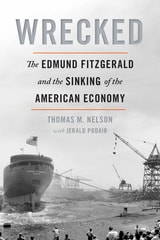
Wrecked
The Edmund Fitzgerald and the Sinking of the American EconomyThomas M Nelson
Michigan State University Press, 2025