Results by title
322 books match the query 'Social change' and 16 start with w

Wandering Peoples
Colonialism, Ethnic Spaces, and Ecological Frontiers in Northwestern Mexico, 1700–1850Cynthia Radding
Duke University Press, 1997
Radding describes this colonial mission not merely as an instance of Iberian expansion but as a site of cultural and political confrontation. This alternative vision of colonialism emphasizes the economic links between mission communities and Spanish mercantilist policies, the biological consequences of the Spanish policy of forced congregación, and the cultural and ecological displacements set in motion by the practices of discipline and surveillance established by the religious orders. Addressing wider issues pertaining to ethnic identities and to ecological and cultural borders, Radding’s analysis also underscores the parallel production of colonial and subaltern texts during the course of a 150-year struggle for power and survival.
We Decide!
Theories and Cases in Participatory DemocracyMichael Menser
Temple University Press, 2017
Participatory democracy calls for the creation and proliferation of practices and institutions that enable individuals and groups to better determine the conditions in which they act and relate to others. Michael Menser’s timely book We Decide! is arguably the most comprehensive treatment of participatory democracy. He explains the three waves of participatory democracy theory to show that this movement is attentive to the mechanics of contemporary political practices. Menser also outlines “maximal democracy,” his own view of participatory democracy that expands people’s abilities to shape their own lives, reduce inequality, and promote solidarity.
We Decide! draws on liberal, feminist, anarchist, and environmental justice philosophies as well as in-depth case studies of Spanish factory workers, Japanese housewives, and Brazilian socialists to show that participatory democracy actually works. Menser concludes his study by presenting a reconstructed version of the state that is shaped not by corporations but by inclusive communities driven by municipal workers, elected officials, and ordinary citizens working together. In this era of Bernie Sanders and Donald Trump, the participatory democracy proposed in We Decide! is more significant than ever.
We Make the Road by Walking
Conversations on Education and Social ChangeMyles Horton
Temple University Press, 1990
What Democracy Looks Like
A New Critical Realism for a Post-Seattle WorldLang, Amy
Rutgers University Press, 2006
The convergence of activists in Seattle during the World Trade Organization meetings captured the headlines in 1999. These demonstrations marked the first major expression on U.S. soil of worldwide opposition to inequality, privatization, and political and intellectual repression. This turning point in world politics coincided with an ongoing quandary in academia-particularly in the humanities where the so-called "death of theory" has left the field on tenuous footing.
In What Democracy Looks Like, the editors and twenty-seven contributors argue that these crises-in the world and the academy-are not unrelated. The essays insist that, in the wake of "Seattle," teachers and scholars of American literature and culture are faced with the challenge of addressing new points of intersection between American studies and literary studies. The narrative, the poem, the essay, and the drama need to be reexamined in ways that are relevant to the urgent social and political issues of our time.
Collectively urging scholars and educators to pay fresh attention to the material conditions out of which literature arises, this path-breaking book inaugurates a new critical realism in American literary studies. It provides a crucial link in the growing need to merge theory and practice with the goal of reconnecting the ivory tower elite to the activists on the street.
What Democracy Looks Like
The Rhetoric of Social Movements and CounterpublicsEdited by Christina R. Foust, Amy Pason, and Kate Zittlow Rogness
University of Alabama Press, 2017
Examining How Social Movements and Counterpublics Shape Democratic Change.
Recent protests around the world (such as the Arab Spring uprisings and Occupy Wall Street movements) have drawn renewed interest to the study of social change and, especially, to the manner in which words, images, events, and ideas associated with protestors can “move the social.” What Democracy Looks Like is an attempt to foster a more coherent understanding of social change among scholars of rhetoric and communication studies by juxtaposing the ideas of social movements and counterpublics—historically two key factors significant in the study of social change. Foust, Pason, and Zittlow Rogness’s volume compiles the voices of leading and new scholars who are contributing to the history, application, and new directions of these two concepts, all in conversation with a number of acts of resistance or social change.
The theories of social movements and counterpublics are related, but distinct. Social movement theories tend to be concerned with enacting policy and legislative changes. Scholars flying this flag have concentrated on the organization and language (for example, rallies and speeches) that are meant to enact social change. Counterpublic theory, on the other hand, focuses less on policy changes and more on the unequal distribution of power and resources among different protest groups, which is sometimes synonymous with subordinated identity groups such as race, gender, sexuality, and class.
Nonetheless, contributors argue that in recent years the distinctions between these two methods have become less evident. By putting the literatures of the two theories in conversation with one another, these scholars seek to promote and imagine social change outside the typical binaries.
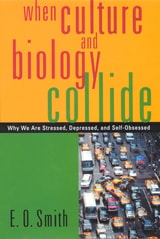
When Culture and Biology Collide
Why We are Stressed, Depressed, and Self-ObsessedE. O. Smith
Rutgers University Press, 2002
Why do we do things that we know are bad for us? Why do we line up to buy greasy fast food that is terrible for our bodies? Why do we take the potentially lethal risk of cosmetic surgery to have a smaller nose, bigger lips, or a less wrinkled face? Why do we risk life and limb in a fit of road rage to seek revenge against someone who merely cut us off in traffic? If these life choices are simply responses to cultural norms and pressures, then why did these particularly self-destructive patterns evolve in place of more sensible ones?
In When Culture and Biology Collide, E. O. Smith explores various aspects of behavior that are endemic to contemporary Western society, and proposes new ways of understanding and addressing these problems. Our physiology and behavior are the products of thousands of generations of evolutionary history. Every day we play out behaviors that have been part of the human experience for a very long time, yet these behaviors are played out in an arena that is far different from that in which they evolved. Smith argues that this discordance between behavior and environment sets up conditions in which there can be real conflict between our evolved psychological predispositions and the dictates of culture.
Topics such as drug abuse, depression, beauty and self-image, obesity and dieting, stress and violence, ethnic diversity, and welfare are all used as sample case studies. As with all of his case studies, Smith emphasizes the importance of not using an evolutionary explanation as an excuse for a particular pattern of behavior. Instead, he seeks to offer a perspective that will help us see ourselves more clearly and that may be useful in developing intelligent solutions to seemingly intractable problems. Smith provides ways of developing strategies for minimizing our self-destructive tendencies.

Why the American Century?
Olivier Zunz
University of Chicago Press, 1998
"It should certainly be the task of historians to explain the nation's triumphs as effectively as they have explained its failures, and Zunz in this intelligent, learned and ambitious book suggests a valuable new model for doing so."—Alan Brinkley, Times Literary Supplement
"Zunz is evenhanded in his judgments. . . . His thesis is both imaginative and well grounded in the appropriate sources."—David M. Oshinsky, New York Times Book Review
"Zunz is an innovative and perceptive social critic. He crosses disciplinary boundaries with ease and felicity, and is particularly adept at illustrating large themes with unusual but telling details."—Kent Blaser, American Studies
"An eye-opening introduction to the shaping of modern America."—Foreign Affairs
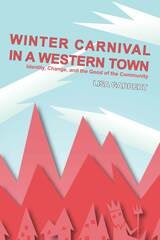
Winter Carnival in a Western Town
Identity, Change and the Good of the CommunityLisa Gabbert
Utah State University Press, 2011
Held annually, the McCall, Idaho, winter carnival has become a modern tradition. A festival and celebration, it is also a source of community income and opportunity for shared community effort; a chance to display the town attractively to outsiders and to define and assert McCall's identity; and consequently, a source of disagreement among citizens over what their community is, how it should be presented, and what the carnival means.
Though rooted in the broad traditions of community festival, annual civic events, often sponsored by chambers of commerce, such as that in McCall, are as much expressions of popular culture and local commerce as of older traditions. Yet they become dynamic, newer community traditions, with artistic, informal, and social meanings and practices that make them forms of folklore as well as commoditized culture. Winter Carnival is the first volume in a new Utah State University Press series titled Ritual, Festival, and Celebration and edited by folklorist Jack Santino.
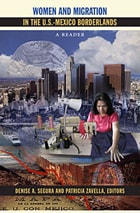
Women and Migration in the U.S.-Mexico Borderlands
A ReaderDenise A. Segura and Patricia Zavella, eds.
Duke University Press, 2007
This reader includes twenty-three essays—two of which are translated from the Spanish—that illuminate women’s engagement with diverse social and cultural challenges. One contributor critiques the statistical fallacy of nativist discourses within the United States that portray Chicana and Mexican women’s fertility rates as “out of control.” Other contributors explore the relation between sexual violence and women’s migration from rural areas to urban centers within Mexico, the ways that undocumented migrant communities challenge conventional notions of citizenship, and young Latinas’ commemorations of the late, internationally renowned singer Selena. Several essays address workplace intimidation and violence, harassment and rape by U.S. border patrol agents and maquiladora managers, sexual violence, and the brutal murders of nearly two hundred young women near Ciudad Juárez. This rich collection highlights both the structural inequities faced by Mexican women in the borderlands and the creative ways they have responded to them.
Contributors. Ernestine Avila, Xóchitl Castañeda, Sylvia Chant, Leo R. Chavez, Cynthia Cranford, Adelaida R. Del Castillo, Sylvanna M. Falcón, Gloria González-López, Maria de la Luz Ibarra, Jonathan Xavier Inda, Rosa Linda Fregoso, Jennifer S. Hirsch, Pierrette Hondagneu-Sotelo, Eithne Luibheid, Victoria Malkin, Faranak Miraftab, Olga Nájera-Ramírez, Norma Ojeda de la Peña, Deborah Paredez, Leslie Salzinger, Felicity Schaeffer-Grabiel, Denise A. Segura, Laura Velasco Ortiz, Melissa W. Wright, Patricia Zavella
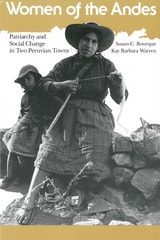
Women of the Andes
Patriarchy and Social Change in Two Peruvian TownsSusan C. Bourque and Kay Barbara Warren
University of Michigan Press, 1981
Pilar is a capable, energetic merchant in the small, Peruvian highland settlement of Chiuchin. Genovena, an unmarried day laborer in the same town, faces an impoverished old age without children to support her. Carmen is the wife of a prosperous farmer in the agricultural community of Mayobamba, eleven thousand feet above Chiuchin in the Andean sierra. Mariana, a madre soltera—single mother—without a husband or communal land of her own, also resides in Mayobamba.
These lives form part of an interlocking network that the authors carefully examine in Women of the Andes. In doing so, they explore the riddle of women’s structural subordination by analyzing the social, political, and economic realities of life in Peru. They examine theoretical explanations of sexual hierarchies against the backdrop of life histories. The result is a study that pinpoints the mechanisms perpetuating sexual repression and traces the impact of social change and national policy on women’s lives.
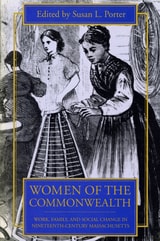
Women of the Commonwealth
Work, Family, and Social Change in Ninteenth-Century MassachusettsSusan L. Porter
University of Massachusetts Press, 1996
These essays reflect the complexity and richness of current scholarship in women's history. Informed by a variety of source materials and methodologies, the ten chapters break down a generalized construct of “womanhood” to explore the dynamics between gender, race, ethnicity, and class.
The first section of the book focuses on women's work, paid and unpaid, and the effects of class, ethnicity, and gender on the structure of the job market and on power relations within the family. The second section revisits the concept of “sisterhood” by looking at women in relation to their families, social and cultural networks, and civic and private institutions. The editor's introduction sets the essays in the current historiographical context of women's studies and provides a bibliographical essay for the nonspecialist reader.
Women's Activism and Feminist Agency in Mozambique and Nicaragua
Jennifer Leigh Disney
Temple University Press, 2009
In Women's Activism and Feminist Agency in Mozambique and Nicaragua, Jennifer Leigh Disney investigates the contours of women’s emancipation outside the framework of liberal democracy and a market economy. She interviews 146 women and men in the two countries to explore the comparative contribution of women’s participation in subsistence and informal economies, political parties and civil society organizations. She also discusses military struggles against colonialism and imperialism in fostering feminist agency to provide a fascinating look at how each movement evolved and how it changed in a post-revolutionary climate.

Words like Water
Queer Mobilization and Social Change in ChinaFugazzola, Caterina
Temple University Press, 2023
Words like Water explores the nonconfrontational strategies the tongzhi movement uses in contemporary China. Caterina Fugazzola analyzes tongzhi organizers’ conceptualizations of, and approaches to, social change, explaining how they avoid the backlash that meets Western tactics, such as protests, confrontation, and language about individual freedoms. In contrast, the groups’ intentional use of community and family-oriented narratives, discourses, and understandings of sexual identity are more effective, especially in situations where direct political engagement is not possible.
Providing on-the-ground stories that examine the social, cultural, and political constraints and opportunities, Words like Water emphasizes the value of discursive flexibility that allows activists to adapt to changing social and political conditions.
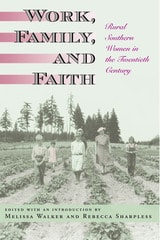
Work, Family, and Faith
Rural Southern Women in the Twentieth CenturyEdited & Intro by Melissa Walker & Rebecca Sharpless
University of Missouri Press, 2006
As the American South changed around them, becoming more urban and industrialized, some women struggled to help their families survive in the increasingly large-scale and commercial agricultural economy, while other women eagerly seized opportunities to engage in rural reform, get better educations, and work at off-farm jobs. Whether they moved to the cities or stayed on the farms, most of these women continued to struggle against poverty and relied on tradition and inner strength to get by.
This well-researched, sharply focused, and keenly insightful collection of essays takes readers across the twentieth-century South, from rural roadside stands to tobacco fields to Sloss-Sheffield Steel’s “Sloss Quarters” in Birmingham. Covering the full scope of southern rural women’s varied lives, this book will be of particular value to anyone interested in sociology, women’s studies, or southern history.
Working Together for Change
Collaborative Change Research, Evaluation, and Design, Volume 5Edited by Lisa M. Vaughn, Sara Neyer, and Kathie Maynard
University of Minnesota Press, 2023
Strategies for engaging key stakeholders—evaluators, researchers, and designers—to discuss frameworks for promoting collaborative change.
Collaborative Change Research, Evaluation, and Design (CCRED) is a framework and collection of participatory practices that engage people and the systems around them to drive community outcomes. This framework emerged out of the recognition that deep participation (or engagement) is frequently missing in collaborative impact approaches. When collaborative change is implemented effectively, community members are viewed as valuable owners and experts instead of being seen as disinterested or unqualified partners.
CCRED is a social action process with dual goals of collective empowerment and the deepening of social knowledge. Executed successfully, CCRED has the potential to increase the rigor, reach, and relevance of research, evaluation, and design translated to meaningful action. Written in an easily accessible, narrative style, Working Together for Change, the fourth volume in the Interdisciplinary Community Engaged Research for Health series edited by Farrah Jacquez and Lela Svedin brings together evaluators, researchers, and designers to describe collaborative change by describing their own work in the space.

World-Systems Analysis
An IntroductionImmanuel Wallerstein
Duke University Press, 2004
Wallerstein explains the defining characteristics of world-systems analysis: its emphasis on world-systems rather than nation-states, on the need to consider historical processes as they unfold over long periods of time, and on combining within a single analytical framework bodies of knowledge usually viewed as distinct from one another—such as history, political science, economics, and sociology. He describes the world-system as a social reality comprised of interconnected nations, firms, households, classes, and identity groups of all kinds. He identifies and highlights the significance of the key moments in the evolution of the modern world-system: the development of a capitalist world-economy in the sixteenth-century, the beginning of two centuries of liberal centrism in the French Revolution of 1789, and the undermining of that centrism in the global revolts of 1968. Intended for general readers, students, and experienced practitioners alike, this book presents a complete overview of world-systems analysis by its original architect.