150 books match the query 'Social psychology' and 4 start with w

cover of Ways & Power Of Love: Techniques Of Moral Transformation

Ways & Power Of Love

Techniques Of Moral Transformation

Pitirim A. Sorokin

Templeton Press, 2002

The Ways and Power of Love was originally published in 1954 when Pitirim Sorokin was in the twilight of his career and leading the Harvard Research Center in Creative Altruism. His elaborate scientific analysis of love with regard to its higher and lower forms, its causes and effects, its human and cosmic significance, and its core features constitutes the first study on this topic in world literature to date.

Sorokin was the one absolutely essential twentieth-century pioneer in the study of love at the interface of science and religion. Bringing The Ways and Power of Love back into print allows a new generation of readers to appreciate Sorokin's genius and to move forward with his endeavor at a time when civilization itself continues to be threatened by a marked inability to live up to the ideal of love for all humankind. It is certainly right to hope, with Sorokin, that progress in knowledge about love can move humanity forward to a better future. Turning the sciences toward the study of love is no easy task, but it can and must be done.

[more]
cover of Weighty Problems: Embodied Inequality at a Children’s Weight Loss Camp

Weighty Problems

Embodied Inequality at a Children’s Weight Loss Camp

Laura Backstrom

Rutgers University Press, 2019
Many parents, teachers, and doctors believe that childhood obesity is a social problem that needs to be solved. Yet, missing from debates over what caused the rise in childhood obesity and how to fix it are the children themselves. By investigating how contemporary cultural discourses of childhood obesity are experienced by children, Laura Backstrom illustrates how deeply fat stigma is internalized during the early socialization experiences of children. Weighty Problems details processes of embodied inequality: how the children came to recognize inequalities related to their body size, how they explained the causes of those differences, how they responded to micro-level injustices in their lives, and how their participation in a weight loss program impacted their developing self-image. The book finds that embodied inequality is constructed and negotiated through a number of interactional processes including resocialization, stigma management, social comparisons, and attribution.
[more]
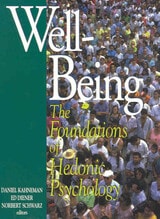
cover of Well-Being: Foundations of Hedonic Psychology

Well-Being

Foundations of Hedonic Psychology

Daniel Kahneman

Russell Sage Foundation, 1999

The nature of well-being is one of the most enduring and elusive subjects of human inquiry. Well-Being draws upon the latest scientific research to transform our understanding of this ancient question. With contributions from leading authorities in psychology, social psychology, and neuroscience, this volume presents the definitive account of current scientific efforts to understand human pleasure and pain, contentment and despair. The distinguished contributors to this volume combine a rigorous analysis of human sensations, emotions, and moods with a broad assessment of the many factors, from heredity to nationality, that bear on our well-being. Using the tools of experimental science, the contributors confront the puzzles of human likes and dislikes. Why do we grow accustomed and desensitized to changes in our lives, both good and bad? Does our happiness reflect the circumstances of our lives or is it determined by our temperament and personality? Why do humans acquire tastes for sensations that are initially painful or unpleasant? By examining the roots of our everyday likes and dislikes, the book also sheds light on some of the more extreme examples of attraction and aversion, such as addiction and depression. Among its wide ranging inquiries, Well-Being examines systematic differences in moods and behaviors between genders, explaining why women suffer higher rates of depression and anxiety than men, but are also more inclined to express positive emotions. The book also makes international comparisons, finding that some countries' populations report higher levels of happiness than others. The contributors deploy an array of methods, from the surveys and questionnaires of social science to psychological and physiological experiments, to develop a comprehensive new approach to the study of well-being. They show how the sensory pleasures of the body can tells us something about the higher pleasures of the mind and even how the effectiveness of our immune system can depend upon the health of our social relationships.
[more]
cover of Why Would Anyone Do That?: Lifestyle Sport in the Twenty-First Century

Why Would Anyone Do That?

Lifestyle Sport in the Twenty-First Century

Stephen C. Poulson

Rutgers University Press, 2016

Triathlons, such as the famously arduous Ironman Triathlon, and “extreme” mountain biking—hair-raising events held over exceedingly dangerous terrain—are prime examples of the new “lifestyle sports” that have grown in recent years from oddball pursuits, practiced by a handful of characters, into multi-million-dollar industries. In Why Would Anyone Do That? sociologist Stephen C. Poulson offers a fascinating exploration of these new and physically demanding sports, shedding light on why some people find them so compelling.
 
Drawing on interviews with lifestyle sport competitors, on his own experience as a participant, on advertising for lifestyle sport equipment, and on editorial content of adventure sport magazines, Poulson addresses a wide range of issues. He notes that these sports are often described as “authentic” challenges which help keep athletes sane given the demands they confront in their day-to-day lives. But is it really beneficial to “work” so hard at “play?” Is the discipline required to do these sports really an expression of freedom, or do these sports actually impose extraordinary degrees of conformity upon these athletes? Why Would Anyone Do That? grapples with these questions, and more generally with whether lifestyle sport should always be considered “good” for people. 
 
Poulson also looks at what happens when a sport becomes a commodity—even a sport that may have begun as a reaction against corporate and professional sport—arguing that commodification inevitably plays a role in determining who plays, and also how and why the sport is played. It can even help provide the meaning that athletes assign to their participation in the sport. Finally, the book explores the intersections of race, class, and gender with respect to participation in lifestyle and endurance sports, noting in particular that there is a near complete absence of people of color in most of these contests. In addition, Poulson examines how concepts of masculinity in triathlons have changed as women’s roles in this sport increase.


[more]