Results by title
3027 books match the query 'Sociology' and 115 start with w
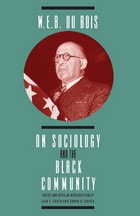
W. E. B. DuBois on Sociology and the Black Community
W. E. B. DuBois
University of Chicago Press, 1978
The editors provide an annotated bibliography, a lengthy overview of Du Bois's life and work, and detailed introductions to the selections.
"The most significant contribution of this book is its inclusive look at Du Bois as both academic and activist. . . . Individuals interested in the study of social issues and political sociology would benefit from reading and discussing this book."—Paul Kriese, Sociology: Reviews of New Books
"Green and Driver, informing this volume with a 48-page essay that summarizes Du Bois' career and places him in the context of the profession, have intelligently organized his writings. . . . A welcome contribution that should have wide use."—Elliott Rudwick, Contemporary Sociology
W. E. B. DuBois on Sociology and the Black Community
W. E. B. DuBois
University of Chicago Press, 1978
Historian, journalist, educator, and civil rights advocate W. E. B. Du Bois was perhaps most accomplished as a sociologist of race relations and of the black community in the United States. This volume collects his most important sociological writings from 1898 to 1910. The eighteen selections include five on Du Bois's conception of sociology and sociological research, especially as a tool in the struggle for racial justice; excerpts from studies of black communities in the South and the North, including The Philadelphia Negro; writings on black culture and social life, with a selection from The Negro American Family; and later works on race relations in the United States and elsewhere after World War II. This section includes a powerful fiftieth-anniversary reassessment of his classic 1901 article in the Atlantic in which he predicted that "the problem of the twentieth century is the problem of the color line."
The editors provide an annotated bibliography, a lengthy overview of Du Bois's life and work, and detailed introductions to the selections.
"The most significant contribution of this book is its inclusive look at Du Bois as both academic and activist. . . . Individuals interested in the study of social issues and political sociology would benefit from reading and discussing this book."—Paul Kriese, Sociology: Reviews of New Books
"Green and Driver, informing this volume with a 48-page essay that summarizes Du Bois' career and places him in the context of the profession, have intelligently organized his writings. . . . A welcome contribution that should have wide use."—Elliott Rudwick, Contemporary Sociology

Waiting For The Revolution To End
Syrian Displacement, Time and SubjectivityCharlotte Al-Khalili
University College London, 2023
Based on more than three years of embedded fieldwork with Syrians displaced in the border city of Gaziantep (southern Turkey), this book places the Syrian revolution and its tragic aftermath under ethnographic scrutiny. It charts the evolution from peaceful uprising (2011) to armed confrontation (2012), descent into fully fledged conflict (2013) and finally to proxy war (2015), to propose an understanding of revolution beyond success and failure.
While the Assad regime remains in place, the Syrian revolution (al-thawra) still holds a transformational power that can be located on intimate and world-making scales. Charlotte Al-Khalili traces the unintended consequences of revolution to reveal the reshaping of Syrian life-worlds and exiles’ evolving theorizations, experiences, and imaginations of al-thawra. She describes the in-between spatio-temporal realm inhabited by Syrians displaced to Turkey as they await the revolution’s outcomes and maps the revolution’s multidimensional and multi-scalar effects on their everyday life. By following the chronology of events inside Syria and Syrians’ geography of displacement, Waiting for the Revolution to End makes the relation between revolution and displacement its centerpiece, both as an ethnographic object and an analytical device.
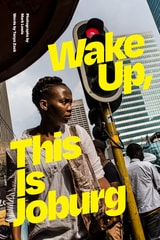
Wake Up, This Is Joburg
Words by Tanya Zack, Photographs by Mark Lewis
Duke University Press, 2022
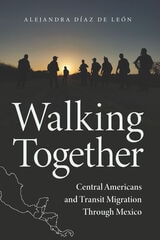
Walking Together
Central Americans and Transit Migration Through MexicoAlejandra Díaz de León
University of Arizona Press, 2023
Migrants in transit form several types of social networks, develop trust, and engage in acts of solidarity. The need to be recognized and grieved, compounded by the practical use of pooling information and resources, leads migrants to form small, strong groups called road families. Through the generalized sharing of information and small items such as food and blankets, migrants also form a transient community that includes everyone on the road at the same time. Sociologist Alejandra Díaz de León shows the trajectories of families that left together, showing, surprisingly, that families might not be the best social arrangement in transit.
Drawing on multisited research, this work contributes to debates on the role of social networks in clandestine migration processes and to discussions on how people create social networks and trust under violent and stressful situations. The detailed ethnographic narratives and accessible writing weave together theory with empirical observations to highlight and humanize the migrant experience.
Sitting at the intersection of border studies, immigration studies, and Latinx studies, this concise volume shows how Central American migrants in transit through Mexico survive the precarious and unpredictable road by forming different types of social ties.
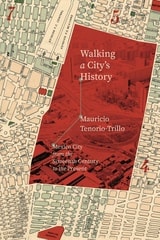
Walking a City's History
Mexico City from the Sixteenth Century to the PresentMauricio Tenorio-Trillo
University of Chicago Press, 2026
Walking a City’sHistory is both a richly documented panoramic view of Mexico City’s long history and an intimate essay on its social and cultural fabric. In this book, Mauricio Tenorio-Trillo uses his expertise as a historian and his talents as a storyteller to bring the city to life.
Using influential moments in Mexico City’s history from the Battle of Tenochtitlán in 1521 to the present, Tenorio-Trillo illustrates the capital’s transformations against a national and global background. Walking a City’s History offers an original, unique perspective on the social, architectural, artistic, and political dimensions of Mexico City, guided by chronicles, literary works, historical accounts, and the author’s own lifetime of walks through the city.
Walking in Cities
Quotidian Mobility as Urban Theory, Method, and PracticeEvrick Brown
Temple University Press, 2015
Walking connects the rhythms of urban life to the configuration of urban spaces. As the contributors and editors show in Walking in Cities, walking also reflects the systematic inequalities that order contemporary urban life. Walking has different meanings because it can be a way of temporarily “taking possession” of urban space, or it can make the relatively powerless more vulnerable to crime. The essays in Walking in Cities explore how walking intersects with sociological dimensions such as gender, race and ethnicity, social class, and power.
Various chapters explorethe flâneuse, or female urban drifter, in Tehran’s shopping malls; Hispanic neighborhoods in New York, San Diego, and El Paso; and the intra-neighborhood and inter-class dynamics of gentrification in Greenpoint, Brooklyn.The essays in Walking in Cities provide important lessons about urban life.

Wallbangin'
Graffiti and Gangs in L.A.Susan A. Phillips
University of Chicago Press, 1999
Anthropologist Susan Phillips enters the lives of the African-American and Chicano gang members to write a comprehensive guide to their symbolic and visual expression. She not only decodes the graffiti—explaining how, for instance, gang boundaries are visually delimited and how "memorial" graffiti functions—but she also places it in the context of the changing urban landscapes within the city. Graffiti, she argues, is inextricably linked to political change, to race, and to art, and she demonstrates how those connections are played out in contemporary L.A. Wallbangin' is, on this level, an iconography of street imagery. But it is also a very personal narrative about entering the world of L.A. street gangs—a world of pride, enemies, affirmation, and humanity where gang members use graffiti to redefine their social and political position in society.
To many outsiders, graffiti is cryptic, senseless scribbling. But Phillips explains it as an ingenious and creative solution to the disenfranchisement felt by those who produce it. With personal narratives, provocative photography, and contemporary voices, Wallbangin' unlocks the mysteries behind street-level ideologies and their visual manifestations.
Wannabe U
Inside the Corporate UniversityGaye Tuchman
University of Chicago Press, 2009
Based on years of observation at a large state university, Wannabe U tracks the dispiriting consequences of trading in traditional educational values for loyalty to the market. Aping their boardroom idols, the new corporate administrators at such universities wander from job to job and reductively view the students there as future workers in need of training. Obsessed with measurable successes, they stress auditing and accountability, which leads to policies of surveillance and control dubiously cloaked in the guise of scientific administration. In this eye-opening exposé of the modern university, Tuchman paints a candid portrait of the corporatization of higher education and its impact on students and faculty.
Like the best campus novelists, Tuchman entertains with her acidly witty observations of backstage power dynamics and faculty politics, but ultimately Wannabe U is a hard-hitting account of how higher education’s misguided pursuit of success fails us all.

Wannabes, Goths, and Christians
The Boundaries of Sex, Style, and StatusAmy C. Wilkins
University of Chicago Press, 2008
Amy C. Wilkins’s intimate ethnography of these three subcultures reveals a complex tug-of-war between the demands of race, class, and gender in which transgressing in one realm often means conforming to expectations in another. Subcultures help young people, especially women, navigate these connecting territories by offering them different sexual strategies: wannabes cross racial lines, goths break taboos by becoming involved with multiple partners, and Christians forego romance to develop their bond with God. Avoiding sanctimonious hysteria over youth gone astray, Wilkins meets these kids on their own terms, and the result is a perceptive and provocative portrait of the structure of young lives.
Wanting Children
Family-Planning Policies and the Engineering of America’s PopulationLeonard M. Lopoo
University of Chicago Press, 2026
On the eugenic origins of US reproductive laws—and the surprising policy changes needed to remedy it.
The US government spends hundreds of millions of dollars every year to promote and facilitate contraception. Whereas other wealthy countries support broader fertility interventions under the banner of “family planning,” the United States remains committed only to helping Americans—and especially poorer Americans—plan not to have a family.
In an unflinching treatise on one of the century’s defining social issues, Leonard M. Lopoo shows how the US’s asymmetric reproductive approach is a vestige of the country’s earlier sins: America’s first reproductive policies were authored by some of the twentieth century’s most prominent eugenicists, a group whose primary goal was birth prevention among lower economic classes and racial minorities. These origins have consequently created a contradictory position for the country today, in which contraception for the lowest-income Americans is subsidized, while many upper-class Americans employ technologies to have children with preferable traits.
Lopoo recasts this personal and politicized topic in elegant, stark terms. If the United States is to legislate reproduction, the only defensible approach is equity: helping people who want children to have children. Wanting Children posits a new and elevating criterion for how we think about fertility in the twenty-first century.
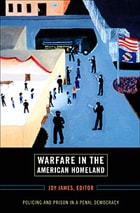
Warfare in the American Homeland
Policing and Prison in a Penal DemocracyJoy James, ed.
Duke University Press, 2007
Contributors consider the interning or policing of citizens of color, the activism of radicals, structural racism, destruction and death in New Orleans following Hurricane Katrina, and the FBI Counterintelligence Program designed to quash domestic dissent. Among the first-person accounts are an interview with Dhoruba Bin Wahad, a Black Panther and former political prisoner; a portrayal of life in prison by a Plowshares nun jailed for her antinuclear and antiwar activism; a discussion of the Puerto Rican Independence Movement by one of its members, now serving a seventy-year prison sentence for sedition; and an excerpt from a 1970 letter by the Black Panther George Jackson chronicling the abuses of inmates in California’s Soledad Prison. Warfare in the American Homeland also includes the first English translation of an excerpt from a pamphlet by Michel Foucault and others. They argue that the 1971 shooting of George Jackson by prison guards was a murder premeditated in response to human-rights and justice organizing by black and brown prisoners and their supporters.
Contributors. Hishaam Aidi, Dhoruba Bin Wahad (Richard Moore), Marilyn Buck, Marshall Eddie Conway, Susie Day, Daniel Defert, Madeleine Dwertman, Michel Foucault, Carol Gilbert, Sirène Harb, Rose Heyer, George Jackson, Joy James, Manning Marable, William F. Pinar, Oscar Lòpez Rivera, Dylan Rodríguez, Jared Sexton, Catherine vön Bulow, Laura Whitehorn, Frank B. Wilderson III

Wartime Shipyard
A STUDY IN SOCIAL DISUNITYKatherine Archibald
University of Illinois Press, 2006
An eye-opening first-hand account of life in a WWII shipyard from a woman's perspective
In 1942, Katherine Archibald, a graduate student at Berkeley, left the halls of academe to spend two years working in a nearby Oakland shipyard. She arrived with a host of preconceptions about the American working class, race relations and the prospect for their improvement, and wartime unity. Her experience working in a shipyard where women were seen as intruders, where "Okies" and black migrants from the South were regarded with barely-disguised hatred, and where trade unions preferred protecting their turf to defending workers' rights, threw much of her liberal faith into doubt.
Archibald's 1947 book about her experiences, Wartime Shipyard: A Study in Social Disunity, remains a classic account of life and labor on the home front. This new edition includes an introduction written by historians Eric Arnesen and Alex Lichtenstein, who explore Archibald's work in light of recent scholarship on women and African Americans in the wartime workplace.

Waste Works
Vital Politics in Urban GhanaBrenda Chalfin
Duke University Press, 2023
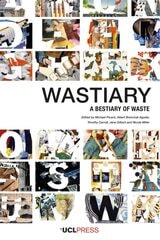
Wastiary
A Bestiary of WasteEdited by Michael Picard, Albert Brenchat-Aguilar, Timothy Carroll, Jane Gilbert, and Nicola Miller
University College London, 2023
Wastiary: A Bestiary of Waste is a creative exercise that occupies letters, numbers, and symbols of Western academic language to compose a list of thirty-five short entries on the uncomfortable but pressing topic of waste in the contemporary world. The collection is richly illustrated with artwork, photography, collage, and mixed media and conveys the message that various forms of waste and pollution have achieved a beast-like or untamable quality, at times pungently transferring to considerations of “the human,” or humans treated as waste.
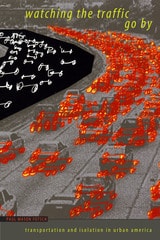
Watching the Traffic Go By
Transportation and Isolation in Urban AmericaBy Paul Mason Fotsch
University of Texas Press, 2007
2007 — Jane Jacobs Urban Communication Publication Award – Urban Communication Foundation
As twentieth-century city planners invested in new transportation systems to deal with urban growth, they ensured that the automobile rather than mass transit would dominate transportation. Combining an exploration of planning documents, sociological studies, and popular culture, Paul Fotsch shows how our urban infrastructure developed and how it has shaped American culture ever since.
Watching the Traffic Go By emphasizes the narratives underlying our perceptions of innovations in transportation by looking at the stories we have built around these innovations. Fotsch finds such stories in the General Motors "Futurama" exhibit at the 1939 World's Fair, debates in Munsey's magazine, films such as Double Indemnity, and even in footage of the O. J. Simpson chase along Los Angeles freeways.
Juxtaposed with contemporaneous critiques by Lewis Mumford, Theodor Adorno, and Max Horkheimer, Fotsch argues that these narratives celebrated new technologies that fostered stability for business and the white middle class. At the same time, transportation became another system of excluding women and the poor, especially African Americans, by isolating them in homes and urban ghettos.
A timely, interdisciplinary analysis, Watching the Traffic Go By exposes the ugly side of transportation politics through the seldom-used lens of popular culture.
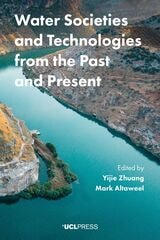
Water Societies and Technologies from the Past and Present
Edited by Mark Altaweel and Yijie Zhuang
University College London, 2018
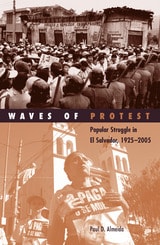
Waves of Protest
Popular Struggle in El Salvador, 1925–2005Paul D. Almeida
University of Minnesota Press, 2008
One of the first longitudinal studies of collective resistance in the developing world, Waves of Protest examines large-scale contentious action in El Salvador during critical eras in the country’s history.
Providing a compelling analysis of the massive waves of protests from the early twentieth century to the present in El Salvador, Paul D. Almeida fully chronicles one of the largest and most successful campaigns against globalization and privatization in the Americas. Drawing on original protest data from newspapers and other archival sources, Almeida makes an impassioned argument that regime liberalization organizes civil society and, conversely, acts of state-sponsored repression radicalize society. He correlates the ebb and flow of protest waves to the changes in regime liberalization and subsequent de-democratization and back to liberalization.
Almeida shows how institutional access and competitive elections create opportunity for civic organizations that become radicalized when authoritarianism increases, resulting at times in violent protest campaigns that escalate to revolutionary levels. In doing so, he brings negative political conditions and threats to the forefront as central forces driving social movement activity and popular contention in the developing world.
Paul D. Almeida is assistant professor of sociology at Texas A&M University. He is coeditor with Hank Johnston of Latin American Social Movements: Globalization, Democratization, and Transnational Networks.

Wax and Gold
Tradition and Innovation in Ethiopian CultureDonald N. Levine
University of Chicago Press, 1965
We Are Not Babysitters
Family Childcare Providers Redefine Work and CareTuominen, Mary
Rutgers University Press, 2003
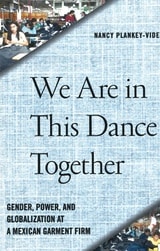
We Are in This Dance Together
Gender, Power, and Globalization at a Mexican Garment FirmPlankey-Videla, Nancy
Rutgers University Press, 2012
Changes in the global economy have real and contradictory outcomes for the everyday lives of women workers. In 2001, Nancy Plankey-Videla had a rare opportunity to witness these effects firsthand. Having secured access to one of Latin America's top producers of high-end men's suits in Mexico for participant-observer research, she labored as a machine operator for nine months on a shop floor made up, mostly, of women. The firm had recently transformed itself from traditional assembly techniques, to lean, cutting-edge, Japanese-style production methods. Lured initially into the firm by way of increased wages and benefits, workers had helped shoulder the company's increasing debts. When the company's plan for successful expansion went awry and it reneged on promises it had made to the workforce, women workers responded by walking out on strike.
Building upon in-depth interviews with over sixty workers, managers, and policy makers, Plankey-Videla documents and analyzes events leading up to the female-led factory strike and its aftermath—including harassment from managers, corrupt union officials and labor authorities, and violent governor-sanctioned police actions. We Are in This Dance Together illustrates how the women's shared identity as workers and mothers—deserving of dignity, respect, and a living wage—became the basis for radicalization and led to further civic organizing against the state, the company, and the corrupt union to demand justice.
We Belong Here
Gentrification, White Spacemaking, and a Black Sense of PlaceShani Adia Evans
University of Chicago Press, 2025
In We Belong Here, sociologist Shani Adia Evans offers an intimate look at gentrification from the inside, documenting the reactions of Albina residents as the racial demographics of their neighborhood shift. As White culture becomes centered in Northeast, Black residents recount their experiences with what Evans refers to as “White watching,” the questioning look on the faces of White people they encounter, which conveys an exclusionary message: “What are you doing here?” This, Evans shows, is a prime example of what she calls “White spacemaking”: the establishment of White space—spaces in which Whiteness is assumed to be the norm and non-Whites are treated with suspicion—in formerly non-White neighborhoods. Evans also documents Black residents’ efforts to create and maintain places for Black belonging in White-dominated Portland. While gentrification typically describes socioeconomic changes that may have racial implications, White spacemaking allows us to understand racism as a primary mechanism of neighborhood change. We Belong Here illuminates why gentrification and White spacemaking should be examined as intersecting, but not interchangeable, processes of neighborhood change.
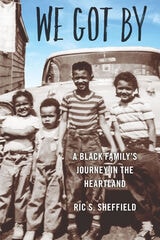
We Got By
A Black Family’s Journey in the HeartlandRic S. Sheffield
The Ohio State University Press, 2022
Spanning four generations and assessing the legacies of traumatic events (arrests, murders, suicide) that are inextricable from the racial dynamics of the small community his family called home, this gripping memoir is a heartfelt, clear-eyed, and rare chronicle of Black life in the rural Midwest. Experiencing the burden of racism among people who refused to accept that such a thing existed only made the isolation feel that much worse to Sheffield and his relatives. And yet, they overcame the obstacles and managed to persist: they got by.
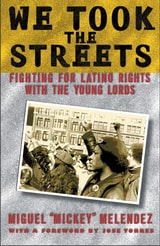
We Took the Streets
Fighting for Latino Rights with the Young LordsMiguel "Mickey" Melendez
Rutgers University Press, 0
In this memoir, Melendez describes with the unsparing eye of an insider the idealism, anger, and vitality of the Lords as they rose to become the most respected and powerful voice of Puerto Rican empowerment in the country. He also traces the internal ideological disputes that led the group, but not the mission, to fracture in 1972. Written with passion and compelling detail, We Took the Streets tells the story of how one group took on the establishment—and won.
In 1968 Miguel “Mickey” Melendez was a college student, developing pride in his Cuban and Puerto Rican cultural identity and becoming increasingly aware of the effects of social inequality on Latino Americans. Joining with other like-minded student activists, Melendez helped form the central committee of the New York branch of the Young Lords, one of the most provocative and misunderstood radical groups to emerge during the 1960s. Incorporating techniques of direct action and community empowerment, the Young Lords became a prominent force in the urban northeast. From their storefront offices in East Harlem, they defiantly took back the streets of El Barrio. In addition to running clothing drives, day-care centers, and food and health programs, they became known for their media-savvy tactics and bold actions, like the takeovers of the First People’s Church and Lincoln Hospital.
Webbed Connectivities
The Imperial Sociology of Sex, Gender, and SexualityVrushali Patil
University of Minnesota Press, 2022
Constructing a new approach for centering empire in productions of racialized, gendered, and sexualized difference
One of the oldest, most persistent issues in gender and sexuality studies is the dominance of white, northern theorizing and its consequences for what we know about sex, gender, and sexuality. There is an ongoing neglect of the significance of histories of empire and coloniality, particularly in U.S. sociology, where the United States and its theoretical productions are routinely sanitized of such histories. In Webbed Connectivities, Vrushali Patil offers a global historical sociology that reembeds the United States within histories of empire, situating the emergence of northern and U.S.-based concepts and frameworks squarely within these histories.
Webbed Connectivities intercepts the political economy of knowledge production within the social sciences to argue for the work of centering the role of imperial hierarchies in knowledge production and circulation. Patil develops a new approach—webbed connectivities—which tracks imperial processes and impacts across borders, shifting from an emphasis on particular experiences and identities to the constitution and creation of the categories themselves.
A sociologist of feminist thought and gender and sexuality studies, Patil explores the theoretical spaces that spotlighting imperial hierarchies within knowledge production might open, including making productive and essential connections across sites of the global south and north.
Webs of Reality
Social Perspectives on Science and ReligionStahl, William
Rutgers University Press, 2002
Science and religion are often thought to be advancing irreconcilable goals and thus to be mutually antagonistic. Yet in the often acrimonious debates between the scientific and religions communities, it is easy to lose sight of the fact that both science and religion are systems of thought and knowledge that aim to understand the world and our place in it.
Webs of Reality is a rare examination of the interrelationship between religion and science from a social science perspective, offering a broader view of the relationship, and posing practical questions regarding technology and ethics. Emphasizing how science and religion are practiced instead of highlighting the differences between them, the authors look for the subtle connections, tacit understandings, common history, symbols, and implicit myths that tie them together. How can the practice of science be understood from a religious point of view? What contributions can science make to religious understanding of the world? What contributions can the social sciences make to understanding both knowledge systems? Looking at religion and science as fields of inquiry and habits of mind, the authors discover not only similarities between them but also a wide number of ways in which they complement each other.
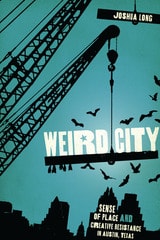
Weird City
Sense of Place and Creative Resistance in Austin, TexasBy Joshua Long
University of Texas Press, 2010
Austin, Texas, at the beginning of the twenty-first century, is experiencing one of the most dynamic periods in its history. Wedged between homogenizing growth and a long tradition of rebellious nonconformity, many Austinites feel that they are in the midst of a battle for the city's soul.
From this struggle, a movement has emerged as a form of resistance to the rapid urban transformation brought about in recent years: "Keep Austin Weird" originated in 2000 as a grassroots expression of place attachment and anti-commercialization. Its popularity has led to its use as a rallying cry for local business, as a rhetorical tool by city governance, and now as the unofficial civic motto for a city experiencing rapid growth and transformation.
By using "Keep Austin Weird" as a central focus, Joshua Long explores the links between sense of place, consumption patterns, sustainable development, and urban politics in Austin. Research on this phenomenon considers the strong influence of the "Creative Class" thesis on Smart Growth strategies, gentrification, income inequality, and social polarization made popular by the works of Richard Florida. This study is highly applicable to several emerging "Creative Cities," but holds special significance for the city considered the greatest creative success story, Austin.
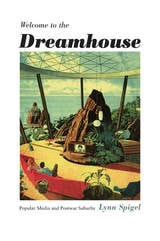
Welcome to the Dreamhouse
Popular Media and Postwar SuburbsLynn Spigel
Duke University Press, 2001
The volume considers not only how the media portrayed suburban family life, but also how both middle-class ideals and a perceived division between private and public worlds helped to shape the visual forms, storytelling practices, and reception of postwar media and consumer culture. Spigel also explores those aspects of suburban culture that media typically render invisible. She looks at the often unspoken assumptions about class, nation, ethnicity, race, and sexual orientation that underscored both media images (like those of 1960s space missions) and social policies of the mass-produced suburb. Issues of memory and nostalgia are central in the final section as Spigel considers how contemporary girls use television reruns as a source for women’s history and then analyzes the current nostalgia for baby boom era family ideals that runs through contemporary images of new household media technologies.
Containing some of Spigel’s well-known essays on television’s cultural history as well as new essays on a range of topics dealing with popular visual culture, Welcome to the Dreamhouse is important reading for students and scholars of media and communications studies, popular culture, American studies, women’s studies, and sociology.
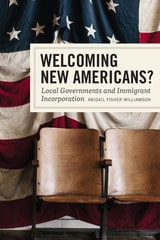
Welcoming New Americans?
Local Governments and Immigrant IncorporationAbigail Fisher Williamson
University of Chicago Press, 2018
Abigail Fisher Williamson explores why and how local governments across the country are taking steps to accommodate immigrants, sometimes despite serious political opposition. Drawing on case studies of four new immigrant destinations—Lewiston, Maine; Wausau, Wisconsin; Elgin, Illinois; and Yakima, Washington—as well as a national survey of local government officials, she finds that local capacity and immigrant visibility influence whether local governments take action to respond to immigrants. State and federal policies and national political rhetoric shape officials’ framing of immigrants, thereby influencing how municipalities respond. Despite the devolution of federal immigration enforcement and the increasingly polarized national debate, local officials face on balance distinct legal and economic incentives to welcome immigrants that the public does not necessarily share. Officials’ efforts to promote incorporation can therefore result in backlash unless they carefully attend to both aiding immigrants and increasing public acceptance. Bringing her findings into the present, Williamson takes up the question of whether the current trend toward accommodation will continue given Trump’s anti-immigrant rhetoric and changes in federal immigration policy.
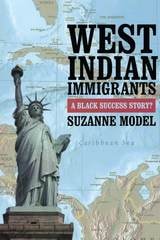
West Indian Immigrants
A Black Success Story?Suzanne Model
Russell Sage Foundation, 2008

What About Mozart? What About Murder?
Reasoning From CasesHoward S. Becker
University of Chicago Press, 2014
Becker draws on a lifetime of sociological research and wisdom to show, in helpful detail, how to use a variety of kinds of cases to build sociological knowledge. With his trademark conversational flair and informal, personal perspective Becker provides a guide that researchers can use to produce general sociological knowledge through case studies. He champions research that has enough data to go beyond guesswork and urges researchers to avoid what he calls “skeleton cases,” which use fictional stories that pose as scientific evidence. Using his long career as a backdrop, Becker delivers a winning book that will surely change the way scholars in many fields approach their research.
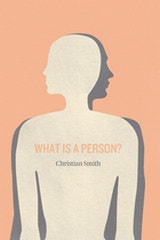
What Is a Person?
Rethinking Humanity, Social Life, and the Moral Good from the Person UpChristian Smith
University of Chicago Press, 2010
What is a person? This fundamental question is a perennial concern of philosophers and theologians. But, Christian Smith here argues, it also lies at the center of the social scientist’s quest to interpret and explain social life. In this ambitious book, Smith presents a new model for social theory that does justice to the best of our humanistic visions of people, life, and society.
Finding much current thinking on personhood to be confusing or misleading, Smith finds inspiration in critical realism and personalism. Drawing on these ideas, he constructs a theory of personhood that forges a middle path between the extremes of positivist science and relativism. Smith then builds on the work of Pierre Bourdieu, Anthony Giddens, and William Sewell to demonstrate the importance of personhood to our understanding of social structures. From there he broadens his scope to consider how we can know what is good in personal and social life and what sociology can tell us about human rights and dignity.
Innovative, critical, and constructive, What Is a Person? offers an inspiring vision of a social science committed to pursuing causal explanations, interpretive understanding, and general knowledge in the service of truth and the moral good.
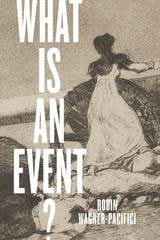
What Is an Event?
Robin Wagner-Pacifici
University of Chicago Press, 2017
What Is an Event? ranges across several disciplines, systematically analyzing the ways that events emerge, take shape, gain momentum, flow, and even get bogged down. As an exploration of how events are constructed out of ruptures, it provides a mechanism for understanding eventful forms and flows, from the micro-level of individual life events to the macro-level of historical revolutions, contemporary terrorist attacks, and financial crises. Wagner-Pacifici takes a close look at a number of cases, both real and imagined, through the reports, personal narratives, paintings, iconic images, political posters, sculptures, and novels they generate and through which they live on. What is ultimately at stake for individuals and societies in events, Wagner-Pacifici argues, are identities, loyalties, social relationships, and our very experiences of time and space. What Is an Event? provides a way for us all—as social and political beings living through events, and as analysts reflecting upon them—to better understand what is at stake in the formations and flows of the events that mark and shape our lives.
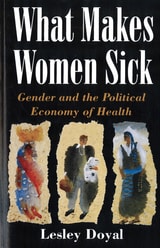
What Makes Women Sick
Gender and the Political Economy of HealthLesley Doyal
Rutgers University Press, 1995
What makes women sick? To an Ecuadorean woman, it’s nervios from constant worry about her children’s illnesses. To a woman working in a New Mexico electronics factory, it’s the solvents that leave her with a form of dementia. To a Ugandan woman, it’s HIV from her husband's sleeping with the widow of an AIDS patient. To a Bangladeshi woman, it’s a fatal infection following an IUD insertion. What they all share is a recognition that their sickness is somehow caused by situations they face every day at home and at work.
In this clearly written and compelling book, Lesley Doyal investigates the effects of social, economic, and cultural conditions on women’s health. The “fault line” of gender that continues to divide all societies has, Doyal demonstrates, profound and pervasive consequences for the health of women throughout the world. Her broad synthesis highlights variations between men and women in patterns of health and illness, and it identifies inequalities in medical care that separate groups of women from each other. Doyal’s wide-ranging arguments, her wealth of data, her use of women’s voices from many cultures—and her examples of women mobilizing to find their own solutions—make this book required reading for everyone concerned with women’s health.
What Makes Women Sick
Gender and the Political Economy of HealthLesley Doyal
Rutgers University Press, 1995
What makes women sick? To an Ecuadorean woman, it’s nervios from constant worry about her children’s illnesses. To a woman working in a New Mexico electronics factory, it’s the solvents that leave her with a form of dementia. To a Ugandan woman, it’s HIV from her husband's sleeping with the widow of an AIDS patient. To a Bangladeshi woman, it’s a fatal infection following an IUD insertion. What they all share is a recognition that their sickness is somehow caused by situations they face every day at home and at work.
In this clearly written and compelling book, Lesley Doyal investigates the effects of social, economic, and cultural conditions on women’s health. The “fault line” of gender that continues to divide all societies has, Doyal demonstrates, profound and pervasive consequences for the health of women throughout the world. Her broad synthesis highlights variations between men and women in patterns of health and illness, and it identifies inequalities in medical care that separate groups of women from each other. Doyal’s wide-ranging arguments, her wealth of data, her use of women’s voices from many cultures—and her examples of women mobilizing to find their own solutions—make this book required reading for everyone concerned with women’s health.

What Would You Do?
Juggling Bioethics and EthnographyCharles L. Bosk
University of Chicago Press, 2008
Renowned sociologist Charles L. Bosk has been observing medical care for thirty-five years. In What Would You Do? he brings his extensive experience to bear on these questions while reflecting on the ethical dilemmas that his own ethnographic research among surgeons and genetic counselors has provoked. Bosk considers whether the consent given to ethnographers by their subjects can ever be fully voluntary and informed. He questions whether promises of confidentiality and anonymity can or should be made. And he wonders if social scientists overestimate the benefits of their work while downplaying the risks.
Vital for practitioners of both the newly prominent field of bioethics and the long-established craft of ethnography, What Would You Do? will also engross anyone concerned with how our society addresses difficult health care issues.
What the Signs Say
Language, Gentrification, and Place-Making in BrooklynShonna Trinch
Vanderbilt University Press, 2020
Shonna Trinch and Edward Snajdr, a sociolinguist and an anthropologist respectively, show how the beliefs and ideas that people take as truths about language and its speakers are deployed in these different sign types. They also present in-depth ethnographic case studies that reveal how gentrification and corporate redevelopment in Brooklyn are intimately connected to public communication, literacy practices, the transformation of motherhood and gender roles, notions of historical preservation, urban planning, and systems of privilege. Far from peripheral or irrelevant, shop signs say loud and clear that language displayed in public always matters.
This book is the recipient of the 2021 Norman L. and Roselea J. Goldberg Prize from Vanderbilt University Press for the best book in the area of art or medicine.
What's so Funny?
The Comic Conception of Culture and SocietyMurray S. Davis
University of Chicago Press, 1993
Drawing on a vast array of jokes and the work of dozens of comedians from Jay Leno and Lenny Bruce to Steve Allen and Billy Crystal, Davis reminds us of the extraordinarily subversive power of comedy. When we laugh, we accept the truth of the comic moment: that this is the way life really is. The book is in two parts. In the first, Davis explores the cultural conventions that even simple jokes take apart—the rules of logic, language, rationality, and meaning. In the second, he looks at the social systems that have been at the root of jokes for centuries: authority figures, power relations, and institutions. Whatever their style, comedians use the tools of the trade—ambiguous meanings, missed signals, incongruous characters, unlikely events—to violate our expectations about the world.
Setting comedy within a rich intellectual tradition—from Plato to Freud, Hobbes to Kant, in philosophy as well as sociology—Davis makes a convincing case for comedy as a subtle, complex, and articulated theory of culture and society. He reveals the unsuspected ways in which comedy, with its spotlight on the gap between appearance and reality, the ideal and the actual, can be a powerful mode for understanding the world we have made.
When America Became Suburban
Robert A. Beauregard
University of Minnesota Press, 2006
When Care is Conditional
Immigrants and the U.S. Safety NetDani Carrillo
Russell Sage Foundation, 2024
Through in-depth interviews with Latinx immigrants in northern California, Carrillo examines three circumstances—place, gender, and immigration status—that intersect to influence an individual’s access to health care, food assistance, and other benefits. She demonstrates that place of residence affects undocumented immigrants’ ability to get care since more services are available in urban areas, where many immigrants cannot afford to live, than suburban areas, where public transportation is limited. She also shows that while both men and women who are undocumented have difficulty obtaining care, men often confront more challenges. Undocumented women who are pregnant or mothers are eligible for some government safety net programs and rely on informal coethnic networks or a “guiding figure”—a relative, friend, neighbor, or coworker—who explains how to get care and makes them feel confident in accessing it. Most undocumented men, in contrast, are not eligible for public programs except in a medical emergency and often lack someone to guide them directly to care. Men sometimes steer one another to jobs through worker centers—where they may learn about various services and take advantage of those that increase their employability, like English or computer classes—but a culture of masculinity leads them to downplay medical problems and seek health care only in a crisis.
As undocumented immigrants navigate this exclusionary system, Carrillo finds that they resist the rhetoric stigmatizing them as lawbreakers. Dismissing the importance of “papers” and highlighting their work ethic, they question the fairness of U.S. immigration policies and challenge ideas about who deserves care.
Carrillo offers concrete recommendations, such as improving labor conditions and reexamining benefit eligibility, to increase access to care for not only undocumented immigrants but also people who have been excluded because of their race, criminal record, gender identity, sexual orientation, or disability. She argues that working with and across populations creates a powerful form of solidarity in advocating for inclusive care.
When Care Is Conditional provides compelling insights into how safety net and immigration policies intersect to affect people’s everyday lives and calls for a cultural shift so that the United States can provide unconditional care for all.
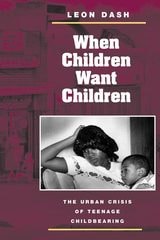
When Children Want Children
THE URBAN CRISIS OF TEENAGE CHILDBEARINGLeon Dash
University of Illinois Press, 2003
Pulitzer Prize-winning author and former Washington Post reporter Leon Dash spent a year living in one of the poorest ghettos in Washington, D.C., and a total of seventeen months conducting interviews examining the causes and effects of the ever-lowering age of teenage parents among poor black youths.
Dash had expected to find inadequate sex education and lack of birth control to be the root cause of the growing trend toward early motherhood, but his conversations with the mothers themselves revealed the truth to be more complex.
A riveting account of the human stories behind the statistics, When Children Want Children allows readers to hear the voices of young adults struggling with poverty and parenthood and gets to the heart of teenage parents’ cultural values and motivations.
When Formality Works
Authority and Abstraction in Law and OrganizationsArthur L. Stinchcombe
University of Chicago Press, 2001
We have come to assume that governing our social activities by advance planning—by creating abstract descriptions of what ought to happen and adjusting these descriptions as situations change—is not as efficient and responsive as dealing directly with the real substance of the situation at hand. Stinchcombe argues the opposite. When a plan is designed to correct itself and keep up with the reality it is meant to govern, it can be remarkably successful. He points out a wide range of examples where this is the case, including architectural blueprints, immigration law, the construction of common law by appeals courts, Fannie Mae's secondary mortgage market, and scientific paradigms and programs.
Arguing that formality has been misconceived as consisting mainly of its defects, Stinchcombe shows how formality, at its best, can serve us much better than ritual obedience to poorly laid plans or a romantic appeal to "real life."
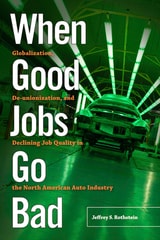
When Good Jobs Go Bad
Globalization, De-unionization, and Declining Job Quality in the North American Auto IndustryRothstein, Jeffrey S
Rutgers University Press, 2016
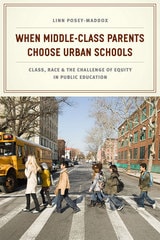
When Middle-Class Parents Choose Urban Schools
Class, Race, and the Challenge of Equity in Public EducationLinn Posey-Maddox
University of Chicago Press, 2014
Drawing on in-depth research at an urban elementary school, Posey-Maddox examines parents’ efforts to support the school through their outreach, marketing, and volunteerism. She shows that when middle-class parents engage in urban school communities, they can bring a host of positive benefits, including new educational opportunities and greater diversity. But their involvement can also unintentionally marginalize less-affluent parents and diminish low-income students’ access to the improving schools. In response, Posey-Maddox argues that school reform efforts, which usually equate improvement with rising test scores and increased enrollment, need to have more equity-focused policies in place to ensure that low-income families also benefit from—and participate in—school change.

When Pain Strikes
Bill Burns, Cathy Busby, and Kim Sawchuk, Editors
University of Minnesota Press, 1998
When Pain Strikes was first published in 1998. Minnesota Archive Editions uses digital technology to make long-unavailable books once again accessible, and are published unaltered from the original University of Minnesota Press editions.
When pain strikes, do you raid the medicine cabinet? Read a self-help manual? Hit the roof? How we in North America respond to pain-what we think about it, what we say, and what we do-is the subject of this collection of writings and images.
The book's five sections contain a myriad of complex reactions to the occurrence of pain: "Measure It" discusses biomedical responses; "Scream and Yell" explores therapeutic solutions; "Cut It Open" takes up surgical interventions; "Take a Pill" looks at pharmacology; and "Intensify It" examines positions that embrace pain. Each section comprises original artwork, scholarly analyses, poetic and literary texts, and discussions by activists. Hailing from the university, the gallery, and the community organization, the authors—as TV watchers, recreational drug users, recipients of medical attention, caregivers, midwives, or the HIV positive—inhabit and reconfigure our contemporary painscape, offering a new approach to the puzzle of pain.
Contributors: Charles R. Acland; Barbara McGill Balfour; Isabelle Brabant; Stephen Busby; Millie Chen; Michael Fernandes; Bob Flanagan; Thyrza Nichols Goodeve; Marie-Paule Macdonald; Ronald Melzack; Margaret Morse; Celeste Olalquiaga; John O'Neill; Gerard Päs; Elsie Petch; D. L. Pughe; Julia Scher; Cathy Sisler; Johanne Sloan; Jana Sterbak; Fred Tomaselli; Patrick D. Wall; Theodore Wan; Gregory Whitehead; Fred Wilson.
When Pain Strikes is published in collaboration with the Banff Centre for the Arts.
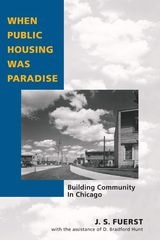
When Public Housing Was Paradise
BUILDING COMMUNITY IN CHICAGOJ. S. Fuerst, with the assistance of D. Bradford Hunt
University of Illinois Press, 2003
J. S. Fuerst has been involved with public housing in Chicago for more than half a century. He retired from Loyola University, where he was a professor of social welfare policy. He was the editor of Public Housing in Europe and America. D. Bradford Hunt is an assistant professor of social science at Roosevelt University. John Hope Franklin is James B. Duke Professor Emeritus of History at Duke University. He has served as president of the Organization of American Historians, the American Historical Association, and many more.
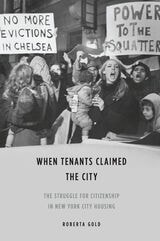
When Tenants Claimed the City
The Struggle for Citizenship in New York City HousingRoberta Gold
University of Illinois Press, 2014
In postwar America, not everyone wanted to move out of the city and into the suburbs. For decades before World War II, New York's tenants had organized to secure renters' rights. After the war, tenant activists raised the stakes by challenging the newly-dominant ideal of homeownership in racially segregated suburbs. They insisted that renters as well as owners had rights to stable, well-maintained homes, and they proposed that racially diverse urban communities held a right to remain in place--a right that outweighed owners' rights to raise rents, redevelop properties, or exclude tenants of color. Further, the activists asserted that women could participate fully in the political arenas where these matters were decided.
Grounded in archival research and oral history, When Tenants Claimed the City: The Struggle for Citizenship in New York City Housing shows that New York City's tenant movement made a significant claim to citizenship rights that came to accrue, both ideologically and legally, to homeownership in postwar America. Roberta Gold emphasizes the centrality of housing to the racial and class reorganization of the city after the war; the prominent role of women within the tenant movement; and their fostering of a concept of "community rights" grounded in their experience of living together in heterogeneous urban neighborhoods.
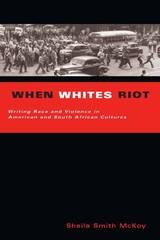
When Whites Riot
Writing Race and Violence in American and South African CulturesSheila Smith McKoy
University of Wisconsin Press, 2001
In a bold work that cuts across racial, ethnic, cultural, and national boundaries, Sheila Smith McKoy reveals how race colors the idea of violence in the United States and in South Africa—two countries inevitably and inextricably linked by the central role of skin color in personal and national identity.
Although race riots are usually seen as black events in both the United States and South Africa, they have played a significant role in shaping the concept of whiteness and white power in both nations. This emerges clearly from Smith McKoy's examination of four riots that demonstrate the relationship between the two nations and the apartheid practices that have historically defined them: North Carolina's Wilmington Race Riot of 1898; the Soweto Uprising of 1976; the Los Angeles Rebellion in 1992; and the pre-election riot in Mmabatho, Bhoputhatswana in 1994. Pursuing these events through narratives, media reports, and film, Smith McKoy shows how white racial violence has been disguised by race riots in the political and power structures of both the United States and South Africa.
The first transnational study to probe the abiding inclination to "blacken" riots, When Whites Riot unravels the connection between racial violence—both the white and the "raced"—in the United States and South Africa, as well as the social dynamics that this connection sustains.
When the Center Is on Fire
Passionate Social Theory for Our TimesBy Diane Harriford and Becky Thompson
University of Texas Press, 2008
In this lively and provocative book, two feminist public sociologists turn to classical social thinkers—W. E. B. Du Bois, Max Weber, Karl Marx, and Émile Durkheim—to understand a series of twenty-first century social traumas, including the massacre at Columbine High School, the 9/11 attacks, the torture at Abu Ghraib prison, and Hurricane Katrina. Each event was overwhelming in its own right, while the relentless pace at which they occurred made it nearly impossible to absorb and interpret them in any but the most superficial ways. Yet, each uncovered social problems that cry out for our understanding and remediation.
In When the Center Is on Fire, Becky Thompson and Diane Harriford assert that classical social theorists grappled with the human condition in ways that remain profoundly relevant. They show, for example, that the loss of "double consciousness" that Du Bois identified in African Americans enabled political elites to turn a blind eye to the poverty and vulnerability of many of New Orleans's citizens. The authors' compelling, sometimes irreverent, often searing interpretations make this book essential reading for students, activists, generations X, Y, and Z, and everybody bored by the 6 o'clock news.

When the Good Life Goes Bad
The US and Its Seven Deadly SinsStacey M. Floyd-Thomas Foreword by Michael Eric Dyson
University of Illinois Press, 2026
Stacey M. Floyd-Thomas examines how the Seven Deadly Sins have shaped the moral strivings and sociopolitical condition of American society and culture in the twenty-first century. Drawing on a multidimensional approach, Floyd-Thomas uses race, gender, class, and other lenses to break down the moral crises that define the American Dream. Her critique exposes the harm done by individual and collective practices of sexual objectification, capitalist materialism, wealth inequality, and technological hubris before pivoting to the rise of right-wing populism, white Christian nationalism, and the politics of cruelty. But Floyd-Thomas also proposes an ethic that emphasizes truth-telling, community engagement, and values rooted in humility, justice, and mercy—a new path for the US to overcome systemic oppression and create a more just society.
Evocative and ambitious, When the Good Life Goes Bad takes readers on a wide-ranging journey through US life and culture to explain what corrupted the American dream.