Results by title
171 books match the query 'Soldiers' and 14 start with w
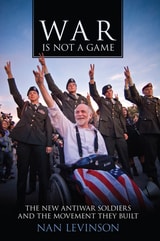
War Is Not a Game
The New Antiwar Soldiers and the Movement They BuiltLevinson, Nan
Rutgers University Press, 2016
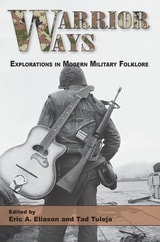
Warrior Ways
Explorations in Modern Military FolkloreEric Eliason and Tad Tuleja
Utah State University Press, 2012
Warrior Ways is one of the first book-length explorations of military folklife, and focuses on the lore produced by modern American warriors, illuminating the ways in which members of the armed services creatively express the complex experience of military life. In short, lively essays, contributors to the volume, all of whom have close personal or professional relationships to the military, examine battlefield talismans, personal narrative (storytelling), “Jody calls” (marching and running cadences), slang, homophobia and transgressive humor, music, and photography, among other cultural expressions.
Military folklore does not remain in an isolated subculture; it reveals our common humanity by delighting, disturbing, infuriating, and inspiring both those deeply invested in and those peripherally touched by military life. Highlighting the contemporary and historical importance of the military in American life, Warrior Ways will be of interest to scholars and students of folklore, anthropology, and popular culture; those involved in veteran services and education; and general readers interested in military culture.

We Were Innocents
AN INFANTRYMAN IN KOREAWilliam D. Dannenmaier
University of Illinois Press, 1999
William Dannenmaier served in Korea with the U.S. Army from December 1952 to January 1954, first as a radioman and then as a radio scout with the Fifteenth Infantry Regiment. Eager to serve a cause in which he fervently believed—the safeguarding of South Korea from advancing Chinese Communists—he enlisted in the army with an innocence that soon evaporated. His letters from the front, most of them to his sister, Ethel, provide a springboard for his candid and wry observations of the privations, the boredom, and the devastation of infantry life. At the same time these letters, designed to disguise the true danger of his tasks and his dehumanizing circumstances, reflect a growing failure to communicate with those outside the combat situation.
Woven through the letters is Dannenmaier's narrative account of his combat experiences, including a vivid re-creation of the bloody battle for Outpost Harry, which he describes as "trivial and insignificant—except to the men who fought it."A high-intensity, eight-day battle for a hill American forces would abandon three months later with the signing of the truce, Outpost Harry was largely ignored by the press despite heavy casualties and many official citations for heroism.
From his vantage point as an Everyman, Dannenmaier describes the frustration of men on the front lines who never saw their commanding superiors, the exhaustion of soldiers whose long-promised leaves never materialized, the transitory friendships and shared horrors that left indelible memories. Endangered by minefields and artillery fire, ground down by rumors and constant tension, these men returned—if they returned at all—profoundly and irrevocably changed.
This intimate, revealing memoir, a rare account by a common soldier, is a tribute to the Americans who served in a conflict that has only recently begun to gain a place in official public memory.
Welcome the Hour of Conflict
William Cowan McClellan and the 9th AlabamaWilliam Cowan McClellan, edited by John C. Carter
University of Alabama Press, 2007
In the Spring of 1861, a 22-year-old Alabamian did what many of his friends and colleagues were doing—he joined the Confederate Army as a volunteer. The first of his family to enlist, William Cowan McClellan, who served as a private in the 9th Alabama Infantry regiment, wrote hundreds of letters throughout the war, often penning for friends who could not write home for themselves. In the letters collected in John C. Carter’s volume, this young soldier comments on his feelings toward his commanding officers, his attitude toward military discipline and camp life, his disdain for the western Confederate armies, and his hopes and fears for the future of the Confederacy.
McClellan’s letters also contain vivid descriptions of camp life, battles, marches, picket duty, and sickness and disease in the army. The correspondence between McClellan and his family dealt with separation due to war as well as with other wartime difficulties such as food shortages, invasion, and occupation. The letters also show the rise and fall of morale on both the home front and on the battlefield, and how they were closely intertwined.
Remarkable for their humor, literacy, and matter-of-fact banter, the letters reveal the attitude a common soldier in the Army of Northern Virginia had toward the day-to-day activity and progression of the war. John C. Carter includes helpful appendixes that list the letters chronologically and offer the regimental roster, casualty/enlistment totals, assignments, and McClellan’s personal military record.
Well Satisfied with My Position
The Civil War Journal of Spencer BonsallEdited by Michael A. Flannery and Katherine H. Oomens
Southern Illinois University Press, 2007
Well Satisfied with My Position offers a first-person account of army life during the Civil War’s Peninsula Campaign and Battle of Fredericksburg. Spencer Bonsall, who joined the 81st Pennsylvania Infantry as a hospital steward, kept a journal from March 1862 until March 1863, when he abruptly ceased writing. Editors Michael A. Flannery and Katherine H. Oomens place his experiences in the context of the field of Civil War medicine and continue his story in an epilogue.
Trained as a druggist when he was in his early twenties, Bonsall traveled the world, spent eight years on a tea plantation in India, and settled in Philadelphia, where he worked in the city surveyor’s office. But in March 1862, when he was in his mid-forties, the lure of serving his country on the battlefield led Bonsall to join the 81st Pennsylvania Infantry as a hospital steward.
Bonsall enjoyed his life with the Union army at first, comparing bivouacking in the woods to merely picnicking on a grand scale. “We are about as jolly a set of old bachelors as can be found in Virginia,” Bonsall wrote. But his first taste of the aftermath of battle at Fair Oaks and the Seven Days’ Battles in Virginia changed his mind about the joys of soldiering—though he never lost his zeal for the Union cause.
Bonsall details the camp life of a soldier from firsthand experience, outlines the engagements of the 81st, and traces the Battle of Fredericksburg and the Peninsula Campaign. He records facts not available elsewhere about camp conditions, attitudes toward Union generals and Confederate soldiers, and troop movements.
From the end of June to late October 1862, Bonsall’s illness kept him from writing in his journal. He picked up the record again in December 1862, just before the Battle of Fredericksburg, Virginia, in which the Union suffered a staggering 10,200 casualties and the 81st Pennsylvania lost more than half its men. He vividly describes the bloody aftermath. Bonsall’s horse was shot out from underneath him at the battle of Gettysburg, injuring him seriously and ending his military career. Although he was listed as “sick in hospital” on the regiment’s muster rolls, he was labeled a deserter in the U.S. Army records. Indeed, after recovery from his injuries, Bonsall walked away from the army to resume life in Philadelphia with his wife and child.
Published for the first time, Bonsall’s journal offers an unusually personal glimpse into the circumstances and motives of a man physically ruined by the war. Seventeen illustrations, including some drawn by Bonsall himself, help bring this narrative to life.
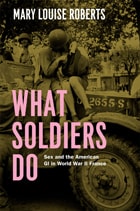
What Soldiers Do
Sex and the American GI in World War II FranceMary Louise Roberts
University of Chicago Press, 2013
That’s not the picture of the Greatest Generation that we’ve been given, but it’s the one Mary Louise Roberts paints to devastating effect in What Soldiers Do. Drawing on an incredible range of sources, including news reports, propaganda and training materials, official planning documents, wartime diaries, and memoirs, Roberts tells the fascinating and troubling story of how the US military command systematically spread—and then exploited—the myth of French women as sexually experienced and available. The resulting chaos—ranging from flagrant public sex with prostitutes to outright rape and rampant venereal disease—horrified the war-weary and demoralized French population. The sexual predation, and the blithe response of the American military leadership, also caused serious friction between the two nations just as they were attempting to settle questions of long-term control over the liberated territories and the restoration of French sovereignty.
While never denying the achievement of D-Day, or the bravery of the soldiers who took part, What Soldiers Do reminds us that history is always more useful—and more interesting—when it is most honest, and when it goes beyond the burnished beauty of nostalgia to grapple with the real lives and real mistakes of the people who lived it.
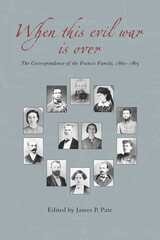
When This Evil War is Over
The Correspondence of the Francis FamilyJames P. Pate
University of Alabama Press, 2006
Six of the seven Francis brothers served in the Confederate army, as did their uncle, four servants, and other kinsmen, and all twelve members of the immediate family of Dr. James Carrington Francis and Amy Ingram Francis—as well as several members of their extended family—are represented in this volume. While the letters refer to the war and the brothers’ military service, they also shed light on this family’s struggle to survive the profound cultural, economic, and political upheaval that ensued.
When War Becomes Personal
Soldiers' Accounts from the Civil War to IraqDonald Anderson
University of Iowa Press, 2008
The thirteen essays in When War Becomes Personal tell the enduring truths of battle, stripping away much of the romance, myth, and fantasy.
Soldiers more than anyone know what they are capable of destroying; when they write about war, they are trying to preserve the world.
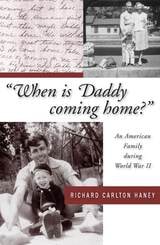
When is Daddy Coming Home?
An American Family during World War IIRichard Carlton Haney
Wisconsin Historical Society Press, 2024
World War II was coming to a close in Europe and Richard Haney was only four years old when the telegram arrived at his family's home in Janesville, Wisconsin. That moment, when Haney learned of his father's death in the final months of fighting, changed his and his mother's lives forever.
In this powerful book, Haney explores the impact of war on an American family. He skillfully weaves together those memories with his parents' wartime letters and his mother's recollections to create a unique blend of history and memoir. Through his father's letters he reveals the war's effect on a man who fought in the Battle of the Bulge with the 17th Airborne but wanted nothing more than to return home. Haney illuminates life on the home front in small-town America as well, describing how profoundly the war changed such communities.
With When Is Daddy Coming Home?, Richard Haney makes an exceptional contribution to the literature on the Greatest Generation—one that is both devastatingly personal and representative of what families all over America endured during that testing time.

Widows by the Thousand
The Civil War Correspondence of Theophilus and Harriet Perry, 1862–1864M. Jane Johansson
University of Arkansas Press, 2000
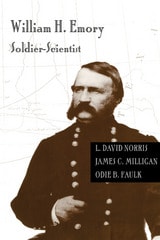
William H. Emory
Soldier-ScientistL. David Norris, James C. Milligan, and Odie B. Faulk
University of Arizona Press, 1998
Born in Maryland in 1811, Emory was a West Point graduate who resigned his commission to become a civil engineer and join the newly formed Corps of Topographical Engineers. After working along the Canadian boundary, he was selected to accompany Stephen Watts Kearny and the Army of the West in their trek to California in 1846, and his map from that expedition helped guide Forty-Niners bound for the goldfields.
Emory worked for nine years on the new border between the United States and Mexico after the Treaty of Guadalupe Hidalgo and the Gadsden Purchase and was responsible for the survey and marking of the boundary. When the Civil War broke out, Emory refused a commission in the Confederate Army, instead commanding a regiment defending Washington, D.C. Later he saw action at Manassas, in the Red River campaign, and in the Shenandoah Valley, where he served under Phil Sheridan.
This biography draws on Emory’s personal papers to reveal other significant episodes of his life. While commanding a cavalry unit in Indian Territory, he was the only officer to bring an entire command out of insurrectionary territory. In hostile action of a different kind, he was a major witness in the impeachment trial of Andrew Johnson and offered testimony that helped save the president.
William H. Emory: Soldier-Scientist is an important resource for scholars of western expansion and the Civil War. More than that, it is a rousing story of an unsung but distinguished hero of his time.
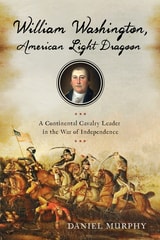
William Washington, American Light Dragoon
A Continental Cavalry Leader in the War of IndependenceDaniel Murphy
Westholme Publishing, 2014
William Washington began the war as a captain of Virginia Militia, was commissioned a junior officer in the Continental Infantry, and slowly rose to field command in the Continental Light Dragoons where he built one of the hardest hitting cavalry regiments to serve in the war. His chief adversary Lord Cornwallis commented, “There could be no more formidable antagonist in a charge, at the head of his cavalry, than Colonel William Washington.” Despite his connection to the commander-in-chief, he suffered his fair share of setbacks, and his relationships varied with not only his legendary cousin George, but many well-known figures of the Revolution including, Henry Lee, Casimir Pulaski, Nathanael Greene, and Daniel Morgan. Relying largely on firsthand accounts and period letters, in William Washington: American Light Dragoon: A Continental Cavalry Leader in the War of Independence, author and avid equestrian Daniel Murphy blends these primary sources with his own working knowledge of period drill, tactics, and terrain to deliver a more complete view of William Washington’s actions throughout the conflict. This perspective traces the often overlooked role of cavalry in the American Revolution and sheds new light on many pivotal battles in of the war, including Trenton, Cowpens, Guilford Courthouse, Hobkirk’s Hill, and William Washington’s final action at Eutaw Springs.
Wisconsin Korean War Stories
Veterans Tell Their Stories from the Forgotten WarSarah Larsen
Wisconsin Historical Society Press, 2008
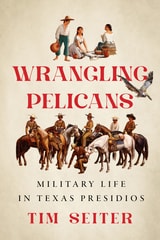
Wrangling Pelicans
Military Life in Texas PresidiosTim Seiter
University of Texas Press, 2025
2026 Excellence in Historic Preservation Award, Daughters of the American Revolution
2026 Summerlee Book Prize, Center for History and Culture of Southeast Texas and the Upper Gulf Coast
2026 Tejano Book Prize, Tejano Genealogy Society of Austin (TGSA)
A richly detailed history of daily life for colonial Spanish soldiers surviving on the eighteenth-century Texas Gulf Coast.
In 1775, Spanish King Carlos III ordered the capture of American pelicans for his wildlife park in Madrid. The command went to the only Spanish fort on the Texas coast—Presidio Nuestra Señora de Loreto de la Bahía in present-day Goliad. But the overworked soldiers stationed at the fort had little interest indulging a king an ocean away. Their days were consumed with guarding their community against powerful Indigenous peoples and managing the demands of frontier life. The royal order went ignored.
Wrangling Pelicans brings to life the world of Presidio La Bahía’s Hispano soldiers, whose duties ranged from heated warfare to high-stakes diplomacy, while their leisure pursuits included courtship, card playing, and cockfighting. It highlights the lives of presidio women and reveals the ways the Spanish legal system was used by and against the soldiers as they continually negotiated their roles within the empire and their community. Although they were agents of the Spanish crown, soldiers at times defied their king and even their captain as they found ways to assert their autonomy. Offering a fresh perspective on colonial Texas, Wrangling Pelicans recreates the complexities of life at the empire’s edge, where survival mattered more than royal decrees.