Results by title
247 books match the query 'South Africa' and 11 start with w
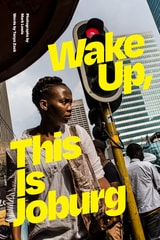
Wake Up, This Is Joburg
Words by Tanya Zack, Photographs by Mark Lewis
Duke University Press, 2022
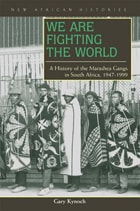
We Are Fighting the World
A History of the Marashea Gangs in South Africa, 1947–1999Gary Kynoch
Ohio University Press, 2005
Since the late 1940s, a violent African criminal society known as the Marashea has operated in and around South Africa’s gold mining areas. With thousands of members involved in drug smuggling, extortion, and kidnapping, the Marashea was more influential in the day-to-day lives of many black South Africans under apartheid than were agents of the state. These gangs remain active in South Africa.
In We Are Fighting the World: A History of the Marashea Gangs in South Africa, 1947–1999, Gary Kynoch points to the combination of coercive force and administrative weakness that characterized the apartheid state. As long as crime and violence were contained within black townships and did not threaten adjacent white areas, township residents were largely left to fend for themselves. The Marashea’s ability to prosper during the apartheid era and its involvement in political conflict led directly to the violent crime epidemic that today plagues South Africa.
Highly readable and solidly researched, We Are Fighting the World is critical to an understanding of South African society, past and present. This pioneering study challenges previous social history research on resistance, ethnicity, urban spaces, and gender in South Africa. Kynoch’s interviews with many current and former gang members give We Are Fighting the World an energy and a realism that are unparalleled in any other published work on gang violence in southern Africa.
We Are Not South African
Mediating National Identity in a Postcolonial and Postapartheid StateRachel Lara van der Merwe
Rutgers University Press, 2026
We Are Not South African explores how national identity functions as a colonial tool of communication, control, and power. Author Rachel Lara van der Merwe examines how humans and the planet are integrally shaped by the idea of the nation and speculates on how different sociopolitical imaginaries, instead of the nation, could inform ways of being-together in the world.
Linking national identity to colonialism, the book broadens the idea of the nation to include its impact on all forms of life, human and more-than-human. Van der Merwe builds her argument on three central observations: that nations are made up of conflicting and fractured imaginaries, not unified, cohesive ones; the nation is divisive by nature, tracing back to its colonial origins; and the nation, along with the state, exploits both humans and more-than-humans. In order to build a more just and sustainable planetary society, she argues, liberation from such colonial formations is vital. In response, the book asks, How could we reimagine how we organize our societies through values of relationality and mutual care rather than rigid borders? What sociopolitical imaginaries do we need, or already possess, that might inform new configurations of community?
Welcome to Our Hillbrow
A Novel of Postapartheid South AfricaPhaswane Mpe
Ohio University Press, 2011
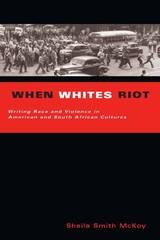
When Whites Riot
Writing Race and Violence in American and South African CulturesSheila Smith McKoy
University of Wisconsin Press, 2001
In a bold work that cuts across racial, ethnic, cultural, and national boundaries, Sheila Smith McKoy reveals how race colors the idea of violence in the United States and in South Africa—two countries inevitably and inextricably linked by the central role of skin color in personal and national identity.
Although race riots are usually seen as black events in both the United States and South Africa, they have played a significant role in shaping the concept of whiteness and white power in both nations. This emerges clearly from Smith McKoy's examination of four riots that demonstrate the relationship between the two nations and the apartheid practices that have historically defined them: North Carolina's Wilmington Race Riot of 1898; the Soweto Uprising of 1976; the Los Angeles Rebellion in 1992; and the pre-election riot in Mmabatho, Bhoputhatswana in 1994. Pursuing these events through narratives, media reports, and film, Smith McKoy shows how white racial violence has been disguised by race riots in the political and power structures of both the United States and South Africa.
The first transnational study to probe the abiding inclination to "blacken" riots, When Whites Riot unravels the connection between racial violence—both the white and the "raced"—in the United States and South Africa, as well as the social dynamics that this connection sustains.

Witchcraft, Power and Politics
Exploring the Occult in the South African LowveldIsak Niehaus, Eliazaar Mohlala, and Kally Shokaneo
Pluto Press, 2001
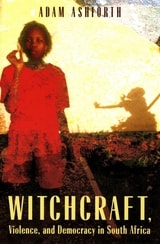
Witchcraft, Violence, and Democracy in South Africa
Adam Ashforth
University of Chicago Press, 2004
In Witchcraft, Violence, and Democracy in South Africa, Adam Ashforth examines how people in Soweto and other parts of post-apartheid South Africa manage their fear of 'evil forces' such as witchcraft. Ashforth examines the dynamics of insecurity in the everyday life of Soweto at the turn of the twenty-first century. He develops a new framework for understanding occult violence as a form of spiritual insecurity and documents new patterns of interpretation attributing agency to evil forces. Finally, he analyzes the response of post-apartheid governments to issues of spiritual insecurity and suggests how these matters pose severe long-term challenges to the legitimacy of the democratic state.
Women in the South African Parliament
FROM RESISTANCE TO GOVERNANCEHannah Evelyn Britton
University of Illinois Press, 2005
Although the international press closely chronicled the dismantling of South Africa's apartheid policies, it paid little attention to the unique role women from a variety of political parties played in establishing the new government. Utilizing interviews, participant observation, and archival research, Women in the South African Parliament tells an inspiring story of liberation, showing how these women achieved electoral success, learned to work with lifelong enemies, and began to transform Parliament by creating more space for women's voices during a critical time in the life of their democracy.
Arguing from her detailed analysis of the strategies and political tactics used by these South African women, both individually and collectively, Hannah Britton contends that, contrary claims in earlier studies of the developing world, mobilization by women prior to a transition to democracy can lead to gains after the transition--including improvements in constitutional mandates, party politics, and representation. At the same time, Britton demonstrates that not even national leadership can ensure power for all women and that many who were elected to South Africa's first democratic parliament declined to run again, feeling they could have a greater impact working in their own communities.
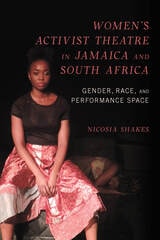
Women's Activist Theatre in Jamaica and South Africa
Gender, Race, and Performance SpaceNicosia M. Shakes
University of Illinois Press, 2023
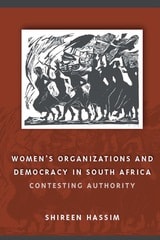
Women's Organizations and Democracy in South Africa
Contesting AuthorityShireen Hassim
University of Wisconsin Press, 2006
The transition to democracy in South Africa was one of the defining events in twentieth-century political history. The South African women’s movement is one of the most celebrated on the African continent. Shireen Hassim examines interactions between the two as she explores the gendered nature of liberation and regime change. Her work reveals how women’s political organizations both shaped and were shaped by the broader democratic movement. Alternately asserting their political independence and giving precedence to the democratic movement as a whole, women activists proved flexible and remarkably successful in influencing policy. At the same time, their feminism was profoundly shaped by the context of democratic and nationalist ideologies. In reading the last twenty-five years of South African history through a feminist framework, Hassim offers fresh insights into the interactions between civil society, political parties, and the state.
Hassim boldly confronts sensitive issues such as the tensions between autonomy and political dependency in feminists’ engagement with the African National Congress (ANC) and other democratic movements, and black-white relations within women’s organizations. She offers a historically informed discussion of the challenges facing feminist activists during a time of nationalist struggle and democratization.
Winner, Victoria Schuck Award for best book on women and politics, American Political Science Association
“An exceptional study, based on extensive research. . . . Highly recommended.”—Choice
“A rich history of women’s organizations in South African . . . . [Hassim] had observed at first hand, and often participated in, much of what she described. She had access to the informants and private archives that so enliven the narrative and enrich the analysis. She provides a finely balanced assessment.”—Gretchen Bauer, African Studies Review
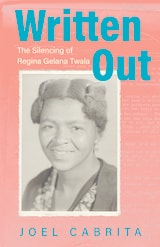
Written Out
The Silencing of Regina Gelana TwalaJoel Cabrita
Ohio University Press, 2023