Results by title
418 books match the query 'Southern States' and 19 start with w
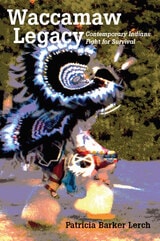
Waccamaw Legacy
Contemporary Indians Fight for SurvivalWritten by Patricia Lerch
University of Alabama Press, 2004
An insightful and informative look into the Waccamaw Siouan's quest for identity and survival
Waccamaw Legacy: Contemporary Indians Fight for Survival sheds light on North Carolina Indians by tracing the story of the now state-recognized Waccamaw Siouan tribe from its beginnings in the Southeastern United States, through their first contacts with Europeans, and into the 21st century, detailing the struggles these Indians have endured over time. We see how the Waccamaw took hold of popular theories about Indian tribes like the Croatan of the Lost Colony and the Cherokee as they struggled to preserve their heritage and to establish their identity.
Patricia Lerch was hired by the Waccamaw in 1981 to perform the research needed to file for recognition under the Bureau of Indian Affairs Federal Acknowledgement Program of 1978. The Waccamaw began to organize powwows in 1970 to represent publicly their Indian heritage and survival and to spread awareness of their fight for cultural preservation and independence. Lerch found herself understanding that the powwows, in addition to affirming identity, revealed important truths about the history of the Waccamaw and the ways they communicate and coexist.
Waccamaw Legacy outlines Lerch’s experience as she played a vital role in the Waccamaw Siouan's continuing fight for recognition and acceptance in contemporary society and culture.

Wandering Dixie
Dispatches from the Lost Jewish SouthSue Eisenfeld
The Ohio State University Press, 2020
From South Carolina to Arkansas, she explores the small towns where Jewish people once lived and thrived. She visits the site of her distant cousin and civil rights activist Andrew Goodman’s murder during 1964’s Freedom Summer. She also talks with the only Jews remaining in some of the “lost” places, from Selma to the Mississippi Delta to Natchitoches, and visits areas with no Jewish community left—except for an old temple or overgrown cemetery. Eisenfeld follows her curiosity about Jewish Confederates and casts an unflinching eye on early southern Jews’ participation in slavery. Her travels become a journey of revelation about our nation’s fraught history and a personal reckoning with the true nature of America.
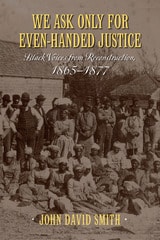
We Ask Only for Even-Handed Justice
Black Voices from Reconstruction, 1865-1877John David Smith
University of Massachusetts Press, 2014
The years following Appomattox offered the freed people numerous opportunities and challenges. Ex-slaves reconnected with relatives dispersed by the domestic slave trade and the vicissitudes of civil war. They sought their own farms and homesteads, education for their children, and legal protection from whites hostile to their new status. They negotiated labor contracts, established local communities, and, following the 1867 Reconstruction Acts, entered local, state, and national politics.
Though aided by Freedmen's Bureau agents and sympathetic whites, former slaves nevertheless faced daunting odds. Ku Klux Klansmen and others terrorized blacks who asserted themselves, many northerners lost interest in their plight, and federal officials gradually left them to their own resources. As a result, former Confederates regained control of the southern state governments following the 1876 presidential election.
We Ask Only for Even-Handed Justice is a substantially revised and expanded edition of a book originally published under the title Black Voices from Reconstruction, 1865–1877.
We See with the Skin
On Zora Neale Hurston's MethodologyRoshanak Kheshti
Duke University Press, 2026

What Mean These Bones?
Studies in Southeastern BioarchaeologyEdited by Mary Lucas Powell, Patricia S. Bridges, and Ann Marie Wagner Mires
University of Alabama Press, 1991
A Dan Josselyn Memorial Publication
Until recently, archaeological projects that included analysis of human remains had often lacked active collaboration between archaeologists and physical anthropologists from the planning stages onward. During the 1980s, a conjunctive approach developed; known as "bioarchaeology," it draws on the methodological and theoretical strengths of the two subdisciplines to bridge a perceived communications gap and promote a more comprehensive understanding of prehistoric and historic cultures.
This volume addresses questions of human adaptation in a variety of cultural contexts, with a breadth not found in studies utilizing solely biological or artifactual data. These nine case studies from eight Southeastern states cover more than 4,000 years of human habitation, from Archaic hunter-gatherers in Louisiana and Alabama to Colonial planters and slaves in South Carolina. Several studies focus upon variations in health between or within late prehistoric agricultural societies. For example, the discovery that reliance upon maize as a dietary staple did not result invariably in poor health, as claimed by earlier studies, either for entire populations or, in ranked societies, for the non-elite majority, has fostered a new appreciation for the managerial wisdom of the Mississippian peoples, as well as for their agricultural skills.

Where No Flag Flies
Donald Davidson and the Southern ResistanceMark Royden Winchell
University of Missouri Press, 2000
Donald Davidson (1893-1968) may well be the most unjustifiably neglected figure in twentieth-century southern literature. One of the most important poets of the Fugitive movement, he also produced a substantial body of literary criticism, the libretto for an American folk opera, a widely used composition textbook, and the recently discovered novel The Big Ballad Jamboree. As a social and political activist, Davidson had significant impact on conservative thought in this century, imfluencing important scholars from Cleanth Brooks to M. E. Bradford.
Despite these accomplishments, Donald Davidson has received little critical attention from either the literary or the southern scholarly community. Where No Flag Flies is Mark Royden Winchell's redress of this critical disservice. A comprehensive intellectual biography of Davidson, this seminal work offers a complete narrative of Davidson's life with all of its triumphs and losses, frustrations and fulfillments.
Winchell provides the reader with more than a simple study of a man and his achievements; he paints a complete portrait of the times in which Davidson published, from the 1930s to the early 1960s. Davidson was more directly involved in political and social activities than most writers of his generation, and Winchell provides the context, both literary and historical, in which Davidson's opinions and works developed. At the same time, Winchell offers detailed evaluations of Davidson's poetry, fiction, historical writings, and essays.
Drawing upon a wealth of previously unpublished archival material, including Davidson's letters and diary, Where No Flag Flies provides unique access to one of the most original minds of the twentieth-century South. Donald Davidson may not have achieved the recognition he deserved, but this remarkable biography finally makes it possible for a considerable literary audience to discover his true achievement.
Where the Devil Don't Stay
Traveling the South with the Drive-By TruckersStephen Deusner
University of Texas Press, 2021
In 1996, Patterson Hood recruited friends and fellow musicians in Athens, Georgia, to form his dream band: a group with no set lineup that specialized in rowdy rock and roll. The Drive-By Truckers, as they named themselves, grew into one of the best and most consequential rock bands of the twenty-first century, a great live act whose songs deliver the truth and nuance rarely bestowed on Southerners, so often reduced to stereotypes.
Where the Devil Don’t Stay tells the band’s unlikely story not chronologically but geographically. Seeing the Truckers’ albums as roadmaps through a landscape that is half-real, half-imagined, their fellow Southerner Stephen Deusner travels to the places the band’s members have lived in and written about. Tracking the band from Muscle Shoals, Alabama, to Richmond, Virginia, to the author’s hometown in McNairy County, Tennessee, Deusner explores the Truckers’ complex relationship to the South and the issues of class, race, history, and religion that run through their music. Drawing on new interviews with past and present band members, including Jason Isbell, Where the Devil Don’t Stay is more than the story of a great American band; it’s a reflection on the power of music and how it can frame and shape a larger culture.
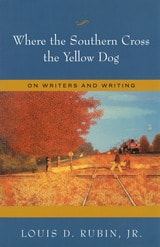
Where the Southern Cross the Yellow Dog
On Writers and WritingLouis D. Rubin, Jr.
University of Missouri Press, 2005
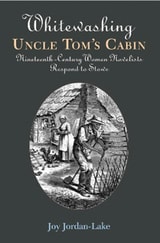
Whitewashing Uncle Tom's Cabin
Nineteenth-Century Women Novelists Respond to StoweJoy Jordan-Lake
Vanderbilt University Press, 2005

Who Killed John Clayton?
Political Violence and the Emergence of the New South, 1861-1893Kenneth C. Barnes
Duke University Press, 1998
More than a description of this particular event, however, Who Killed John Clayton? traces patterns of political violence in this section of the South over a three-decade period. Using vivid courtroom-type detail, Barnes describes how violence was used to define and control the political system in the post-Reconstruction South and how this system in turn produced Jim Crow. Although white Unionists and freed blacks had joined under the banner of the Republican Party and gained the upper hand during Reconstruction, during these last decades of the nineteenth century conservative elites, first organized as the Ku Klux Klan and then as the revived Democratic Party, regained power—via such tactics as murdering political opponents, lynching blacks, and defrauding elections.
This important recounting of the struggle over political power will engage those interested in Southern and American history.
Why Parties Matter
Political Competition and Democracy in the American SouthJohn H. Aldrich and John D. Griffin
University of Chicago Press, 2017
With Why Parties Matter, John H. Aldrich and John D. Griffin make a compelling case that competition between political parties is an essential component of a democracy that is responsive to its citizens and thus able to address their concerns. Tracing the history of the parties through four eras—the Democratic-Whig party era that preceded the Civil War; the post-Reconstruction period; the Jim Crow era, when competition between the parties virtually disappeared; and the modern era—Aldrich and Griffin show how and when competition emerged between the parties and the conditions under which it succeeded and failed. In the modern era, as party competition in the South has come to be widely regarded as matching that of the North, the authors conclude by exploring the question of whether the South is poised to become a one-party system once again with the Republican party now dominant.
Wide Branches, Deep Roots
How Appalachian Wisdom Can Help in the Fight for a Sustainable FutureJessica M Jones
West Virginia University Press, 2026
To be Appalachian is to define oneself in terms of a place. Where we’re from plays a tremendous role in who we are, through storytelling about our homeplaces and the people who have loved them. However, what goes largely unaddressed is how this love of place can contribute to sustainability within the region, which has notoriously faced on-going environmental threats from extraction industries. The reality is that our relationship with the environment is thorny and intertwined with our identities, histories, and economic realities. The authors in the collection get down among the thorns to explore what sustainability means in Appalachia and how we can utilize the power of traditional folkways to achieve it.
This collection of over thirty pieces explores the connections between Appalachia’s stories, traditions, and modern events and the pathway to regional sustainability. The contributors — writers and scholars — examine how our definitions of sustainability have been formed, the power of education to encourage or inhibit it, and what moves are being made toward efficacy in the future. They also offer specific actions readers can take to better understand and build sustainability where they live.
Contributors: Greg Bealer, Luc Biscan-White, David Blackmore, Aysha Bodenhamer, Ivy Brashear, Matthew Calloway, Nicole Drewitz-Crockett, Christina Fisanick, Deborah Fleming, Amanda V. Garner, Karie Gunter-Seymour, Richard Hague, Amanda E. Hayes, Lockie Hunter, Jessica M. Jones, Kristen LeFevers, Sarah Long, Meghan Moore-Hubbard, Barbara Marie Minney, Jessica Radicic, Elizabeth Emmerth Rexroad, Barbara Sabol, Larry Smith, Patrice Stank, Taylor Nasim Stone, Paul Thomas, Elizabeth Tussey, and Betsy Weems.

William Styron - American Writers 98
University of Minnesota Pamphlets on American WritersRichard Pearce
University of Minnesota Press, 1971
William Styron - American Writers 98 was first published in 1971. Minnesota Archive Editions uses digital technology to make long-unavailable books once again accessible, and are published unaltered from the original University of Minnesota Press editions.

With Music and Justice for All
Some Southerners and Their PassionsFrye Gaillard
Vanderbilt University Press, 2008
But Gaillard examines the South from other angles as well--the religious heritage, for example, that once led Flannery O'Connor to write about a "Christ-haunted" South. We meet Billy Graham, the greatest evangelist of his time, who admitted in the course of interviews with Gaillard that his ministry represented a "very narrow gift." There are profiles here of the Southern Baptist renegade Will Campbell and former President Jimmy Carter, whose commitment to his own understanding of Christianity has sometimes led him into controversy. Gaillard writes also about the revealing power of Southern music--how the great Johnny Cash, for example, became a force for reconciliation in America. In the final section of the book we meet some of the characters Gaillard has covered through the years, including John T. Scopes, whose final public appearance Gaillard wrote about as a young reporter in Nashville.
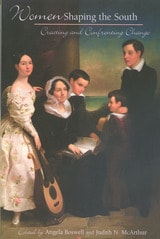
Women Shaping the South
Creating and Confronting ChangeEdited by Angela Boswell & Judith N. McArthur
University of Missouri Press, 2006
Shifting the focus to the local level, the authors demonstrate how women participated in creating change, even as they confronted conditions over which they had little power. In addition to exploring southern women’s lives, this collection shows how women shaped southern history. Using new and extensive primary research, each of these authors presents a new perspective on the important roles that women of different races and classes have played in transforming the South at some of its most crucial turning points, including post-Revolution, Civil War, Jim Crow era, World War I, and the civil rights movement.
Expanded from papers presented at the Sixth Southern Conference on Women’s History in Athens, Georgia, these essays reflect the depth and breadth of current vibrant research in southern women’s history and contribute exciting and important new scholarship to the field. Just as significant, the volume highlights the trends in southern women’s historical scholarship and points toward new directions for future scholars.
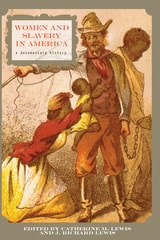
Women and Slavery in America
A Documentary HistoryCatherine M. Lewis
University of Arkansas Press, 2011

Women in a Man's World, Crying
EssaysVicki Covington
University of Alabama Press, 2002
This thoughtful, engaging collection examines resilience, identity, and inequality in the modern workplace produced by one of the nation's most observant and incisive writers.
This collection of warm, heartfelt essays from award-winning novelist Vicki Covington chronicles the multitude of "in between" moments in the writer's life. These are her stolen moments in between the writing of four novels-Gathering Home, Bird of Paradise, Night Ride Home, and The Last Hotel for Women; in between coauthoring the edgy memoir Cleaving: The Story of a Marriage with her husband Dennis Covington; in between raising two daughters; in between her husband's struggle with cancer and the author's own heart attack; in between a life full of trials and triumphs, disappointments and celebrations - moments that, as Covington demonstrates here, are always rich and revealing.
In the title essay, the author questions why all seven middle-class women who live on her street confess at a neighborhood cookout that in the past 48 hours each of them has cried. In "A Southern Thanksgiving," Covington reflects on the "family dance" that is Thanksgiving in the South: "In the North they put their crazy family members in institutions, but in the South we put them in the living room for everyone to enjoy." In "My Mother's Brain," the author recounts the onset of Alzheimer's in her mother and how, with the spread of the disease, an untapped vein of love is revealed.
Some of these essays were written as weekly newspaper columns for the Birmingham News. Others were written for specific literary occasions, such as the First Annual Eudora Welty Symposium. They are divided into six thematic sections: "Girls and Women," "Neighborhood," "Death," "The South," "Spiritual Matters," and “Writing.”
Throughout, as Covington casts her candid, attentive eye on a situation, confusion yields to comprehension, fear flourishes into faith, and anger flows into understanding. In memorializing the small moments of her life, she finds that they are far from peripheral; indeed, they are central to a life full of value and meaning.
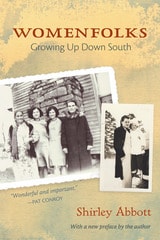
Womenfolks
Growing Up Down SouthShirley Abbott
University of Arkansas Press, 2017
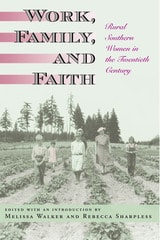
Work, Family, and Faith
Rural Southern Women in the Twentieth CenturyEdited & Intro by Melissa Walker & Rebecca Sharpless
University of Missouri Press, 2006
As the American South changed around them, becoming more urban and industrialized, some women struggled to help their families survive in the increasingly large-scale and commercial agricultural economy, while other women eagerly seized opportunities to engage in rural reform, get better educations, and work at off-farm jobs. Whether they moved to the cities or stayed on the farms, most of these women continued to struggle against poverty and relied on tradition and inner strength to get by.
This well-researched, sharply focused, and keenly insightful collection of essays takes readers across the twentieth-century South, from rural roadside stands to tobacco fields to Sloss-Sheffield Steel’s “Sloss Quarters” in Birmingham. Covering the full scope of southern rural women’s varied lives, this book will be of particular value to anyone interested in sociology, women’s studies, or southern history.