Results by title
1927 books match the query 'Technology & Engineering' and 76 start with w
Waiting for Robots
The Hired Hands of AutomationAntonio A. Casilli
University of Chicago Press, 2025
Artificial Intelligence fuels both enthusiasm and panic. Technologists are inclined to give their creations leeway, pretend they’re animated beings, and consider them efficient. As users, we may complain when these technologies don’t obey, or worry about their influence on our choices and our livelihoods. And yet, we also yearn for their convenience, see ourselves reflected in them, and treat them as something entirely new. But when we overestimate the automation of these tools, award-winning author Antonio A. Casilli argues, we fail to recognize how our fellow humans are essential to their efficiency. The danger is not that robots will take our jobs, but that humans will have to do theirs.
In this bracing and powerful book, Casilli uses up-to-the-minute research to show how today’s technologies, including AI, continue to exploit human labor—even ours. He connects the diverse activities of today’s tech laborers: platform workers, like Uber drivers and Airbnb hosts; “micro workers,” including those performing atomized tasks like data entry on Amazon Mechanical Turk; and the rest of us, as we evaluate text or images to show we’re not robots, react to Facebook posts, or approve or improve the output of generative AI. As Casilli shows us, algorithms, search engines, and voice assistants wouldn’t function without unpaid or underpaid human contributions. Further, he warns that if we fail to recognize this human work, we risk a dark future for all human labor.
Waiting for Robots urges us to move beyond the simplistic notion that machines are intelligent and autonomous. As the proverbial Godot, robots are the bearers of a messianic promise that is always postponed. Instead of bringing prosperity for all, they discipline the workforce, so we don’t dream of a world without drudgery and exploitation. Casilli’s eye-opening book makes clear that most “automation” requires human labor—and likely always will—shedding new light on today’s consequences and tomorrow’s threats of failing to recognize and compensate the “click workers” of today.

War No More
Eliminating Conflict in the Nuclear AgeRobert Hinde and Joseph Rotblat
Pluto Press, 2003
Written by Nobel Peace prize winner and former nuclear physicist Joseph Rotblat, who was involved in the creation of the first atom bomb, and biologist/ psychologist Robert Hinde, War No More provides expert insight into the nature of modern warfare - including weapons of mass destruction. Examining the key factors that contribute to conflict, the authors explain how best to approach a peaceful future.
If war is ever to be eliminated, we must address key issues such as the gap between rich and poor; have fully effective arms controls, and above all we must have better education. The authors emphasise the United Nations - as well as NGOs, religious groups, and grassroots movements - also have important parts to play.
War without Bodies
Framing Death from the Crimean to the Iraq WarMartin Danahay
Rutgers University Press, 2022
Analyzing poetry, photographs, video and video games the book illustrates the ways in which war was framed in these different historical contexts. It examines the cultural assumptions that influenced the reception of images of war and discusses how death and damage to bodies was made acceptable to the public. War Without Bodies aims to heighten awareness of how acceptance of war is coded into texts and how active resistance to such hidden messages can help prevent future unnecessary wars.
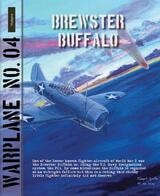
Warplane 04
Brewster BuffaloNico Braas
Amsterdam University Press, 2017
This book presents an overview of the development and operational use of the Buffalo with many photos including a number not published before.
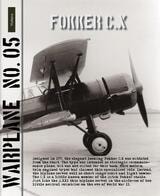
Warplane 05
Fokker C.XEdwin Hoogschagen
Amsterdam University Press, 2017
The C.X is a little-known member of the Dutch Fokker stable. Just like the D.XXI this biplane served in the air forces of two little neutral countries on the eve of World War II. Both fought gallantly in a war of David versus Goliath proportions, and the complete operational history of the type spans a total of 25 years. In retrospect, the C.X was the last fighting biplane type built by Fokker and the company's last pre-war military type to survive.
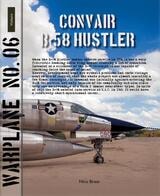
Warplane 06
Convair B-58 HustlerNico Braas
Amsterdam University Press, 2017
However, problems occurred during the development process and costs risings went so out of control that the whole project was almost cancelled a few times. Strategic Air Command was initially against ordering the B-58 for service, not only because of its complexity but also since they saw no advantage of a Mach 2 bomber over other types. Despite this the B-58 entered service at S.A.C. in 1960. It would have a relatively short operational career.
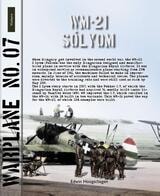
Warplane 07
Weis WM.21 SólyomEdwin Hoogschagen
Amsterdam University Press, 2017
The Sólyom story starts in 1927, with the Fokker C.V, of which the Hungarian Royal Airforce had acquired 76, mostly built under license by Manfred Weiss (WM). WM improved the C.V, which resulted in the WM-16, with 18 built in two variants. This WM-16 paved the way for the WM-21, of which 128 examples were built.
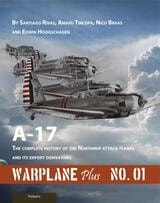
Warplane Plus 01
A17 - The Complete History of the Northrop Attack Planes and Its Export DerivativesSantiago Rivas
Amsterdam University Press, 2023
This book offers an overview of an iconic aeroplane. The authors, all specialists in their field, have compiled a comprehensive story and gathered more than 350 photographs, colour profiles and maps, thus offering a fascinating view at an aircraft type linking the ‘Golden Age of aviation’ days with the dark years of World War Two.
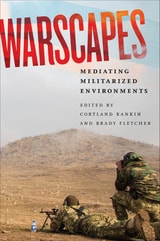
Warscapes
Mediating Militarized EnvironmentsCortland Rankin
Rutgers University Press, 2026
What do we see when we look at a battlefield? How do we come to understand environments as battlefields in the first place? What happens to our perception of war when we focus on the physical spaces of conflict? Warscapes is the first collection to pursue answers to such questions by considering the relationship between war, environment, and media along three lines: imagined geographies of control that prefigure environments as spaces of war; representations of resistance to occupation and ecocidal violence; and elemental reframings of archives and cultural memories of war. This book offers novel perspectives on historical conflict environments while also examining how hypothetical spaces of conflict are imagined. Deploying theoretical perspectives gleaned from film and media studies, ecocriticism, environmental history, urban studies, and postcolonial/decolonial studies, among others, authors highlight an international spectrum of 21st-century fiction films and television series, documentaries, and video installations that challenge how we look at war.
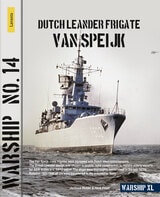
Warship 14
Dutch Leander Frigate Van SpeijkJantinus Mulder
Amsterdam University Press, 2023
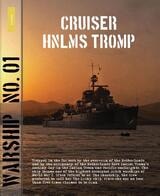
Warship 1
Cruiser HNLMS TrompJantinus Mulder
Amsterdam University Press, 2012
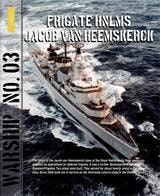
Warship 3
Frigate HNLMS Jacob van HeemskerckRindert van Zinderen Bakker
Amsterdam University Press, 2017
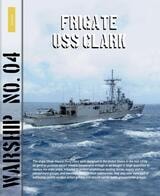
Warship 4
Frigate USS ClarkRindert van Zinderen Bakker
Amsterdam University Press, 0
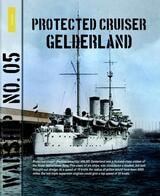
Warship 5
Protected Cruiser GelderlandJantinus Mulder
Amsterdam University Press, 0
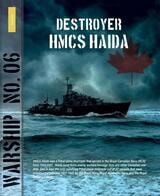
Warship 6
Destroyer HMCS HaidaRindert van Zinderen Bakker
Amsterdam University Press, 0
Nowadays she is the only surviving Tribal-class destroyer out of 27 units that were constructed between 1937-1945 for the Royal Navy, Royal Australian Navy, and the Royal Canadian Navy.
Waste is a Terrible Thing to Mind
Risk, Radiation, and Distrust of GovernmentWeingart, John
Rutgers University Press, 2007
It is an unenviable task, but one that all state governments face: finding a final “resting place” for low-level nuclear waste from power plants, hospitals, university laboratories, and other industries. John Weingart was the official in New Jersey who for many years led this onerous charge. This book is the story of how he and a commission appointed by the governor, instead of imposing a top-down solution, designed an approach that would confront public fears by seeking a community that would volunteer to host a disposal facility. Initially, this novel approach was surprisingly successful, as leaders in a dozen municipalities stepped forward to say they might be interested. Once their interest became known, however, the process in each town derailed. Residents demanded assurances of zero-percent risk and expressed profound distrust of government assertions and promises.
Waste Is a Terrible Thing to Mind is a compelling, suspenseful, and amusing insider’s account of New Jersey policy and politics, but it is also a larger saga of the challenges facing society in the post–9/11 era when the public’s distrust of government is increasing at the same time that its sensitivity to health and safety threats is heightened.
For more information, see: http://wasteisaterriblethingtomind.com/
"Written with a wry sense of humor, it is a pleasure to read and could provide the blueprint for future efforts to find locations for controversial land uses."
- Marie Curtis, Executive Director, New Jersey Environmental Lobby
"A penetrating look at one state's struggle with radioactive waste ... offering some tantalizing reflections on the public understanding of science and how we, in a democratic society, deal with complexity and uncertainty."
- Jay Kaufman, State Senator, Massachusetts State Legislature
"A provocative story, laced with humor, demonstrates how public distrust of government can make it impotent. It should be read by anyone working on public policy issues, especially planning, growth, and the environment."
- Harriet Keyserling, Former Energy Committee Chair, South Carolina State Legislature
"Readers interested in environmental policy, land use and how governments make decisions will learn much from this fine reflective insider's account. It's also a primer on how to survive and thrive in state government."
- David N. Kinsey, Visiting Professor, Woodrow Wilson School Princeton University
"... a fascinating case study of how a government agency creatively tried to solve an intractable public issue. Although the agency failed in its quest to recruit a town to host a low-level radioactive waste site, Weingart's detailed and often humorous narrative of the agency's efforts is a clear winner."
- Jack Sabatino, Judge, New Jersey Superior Court
"... a very engaging and sometimes discouraging case study about the pitfalls and perils of trying to site a controversial facility the right way."
- Gregg Larson, Administrator, Center for Biometric Research, University of Minnesota

Water Management in the Yellow River Basin of China
By Charles Greer
University of Texas Press, 1979
Throughout history the Yellow River, or Huang Ho, has repeatedly broken through its levees to rampage over the densely populated North China Plain. In spite of its importance as the major river of China, little has been written on the Yellow River and its management. Charles Greer fills this gap with his comprehensive and thoroughly researched book.
This work deals with the technological problems faced by the Chinese in taming the destructive river and also focuses on cultural attitudes that have governed the Chinese response to nature. For example, water control was not highly regarded by the Taoists, who preferred to let nature take its course; but the Buddhists sought to harness the river against devastating floods and also to benefit their crops.
Greer traces water use and management in the Yellow River Basin through Chinese history and discusses early Western interest in the flood problem and Soviet assistance in Yellow River development. He analyzes traditional methods of control as well as newer strategies and their implications.
The author of this book is one of a small number of social scientists able to master the original Chinese-language historical materials necessary to this undertaking. He has also examined Chinese water management methods first-hand as part of a delegation of water management specialists in 1976.
In addition to geographers and conservationists, China scholars will find this book valuable because of the axial role the control of the Yellow River plays in the fundamental economic health of the People’s Republic of China. Water management engineers will find much useful comparative material.
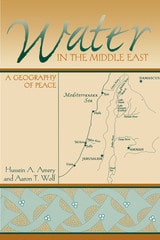
Water in the Middle East
A Geography of PeaceEdited by Hussein A. Amery and Aaron Wolf
University of Texas Press, 2000
Finding "streams in the desert" has never been more urgent for the peoples of the Middle East. Rapid population growth and a rising standard of living are driving water demand inexorably upward, while the natural supply has not increased since Biblical times. Ensuring a fair and adequate distribution of water in the region is vitally important for building a lasting peace among the nations of the Middle East.
Addressing water needs from a geographical perspective, the contributors to this book analyze and assess the impact of scarce water resources in the Jordan River basin countries and territories (Israel, Jordan, Lebanon, Palestine, and Syria) as these long-time antagonists work toward peace. After geographical and historical overviews, the authors envision the future-what the water issues may be when Israel and Syria begin negotiating, the "hydro-security" needs of each nation, and the difficulties of planning for uncertainty. Without proposing any one ideal scheme, they discuss the possibilities for cooperative sharing of water resources, while honestly acknowledging the political constraints that may limit such projects. The final essay speaks to the needs of the one party so rarely represented at the negotiating table—the Jordan River itself.
Wave and Tidal Generation Devices
Reliability and availabilityPeter Tavner
The Institution of Engineering and Technology, 2017

Wave and Tidal Generation Devices
Reliability and availabilityPeter Tavner
The Institution of Engineering and Technology, 2024
Waveform Design and Diversity for Advanced Radar Systems
Fulvio Gini
The Institution of Engineering and Technology, 2012

Waveguide Handbook
N. Marcuvitz
The Institution of Engineering and Technology, 1986
Waves of Knowing
A Seascape EpistemologyKarin Amimoto Ingersoll
Duke University Press, 2016
Ways of Knowing
A New History of Science, Technology, and MedicineJohn V. Pickstone
University of Chicago Press, 2001
Covering an incredibly wide range of subjects, from minerals and machines to patients and pharmaceuticals, and from experimental physics to genetic engineering, Pickstone's Ways of Knowing challenges the reader to reexamine traditional conceptualizations of the history, philosophy, and social studies of science, technology, and medicine.
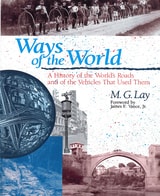
Ways of the World
A History of the World's Roads and of the Vehicles that Used ThemLay, M. G.
Rutgers University Press, 1999
This is the first comprehensive history of the world's roads, highways, bridges, and the people and vehicles that traverse them, from prehistoric times to the present. Encyclopedic in its scope, fascinating in its details, Ways of the World is a unique work for reference and browsing. Maxwell Lay considers the myriad aspects of roads and their users: the earliest pathways, the rise of wheeled vehicles and animals to pull them, the development of surfaced roads, the motives for road and bridge building, and the rise of cars and their influence on roads, cities, and society. The work is amply illustrated, well indexed and cross-referenced, and includes a chronology of road history and a full bibliography.
It is indispensable for anyone interested in travel, history, geography, transportation, cars, or the history of technology.
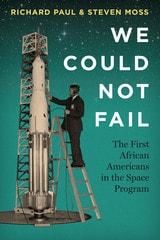
We Could Not Fail
The First African Americans in the Space ProgramBy Richard Paul and Steven Moss
University of Texas Press, 2015
The Space Age began just as the struggle for civil rights forced Americans to confront the long and bitter legacy of slavery, discrimination, and violence against African Americans. Presidents John F. Kennedy and Lyndon Johnson utilized the space program as an agent for social change, using federal equal employment opportunity laws to open workplaces at NASA and NASA contractors to African Americans while creating thousands of research and technology jobs in the Deep South to ameliorate poverty. We Could Not Fail tells the inspiring, largely unknown story of how shooting for the stars helped to overcome segregation on earth.
Richard Paul and Steven Moss profile ten pioneer African American space workers whose stories illustrate the role NASA and the space program played in promoting civil rights. They recount how these technicians, mathematicians, engineers, and an astronaut candidate surmounted barriers to move, in some cases literally, from the cotton fields to the launching pad. The authors vividly describe what it was like to be the sole African American in a NASA work group and how these brave and determined men also helped to transform Southern society by integrating colleges, patenting new inventions, holding elective office, and reviving and governing defunct towns. Adding new names to the roster of civil rights heroes and a new chapter to the story of space exploration, We Could Not Fail demonstrates how African Americans broke the color barrier by competing successfully at the highest level of American intellectual and technological achievement.

We Europeans?
Media, Representations, IdentitiesWilliam Uricchio
Intellect Books, 2009

Weapons of Choice
The Development of Precision Guided MunitionsPaul G. Gillespie
University of Alabama Press, 2006
A military history study that traces the development of precision‑guided munitions from World War I through the Gulf War, examining how advances in weapons technology reshaped air power, military strategy, and U.S. national security policy.
In the United States, efforts to develop precision guided munitions—PGMs—began during the First World War and resulted in an 'aerial torpedo' by the 1920s. While World War II was dominated by large-scale strategic bombing—essentially throwing out tons of free-falling munitions in the hope they hit something important—both sides in the war worked to develop airborne munitions that could be steered toward a target. However after that war, U.S. national security policy focused on the atomic bomb, hardly a weapon that needed to be directed with accuracy.
The cost of emphasis on atomic weapons was revealed in the general unsuitability of American tactics and weapons deployment systems during the Vietnam War. Lessons learned in that conflict, coupled with rapid technological developments in aerodynamics, lasers, and solid-state electronics, brought air power dramatically closer to the "surgical strike" now seen as crucial to modern warfare. New technology created attractive choices and options for American policymakers as well as field commanders, and events in the Arab-Israeli wars, the U.S. raid on Libya, and most dramatically in the first Gulf War created an ever-increasing demand for the precision weapons.
The prospect of pinpoint delivery of weapons right to the enemy's door by speeding aircraft seems to presage war in which the messy and politically risky deployment of ground troops is unnecessary. The potential of such weapons, and their strategic limitations, made the Gulf War and Iraqi War living theater for assessing what such weapons can and cannot do and have important implications for planning for future warfare.

Wearable Exoskeleton Systems
Design, control and applicationsShaoping Bai
The Institution of Engineering and Technology, 2018

Wearable Exoskeleton Systems
Design, control and applicationsShaoping Bai
The Institution of Engineering and Technology, 2026
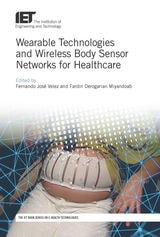
Wearable Technologies and Wireless Body Sensor Networks for Healthcare
Fernando José Velez
The Institution of Engineering and Technology, 2019
Weibull Radar Clutter
Matsuo Sekine
The Institution of Engineering and Technology, 1990
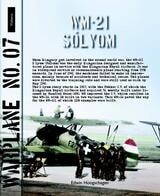
Weis WM.21 Sólyom
Edwin Hoogschagen
Amsterdam University Press, 2023
The Sólyom story starts in 1927, with the Fokker C.V, of which the Hungarian Royal Airforce had acquired 76, mostly built under license by Manfred Weiss (WM). WM improved the C.V, which resulted in the WM-16, with 18 built in two variants. This WM-16 paved the way for the WM-21, of which 128 examples were built.
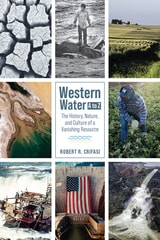
Western Water A to Z
The History, Nature, and Culture of a Vanishing Resourceby Robert R. Crifasi
University Press of Colorado, 2022
Organized as a collection of terms, the book addresses the most salient water issues and provides helpful background information regarding their origins and implications. Photographs serve a vital role in the cultural dialogue on water and stand as an equal partner to the text. Each subject is covered in about one page and is accompanied by one or two striking images from famous photographers like Margaret Bourke-White, Carleton E. Watkins, Arthur Rothstein, William Henry Jackson, and Dorothea Lang as well as Crifasi’s own work. Water often finds itself at the center of our cultural discourse in art, cinema, and literature, which play essential roles in shaping our understanding and experience of Western water. Crifasi also engages personalities that are nearly synonymous with Western water—John Wesley Powell, Elwood Mead, and Floyd Dominy, among others—to show how their lives intertwined with and often influenced the course of water development across the region.
Travelers, adventurers, students, and anyone interested in water will find Western Water A to Z a handy and entertaining reference guide.

Wetwares
Experiments In Postvital LivingRichard Doyle
University of Minnesota Press, 2003
A dizzying tour of the ways technologies, both real and imagined, can transform humanity
The mind of the machine, the body suspended in time, organs exchanged, thought computed, genes manipulated, DNA samples abducted by aliens: the terrain between science and speculation, fraught with the possibility of technological and perhaps even evolutionary transformations, is the territory Richard Doyle explores in Wetwares. In a manner at once sober and playful, Doyle maps potentials for human transformation by new ecologies of information in the early twenty-first century.
Wetwares ranges over recent research in artificial life, cloning, cryonics, computer science, organ transplantation, and alien abduction. Moving between actual technical practices, serious speculative technology, and science fiction, Doyle shows us emerging scientific paradigms where “life” becomes more a matter of information than of inner vitality—in short, becomes “wetwares” for DNA and computer networks. Viewing technologies of immortality—from cryonics to artificial life—as disciplines for welcoming a thoroughly other future, a future of neither capital, god, human, nor organism, the book offers tools for an evolutionary, transhuman mutation in the utterly unpredictable decades to come.
Whitfield's Electrical Craft Principles, Volume 1
Terry Grimwood
The Institution of Engineering and Technology, 2025

Whitfield's Electrical Craft Principles, Volume 2
Terry Grimwood
The Institution of Engineering and Technology, 2026
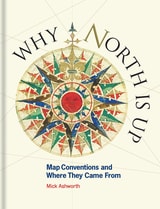
Why North Is Up
Map Conventions and Where They Came FromMick Ashworth
Bodleian Library Publishing, 2019
This book tells the story of how widely accepted mapping conventions originated and evolved—from map orientation, projections, typography, and scale, to the use of color, symbols, ways of representing relief, and the treatment of boundaries and place names. It charts the fascinating story of how conventions have changed in response to new technologies and ever-changing mapping requirements, how symbols can be a matter of life or death, why universal acceptance of conventions can be difficult to achieve, and how new mapping conventions are developing to meet the needs of modern cartography. Why North is Up offers an accessible and enlightening guide to the sometimes hidden techniques of map-making through the centuries.
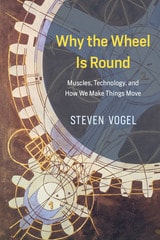
Why the Wheel Is Round
Muscles, Technology, and How We Make Things MoveSteven Vogel
University of Chicago Press, 2016
Steven Vogel combines his engineering expertise with his remarkable curiosity about how things work to explore how wheels and other mechanisms were, until very recently, powered by the push and pull of the muscles and skeletal systems of humans and other animals. Why the Wheel Is Round explores all manner of treadwheels, hand-spikes, gears, and more, as well as how these technologies diversified into such things as hand-held drills and hurdy-gurdies. Surprisingly, a number of these devices can be built out of everyday components and materials, and Vogel’s accessible and expansive book includes instructions and models so that inspired readers can even attempt to make their own muscle-powered technologies, like trebuchets and ballista.
Appealing to anyone fascinated by the history of mechanics and technology as well as to hobbyists with home workshops, Why the Wheel Is Round offers a captivating exploration of our common technological heritage based on the simple concept of rotation. From our leg muscles powering the gears of a bicycle to our hands manipulating a mouse on a roller ball, it will be impossible to overlook the amazing feats of innovation behind our daily devices.
Wide Area Monitoring of Interconnected Power Systems
Arturo Román Messina
The Institution of Engineering and Technology, 2015
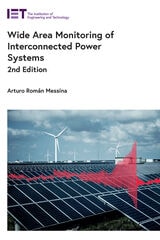
Wide Area Monitoring of Interconnected Power Systems
Arturo Román Messina
The Institution of Engineering and Technology, 2022

Wide Area Monitoring, Protection and Control Systems
The enabler for smarter gridsAlfredo Vaccaro
The Institution of Engineering and Technology, 2016
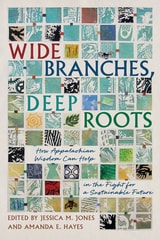
Wide Branches, Deep Roots
How Appalachian Wisdom Can Help in the Fight for a Sustainable FutureJessica M Jones
West Virginia University Press, 2026
To be Appalachian is to define oneself in terms of a place. Where we’re from plays a tremendous role in who we are, through storytelling about our homeplaces and the people who have loved them. However, what goes largely unaddressed is how this love of place can contribute to sustainability within the region, which has notoriously faced on-going environmental threats from extraction industries. The reality is that our relationship with the environment is thorny and intertwined with our identities, histories, and economic realities. The authors in the collection get down among the thorns to explore what sustainability means in Appalachia and how we can utilize the power of traditional folkways to achieve it.
This collection of over thirty pieces explores the connections between Appalachia’s stories, traditions, and modern events and the pathway to regional sustainability. The contributors — writers and scholars — examine how our definitions of sustainability have been formed, the power of education to encourage or inhibit it, and what moves are being made toward efficacy in the future. They also offer specific actions readers can take to better understand and build sustainability where they live.
Contributors: Greg Bealer, Luc Biscan-White, David Blackmore, Aysha Bodenhamer, Ivy Brashear, Matthew Calloway, Nicole Drewitz-Crockett, Christina Fisanick, Deborah Fleming, Amanda V. Garner, Karie Gunter-Seymour, Richard Hague, Amanda E. Hayes, Lockie Hunter, Jessica M. Jones, Kristen LeFevers, Sarah Long, Meghan Moore-Hubbard, Barbara Marie Minney, Jessica Radicic, Elizabeth Emmerth Rexroad, Barbara Sabol, Larry Smith, Patrice Stank, Taylor Nasim Stone, Paul Thomas, Elizabeth Tussey, and Betsy Weems.

Wideband Amplifier Design
Allen L. Hollister
The Institution of Engineering and Technology, 2007
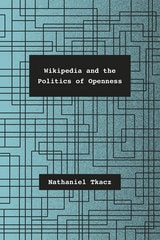
Wikipedia and the Politics of Openness
Nathaniel Tkacz
University of Chicago Press, 2014
But what does openness mean, and what would a political theory of openness look like? With Wikipedia and the Politics of Openness, Nathaniel Tkacz uses Wikipedia, the most prominent product of open organization, to analyze the theory and politics of openness in practice—and to break its spell. Through discussions of edit wars, article deletion policies, user access levels, and more, Tkacz enables us to see how the key concepts of openness—including collaboration, ad-hocracy, and the splitting of contested projects through “forking”—play out in reality.
The resulting book is the richest critical analysis of openness to date, one that roots media theory in messy reality and thereby helps us move beyond the vaporware promises of digital utopians and take the first steps toward truly understanding what openness does, and does not, have to offer.

Wildly Successful Farming
Sustainability and the New Agricultural Land EthicBrian DeVore
University of Wisconsin Press, 2020
Written by agricultural journalist Brian DeVore, the book is based on interviews he has conducted at farms, wildlife refuges, laboratories, test plots, and gardens over the past twenty-five years. He documents innovations in cover cropping, managed rotational grazing, perennial polyculture, and integrated pest management. His accounts provide insight into the impacts regenerative farming methods can have on wildlife, water, landscape, soils, and rural communities and suggest ways all of us can support wildly successful farmers.
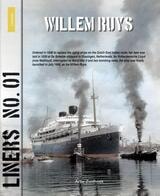
Willem Ruys
Arne Zuidhoek
Amsterdam University Press, 2014
Wind Energy Modeling and Simulation
Atmosphere and plant, Volume 1Paul Veers
The Institution of Engineering and Technology, 2020
Wind Energy Modeling and Simulation
Turbine and system, Volume 2Paul Veers
The Institution of Engineering and Technology, 2020
Wind Power Integration
Connection and system operational aspectsBrendan Fox
The Institution of Engineering and Technology, 2007