Results by title
51 books match the query 'Television programs' and 2 start with w
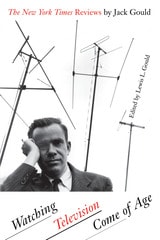
Watching Television Come of Age
The New York Times Reviews by Jack GouldEdited by Lewis L. Gould
University of Texas Press, 2002
Providing video companionship for isolated housewives, afternoon babysitting for children, and nonstop evening entertainment for the whole family, television revolutionized American society in the post-World War II years. Helping the first TV generation make sense of the new medium was the mission of Jack Gould, television critic of The New York Times from 1947 to 1972. In columns noteworthy for crisp writing, pointed insights, and fair judgment, he highlighted both the untapped possibilities and the imminent perils of television, becoming "the conscience of the industry" for many people.
In this book, historian Lewis L. Gould, Jack Gould's son, collects over seventy of his father's best columns. Grouped topically, they cover a wide range of issues, including the Golden Age of television drama, McCarthy-era blacklisting, the rise and fall of Edward R. Murrow, quiz show scandals, children's programming, and the impact of television on American life and of television criticism on the medium itself. Lewis Gould also supplies a brief biography of his father that assesses his influence on the evolution of television, as well as prefaces to each section.
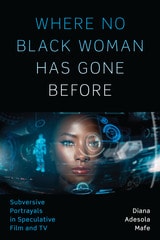
Where No Black Woman Has Gone Before
Subversive Portrayals in Speculative Film and TVBy Diana Adesola Mafe
University of Texas Press, 2018
When Lieutenant Uhura took her place on the bridge of the Starship Enterprise on Star Trek, the actress Nichelle Nichols went where no African American woman had ever gone before. Yet several decades passed before many other black women began playing significant roles in speculative (i.e., science fiction, fantasy, and horror) film and television—a troubling omission, given that these genres offer significant opportunities for reinventing social constructs such as race, gender, and class. Challenging cinema’s history of stereotyping or erasing black women on-screen, Where No Black Woman Has Gone Before showcases twenty-first-century examples that portray them as central figures of action and agency.
Writing for fans as well as scholars, Diana Adesola Mafe looks at representations of black womanhood and girlhood in American and British speculative film and television, including 28 Days Later, AVP: Alien vs. Predator, Children of Men, Beasts of the Southern Wild, Firefly, and Doctor Who: Series 3. Each of these has a subversive black female character in its main cast, and Mafe draws on critical race, postcolonial, and gender theories to explore each film and show, placing the black female characters at the center of the analysis and demonstrating their agency. The first full study of black female characters in speculative film and television, Where No Black Woman Has Gone Before shows why heroines such as Lex in AVP and Zoë in Firefly are inspiring a generation of fans, just as Uhura did.