Results by title
248 books match the query 'Theology' and 7 start with w
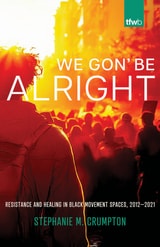
We Gon’ Be Alright
Resistance and Healing in Black Movement Spaces, 2012–2021Stephanie M. Crumpton
University of Arizona Press, 2025
Drawing on oral histories and personal narratives, Crumpton provides an intimate look at the lived experiences of thirty-seven full-time community organizers. These activists and organizers share their strategies for maintaining an ethic of care that sustains them while fighting against both external oppression and internal community struggles. The book highlights how contemporary Black resisters have leveraged a growing understanding of trauma and healing to enhance their activism. This blend of historical knowledge and modern therapeutic practices has equipped them with a broader array of tools to support their communities.
Rooted in womanist practical theology, We Gon’ Be Alright emphasizes the interconnectedness of white supremacy with other forms of oppression such as sexism, homophobia, and classism. Crumpton’s work underscores the necessity of “deep, deep healing” to address these multifaceted threats to Black life. This book is an essential resource for scholars, activists, and anyone interested in understanding the dynamics of Black resistance and healing in contemporary America. Through its detailed examination of the past decade, it offers valuable insights into the ongoing struggle for Black humanity, dignity, and a thriving future.

What Brings a Marriage into Existence?
An Historical Re-examination of the Canon Law of the Latin ChurchBrendan Killeen
University of Scranton Press, 2010
Of the seven sacraments of the Roman Catholic Church, matrimony is the most discussed, debated, disputed, and adjudicated in all of canon law. In this book, Brendan Killeen employs the fundamental question “What brings a marriage into existence?” as the legal and scholarly means to explore the very nature of marriage within the framework of the canon law of the Catholic Church.
Killeen conducts his exploration in two phases. First he scrutinizes the canon law’s primary sources—texts dating as far back as the Roman Empire—and gives readers a fresh perspective of the law’s historical progression. He then examines the papers from the Second Vatican Council and offers both an objective evaluation of the law at present and some possible amendments for its future.
Noteworthy for its diligent research and in-depth analysis, What Brings a Marriage into Existence? will be useful to both newcomers to the canon law of marriage as well as seasoned scholars.
Whatever Happened to Sherlock Holmes?
Detective Fiction, Popular Theology, and SocietyRobert S. Paul
Southern Illinois University Press, 1991
Robert S. Paul suggests that the reason detective fiction has won legions of readers may be that "the writer of detective fiction, without conscious intent, appeals directly to those moral and spiritual roots of society unconsciously affirmed and endorsed by the readers."
Because detective stories deal with crime and punishment they cannot help dealing implicitly with theological issues, such as the reality of good and evil, the recognition that humankind has the potential for both, the nature of evidence (truth and error), the significance of our existence in a rational order and hence the reality of truth, and the value of the individual in a civilized society.
Paul argues that the genre traces its true beginning to the Enlightenment and documents two related but different reactions to the theological issues involved: first, a line of writers who are generally positive in relation to their cultural setting, such as Edgar Allan Poe, Wilkie Collins, Conan Doyle; and second, a reactionary strain, critical of the prevailing culture, that begins in William Godwin’s Caleb Williams and continues through the anti-heroic writers like Arsène Lupin to Raymond Chandler, Dashiell Hammett, and John MacDonald.
When Sickness Heals
The Place of Religious Belief in HealthcareSiroj Sorajjakool
Templeton Press, 2006
In When Sickness Heals, Dr. Siroj Sorajjakool draws on more than ten years of studies on health benefits in relation to spirituality, especially focusing on the function of "meaning." He expounds on his theory that healing is primarily the function of meaning, and meaning transcends sickness and even death itself. He concludes that what people ultimately seek in life is the healing of their souls.
Sorajjakool brings many Eastern and Western resources to his conversation on health, meaning, and healing. He incorporates the perspectives of theologians and philosophers like Paul Tillich, Carl Jung, Søren Kierkegaard, Raimundo Panikkar, Dietrich Bonhoeffer, and John Macquarrie; as well as references to religious texts, including yin and yang, and alchemy.
A clear, distinct understanding of spirituality in clinical contexts is presented, with an argument for the role of meaning in the healing process, based on evidence that there may be healing even in the face of death. Sorajjakool identifies the transitional processes people may go through as they seek to make sense of their experiences during a health crisis. He suggests an alternative approach to spiritual assessment and provides methods of spiritual care that speak to the soul.
Why the Science and Religion Dialogue Matters
Voices from the International Society for Science and ReligionFraser Watts
Templeton Press, 2006
•Munawar Anees on Islam
•B.V. Subbarayappa on Hinduism
•Trinh Xuan Thuan on Buddhism
•Heup Young Kim on Asian Christianity
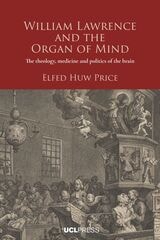
William Lawrence and the Organ of Mind
The Theology, Medicine and Politics of the BrainElfed Huw Price
University College London, 2025
Elfed Huw Price studies the radical history behind the idea that thought and consciousness are rooted in the brain, tracing its emergence in early nineteenth-century Britain. Centered on the controversy surrounding Lawrence’s Lectures on Physiology, Zoology, and the Natural History of Man, this book reveals how his arguments on the sentient brain challenged both medical tradition and religious orthodoxy, provoking backlash from the establishment.
Drawing on archival sources including unpublished material from Bethlem Hospital, Price situates Lawrence’s work within the rise of Christian mortalist thought and the broader shift toward Victorian naturalism. Despite Lawrence’s silencing, his ideas endured, shaping a transformation that redefined human exceptionality through biology rather than theology.
Bridging science, medicine, philosophy, and religion, William Lawrence and the Organ of Mind illuminates a pivotal yet overlooked moment in the history of mind and brain studies, offering fresh insights into the intellectual struggles that helped reshape modern thought.

Witness and Existence
Essays in Honor of Schubert M. OgdenEdited by Philip E. Devenish and George L. Goodwin
University of Chicago Press, 1989
Witness and Existence pays tribute to Ogden by bringing together essays by eminent scholars in New Testament studies and philosophical theology, two fields which directly reflect his methodological concerns and his substantive contributions. The book honors Ogden precisely by engaging the fundamental issues which Ogden himself has taken so seriously.
The first group of essays presents careful analyses of issues basic to the early Christian witness; the second group examines the credibility of the Christian claim about God in terms of human experience. The editors' introductory essay provides the first comprehensive analysis yet to appear of Ogden's theology. A complete bibliography of his published writings is included as an appendix.