Results by title
56 books match the query 'Thought' and 4 start with w
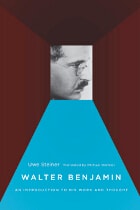
Walter Benjamin
An Introduction to His Work and ThoughtUwe Steiner
University of Chicago Press, 2010
Acknowledged only by a small circle of intellectuals during his lifetime, Benjamin is now a major figure whose work is essential to an understanding of modernity. Steiner traces the development of Benjamin’s thought chronologically through his writings on philosophy, literature, history, politics, the media, art, photography, cinema, technology, and theology. Walter Benjamin reveals the essential coherence of its subject’s thinking while also analyzing the controversial or puzzling facets of Benjamin’s work. That coherence, Steiner contends, can best be appreciated by placing Benjamin in his proper context as a member of the German philosophical tradition and a participant in contemporary intellectual debates.
As Benjamin’s writing attracts more and more readers in the English-speaking world, Walter Benjamin will be a valuable guide to this fascinating body of work.
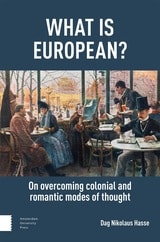
What is European?
On Overcoming Colonial and Romantic Modes of ThoughtDag Nikolaus Hasse
Amsterdam University Press, 2025
The book promotes an inclusive vision of Europe that reflects its long history of multiethnic cities, offers a cultural home to a wider range of people across the continent, and extends attention and respect to other continents, thus laying a more respectful foundation for shaping the future together.
At the same time, Hasse demonstrates that overcoming colonial ways of thinking does not and should not result in anti-Europeanism. Criticising European arrogance may well go hand in hand with feeling culturally at home in other traditions of Europe. For this, it does not matter whether one is a resident of the European continent or not. There is no privileged access to European culture or to the culture of any other continent.
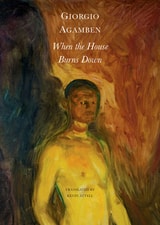
When the House Burns Down
From the Dialect of ThoughtGiorgio Agamben
Seagull Books, 2022
“Which house is burning?” asks Giorgio Agamben. “The country where you live, or Europe, or the whole world? Perhaps the houses, the cities have already burnt down—who knows how long ago?—in a single immense blaze that we pretended not to see.” In this collection of four luminous, lyrical essays, Agamben brings his characteristic combination of philosophical acuity and poetic intensity to bear on a world in crisis. Whether surveying the burning house of our culture in the title essay, the architecture of pure exteriority in “Door and Threshold,” the language of prophecy in “Lessons in the Darkness,” or the word of the witness in “Testimony and Truth,” Agamben’s insights throw a revealing light on questions both timeless and topical. Written in dark times over the past year, and rich with the urgency of our moment, the essays in this volume also seek to show how what appears to be an impasse can, with care and attention, become the door leading to a way out.
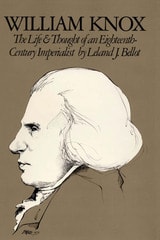
William Knox
The Life and Thought of an Eighteenth-Century ImperialistBy Leland J. Bellot
University of Texas Press, 1977
Colonial expert and pamphleteer William Knox has received attention in virtually every major study of the American Revolution, yet this is the first biography of Knox ever written.
Knox is best known as undersecretary of state in the American Department of the British government from 1770 to 1782. A prolific and candid commentator, he also made a reputation as a pamphleteer, defending the imperial cause during the decade preceding the Revolution. It had been his experience as provost marshal in Georgia from 1757 to 1762 that convinced Knox of the danger to the empire of the growing "democratic" forces in the American colonies.
While numerous historical works have focused on this or that aspect of Knox's career and thought, such treatment has produced at best a jigsaw portrait. Bellot's comprehensive narrative reveals Knox as a person—one whose Calvinist heritage and Scots-Irish upbringing profoundly influenced his view of empire—and as a historical actor and witness. Here is a look at the events of the revolutionary period through the eyes of a British bureaucrat who had a significant role in both the formation and the execution of British policy. This perspective also provides an excellent case study of the operation of the eighteenth-century British bureaucracy.