Results by title
104 books match the query 'Times' and 6 start with w
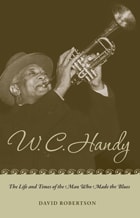
W. C. Handy
The Life and Times of the Man Who Made the BluesDavid Robertson
University of Alabama Press, 2011
Normal0falsefalsefalseEN-USX-NONEX-NONEMicrosoftInternetExplorer4
We Are Having This Conversation Now
The Times of AIDS Cultural ProductionAlexandra Juhasz and Theodore Kerr
Duke University Press, 2022
When Conscience Calls
Moral Courage in Times of Confusion and DespairKristen Renwick Monroe
University of Chicago Press, 2023
What is moral courage? Why is it important and what drives it? An argument for why we should care about moral courage and how it shapes the world around us.
War, totalitarianism, pandemics, and political repression are among the many challenges and crises that force us to consider what humane people can do when the world falls apart. When tolerance disappears, truth becomes rare, and civilized discourse is a distant ideal, why do certain individuals find the courage to speak out when most do not?
When Conscience Calls offers powerful portraits of ordinary people performing extraordinary acts—be it confronting presidents and racist mobs or simply caring for and protecting the vulnerable. Uniting these portraits is the idea that moral courage stems not from choice but from one’s identity. Ultimately, Kristen Renwick Monroe argues bravery derives from who we are, our core values, and our capacity to believe we must change the world. When Conscience Calls is a rich examination of why some citizens embrace anger, bitterness, and fearmongering while others seek common ground, fight against dogma, and stand up to hate.
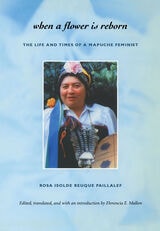
When a Flower Is Reborn
The Life and Times of a Mapuche FeministRosa Isolde Reuque Paillalef, Edited, translated, and with an introduction by Florencia E. Mallon
Duke University Press, 2002
A leading activist during the Pinochet dictatorship, Reuque—a woman, a Catholic, and a Christian Democrat—often felt like an outsider within the male-dominated, leftist Mapuche movement. This sense of herself as both participant and observer allows for Reuque’s trenchant, yet empathetic, critique of the Mapuche ethnic movement and of the policies regarding indigenous people implemented by Chile’s post-authoritarian government. After the 1990 transition to democratic rule, Reuque collaborated with the government in the creation of the Indigenous Development Corporation (CONADI) and the passage of the Indigenous Law of 1993. At the same time, her deepening critiques of sexism in Chilean society in general, and the Mapuche movement in particular, inspired her to found the first Mapuche feminist organization and participate in the 1996 International Women’s Conference in Beijing. Critical of the democratic government’s inability to effectively address indigenous demands, Reuque reflects on the history of Mapuche activism, including its disarray in the early 1990s and resurgence toward the end of the decade, and relates her hopes for the future.
An important reinvention of the testimonial genre for Latin America’s post-authoritarian, post-revolutionary era, When a Flower Is Reborn will appeal to those interested in Latin America, race and ethnicity, indigenous people’s movements, women and gender, and oral history and ethnography.

Winifred Sanford
The Life and Times of a Texas WriterBetty Holland Wiesepape
University of Texas Press, 2013
Winifred Sanford is generally regarded by critics as one of the best and most important early twentieth-century Texas women writers, despite publishing only a handful of short stories before slipping into relative obscurity. First championed by her mentor, H. L. Mencken, and published in his magazine, The American Mercury, many of Sanford’s stories were set during the Texas oil boom of the 1920s and 1930s and offer a unique perspective on life in the boomtowns during that period. Four of her stories were included in The Best American Short Stories of 1926.
Questioning the sudden end to Sanford’s writing career, Wiesepape, a leading literary historian of Texas women writers, delved into the author’s previously unexamined private papers and emerged with an insightful and revealing study that sheds light on both Sanford’s abbreviated career and the domestic lives of women at the time. The first in-depth account of Sanford’s life and work, Wiesepape’s biography discusses Sanford’s fiction through the lens of the sociohistorical contexts that shaped and inspired it. In addition, Wiesepape has included two previously unpublished stories as well as eighteen previously unpublished letters to Sanford from Mencken.
Winifred Sanford is an illuminating biography of one of the state’s unsung literary jewels and an important and much-needed addition to the often overlooked field of Texas women’s writing.
Writing Emergencies
Composing (Ourselves) in Times of CrisisHolly Hassel
Utah State University Press, 2026
Despite the adage “there are no writing emergencies,” at times situations invite or require immediate written response. In a modern era of social media and with the constancy of “crisis,” knowing when, how, and why to respond quickly is increasingly important. In Writing Emergencies, a diverse group of authors contribute scholarly, narrative-based discussions of writing emergencies, descriptions of more and less successful strategies, and a reflective conclusion that offers implications for writing studies praxis and theory.
In this collection, contributors demonstrate the reality of writing emergencies—in their own writing lives, classrooms, and programs—and they offer both self- and community-focused approaches for response. Chapters focus on discernment and prioritization, recognizing that all stressors are not necessarily emergencies. Instead, expanding our vocabulary for (and subsequent understanding) of the kinds of difficulties we come across can build our professional capacity and support greater career sustainability. The volume also illustrates the role of coalitions in navigating writing emergencies and how purposefully building and activating these coalitions subverts some challenges before they become emergencies, particularly those that are recurrent or manufactured.
Writing Emergencies both names and grapples with writing emergencies and offers insights for capacity-building in the acts of filtering and prioritizing competing urgent demands. The findings are meaningful for all leaders, students, and teachers who center care in their relationships with others.