527 books match the query 'Translations into English' and 21 start with w
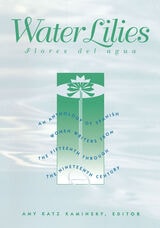
cover of Water Lilies: An Anthology of Spanish Women Writers from the Fifteenth through the Nineteenth Century

Water Lilies

An Anthology of Spanish Women Writers from the Fifteenth through the Nineteenth Century

Amy Kaminsky

University of Minnesota Press, 1995

Poetry and prose by Spanish women presented here in both English and Spanish.

A dazzling sampler, Water Lilies brings to light a rich and until now largely invisible version of Spanish literary history. These hard-to-find works, most translated for the first time, are printed on facing pages in Spanish and English and located within a critical, biographical, and historical overview.

Here are five centuries of writing by Spanish women, the unknown recovered from obscurity, the well-known seen as they rarely have been-in the context of a women’s literary history. Some of these writers, like Rosalía de Castro in “The Bluestockings” and Teresa de Cartagena in Wonder at the Work of God, question the relationship between the woman writer and the act of writing. Some, like the poet Carolina Coronado in “The Twin Geniuses: Sappho and Saint Teresa of Jesus,” overtly seek a literary tradition. Others, like Saint Teresa in her Life and Luisa Sigea in her poetry, provide touchstones for women in search of such a tradition.Legends and stories of women’s friendships, the inconstancy of men, and the love of God; Spain’s first autobiographical text; secular and religious poetry from medieval through recent times; an excerpt from one of the few chivalresque novels written by a woman; a full-length Golden Age comedia: this is the wide range of works Water Lilies comprises. Brought together for the first time, the writers articulate their resistance to, and their complicity in, a literary history that, until now, has tried to exclude them.

[more]
cover of Western Icelandic Short Stories

Western Icelandic Short Stories

Kirsten Wolf

University of Manitoba Press, 1992
This selection of Western Icelandic writings, the first of its kind in English, represents a wide collection of first and second generation Icelandic-Canadian authors.The stories, first published between 1895 and 1930, are set mainly in North America (especially Manitoba). They reflect a weath of literary activity, from the numerous Western Icelandic newspapers and journals, to the reading circles and cultural and literary societies that supported them. The stories show a wide range of experiences and influences, including Old Norse Icelandic literature and romantic nationalism, but they also reveal the emergence of a literature that bears a unique cultural imprint.Western Icelandic Short Stories includes some of the best wirting from the period--- narrative, descriptive, comical, satirical, and serious. The stories may be read as much for enjoyment as for what they reveal about the Western Icelandic literary tradition.
[more]
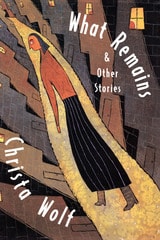
cover of What Remains and Other Stories

What Remains and Other Stories

Christa Wolf

University of Chicago Press, 1995

What Remains collects Christa Wolf's short fiction, from early work in the sixties to the widely debated title story, first published in Germany in 1990. Addressing a wide range of topics, from sexual politics to the nature of memory, these powerful and often very personal stories offer a fascinating introduction to Wolf's work.
What Remains and Other Stories . . . is clear and farsighted. The eight heartfelt stories in the book show why she has been respected as a serious author since her 1968 novel, The Quest for Christa T. . . . Wolf uses her own experiences and observations to create universal themes about the controls upon human freedom.—Herbert Mitgang, New York Times
Christa Wolf has set herself nothing less than the task of exploring what it is to be a conscious human being alive in a moment of history.—Mary Gordon, New York Times Book Review
The simultaneous publication of these two volumes offers readers here a generous sampling of the short fiction, speeches and essays that Wolf has produced over the last three decades.—Mark Harman, Boston Globe

[more]
cover of What Sex Is Death?

What Sex Is Death?

Dario Bellezza, Selected and Translated by Peter Covino

University of Wisconsin Press, 2025
Dario Bellezza—Italy’s first openly gay, major prize winning poet-novelist-playwright—was a bold, daring writer who energetically explored love, sexual transformation, and death. Bellezza embraced a variety of forms, from unabashed love-lyric to political narrative, and the fervor of his voice makes a compelling argument for his lasting importance as one of the most remarkable poets of the late twentieth century. Yet, until now, his work has never been available in English. Award-winning translator Peter Covino offers a wide-ranging selection of representative poetry from Bellezza’s career. Influenced by Rimbaud, the Beats, and the growing European gay rights movements, his poetry remains innovative and timely. Ranging from stray cats in the graveyards of Rome, to the literal and metaphoric fallout from the Chernobyl disaster, to the joys and disappointments of random hookups, Bellezza’s dazzling visions will sparkle in readers’ eyes like sunspots long after they complete this magnificent volume.  
[more]
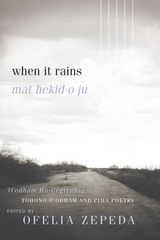
cover of When It Rains: Tohono O'odham and Pima Poetry

When It Rains

Tohono O'odham and Pima Poetry

Edited by Ofelia Zepeda

University of Arizona Press, 1982

When it was first released in 1982, When It Rains was one of the earliest published literary works in the O’odham language. Speakers from across generations shared poems that showcased the aesthetic of the written word and aimed to spread interest in reading and writing in O’odham.

The poems capture brief moments of beauty, the loving bond between family members, and a deep appreciation of Tohono O’odham culture and traditions, as well as reverent feelings about the landscape and wildlife native to the Southwest. A motif of rain and water is woven throughout the poetry in When It Rains, tying in the collection’s title to the importance of this life-giving and sustaining resource to the Tohono O’odham people. With the poems in both O’odham and English, the volume serves as an important reminder of the beauty and changeability of the O’odham language.

The themes and experiences expressed by the language educators in this volume capture still-rural community life: children are still bussed for miles to school, and parents still have hours-long daily commutes to work. The Sonoran Desert also remains an important part of daily life—seasons, rain on desert plants, and sacred mountains serve as important markers.

In a new foreword to the volume, Sun Tracks editor Ofelia Zepeda reflects on how meaningful this volume was when it was first published and its continued importance. “Things have changed but many things remain the same,” writes Zepeda. “The pieces in this collection will be meaningful to many still.”
[more]
cover of When Night Fell: An Anthology of Holocaust Short Stories

When Night Fell

An Anthology of Holocaust Short Stories

Linda Schermer Raphael and Marc Lee Raphael

Rutgers University Press, 1999

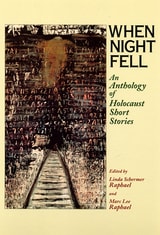
Both survivors of the Holocaust and those who were not there agree that it is impossible to tell what happened as the Nazi Final Solution was put into effect. No writing can adequately imagine the concentration camps, ghettos, and death camps. And that is precisely why writers must tell-and retell-what happened there.

In When Night Fell: An Anthology of Holocaust Short Stories, Linda Schermer Raphael and Marc Lee Raphael have collected twenty-six short stories that tell of the human toll of the Holocaust on those who survived its horrors, as well as later generations touched by its memory. The stories are framed by discussion of the current debate about who owns the Holocaust and who is entitled to speak about it.

Some of the stories included here are by internationally acclaimed authors. Others may be new to many readers. When Night Fell is a fitting memorial to this genocidal horror, putting eloquent voice to human endurance that is-almost-beyond words.
[more]
cover of When We Say “Hiroshima”: Selected Poems

When We Say “Hiroshima”

Selected Poems

Kurihara Sadako; Translated with an Introduction by Richard H. Minear

University of Michigan Press, 1999
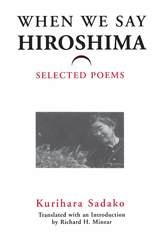
Kurihara Sadako is one of the poetic giants of the nuclear age. Born in Hiroshima in 1913, she was in Hiroshima on August 6, 1945. From then till now she has addressed her poetry primarily to issues of nuclear destruction, nuclear weapons, and nuclear power. Herself a victim of the world’s first nuclear attack, she became the poetic conscience of the Hiroshima that was no more. But Kurihara turned her attention soon to more controversial issues, including Japan’s role as victimizer in World War II. Many of her poems attack the Japanese government and its policies then and now.
When We Say “Hiroshima” contains a selection of the poems Kurihara wrote between 1942 and 1989. They include meditations on death, on survival, on nuclear radiation, on Japanese politics, on American foreign policy, and on women’s issues.
[more]
cover of When a Robot Decides to Die and Other Stories

When a Robot Decides to Die and Other Stories

Francisco García González

Vanderbilt University Press, 2021

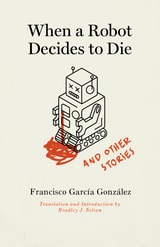
A manufactured and pre-programmed serial killer; a suicidal robot; a romantic necrophiliac; and an archaeologist who feeds the perverse desires of aficionados of the apocalypse—Francisco García Gonzalez's stories map out literary and metafictional approaches to the sci-fi universe in ways that echo the humor and violence of Miguel de Cervantes, María de Zayas, Jorge Luis Borges, Rosa Montero, and Roberto Bolaño.

With a scholarly introduction by translator Bradley J. Nelson that introduces García González's oeuvre to contemporary readers and scholars of Spanish-language literature, this science fiction collection introduces Anglophones to this unique author.

García González turns a black mirror on contemporary society and its relation both to history and to the future. His insightfulness and relevance draw comparisons with Margaret Atwood, Neal Stephenson, and China Miéville, though his verbal economy and elegance are more akin to Cormac McCarthy, producing both disturbingly uncanny violence and unexpected comedy.
[more]
cover of Wild Mustard: New Voices from Vietnam

Wild Mustard

New Voices from Vietnam

Edited by Charles Waugh, Nguyen Lien, and Van Giá

Northwestern University Press, 2017

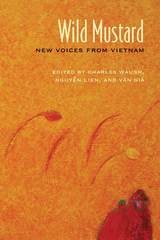
Wild Mustard, an anthology of prizewinning short fiction by contemporary Vietnamese writers, throws into relief the transformations of self and place that followed Vietnam’s turn toward a market economy. In just three decades, since the 1986 policy known as doi moi (renovation) ended collectivization and integrated Vietnam into world markets, the country has transformed from one of the poorest and most isolated on earth into a dynamic global economy. The nineteen stories in this volume capture the kaleidoscopic experiences of Vietnam's youth, navigating between home and newly expanded horizons, as they seek new opportunities through migration, education, and integration not only into their nation but into the world.

In the tradition of the "Under 40" collections popularized by magazines such as the New Yorker and Granta, but with greater stakes and greater differences between the previous generation of writers and this new one, Wild Mustard seeks to change how North American readers think of Vietnam. Escaping the common fixation on the Vietnam War and its aftermath, these stories reflect the movement and dynamism of the young Vietnamese who locate themselves amid the transnational encounters and proliferating identities of a global economy.

 
[more]
cover of Wind–Mountain–Oak: The Poems of Sappho

Wind–Mountain–Oak

The Poems of Sappho

Dan Beachy-Quick

Tupelo Press, 2023

Dan Beachy-Quick writes, “There are depths within the denotative life of Greek words that English seldom allows readers in translation to access. At some basic level, I wanted to offer a translation that traced out some of those complexities into an apprehendable substance in the poems themselves—sometimes by allowing an image to unfold more fully than is the norm, at other times by giving some sense of a word’s complicated life, the compound nature of the Greek language, or by translating the same line in multiple ways. The hope, far-fetched as it might be, is to give a reader in English some semblance of how an ancient Greek listener might hear these songs. I’ve also veered away from the various traditions of ordering the poems. I’ve clustered them into groups that seem to loosely trace the entirety of life, from childhood to older age, from the birth of desire to the fear of no longer being desirable. In a quiet way, I mean the book to read as a kind novel, a bildungsroman, so that a larger sense of the life—the poem of the life—becomes palpable. “
[more]
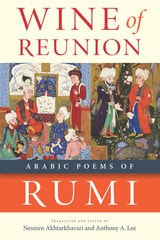
cover of Wine of Reunion: Arabic Poems of Rumi

Wine of Reunion

Arabic Poems of Rumi

Nesreen Rumi

Michigan State University Press, 2017

Exciting to those unfamiliar with Rumi’s verse as well as to the veteran scholar, this volume, following on Love Is My Savior, offers more of the little-known Arabic poems of Mawlana Rumi. These poems take the reader on a journey of spiritual search, ecstatic union, universal salvation, and mystic reconciliation, in which Rumi reveals his soul and welcomes everyone to his spiritual feast. This dual-language volume, with its informative introduction, is one of the first to bring Rumi’s Arabic poems into English, and it opens a treasury of Rumi’s mystic thought and electrifying poetry. The poems pulsate with desire and longing, with erotic meaning, and with ecstatic celebration. Rumi found in his mystic poetry a vehicle for the expression of the endless spiritual bounties of love. The reader will find, at the center of his faith and doctrine, love and a strong belief in universal salvation and unlimited generosity.
[more]
cover of Winning the Game and Other Stories

Winning the Game and Other Stories

Rubem Fonseca

Tagus Press, 2013
In these seventeen stories by one of Brazil's foremost living authors, Fonseca introduces readers—with unsurpassed candor and keenness of observation—to a kaleidoscopic, often disturbing world. A hunchback sets his lascivious sights on seducing a beautiful woman. A wealthy businessman hires a ghost writer, with unexpected results. A family of modern-day urban cannibals celebrates a bizarre rite of passage. A man roams the nocturnal streets of Rio de Janeiro in search of meaning. A male ex-police reporter writes an advice column under a female pseudonym. A prosperous entrepreneur picks up a beautiful girl in his Mercedes only to discover his costly mistake. A loser elaborates a lethal plan to become, in his mind, a winner.
[more]
cover of Winter Dialogue

Winter Dialogue

Tomas Venclova

Northwestern University Press, 1999
Best known in the U.S. as a scholar and critic, Tomas Venclova is a gifted poet whose work has remained largely unknown to an English-speaking audience. This collection of fifty-one poems is as distinctive as it is finely crafted. Also included is a foreword by Joseph Brodsky and an exchange between Venclova and Czeslaw Milosz.
[more]
cover of Wisdom from the Late Bronze Age

Wisdom from the Late Bronze Age

Yoram Cohen

SBL Press, 2013
This volume presents the original texts and annotated translations of a collection of Mesopotamian wisdom compositions and related texts of the Late Bronze Age (ca. 1500–1200 B.C.E.) found at the ancient Near Eastern sites of Hattuša, Emar, and Ugarit. These wisdom compositions constitute the missing link between the great Sumerian wisdom corpus and early Akkadian wisdom literature of the Old Babylonian period, on the one hand, and the wisdom compositions of the first millennium B.C.E., on the other. Included here are works such as the Ballad of Early Rulers, Hear the Advice, and The Date-Palm and the Tamarisk, as well as proverb collections from Ugarit and Hattuša. A detailed introduction provides an assessment of the place of wisdom literature in the ancient curriculum and library collections.
[more]
cover of With This Night

With This Night

By Leah Goldberg

University of Texas Press, 2011

When she arrived in Palestine in 1935 at the age of twenty-four, Leah Goldberg was already known as a significant emerging poet in contemporary Hebrew literature. Today, mention of her name is apt to evoke a nostalgic sigh among Israelis who have grown up hearing her poems read, quoted, recollected, and—having been set to some four hundred melodies—sung on the radio. In the wake of overwhelming new attention on Goldberg's work in Israel, With This Night makes available for the first time in English the final collection of poetry that Goldberg published during her lifetime.
[more]
cover of Words Are Something Else

Words Are Something Else

David Albahari

Northwestern University Press, 1996
David Albahari is one of the most prominent prose writers to come out of the former Yugoslavia in the last twenty years. His short stories, which developed largely outside the canon of Serbian literature, have influenced a generation of Balkan writers. This collection gathers Albahari's best and most important stories, moving from an early preoccupation with the family and Central European culture to metafictional searches for the roots of his identity.
[more]
cover of Words of the Real People: Alaska Native Literature in Translation

Words of the Real People

Alaska Native Literature in Translation

Edited by Ann Fienup-Riordan and Lawrence D. Kaplan

University of Alaska Press, 2007
Words of the Real People collects the life stories, poetry, and oral literature of the Yupik, Inupiaq, and Alutiiq peoples of Alaska, making them widely available to readers in English for the first time. Accompanied by background essays on each Native group, the literature in this collection embraces Native Alaskan life in all its rich variety. From tales of malevolent shamans to the unexpected poetry of the urban experience, and from ancient tales passed down for generations to contemporary stories being woven into a new tradition, Words of the Real People stakes out an important place for Native Alaskan literature as a vibrant, living tradition and will be essential to folklorists, anthropologists, and anyone interested in the storied past of our continent's most forbidding reaches.
[more]
cover of Works of Hesiod and the Homeric Hymns: Including Theogony and Works and Days

Works of Hesiod and the Homeric Hymns

Including Theogony and Works and Days

Edited by Daryl Hine

University of Chicago Press, 2004

The most faithful and lyrical translation of Works and Days, Theogony, and more 
 
In Works of Hesiod and the Homeric Hymns, highly acclaimed poet and translator Daryl Hine brings to life the words of Hesiod and the world of Archaic Greece. While most available versions of these early Greek writings are rendered in prose, Hine's illuminating translations represent these early classics as they originally appeared, in verse. Since prose was not invented as a literary medium until well after Hesiod's time, presenting these works as poems more closely approximates not only the mechanics but also the melody of the originals.

This volume includes Hesiod's Works and Days and Theogony, two of the oldest non-Homeric poems to survive from antiquity. Works and Days is in part a farmer's almanac—filled with cautionary tales and advice for managing harvests and maintaining a good work ethic—and Theogony is the earliest comprehensive account of classical mythology—including the names and genealogies of the gods (and giants and monsters) of Olympus, the sea, and the underworld. Hine brings out Hesiod's unmistakable personality; Hesiod's tales of his escapades and his gritty and persuasive voice not only give us a sense of the author's own character but also offer up a rare glimpse of the everyday life of ordinary people in the eighth century BCE.

In contrast, the Homeric Hymns are more distant in that they depict aristocratic life in a polished tone that reveals nothing of the narrators' personalities. These hymns (so named because they address the deities in short invocations at the beginning and end of each) are some of the earliest examples of epyllia, or short stories in the epic manner in Greek.

This volume unites Hine's skillful translations of the Works of Hesiod and the Homeric Hymns—along with Hine's rendering of the mock-Homeric epic The Battle of the Frogs and the Mice—in a stunning pairing of these masterful classics.
 
[more]
cover of Workshop of Silence: Poems

Workshop of Silence

Poems

Jean D’Amérique; Translated from French by Conor Bracken

Vanderbilt University Press, 2025

Workshop of Silence, a book of poems by the Haitian writer Jean D’Amérique, was published in France by Cheyne éditeur in 2020. Across all of D’Amérique’s work, and especially in this third collection, he bridges the political and the personal, the aggrieved and the hopeful, the local and the global. The first three poems of Workshop offer a helpful overture. The first describes where the speaker’s poems come from (“gnaw[ed] nights sprung from guts”); the second imagines a world where tenderness alone can pay for groceries; and the third laments the inattention of “developed nations” toward places like Aleppo and Gaza, which are “married by force to the evening of bones.” Hope and horror, impatience and dreamy languor trade places throughout the book, as D’Amérique asks how poetry can be made of and resist silence, and how poems can be products of and inspirations toward hope and resistance even in the face of overwhelming, and sometimes violent, indifference.

Though D’Amérique’s poems grow out of soils strewn with stones and splotched with blood, they also grow out of play, one of the more daring and dangerous modes there is (“being happy is worth the price” he says in “worth the price”). Produced in a bilingual edition, with a side-by-side translation by Conor Bracken as well as a critical introduction, Workshop of Silence preserves and approximates this spirit of play and scrutiny so that the sound of the translation bears as much semantic heft as the signifying content of the words. This leads, oftentimes, to choices that may seem odd or tangential, but ultimately highlight D’Amérique’s experimentation with the French language in and on poetic form—the puns, the intricate play of assonance and consonance, the rhymes and kennings, the lineation and inversions. These all serve to recalibrate a reader’s relationship with the language he is writing in, one that has been used for centuries to subjugate people throughout the Global South. The more we recognize language as a mighty and strange substance that can be manipulated to do weird things and to effect arbitrary outcomes, the more we can both revel in its potential and question what it has led us to take for granted.
[more]
cover of Woven on the Loom of Time: Stories by Enrique Anderson-Imbert

Woven on the Loom of Time

Stories by Enrique Anderson-Imbert

Selected and translated by Carleton Vail and Pamela Edwards-Mondragón

University of Texas Press, 1990

Argentinian scholar and writer Enrique Anderson-Imbert is familiar to many North American students for his La Literatura de América Latina I and II, which are widely used in college Spanish courses. But Anderson-Imbert is also a noted creative writer, whose use of "magical realism" helped pave the way for such writers as Borges, Cortázar, Sábato, and Ocampo. In this anthology, Carleton Vail and Pamela Edwards-Mondragón have chosen stories from the period 1965 to 1985 to introduce English-speaking readers to the creative work of Enrique Anderson-Imbert. Representative stories from the collections The Cheshire Cat, The Swindler Retires, Madness Plays at Chess, Klein's Bottle, Two Women and One Julián, and The Size of the Witches illustrate Anderson-Imbert's unique style and world view. Many are "short short" stories, which Anderson-Imbert calls casos (instances). The range of subjects and points of view varies widely, challenging such "realities" as time and space, right and wrong, science and religion. In a prologue, Anderson-Imbert tells an imaginary reader, "Each one of my stories is a closed entity, brief because it has caught a single spasm of life in a single leap of fantasy. Only a reading of all my stories will reveal my world-view." The reader asks, "And are you sure that it is worth the trouble?" Anderson-Imbert replies, "No." The unexpected, ironic ending is one of the great pleasures of reading Enrique Anderson-Imbert.
[more]
cover of Writings by Western Icelandic Women

Writings by Western Icelandic Women

Kirsten Wolf

University of Manitoba Press, 1997

There are two Icelands. One is the island in the North Sea, occupied since before the arrival of the Vikings. The other is "Western Iceland," the communities throughout North America, settled by Icelandic immigrants in the 19th and 20th centuries, and still maintaining strong ties to their mother country. While the prominent role of women in the development of Western Iceland has long been acknowledged, there is little recognition of their contribution to its literary life.This collection of short stories and poems spans 75 years of writings. It includes translated work by little-known authors such as Undina - "a modest poet," as well as works in English by prominent writers such as Laura Goodman Salverson, twice a winner of the Governor-General's Award. From the hopefulness of the early immigration in the 1870s to the conflict of assimilation in the 1950s, the pieces reflect a range of experiences common to immigrant women from many cultures.Writings by Western Icelandic Women includes many works translated for the first time from their original Icelandic, and rescues from obscurity the voices and experiences of women as they struggled in a new country. It offers insight into the many obstacles, both personal and professional, that faced these pioneering writers. An introduction by Kirsten Wolf provides a literary and historical context, and is complemented by photographs and brief author biographies.
[more]