Results by title
64 books match the query 'Vocational guidance' and 7 start with w
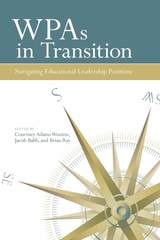
WPAs in Transition
Navigating Educational Leadership PositionsCourtney Adams Wooten
Utah State University Press, 2017
WPAs in Transition shares a wide variety of professional and personal perspectives about the costs, benefits, struggles, and triumphs experienced by writing program administrators making transitions into and out of leadership positions. Contributors to the volume come from various positions, as writing center directors, assistant writing program administrators, and WPAs; mixed settings, including community colleges, small liberal arts colleges, and research institutions; and a range of career stages, from early to retiring. They recount insightful anecdotes and provide a scholarly context in which WPAs can share experiences related to this long-ignored aspect of their work.
During such transitions, WPAs and other leaders who function as both administrators and faculty face the professional and personal challenges of redefining who they are, the work they do, and with whom they collaborate. WPAs in Transition creates a grounded and nuanced experiential understanding of what it means to navigate changing roles, advancing the dialogue around WPAs’ and other administrators’ identities, career paths, work-life balance, and location, and is a meaningful addition to the broader literature on administration and leadership.
Contributors: Mark Blaauw-Hara, Christopher Blankenship, Jennifer Riley Campbell, Nicole I. Caswell, Richard Colby, Steven J. Corbett, Beth Daniell, Laura J. Davies, Jaquelyn Davis, Holland Enke, Letizia Guglielmo, Beth Huber, Karen Keaton Jackson, Rebecca Jackson, Tereza Joy Kramer, Jackie Grutsch McKinney, Kerri K. Morris, Liliana M. Naydan, Reyna Olegario, Kate Pantelides, Talinn Phillips, Andrea Scott, Paul Shovlin, Bradley Smith, Cheri Lemieux Spiegel, Sarah Stanley, Amy Rupiper Taggart, Molly Tetreault, Megan L. Titus, Chris Warnick

What They Don't Teach You in Library School
Elisabeth Doucett
American Library Association, 2010

Who Succeeds in Science?
The Gender DilemmaGerald Holton and Gerhard Sonnert
Rutgers University Press, 1995
Why don’t more women become scientists? And why do those who do become scientists often face more difficulties than their male counterparts? Every year, about a quarter of a million young men and women in the United States receive their first academic degree in science, mathematics, or engineering. A small fraction will eventually become research scientists. But many who start out with that goal fail to reach it––for reasons that may have less to do with their scientific ability than with their gender.
Drawing on a wealth of information (699 questionnaires and 200 interviews) from men and women who gave every promise of scientific achievement, Gerhard Sonnert and Gerald Holton illuminate the partly gender-driven dynamics of “the leaky scientific pipeline.” At the heart of this book are gripping personal life stories of ten women and ten men: half became highly successful scientists, the rest left research science. In their own voices, they talk candidly about their career paths, the obstacles and assists they encountered, the difficulties and rewards of attempting to combine a family life with a science career.
This highly readable analysis of the gender dimension in scientific careers––and its clear-headed advice––will be of great interest to everyone considering a career in science as well as to teachers, parents, and active scientists. Academics in sociology of science and gender studies as well as decision-makers in the areas of human resources and science policy will also welcome its discussions of general issues and policy recommendations.
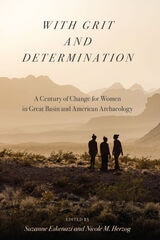
With Grit and Determination
A Century of Change for Women in Great Basin and American ArchaeologyEdited by Suzanne Eskenazi and Nicole M. Herzog
University of Utah Press, 2020
Working in the Virtual Stacks
Laura Townsend Kane
American Library Association, 2011
Working with Faculty Writers
Anne Ellen Geller and Michele Eodice
Utah State University Press, 2013
Contributors from a variety of institution types and perspectives consider who faculty writers are and who they may be in the future, reveal the range of locations and models of support for faculty writers, explore the ways these might be delivered and assessed, and consider the theoretical, philosophical, political, and pedagogical approaches to faculty writing support, as well as its relationship to student writing support.
With the pressure on faculty to be productive researchers and writers greater than ever, this is a must-read volume for administrators, faculty, and others involved in developing and assessing models of faculty writing support.
Writing Emergencies
Composing (Ourselves) in Times of CrisisHolly Hassel
Utah State University Press, 2026
Despite the adage “there are no writing emergencies,” at times situations invite or require immediate written response. In a modern era of social media and with the constancy of “crisis,” knowing when, how, and why to respond quickly is increasingly important. In Writing Emergencies, a diverse group of authors contribute scholarly, narrative-based discussions of writing emergencies, descriptions of more and less successful strategies, and a reflective conclusion that offers implications for writing studies praxis and theory.
In this collection, contributors demonstrate the reality of writing emergencies—in their own writing lives, classrooms, and programs—and they offer both self- and community-focused approaches for response. Chapters focus on discernment and prioritization, recognizing that all stressors are not necessarily emergencies. Instead, expanding our vocabulary for (and subsequent understanding) of the kinds of difficulties we come across can build our professional capacity and support greater career sustainability. The volume also illustrates the role of coalitions in navigating writing emergencies and how purposefully building and activating these coalitions subverts some challenges before they become emergencies, particularly those that are recurrent or manufactured.
Writing Emergencies both names and grapples with writing emergencies and offers insights for capacity-building in the acts of filtering and prioritizing competing urgent demands. The findings are meaningful for all leaders, students, and teachers who center care in their relationships with others.