53 books match the query 'Voting' and 3 start with w
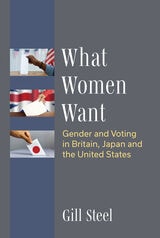
cover of What Women Want: Gender and Voting in Britain, Japan and the United States

What Women Want

Gender and Voting in Britain, Japan and the United States

Gill Steel

University of Michigan Press, 2022

What Women Want analyzes decades of voting preferences, values, and policy preferences to debunk some of the media and academic myths about gender gaps in voting and policy preferences. Findings show that no single theory explains when differences in women’s and men’s voting preferences emerge, when they do not, or when changes—or the lack thereof—occur over time. Steel extends existing theories to create a broader framework for thinking about gender and voting behavior to provide more analytical purchase in understanding gender and its varying effects on individual voters’ preferences. She incorporates the long-term effects of party identification and class politics on political decision-making, particularly in how they influence preferences on social provision and on expectations of the state. She also points to the importance of symbolic politics
[more]
cover of Why Americans Split Their Tickets: Campaigns, Competition, and Divided Government

Why Americans Split Their Tickets

Campaigns, Competition, and Divided Government

Barry C. Burden and David C. Kimball

University of Michigan Press, 2004
In Why Americans Split Their Tickets, Barry C. Burden and David C. Kimball argue that divided government is produced unintentionally. Using a new quantitative method to analyze voting in presidential, House, and Senate elections from 1952 to 1996, they reject the dominant explanation for divided government, that ticket splitting is done to balance parties that are far from the center. The ideological positions of candidates do not matter in American elections, but voters favor centrist candidates rather than a mix of extremists. When candidates of opposing parties adopt similar platforms, ticket splitting arises. For voters, ideological differences between the parties blur and other considerations such as candidate characteristics exert a greater influence on their voting decisions. Among their other findings, the authors link changes in congressional campaigns--namely the rise of incumbency advantage and the greater importance of money in the 1960s and 1970s--to ticket splitting and argue, in addition, that the transformation of the South from a Democratic stronghold to a Republican-leaning environment has made regional factors less important.
Burden and Kimball draw upon a diverse and unique range of data as evidence for their argument. Their analyses rely on survey data, aggregate election returns, and new ecological inference estimates for every House and Senate election from 1952 to 1996. This approach allows for the examination of divided voting in traditional ways, such as choosing a Democratic presidential candidate and a Republican House candidate on a single ballot, to less traditional forms, such as voting in a midterm House election and choosing a state's Senate delegation.
Barry C. Burden is Assistant Professor of Government, Harvard University. David C. Kimball is Assistant Professor of Political Science, University of Missouri, St. Louis.
[more]
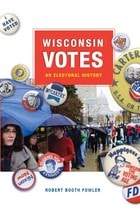
cover of Wisconsin Votes: An Electoral History

Wisconsin Votes

An Electoral History

Robert Booth Fowler

University of Wisconsin Press, 2008

This is the first full history of voting in Wisconsin from statehood in 1848 to the present. Fowler both tells the story of voting in key elections across the years and investigates electoral trends and patterns over the course of Wisconsin’s history. He explores the ways that ethnic and religious groups in the state have voted historically and how they vote today, and he looks at the successes and failures of the two major parties over the years. Highlighting important historical movements, Fowler discusses the great struggle for women’s suffrage and the rich tales of many Wisconsin third parties—the Socialists, Progressives, the Prohibition Party, and others. Here, too, are the famous politicians in Wisconsin history, such as the La Follettes, William Proxmire, and Tommy Thompson.
 
Winner, Award of Merit for Leadership in History, American Association for State and Local History
[more]