Results by title
77 books match the query 'Wars' and 7 start with w
Warfare and the Fall of a Fortified Center
Archaeological Investigations at AguatecaTakeshi Inomata
Vanderbilt University Press, 2006
VIMA Series #3
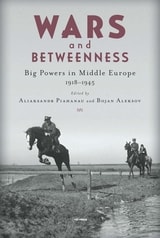
Wars and Betweenness
Big Powers and Middle Europe, 1918-1945Aliaksandr Piahanau
Central European University Press, 2020
The region between the Baltic and the Black Sea was marked by a set of crises and conflicts in the 1920s and 1930s, demonstrating the diplomatic, military, economic or cultural engagement of France, Germany, Russia, Britain, Italy and Japan in this highly volatile region, and critically damaging the fragile post-Versailles political arrangement. The editors, in naming this region as "Middle Europe" seek to revive the symbolic geography of the time and accentuate its position, situated between Big Powers and two World Wars.
The ten case studies in this book combine traditional diplomatic history with a broader emphasis on the geopolitical aspects of Big-Power rivalry to understand the interwar period. The essays claim that the European Big Powers played a key role in regional affairs by keeping the local conflicts and national movements under control and by exploiting the region's natural resources and military dependencies, while at the same time strengthening their prestige through cultural penetration and the cultivation of client networks.
The authors, however, want to avoid the simplistic view that the Big Powers fully dominated the lesser players on the European stage. The relationship was indeed hierarchical, but the essays also reveal how the "small states" manipulated Big-Power disagreements, highlighting the limits of the latters' leverage throughout the 1920s and the 1930s.
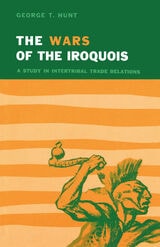
Wars of the Iroquois
A Study in Intertribal Trade RelationsGeorge T. Hunt
University of Wisconsin Press, 1960
George T. Hunt’s classic 1940 study of the Iroquois during the middle and late seventeenth century presents warfare as a result of depletion of natural resources in the Iroquois homeland and tribal efforts to assume the role of middlemen in the fur trade between the Indians to the west and the Europeans.

Wars, Parties and Nationalism
Essays on the Politics and Society of Nineteenth-century Latin AmericaEdited by Eduardo Posada-Carbo
University of London Press, 1995
We Alone Will Rule
Native Andean Politics in the Age of InsurgencySinclair Thomson
University of Wisconsin Press, 2003
Women and Rhetoric between the Wars
Ann George, M. Elizabeth Weiser, and Janet Zepernick
Southern Illinois University Press, 2013
In Women and Rhetoric between the Wars, editors Ann George, M. Elizabeth Weiser, and Janet Zepernick have gathered together insightful essays from major scholars on women whose practices and theories helped shape the field of modern rhetoric. Examining the period between World War I and World War II, this volume sheds light on the forgotten rhetorical work done by the women of that time. It also goes beyond recovery to develop new methodologies for future research in the field.
Collected within are analyses of familiar figures such as Jane Addams, Amelia Earhart, Helen Keller, and Bessie Smith, as well as explorations of less well known, yet nevertheless influential, women such as Zitkala-Ša, Jovita González, and Florence Sabin. Contributors evaluate the forces in the civic, entertainment, and academic scenes that influenced the rhetorical praxis of these women. Each essay presents examples of women’s rhetoric that move us away from the “waves” model toward a more accurate understanding of women’s multiple, diverse rhetorical interventions in public discourse. The collection thus creates a new understanding of historiography, the rise of modern rhetorical theory, and the role of women professionals after suffrage. From celebrities to scientists, suffragettes to academics, the dynamic women of this volume speak eloquently to the field of rhetoric studies today.
Women, Celebrity, and Literary Culture between the Wars
By Faye Hammill
University of Texas Press, 2007
As mass media burgeoned in the years between the first and second world wars, so did another phenomenon—celebrity. Beginning in Hollywood with the studio-orchestrated transformation of uncredited actors into brand-name stars, celebrity also spread to writers, whose personal appearances and private lives came to fascinate readers as much as their work. Women, Celebrity, and Literary Culture between the Wars profiles seven American, Canadian, and British women writers—Dorothy Parker, Anita Loos, Mae West, L. M. Montgomery, Margaret Kennedy, Stella Gibbons, and E. M. Delafield—who achieved literary celebrity in the 1920s and 1930s and whose work remains popular even today.
Faye Hammill investigates how the fame and commercial success of these writers—as well as their gender—affected the literary reception of their work. She explores how women writers sought to fashion their own celebrity images through various kinds of public performance and how the media appropriated these writers for particular cultural discourses. She also reassesses the relationship between celebrity culture and literary culture, demonstrating how the commercial success of these writers caused literary elites to denigrate their writing as "middlebrow," despite the fact that their work often challenged middle-class ideals of marriage, home, and family and complicated class categories and lines of social discrimination.
The first comparative study of North American and British literary celebrity, Women, Celebrity, and Literary Culture between the Wars offers a nuanced appreciation of the middlebrow in relation to modernism and popular culture.