104 books match the query 'Writings' and 16 start with w
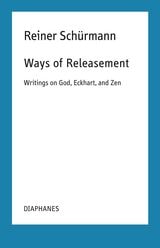
cover of Ways of Releasement: Writings on God, Eckhart, and Zen

Ways of Releasement

Writings on God, Eckhart, and Zen

Reiner Schürmann

Diaphanes, 2023

Never-before-published writing from a key twentieth-century philosopher.
 
In 1962, Reiner Schürmann began studying at the Dominican school of theology Le Saulchoir, outside Paris. That experience radically shaped his life and work, enabling him to begin to develop many of the ideas for which he would later be known: letting be, life without why, ontological anarchy, and the tragic double bind.
 
Ways of Releasement contains never-before-published material from Schürmann’s early period as well as a report Schürmann wrote about his encounter with Heidegger; a précis of his autobiographical novel, Origins; and translations and new editions of later groundbreaking essays. Ways of Releasement concludes with an extensive afterword setting Schürmann’s writings in the context of his thinking and life.

[more]
cover of We Mark Your Memory: writings from the descendants of indenture

We Mark Your Memory

writings from the descendants of indenture

Edited by David Dabydeen, Maria del Pilar Kaladeen, and Tina K. Ramnarine

University of London Press, 2018
Customers based in the United States and Canada, please order from here: https://bit.ly/2GAV2YR The abolition of slavery was the catalyst for the arrival of the first Indian indentured labourers into the sugar colonies of Mauritius (1834), Guyana (1838) and Trinidad (1845), followed some years later by the inception of the system in South Africa (1860) and Fiji (1879). By the time indenture was abolished in the British Empire (1917–20), over one million Indians had been contracted, the overwhelming majority of whom never returned to India. Today, an Indian indentured labour diaspora is to be found in Commonwealth countries including Belize, Kenya, Malaysia, Sri Lanka and the Seychelles. Indenture, whereby individuals entered, or were coerced, into an agreement to work in a colony in return for a fixed period of labour, was open to abuse from recruitment to plantation. Hidden within this little-known system of nineteenth- and early twentieth-century Indian migration under the British Empire are hitherto neglected stories of workers who were both exploited and unfree. These include indentured histories from Madeira to the Caribbean, from West Africa to the Caribbean, and from China to the Caribbean, Mauritius and South Africa. To mark the centenary of the abolition of the system in the British Empire (2017–20) this volume brings together, for the first time, new writing from across the Commonwealth. It is a unique attempt to explore, through the medium of poetry and prose, the indentured heritage of the twenty-first century.
[more]
cover of When I Am Dead: The Writings of George M. Teegarden

When I Am Dead

The Writings of George M. Teegarden

Raymond Luczak

Gallaudet University Press, 2007

The Sixth Volume in the Gallaudet Classics in Deaf Studies Series

George M. Teegarden (1852-1936) taught at the Western Pennsylvania School for the Deaf for 48 years, established the printing department, and also served as the first editor of the school’s magazine. Despite these significant contributions, his greatest gift to deaf people was his skill as a writer and poet who was deaf, as readers will discover in When I Am Dead: The Writings of George M. Teegarden.

Editor Raymond Luczak selected Teegarden’s prose in When I Am Dead from several books, including Raindrop, and Stories, Old and New. Noting that these stories were never written for hearing readers, Luczak marvels at Teegarden’s ability to write English prose that the ASL-familiar reader would find incredibly easy to transliterate. By employing a rich blend of original stories and revisions of fables and myths, Teegarden taught his students the importance of improving their reading and writing skills to outfit them “for the battle of life.” He produced a body of work that Luczak characterizes as “a breath of fresh air: quick, painless, and usually told with a sense of wonder.”

Luczak’s choice of poems came from Teegarden’s self-published volume Vagrant Verses, a summation of his affection for Gallaudet College, the Deaf community, and all deaf people. The eponymous poem “When I Am Dead” articulates concisely the beliefs that directed Teegarden’s life of service:

“When I am dead, I hope to be
Remembered—this is true—
Not for my wit or vanities
But what I did for you.”
[more]
cover of Writings

Writings

Saint John of Damascus

Catholic University of America Press, 1958
St. John of Damascus (ca. 675-749) is generally regarded as the last great figure of Greek Patrology
[more]
cover of Writings

Writings

Vilem Flusser

University of Minnesota Press, 2004

Ten years after his death, Vilém Flusser’s reputation as one of Europe’s most original modern philosophers continues to grow. Increasingly influential in Europe and Latin America, the Prague-born intellectual’s thought has until now remained largely unknown in the English-speaking world. His innovative writings theorize—and ultimately embrace—the epochal shift that humanity is undergoing from what he termed "linear thinking" (based on writing) toward a new form of multidimensional, visual thinking embodied by digital culture. For Flusser, these new modes and technologies of communication make possible a society (the "telematic" society) in which dialogue between people becomes the supreme value.The first English-language anthology of Flusser’s work, this volume displays the extraordinary range and subtlety of his intellect. A number of the essays collected here introduce and elaborate his theory of communication, influenced by thinkers as diverse as Martin Buber, Edmund Husserl, and Thomas Kuhn. While taking dystopian, posthuman visions of communication technologies into account, Flusser celebrates their liberatory and humanizing aspects. For Flusser, existence was akin to being thrown into an abyss of absurd experience or "bottomlessness"; becoming human required creating meaning out of this painful event by consciously connecting with others, in part through such technologies. Other essays present Flusser’s thoughts on the future of writing, the revolutionary nature of photography, the relationship between exile and creativity, and his unconventional concept of posthistory. Taken together, these essays confirm Flusser’s importance and prescience within contemporary philosophy.Vilém Flusser (1920–1991) was born in Prague and taught philosophy in Brazil. Andreas Ströhl is director of the film department at the Goethe-Institut Inter Nationes in Munich. Erik Eisel works for a software technology company in Southern California.
[more]
cover of Writings

Writings

Vilem Flusser

University of Minnesota Press, 2002
Ten years after his death, Vilém Flusser’s reputation as one of Europe’s most original modern philosophers continues to grow. Increasingly influential in Europe and Latin America, the Prague-born intellectual’s thought has until now remained largely unknown in the English-speaking world. His innovative writings theorize—and ultimately embrace—the epochal shift that humanity is undergoing from what he termed "linear thinking" (based on writing) toward a new form of multidimensional, visual thinking embodied by digital culture. For Flusser, these new modes and technologies of communication make possible a society (the "telematic" society) in which dialogue between people becomes the supreme value. The first English-language anthology of Flusser’s work, this volume displays the extraordinary range and subtlety of his intellect. A number of the essays collected here introduce and elaborate his theory of communication, influenced by thinkers as diverse as Martin Buber, Edmund Husserl, and Thomas Kuhn. While taking dystopian, posthuman visions of communication technologies into account, Flusser celebrates their liberatory and humanizing aspects. For Flusser, existence was akin to being thrown into an abyss of absurd experience or "bottomlessness;" becoming human required creating meaning out of this painful event by consciously connecting with others, in part through such technologies. Other essays present Flusser’s thoughts on the future of writing, the revolutionary nature of photography, the relationship between exile and creativity, and his unconventional concept of posthistory. Taken together, these essays confirm Flusser’s importance and prescience within contemporary philosophy. 
[more]
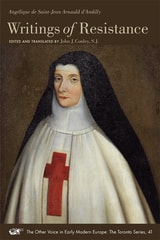
cover of Writings of Resistance

Writings of Resistance

Angélique de Saint-Jean Arnauld d’Andilly

Iter Press, 2015

An erudite abbess of Port-Royal, Angélique de Saint-Jean Arnauld d’Andilly (1624 – 1684) resisted the demands of church and state to condemn the Jansenist theological doctrines which the convent had long upheld. In her autobiographical Report on Captivity, Angélique de Saint-Jean recounts her personal methods of spiritual resistance as she and her fellow nuns underwent waves of persecution resulting in exile, house arrest, interdict, and excommunication. Her voluminous theological writings present the theoretical basis for this resistance, limiting the claims of political and ecclesiastical authorities over the conscience of the individual. In particular, she defends the right of women to refuse to surrender their convictions due to specious appeals to obedience and humility.
[more]
cover of Writings of Warner Mifflin: Forgotten Quaker Abolitionist of the Revolutionary Era

Writings of Warner Mifflin

Forgotten Quaker Abolitionist of the Revolutionary Era

Gary B. Nash

University of Delaware Press, 2021
In The Writings of Warner Mifflin, Gary Nash and Michael McDowell present the correspondence, petitions, and memorials to state and federal legislative bodies, semi-autobiographical essays, and other materials of the key figure in the U.S. abolitionist movement between the end of the American Revolution and the Jefferson presidency. Virtually unknown to Americans, Mifflin has been brought to life in Nash’s recent biography, Warner Mifflin: Unflinching Quaker Abolitionist (2017). This volume provides an array of insights into the mind of this conscience-bound pacifist Quaker who became instrumental in making Kent County, Delaware, a bastion of free blacks liberated from slavery and a seedbed of a reparationist doctrine that insisted that enslavers owed “restitution” to manumitted Africans and their descendants. Mifflin's writings also show how he became the most skilled lobbyist of the antislavery campaigners who haunted the legislative chambers of North Carolina, Virginia, Maryland, Delaware, and Pennsylvania as well as the halls of the Continental Congress and the First and Second Federal Congresses. An opening introduction and introductions to each of the five chronologically arranged parts of the book provide context for the documents and a narrative of the life of this remarkable American.
[more]
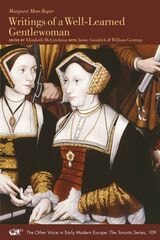
cover of Writings of a Well-Learned Gentlewoman

Writings of a Well-Learned Gentlewoman

Margaret More Roper

Iter Press, 2024

The collected writings of Margaret More Roper, presented and annotated for classroom use.

Margaret More Roper (1505–44) was, at the age of nineteen, the first early modern woman writer in Tudor England and the first nonroyal woman to have a book printed in the English language. As the eldest daughter of Sir Thomas More, Roper received a cutting-edge education in Latin and Greek that was virtually unprecedented for a woman. Besides gaining an international reputation for her outstanding erudition, Roper served as More’s confidante during his imprisonment. Her correspondence from this period offers valuable insight into a key moment in English history.

This Other Voice series edition recognizes Margaret More Roper as a notable historical figure in her own right and as one of the most learned women of her time. It publishes all her extant writings in modernized spelling, with annotations, a glossary, and a current bibliography of studies about her.
 
[more]
cover of Writings on Grace: The Complete <i>Ecrits sur la grace</i>

Writings on Grace

The Complete <i>Ecrits sur la grace</i>

Blaise Pascal

Catholic University of America Press, 2025

A few years before he died in 1662, Blaise Pascal wrote fifteen interconnected essays on grace, which have collectively come to be known as the Écrits sur la grâce. These were not published before his death, and were not polished and revised by him with an eye to publication, which means that they show his mind at work experimentally, trying out lines of argument and engagements with magisterial and patristic texts without resolving them into anything like a final system. The Écrits are replete with experimental formulations and bursts of literary and intellectual energy; taken together, they provide an intense and extreme presentation of Pascal's version of Augustinianism with respect to grace, election, and predestination, the meaning of the Council of Trent, and much else. These essays provide one of the keys to the entirety of Pascal's thought, and they provide a view of grace's workings -- perhaps better, a grammar of grace -- which still warrants serious attention by Catholic theologians. Less than one-fifth of the Écrits has yet been published in English. This book provides a complete translation, made from the French text provided in Michel Le Guern's edition (1998, 2000) of Pascal's Oeuvres complètes, and annotated to provide full information about Pascal's sources and how he used them. The translation is followed by a substantial interpretive essay in which Pascal's positions and approaches are restated and argued with.
[more]
cover of Writings on Media: History of the Present

Writings on Media

History of the Present

Stuart Hall

Duke University Press, 2021

Writings on Media gathers more than twenty of Stuart Hall's media analyses, from scholarly essays such as “Encoding and Decoding in the Television Discourse” (1973) to other writings addressed to wider publics. Hall explores the practices of news photography, the development of media and cultural studies, the changing role of television, and how the nation imagines itself through popular media. He attends to Britain's imperial history and the politics of race and cultural identity as well as the media's relationship to the political project of the state. Testifying to the range and agility of Hall's critical and pedagogic engagement with contemporary media culture—and also to his collaborative mode of working—this volume reaffirms his stature as an innovative media theorist while demonstrating the continuing relevance of his methods of analysis.
[more]
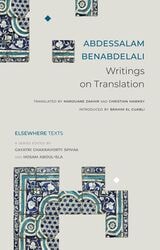
cover of Writings on Translation

Writings on Translation

Abdessalam Benabdelali

Seagull Books, 0
[more]
cover of Writings on Translation

Writings on Translation

Abdessalam Benabdelali

Seagull Books, 2025

An exploration of the philosophical dimensions of translation, celebrating it as a practice that preserves and proliferates cultural differences.

Abdessalam Benabdelali is a revered Moroccan philosopher and translator whose work maps an invaluable history of the status of translation in contemporary Arabic thought and language. Bringing together essays from two linked Arabic works by Benabdelali—On Translation and Hosting the Stranger—this volume represents one of the first extended philosophical explorations of translation by a contemporary Arab philosopher. These works reframe Arabic and European cultural histories around translation to counter hegemonic discourses and celebrate translation as a form of philosophical thought and practice, one that both preserves and proliferates difference.

Whether discussing eighteenth-century European perceptions of Arabic culture, classical Arabic literature and its express intent to resist all translation, or contemporary Arabic authors who write in anticipation of translation, Writings on Translation nimbly outlines the key philosophical questions at stake in translation. It concludes with an impassioned argument for translations that “host the stranger” and allow texts to “lift off and migrate.”
[more]
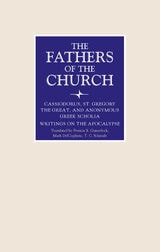
cover of Writings on the Apocalypse

Writings on the Apocalypse

Francis X. Gumerlock

Catholic University of America Press, 2022
The Apocalypse or Book of Revelation is one of the most frequently discussed books of the biblical canon and arguably one of the most difficult to interpret. This volume contains three texts as examples of late ancient Christian interpretation of its intriguing visions. It also includes a comprehensive introduction to each text by its respective translator. Brief Explanations of the Apocalypse by Cassiodorus (c. 580), translated by Francis X. Gumerlock from Latin and published in English for the first time in this volume, served as an introduction to the Book of Revelation for Cassiodorus’s students at the Vivarium, a monastery in southern Italy. Cassiodorus divided the Apocalypse into 33 sections, corresponding to the age of Jesus at his Passion, and expressed his belief that John’s visions were revelations of the end of the world, including the Second Coming of Christ for judgment, the defeat of the Antichrist, the general resurrection, and the arrival of the heavenly Kingdom. Testimonies of Gregory the Great on the Apocalypse, translated from Latin by Mark DelCogliano and also published here for the first time in English, is a collection of 55 excerpts on the Apocalypse from the writings of St. Gregory the Great (d. 604) compiled by an anonymous author. Drawn mainly from Gregory’s Moralia, but also from his Book on Pastoral Care and homilies, the excerpts, which are arranged from Revelation 1.4 to 22.17, illustrate Gregory’s grammatical exegesis of the Apocalypse, his interpretation of various figures in the Apocalypse, and his attempt to reconcile certain passages in the Apocalypse with seemingly contradictory texts from other parts of Scripture. The anonymous Greek Scholia on the Apocalypse contains 39 exegetical notes on chapters 1-14 of the Apocalypse, which reveal influences of Origen and Didymus the Blind, among others. The notes provide “spiritual” interpretations of the various passages and give attention to the interpretation of certain words that appear in the Book of Revelation. This new translation from the Greek by T. C. Schmidt utilizes all the Greek editions. Furthermore, its introductory matter contains updates on the Scholia from the latest scholarship and compares each scholion with interpretations found in various patristic authors, mainly of Alexandrian heritage.
[more]
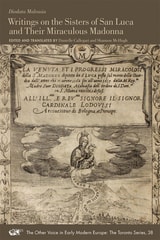
cover of Writings on the Sisters of San Luca and Their Miraculous Madonna

Writings on the Sisters of San Luca and Their Miraculous Madonna

Diodata Malvasia

Iter Press, 2015

The Bolognese nun Diodata Malvasia was presumed to have authored only one work, The Arrival and the Miraculous Workings of the Glorious Image of the Virgin (1617). In her recently discovered second manuscript chronicle, A Brief Discourse on What Occurred to the Most Reverend Sisters of the Joined Convents of San Mattia and San Luca (1575), her writing demonstrates active resistance to Tridentine convent reform. Together, Malvasia’s works read as the bookends to a lifelong crusade on behalf of her convent.
[more]
cover of Writings; Writings; Commonitories; Grace and Free Will

Writings; Writings; Commonitories; Grace and Free Will

Catholic University of America Press, 2008

No description available
[more]