Results by title
295 books match the query 'Zoology' and 9 start with w
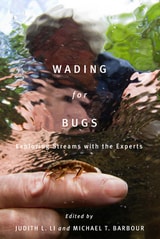
Wading for Bugs
Exploring Streams with the ExpertsJudith L. Li
Oregon State University Press, 2011
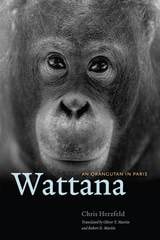
Wattana
An Orangutan in ParisChris Herzfeld
University of Chicago Press, 2016
Offering a uniquely intimate look at the daily lives of captive great apes, Herzfeld uses Wattana’s life to trace the history of orangutans from their first arrival in Europe in 1776 to the inhabitants of the Zoo of Paris and other zoos today. She provides a close look at the habits, technical know-how, and skills of Wattana, who, remarkably, uses strings, paper rolls, rope, and even pieces of wood to make things. And she thoughtfully explores how apes individually—and often with ingenuity—come to terms with and adapt to their captive environments and caretakers. Through these stories, Wattana sympathetically reveals the extraordinary psychology and distinctive personalities of great apes as well as the interconnections between animal and human lives, especially in zoos.
Scientists predict that orangutans will disappear from the wild by 2030, and captive animals like Wattana may, as a result, provide our best chance to understand and appreciate their astonishing intelligence and abilities. Wattana, the accomplished maker of knots, is the hero of this poignant book, which will enthrall anyone curious about the lives of our primate cousins.
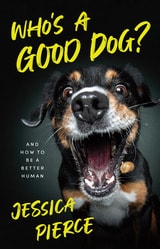
Who's a Good Dog?
And How to Be a Better HumanJessica Pierce
University of Chicago Press, 2023
A guide to cultivating a shared life of joy and respect with our dogs.
Who’s a Good Dog? is an invitation to nurture more thoughtful and balanced relationships with our canine companions. By deepening our curiosity about what our dogs are experiencing, and by working together with them in a spirit of collaboration, we can become more effective and compassionate caregivers.
With sympathy for the challenges met by both dogs and their humans, bioethicist Jessica Pierce explores common practices of caring for dogs, including how we provide exercise, what we feed, how and why we socialize and train, and how we employ tools such as collars and leashes. She helps us both to identify potential sources of fear and anxiety in our dogs’ lives and to expand practices that provide physical and emotional nourishment. Who’s a Good Dog? also encourages us to think more critically about what we expect of our dogs and how these expectations can set everyone up for success or failure. Pierce offers resources to help us cultivate attentiveness and kindness, inspiring us to practice the art of noticing, of astonishment, of looking with fresh eyes at these beings we think we know so well. And more than this, she makes her findings relatable by examining facets of her relationship with Bella, the dog in her life. As Bella shows throughout, all dogs are good dogs, and we, as humans and dog guardians, could be doing a little bit better to get along with them and give them what they need.
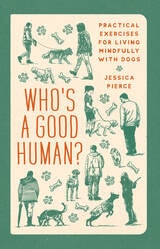
Who's a Good Human?
Practical Exercises for Living Mindfully with DogsJessica Pierce
University of Chicago Press, 2026
Most dog books focus on how to change our companion’s behavior; very few ask how we might change our own.
This workbook and journal, created by ethicist, celebrated author, and dog guardian Jessica Pierce, helps readers learn to live more mindfully with their dogs. Across ten chapters filled with exercises grounded in behavioral science and contemplative practice, Pierce invites readers to mirror their dog’s movements, savor shared silence, examine the impulse to command, reflect on past relationships with dogs, and prepare for the inevitabilities of aging and loss. She teaches readers how to view their dogs with the care of a field biologist—keeping notes, mapping relationships, and generally observing to better understand the dog’s world. She also challenges long-held assumptions about traditional dog training and asks whether our methods truly serve our dogs or simply reassure us as humans.
Many readers of Pierce’s acclaimed earlier books asked for a practical guide to help them put ideas into daily practice. For both those readers and those new to her work, this workbook is her response: a human-training manual informed by science, ethics, and lived experience. Each chapter begins with a short introduction to orient the reader, followed by self-directed exercises, reflection prompts, and shared experiences from living with her dog, Bella. Annotated further-reading sections point to both accessible books and peer-reviewed research. With its blend of gentle guidance and intellectual rigor, this workbook helps readers cultivate a more curious, collaborative, and compassionate relationship with the dogs they love.
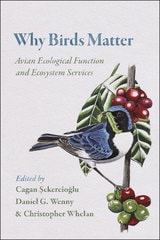
Why Birds Matter
Avian Ecological Function and Ecosystem ServicesEdited by Çagan H. Sekercioglu, Daniel G. Wenny, and Christopher J. Whelan
University of Chicago Press, 2016
The first book to approach ecosystem services from an ornithological perspective, Why Birds Matter asks what economic value we can ascribe to those services, if any, and how this value should inform conservation. Chapters explore the role of birds in such important ecological dynamics as scavenging, nutrient cycling, food chains, and plant-animal interactions—all seen through the lens of human well-being—to show that quantifying avian ecosystem services is crucial when formulating contemporary conservation strategies. Both elucidating challenges and providing examples of specific ecosystem valuations and guidance for calculation, the contributors propose that in order to advance avian conservation, we need to appeal not only to hearts and minds, but also to wallets.
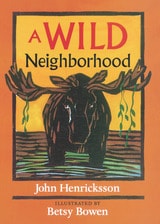
Wild Neighborhood
John Henricksson
University of Minnesota Press, 1997
An entertaining portrait of the creatures that share our place in the woods.
John Henricksson’s neighbors stop by to chat or to have a bite to eat or just to sit and watch. But in his Wild Neighborhood the visitors are the black bear, gray jay, timber wolf, owl, white-tailed deer, raven, and the moose.
A Wild Neighborhood is a collection of elegantly written essays about these creatures. From kitchen-table gossip about the black bear’s recent attempts to raid the bird feeder, to the retelling of Native American myths about the mischievous raven, Henricksson shows a love and understanding of the residents with whom he shares the narrow wedge of the Superior National Forest in northeastern Minnesota.Henricksson writes of the personal relationships that develop while living in the woods. He tells of the joy of helping a deer survive a tough winter and the mystery of animals he calls “ghosts”—species that are extinct or near extinct but still have a fleeting presence in the area. Award-winning artist Betsy Bowen, author of Antler, Bear, Canoe: A Northwoods Alphabet Year, beautifully depicts the denizens of the forest. Her twenty-four woodcuts reflect, often humorously, Henricksson’s respect for and love of northwoods creatures.This personal account of a vibrant community in the woods will appeal to readers of all ages and make a beautiful gift for everyone who has admired the creatures of his or her own wild neighborhood.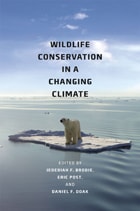
Wildlife Conservation in a Changing Climate
Edited by Jedediah F. Brodie, Eric S. Post, and Daniel F. Doak
University of Chicago Press, 2012
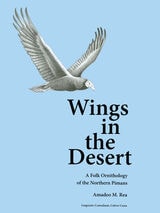
Wings in the Desert
A Folk Ornithology of the Northern PimansAmadeo M. Rea
University of Arizona Press, 2008
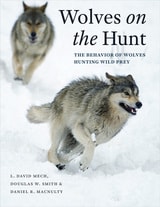
Wolves on the Hunt
The Behavior of Wolves Hunting Wild PreyL. David Mech, Douglas W. Smith, and Daniel R. MacNulty
University of Chicago Press, 2015
Combining behavioral data, thousands of hours of original field observations, research in the literature, a wealth of illustrations, and—in the e-book edition and online—video segments from cinematographer Robert K. Landis, the authors create a compelling and complex picture of these hunters. The wolf is indeed an adept killer, able to take down prey much larger than itself. While adapted to hunt primarily hoofed animals, a wolf—or especially a pack of wolves—can kill individuals of just about any species. But even as wolves help drive the underlying rhythms of the ecosystems they inhabit, their evolutionary prowess comes at a cost: wolves spend one-third of their time hunting—the most time consuming of all wolf activities—and success at the hunt only comes through traveling long distances, persisting in the face of regular failure, detecting and taking advantage of deficiencies in the physical condition of individual prey, and through ceaseless trial and error, all while risking injury or death.
By describing and analyzing the behaviors wolves use to hunt and kill various wild prey—including deer, moose, caribou, elk, Dall sheep, mountain goats, bison, musk oxen, arctic hares, beavers, and others—Wolves on the Hunt provides a revelatory portrait of one of nature’s greatest hunters.