Results by title
22279 books match the query 'Social Science' and 963 start with w

Widows
Vol. I: The Middle East, Asia, and the PacificHelena Znaniecka Lopata, ed.
Duke University Press, 1987

Widows
Vol. II: North AmericaHelena Znaniecka Lopata, ed.
Duke University Press, 1987

Widows
Vol. II: North AmericaHelena Znaniecka Lopata, ed.
Duke University Press, 0
Wife and Widow in Medieval England
Sue Sheridan Walker, Editor
University of Michigan Press, 1993
Wild Blue Media
Thinking through SeawaterMelody Jue
Duke University Press, 2020
Wild Child
Intensive Parenting and Posthumanist EthicsNaomi Morgenstern
University of Minnesota Press, 2018
Exploring how the figure of the “wild child” in contemporary fiction grapples with contemporary cultural anxieties about reproductive ethics and the future of humanity
In the eighteenth century, Western philosophy positioned the figure of “the child” at the border between untamed nature and rational adulthood. Contemporary cultural anxieties about the ethics and politics of reproductive choice and the crisis of parental responsibility have freighted this liminal figure with new meaning in twenty-first-century narratives.
In Wild Child, Naomi Morgenstern explores depictions of children and their adult caregivers in extreme situations—ranging from the violence of slavery and sexual captivity to accidental death, mass murder, torture, and global apocalypse—in such works as Toni Morrison’s A Mercy, Cormac McCarthy’s The Road, Lionel Shriver’s We Need to Talk about Kevin, Emma Donoghue’s Room, and Denis Villeneuve’s film Prisoners. Morgenstern shows how, in such narratives, “wild” children function as symptoms of new ethical crises and existential fears raised by transformations in the technology and politics of reproduction and by increased ethical questions about the very decision to reproduce. In the face of an uncertain future that no longer confirms the confidence of patriarchal humanism, such narratives displace or project present-day apprehensions about maternal sacrifice and paternal protection onto the wildness of children in a series of hyperbolically violent scenes.
Urgent and engaging, Wild Child offers the only extended consideration of how twenty-first-century fiction has begun to imagine the decision to reproduce and the ethical challenges of posthumanist parenting.
Wild Colonial Girl
Essays on Edna O'BrienEdited by Lisa Colletta and Maureen O'Connor
University of Wisconsin Press, 2006
Wild Colonial Girl situates O'Brien in Irish contexts that allow for an appraisal of her significant contribution to a specifically Irish women's literary tradition while attesting to the potency of writing against patriarchal conventions. Each chapter's clear and detailed readings of O'Brien's fiction build a convincing case for her literary, political, and cultural importance, providing an invaluable critical guide for an enriched appreciation of O'Brien and her work.
Wild Indians And Other Creatures
Adrian C. Louis
University of Nevada Press, 1997
Wild Man
Tobias Schneebaum
University of Wisconsin Press, 2003
Part autobiographical journal, part social-historical novel, Wild Man tracks Tobias Schneebaum's fascinating and almost epic life story, from his earliest contemplation of homoerotic desire through his life in Peru, Borneo, and beyond. A young man from New York, Schneebaum "disappeared" in 1955 on the eastern slopes of the Andes. He was, in actuality, living for more than a year among the remote Harakhambut people, discovering a way of being that was strange, primitive, and powerfully attractive to him. This longing to find the "wild man" in other cultures—and in himself—eventually led him on an odyssey through South America, India, Tibet, Africa, Borneo, New Guinea, and Southeast Asia. He lived among isolated forest peoples, including headhunters and cannibals, in regions where few, if any, white men had ever been.

Wild Mother Dancing
Maternal Narrative in Canadian LiteratureDi Brandt
University of Manitoba Press, 1993
Wild Nevada
Testimonies on Behalf of the DesertRoberta Moore
University of Nevada Press, 2005
Wild Theater
Staging the Margins of Baroque Ideology in the Spanish ComediaHarrison Meadows
Vanderbilt University Press, 2025
In five compelling chapters, Meadows argues that a major shift occurred during the Baroque period, whereby the largely positive quality of previous iterations in the genealogy of wildness take on a negative character in the cultural ethos—and that this fundamental shift was representative of the influence of Spanish colonialism on racial thinking and a larger set of changes in how early modern people viewed gender and class. In this way, the book identifies the wild figure’s dramatic roots in the carnivalesque as an indispensable point of departure to plot the trajectory of wild representation in the theater of the Hispanic Baroque. From this guiding premise, Meadows traces the carryovers, transformations, and negations of the carnivalesque into early modern dramaturgy, specifically the Spanish comedia, which are emblematic of the poetic and ideological features of the emerging commercial theater in Iberia.
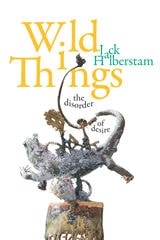
Wild Things
The Disorder of DesireJack Halberstam
Duke University Press, 2020
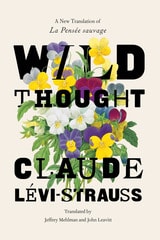
Wild Thought
A New Translation of “La Pensée sauvage”Claude Lévi-Strauss
University of Chicago Press, 2021
Controversially titled The Savage Mind when it was first published in English in 1966, the original translation nevertheless sparked a fascination with Lévi-Strauss’s work among Anglophone readers. Wild Thought rekindles that spark with a fresh and accessible new translation. Including critical annotations for the contemporary reader, it restores the accuracy and integrity of the book that changed the course of intellectual life in the twentieth century, making it an indispensable addition to any philosophical or anthropological library.

Wild Tides
Media Infrastructure and Financial Crisis in IrelandPatrick Brodie
Duke University Press, 2026
Wild Tongue
A Borderlands MixtapeJonathan Leal
Duke University Press, 2026
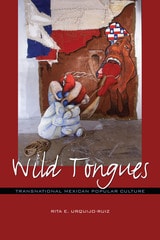
Wild Tongues
Transnational Mexican Popular CultureBy Rita E. Urquijo-Ruiz
University of Texas Press, 2012
Tracing the configuration of the slapstick, destitute Peladita/Peladito and the Pachuca/Pachuco (depicted in flashy zoot suits) from 1928 to 2004, Wild Tongues is an ambitious, extensive examination of social order in Mexican and Chicana/o cultural productions in literature, theater, film, music, and performance art.
From the use of the Peladita and the Peladito as stock characters who criticized various aspects of the Mexican government in the 1920s and 1930s to contemporary performance art by María Elena Gaitán and Dan Guerrero, which yields a feminist and queer-studies interpretation, Rita Urquijo-Ruiz emphasizes the transnational capitalism at play in these comic voices. Her study encompasses both sides of the border, including the use of the Pachuca and the Pachuco as anti-establishment, marginal figures in the United States. The result is a historically grounded, interdisciplinary approach that reimagines the limitations of nation-centered thinking and reading.
Beginning with Daniel Venegas’s 1928 novel, Las aventuras de don Chipote o Cuando los pericos mamen, Rita Urquijo-Ruiz’s Wild Tongues demonstrates early uses of the Peladito to call attention to the brutal physical demands placed on the undocumented Mexican laborer. It explores Teatro de Carpa (tent theater) in-depth as well, bringing to light the experience of Mexican Peladita Amelia Wilhelmy, whose “La Willy” was famous for portraying a cross-dressing male soldier who criticizes the failed Revolution. In numerous other explorations such as these, the political, economic, and social power of creativity continually takes center stage.
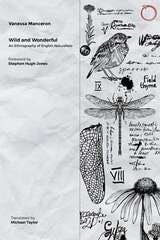
Wild and Wonderful
An Ethnography of English NaturalistsVanessa Manceron
HAU, 2025
In Wild and Wonderful, social anthropologist Vanessa Manceron investigates an understudied but indispensable scientific practice: getting to know and recognize the living worlds around us. Her research takes her to England, where a longstanding naturalist tradition brings together professionals, academics, and amateurs to study the world around them. Observing the natural world here is regarded not as a simple hobby, but as a necessary activity. This is participatory science, an itinerant brand of scholarship that immerses itself in a specific and delimited territory, meticulously documenting the species living there and how they develop and expand their domain or regress and disappear. Manceron leads us through woods and fields, showing us another way of looking, of paying attention to minute differences, sounds, and variations of color. Her book is both a contribution to the anthropology of science and an opportunity to take a fresh look at our relationship with nature, affording us a glimpse of another way of living and living with.

Wildcat Women
Narratives of Women Breaking Ground in Alaska's Oil and Gas IndustryCarla Williams
University of Alaska Press, 2018
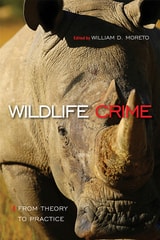
Wildlife Crime
From Theory to PracticeWilliam D.Moreto
Temple University Press, 2018
The editors and contributors to Wildlife Crime examine topical issues from extinction to trafficking in order to understand the ecological, economic, political, and social costs and consequences of these crimes. Drawing from diverse theoretical perspectives, empirical and methodological developments, and on-the-ground experiences of practitioners, this comprehensive volume looks at how conservationists and law enforcement grapple with and combat environmental crimes and the profitable market for illegal trade.
Chapters cover criminological perspectives on species poaching, unregulated fishing, the trading of ivory and rhino horns, the adoption of conservation technologies, and ranger workplaces and conditions. The book includes firsthand experiences and research from China, Indonesia, Kenya, Madagascar, Morocco, Peru, Russia, South Africa, Tanzania, and the United States. The result is a significant book about the causes of and response to wildlife crime.
Contributors include: Johan Bergenas, Avi Brisman, Craig Forsyth, Meredith Gore, Georg Jaster, Alex Killion, Kasey Kinnard, Antony C. Leberatto, Barney Long, Nerea Marteache, Gohar Petrossian, Jonah Ratsimbazafy, Gary Roloff, Viviane Seyranian, Louise Shelley, Rohit Singh, Nicole Sintov, Nigel South, Milind Tambe, Daan van Uhm, Greg Warchol, Rodger Watson, Rob White, Madelon Willemsen, and the editor.

Wildlife as Property Owners
A New Conception of Animal RightsKaren Bradshaw
University of Chicago Press, 2020
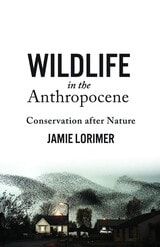
Wildlife in the Anthropocene
Conservation after NatureJamie Lorimer
University of Minnesota Press, 2015
Elephants rarely breed in captivity and are not considered domesticated, yet they interact with people regularly and adapt to various environments. Too social and sagacious to be objects, too strange to be human, too captive to truly be wild, but too wild to be domesticated—where do elephants fall in our understanding of nature?
In Wildlife in the Anthropocene, Jamie Lorimer argues that the idea of nature as a pure and timeless place characterized by the absence of humans has come to an end. But life goes on. Wildlife inhabits everywhere and is on the move; Lorimer proposes the concept of wildlife as a replacement for nature. Offering a thorough appraisal of the Anthropocene—an era in which human actions affect and influence all life and all systems on our planet— Lorimer unpacks its implications for changing definitions of nature and the politics of wildlife conservation. Wildlife in the Anthropocene examines rewilding, the impacts of wildlife films, human relationships with charismatic species, and urban wildlife. Analyzing scientific papers, policy documents, and popular media, as well as a decade of fieldwork, Lorimer explores the new interconnections between science, politics, and neoliberal capitalism that the Anthropocene demands of wildlife conservation.
Imagining conservation in a world where humans are geological actors entangled within and responsible for powerful, unstable, and unpredictable planetary forces, this work nurtures a future environmentalism that is more hopeful and democratic.
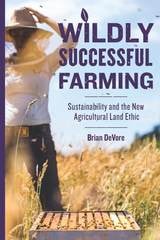
Wildly Successful Farming
Sustainability and the New Agricultural Land EthicBrian DeVore
University of Wisconsin Press, 2020
Written by agricultural journalist Brian DeVore, the book is based on interviews he has conducted at farms, wildlife refuges, laboratories, test plots, and gardens over the past twenty-five years. He documents innovations in cover cropping, managed rotational grazing, perennial polyculture, and integrated pest management. His accounts provide insight into the impacts regenerative farming methods can have on wildlife, water, landscape, soils, and rural communities and suggest ways all of us can support wildly successful farmers.
Wildness
Jack Halberstam and Tavia Nyong'o, special issue editors
Duke University Press, 2018
Contributors: Vanessa Agard-Jones, Jayna Brown, Jodi A. Byrd, Mel Y. Chen, Jack Halberstam, Saidiya Hartman, Lamonda Horton-Stallings, Zakkiyyah Jackson, Martin F. Manalansan IV, Fred Moten, José E. Muñoz, Tavia Nyong’o, Julietta Singh, Riley Snorton, Wu Tsang, Dinesh Wadiwei

Will We Be Smart Enough?
A Cognitive Analysis of the Coming WorkforceEarl Hunt
Russell Sage Foundation, 1995

Willa Cather and Material Culture
Real-World Writing, Writing the Real WorldEdited by Janis P. Stout
University of Alabama Press, 2004
Willa Cather and Material Culture is a collection of 11 new essays that tap into a recent and resurgent interest among Cather scholars in addressing her work and her career through the lens of cultural studies. One of the volume's primary purposes is to demonstrate the extent to which Cather did participate in her culture and to correct the commonplace view of her as a literary connoisseur set apart from her times.
The contributors explore both the objects among which Cather lived and the objects that appear in her writings, as well as the commercial constraints of the publishing industry in which her art was made and marketed. Essays address her relationship to quilts both personally and as symbols in her work; her contributions to domestic magazines such as Home Monthly and Woman's Home Companion; the problematic nature of Hollywood productions of her work; and her efforts and successes as a businesswoman. By establishing the centrality of material matters to her writing, these essays contribute to the reclaiming of Cather as a modernist and highlight the significance of material culture, in general, to the study of American literature.

Willard W. Waller on the Family, Education, and War
Willard W. Waller
University of Chicago Press, 1970
Waller's explorations of role behavior, especially in his writings on marriage and education, shocked academia and are still provocative today. In his direct, perceptive, often cynical style, he penetrated the facades of the most respected social institutions. He made use of the case study method; many of Waller's case studies were lifted directly from his own experiences, particularly from the agonies of his own divorce and from the disappointments of his initial teaching experience. He also drew fresh insights from the personal experiences of his colleagues and students, hardly a traditional procedure.
This volume is the first unified presentation of Waller's writings, covering in depth his work on family, education, and war. It also includes his shorter, but equally vivid, discussions on social problems such as crime and on the conflict between insight and scientific method.
Since Waller's private life was so intimately bound to his public work, an understanding of his personal history reveals much about the development and dilemma of sociologists in the United States. In their Introduction editors Goode, Mitchell, and Furstenberg reconstruct the life of this complex American thinker.

Willard Z. Park's Notes on the Northern Paiute of Western Nevada, 1933-1940
UUAP 114Catherine S. Fowler
University of Utah Press, 1989
Willful Subjects
Sara Ahmed
Duke University Press, 2014

William Grant Still
Catherine Parsons Smith
University of Illinois Press, 2008
Catherine Parsons Smith’s biography tracks the composer's interrelated careers in popular and concert music. Still’s artistic journey took him from conservatory study with George W. Chadwick to collaborating with Langston Hughes, working as a commercial arranger and composer on Broadway and radio, arranging for artists like Sophie Tucker and Artie Shaw, and serving as the recording director for the first Black-owned record label. But despite his prolific production and multidimensional talents, Still endured financial struggles and declining attention to his work.

William J. Seymour and the Origins of Global Pentecostalism
A Biography and Documentary HistoryGastón Espinosa
Duke University Press, 2014
The 104 primary sources include all of Seymour's extant writings in full and without alteration and some of Parham's theological, social, and racial writings, which help explain why the two parted company. To capture the revival's diversity and global influence, this book includes Black, Latino, Swedish, and Irish testimonies, along with those of missionaries and leaders who spread Seymour's vision of Pentecostalism globally.

William James and the Art of Popular Statement
Paul Stob
Michigan State University Press, 2013
Williamstown and Williams College
Explorations in Local HistoryDustin Griffin
University of Massachusetts Press, 2018
Well researched and written in an accessible style, Williamstown and Williams College is a must-have resource for anyone connected with Williams College—from students and parents to alumni—as well as visitors who want to understand what makes this town unique.

Willing and Unable
Doctors' Constraints in Abortion CareLori R. Freedman
Vanderbilt University Press, 2010
Structural barriers to the mainstream practice of abortion effectively institutionalize the buck-passing of abortion patients to abortion clinics. As the author notes, "Public-health-minded HMOs and physician practices could significantly change the world of abortion care if they stopped outsourcing it."
Drawing from forty in-depth interviews, the book presents a challenge to a commonly held assumption that physicians decide whether or not to provide abortion based on personal ideology. Physician narratives demonstrate how their choices around learning, doing, and even having abortions themselves disrupt the pro-choice/pro-life moral and political binary.
Wind and Power in the Anthropocene
Dominic Boyer and Cymene Howe
Duke University Press, 2019
In his volume, Energopolitics, Boyer examines the politics of wind power and how it is shaped by myriad factors, from the legacies of settler colonialism and indigenous resistance to state bureaucracy and corporate investment. Drawing on interviews with activists, campesinos, engineers, bureaucrats, politicians, and bankers, Boyer outlines the fundamental impact of energy and fuel on political power. Boyer also demonstrates how large conceptual frameworks cannot adequately explain the fraught and uniquely complicated conditions on the Isthmus, illustrating the need to resist narratives of Anthropocenic universalism and to attend to local particularities.
In her volume, Ecologics, Howe narrates how an antidote to the Anthropocene became both failure and success. Tracking the development of what would have been Latin America's largest wind park, Howe documents indigenous people's resistance to the project and the political and corporate climate that derailed its renewable energy potential. Using feminist and more-than-human theories, Howe demonstrates how the dynamics of energy and environment cannot be captured without understanding how human aspirations for energy articulate with nonhuman beings, technomaterial objects, and the geophysical forces that are at the heart of wind and power.
Window Shopping with Helen Keller
Architecture and Disability in Modern CultureDavid Serlin
University of Chicago Press, 2025
Window Shopping with Helen Keller recovers a series of influential moments when architects and designers engaged the embodied experiences of people with disabilities. David Serlin reveals how people with sensory and physical impairments navigated urban spaces and helped to shape modern culture. Through four case studies—the lives of Joseph Merrick (aka “The Elephant Man”) and Helen Keller, the projects of the Works Progress Administration, and the design of the Illinois Regional Library for the Blind and Physically Handicapped—Serlin offers a new history of modernity’s entanglements with disability.

Windows into the Soul
Surveillance and Society in an Age of High TechnologyGary T. Marx
University of Chicago Press, 2016
In this landmark book, Marx sums up a lifetime of work on issues of surveillance and social control by disentangling and parsing the empirical richness of watching and being watched. Using fictional narratives as well as the findings of social science, Marx draws on decades of studies of covert policing, computer profiling, location and work monitoring, drug testing, caller identification, and much more, Marx gives us a conceptual language to understand the new realities and his work clearly emphasizes the paradoxes, trade-offs, and confusion enveloping the field. Windows into the Soul shows how surveillance can penetrate our social and personal lives in profound, and sometimes harrowing, ways. Ultimately, Marx argues, recognizing complexity and asking the right questions is essential to bringing light and accountability to the darker, more iniquitous corners of our emerging surveillance society.
For more information, please see www.garymarx.net.
Winds from the North
Tewa Origins and Historical AnthropologyScott G. Ortman
University of Utah Press, 2012
Winner of the Don D. and Catherine S. Fowler Prize
The “abandonment” of Mesa Verde and the formation of the Rio Grande Pueblos represent two classic events in North American prehistory. Yet, despite a century of research, no consensus has been reached on precisely how, or even if, these two events were related. In this landmark study, Scott Ortman proposes a novel and compelling solution to this problem through an investigation of the genetic, linguistic, and cultural heritage of the Tewa Pueblo people of New Mexico.
Integrating data and methods from human biology, linguistics, archaeology, and cultural anthropology, Ortman shows that a striking social transformation took place as Mesa Verde people moved to the Rio Grande, such that the resulting ancestral Tewa culture was a unique hybrid of ideas and practices from various sources. While addressing several long-standing questions in American archaeology, Winds from the North also serves as a methodological guidebook, including new approaches to integrating archaeology and language based on cognitive science research. As such, it will be of interest to researchers throughout the social and human sciences.
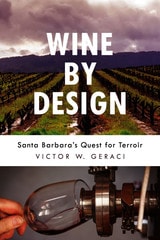
Wine By Design
Santa Barbara's Quest for TerroirVictor W. Geraci
University of Nevada Press, 2020
As the American demand for premium wine grapes intensified in the late twentieth century, the Northern California wine industry rapidly grew its boutique and innovative local designer winemaking to increase profit to meet demand and compete on a global scale. Set in the context of the regional, national, and global wine community, this story illuminates a regional story of how the Santa Barbara wine industry found solutions to current market conditions while utilizing local traditions to develop a new version of local wine terroir. An accomplishment that allowed them to compete in the global marketplace yet develop highly specialized wine that is unique to the region.
By employing leading-edge technology and entrepreneurship, the California Central Coast region of Santa Barbara became a model for the American vision of agricultural innovation and an integral part of the international wine trade, developing a personalized version of local wine terroir.
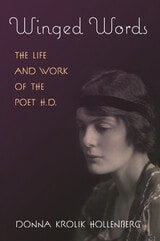
Winged Words
The Life and Work of the Poet H.D.Donna Krolik Hollenberg
University of Michigan Press, 2022
H.D.’s friends and lovers were a veritable Who’s Who of Modernism, and Hollenberg gives us a glimpse into H.D.’s relationships with them. With rich detail, the biography follows H.D. from her early years in America with her family, to her later years in England during both world wars, to Switzerland, which would eventually become H.D.’s home base. It explores her love affairs with both men and women; her long friendship with Bryher; the birth of her daughter, Perdita, and her imaginative bond with her; and her marriage to (and later divorce from) fellow poet Richard Aldington. Additionally, the book includes scenes from her relationships with Ezra Pound, Marianne Moore, William Carlos Williams, and D.H. Lawrence; H.D.’s fascination with spiritualism and the occult; and H.D.’s psychoanalysis with Sigmund Freud. The first new biography of H.D. to be published in over four decades, Winged Words is a must-read resource for anyone conducting research on H.D.

Wingless Flights
Appalachian Women in FictionDanny L. Miller
University of Wisconsin Press, 1996
Wings in the Desert
A Folk Ornithology of the Northern PimansAmadeo M. Rea
University of Arizona Press, 2008
Winners and Losers
Social and Political Polarities in AmericaIrving Louis Horowitz
Duke University Press, 1984
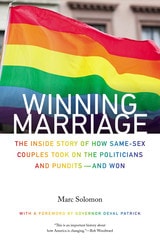
Winning Marriage
The Inside Story of How Same-Sex Couples Took on the Politicians and Pundits—and WonMarc Solomon
University Press of New England, 2014

Winning Marriage
The Inside Story of How Same-Sex Couples Took on the Politicians and Pundits—and WonMarc Solomon
University Press of New England, 2015
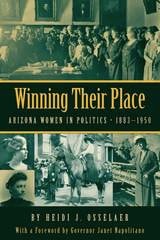
Winning Their Place
Arizona Women in Politics, 1883-1950Heidi J. Osselaer
University of Arizona Press, 2009
This landmark book chronicles for the first time the participation of Arizona women in the state’s early politics. Incorporating impressive original research, Winning Their Place traces the roots of the political participation of women from the territorial period to after World War II. Although women in Arizona first entered politics for traditional reasons—to reform society and protect women and children—they quickly realized that male politicians were uninterested in their demands. Most suffrage activists were working professional women, who understood that the work place discriminated against them. In Arizona they won the vote because they demanded rights as working women and aligned with labor unions and third parties that sympathized with their cause. After winning the vote, the victorious suffragists ran for office because they believed men could not and would not represent their interests.
Through this process, these Arizona women became excellent politicians. Unlike women in many other states, women in Arizona quickly carved out a place for themselves in local and state politics, even without the support of the reigning Democratic Party, and challenged men for county office, the state legislature, state office, Congress, and even for governor. This fascinating book reveals how they shattered traditional notions about “a woman’s place” and paved the way for future female politicians, including the “Fab Five” and countless others who have changed the course of Arizona history.

Winning the War for Democracy
The March on Washington Movement, 1941-1946David Lucander
University of Illinois Press, 2014
Winning the War for Democracy: The March on Washington Movement, 1941-1946 recalls that triumph, but also looks beyond Randolph and the MOWM's national leadership to focus on the organization's evolution and actions at the local level. Using the personal papers of previously unheralded MOWM members such as T.D. McNeal, internal government documents from the Roosevelt administration, and other primary sources, David Lucander highlights how local affiliates fighting for a double victory against fascism and racism helped the national MOWM accrue the political capital it needed to effect change.
Lucander details the efforts of grassroots organizers to implement MOWM's program of empowering African Americans via meetings and marches at defense plants and government buildings and, in particular, focuses on the contributions of women activists like Layle Lane, E. Pauline Myers, and Anna Arnold Hedgeman. Throughout he shows how local activities often diverged from policies laid out at MOWM's national office, and how grassroots participants on both sides ignored the rivalry between Randolph and the leadership of the NAACP to align with one another on the ground.
Winnowing
Suzanne Matson
Duke University Press, 2026
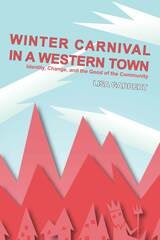
Winter Carnival in a Western Town
Identity, Change and the Good of the CommunityLisa Gabbert
Utah State University Press, 2011
Held annually, the McCall, Idaho, winter carnival has become a modern tradition. A festival and celebration, it is also a source of community income and opportunity for shared community effort; a chance to display the town attractively to outsiders and to define and assert McCall's identity; and consequently, a source of disagreement among citizens over what their community is, how it should be presented, and what the carnival means.
Though rooted in the broad traditions of community festival, annual civic events, often sponsored by chambers of commerce, such as that in McCall, are as much expressions of popular culture and local commerce as of older traditions. Yet they become dynamic, newer community traditions, with artistic, informal, and social meanings and practices that make them forms of folklore as well as commoditized culture. Winter Carnival is the first volume in a new Utah State University Press series titled Ritual, Festival, and Celebration and edited by folklorist Jack Santino.
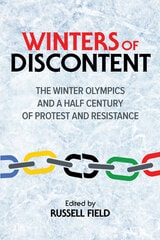
Winters of Discontent
The Winter Olympics and a Half Century of Protest and ResistanceEdited by Russell Field
University of Illinois Press, 2025
The essays collectively explore the shifting dynamics and power relations between the civic coalitions that pursue the Winter Olympics and the social movements that oppose their efforts. The contributors look at specific Games impacted by dissent and probe the issues that swirled around failed and withdrawn bids. In addition, contributions on the contemporary Olympics describe current or future bids while delving into the campaigns demanding host nations pay attention to economic, social, humanitarian, and environmental concerns.
A first-of-its-kind collection, Winters of Discontent profiles the wide range of activists and social movements that have organized against the Winter Olympics.