Results by title
22279 books match the query 'Social Science' and 963 start with w
Working Out Egypt
Effendi Masculinity and Subject Formation in Colonial Modernity, 1870–1940Wilson Chacko Jacob
Duke University Press, 2011

Working Out in Japan
Shaping the Female Body in Tokyo Fitness ClubsLaura Spielvogel
Duke University Press, 2003
Fitness clubs have proliferated in Japanese cities over the past decade. Yet, despite the pervasive influence of a beauty industry that values thinness above all else, they have met with only mixed success . Exploring this paradox, Spielvogel focuses on the tensions and contradictions within the world of Japanese fitness clubs and on the significance of differences between Japanese and North American philosophies of mind and body. Working Out in Japan explores the ways spaces and bodies are organized and regulated within the clubs, the frustrations of female instructors who face various gender inequities, and the difficult demands that the ideal of slimness places on Japanese women. Spielvogel’s vivid investigation illuminates not only the fitness clubs themselves, but also broader cultural developments including the growth of the service industry and the changing character of work and leisure in Japan.
Working Poor
Farmworkers in the United StatesDavid Griffith
Temple University Press, 1995
Working Poor investigates the lives and working conditions of migrant farmworkers in seven regions of the United States. The community studies in this volume include descriptions and analyses of the low-income neighborhoods of Immokalee, Florida; Parlier, California; Weslaco, Texas; and Mayagüez, Puerto Rico, where growers and farm contractors put immigrants to work in fruit and vegetable harvests. The authors link farmworker communities that have winter growing seasons with summer labor supply demand regions in the northern United States, in particular south-western Michigan, New Jersey, and the Delmarva Peninsula of Maryland and Delaware.
The authors investigate ethnic succession in the farm labor market and the ways individual farmworkers, farmworker families, and networks organize these migrations and attach themselves to farming operations by a variety of social relations. Framing the portraits of crowded households, the histories of networks, and the ethnic vignettes are three chapters placing the community studies into historical and theoretical perspectives. This broad framework underscores the importance of housing, transportation, networks, labor contracts, and ethnic relations in the organization of low-wage labor markets.
Working Time
Essays on Poetry, Culture, and TravelJane Miller
University of Michigan Press, 1992
The essays consider notions of time, duration, narrative, documentary, and history in American poetry, and view poetry in the light of developments in feminism, postmodern theory, and contemporary poetic practice. In addition to poetry, Miller investigates a range of cultural products and art forms, including film, video, photography, painting, sculpture, music, and the Madonna phenomenon.
Working Women in Jordan
Education, Migration, and AspirationFida J. Adely
University of Chicago Press, 2024
Jordan has witnessed tremendous societal transformation in its relatively short history. Today it has one of the most highly educated populations in the region, and women have outnumbered and outperformed their male counterparts for more than a decade. Yet, despite their education and professional status, many women still struggle to build a secure future and a life befitting of their aspirations.
In Working Women in Jordan anthropologist Fida J. Adely turns to college-educated women in Jordan who migrate from rural provinces to Amman for employment opportunities. Building on twelve years of ethnographic research and extensive interviews with dozens of women, as well as some of their family members, Adely analyzes the effects of developments such as expanded educational opportunities, urbanization, privatization, and the restructuring of the labor market on women’s life trajectories, gender roles, the institution of marriage, and kinship relations. Through these rich narrative accounts and the analysis of broader socio-economic shifts, Adely explains how educational structures can act as both facilitators and obstacles to workforce entry—along with cascading consequences for family and social life. Deeply thorough and compelling, Working Women in Jordan asks readers to think more critically about what counts as development, and for whom.
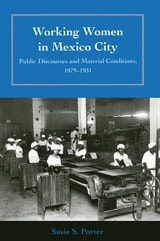
Working Women in Mexico City
Public Discourses and Material Conditions, 1879-1931Susie S. Porter
University of Arizona Press, 2003
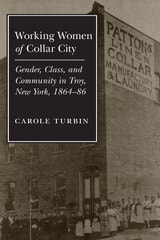
Working Women of Collar City
Gender, Class, and Community in Troy, 1864-86Carole Turbin
University of Illinois Press, 1992
Why have some working women succeeded at organizing in spite of obstacles to labor activity? Under what circumstances were they able to form alliances with male workers?
Carole Turbin explores these and other questions by examining the case of Troy, New York. In the 1860s, Troy produced nearly all the nation's detachable shirt collars and cuffs. The city's collar laundresses were largely Irish immigrants. Their union was officially the nation's first women's labor organization, and one of the best organized. Turbin provides a new perspective on gender and shows that women's family ties are not necessarily a conservative influence but may encourage women's and men's collective action.
Working Women, Working Men
Sao Paulo & the Rise of Brazil’s Industrial Working Class, 1900–1955Joel Wolfe
Duke University Press, 1993
Drawing on a diverse range of sources—oral histories along with union, industry, and government archival materials—Wolfe's account focuses not only on labor leaders and formal Left groups, but considers the impact of grassroots workers' movements as well. He pays particular attention to the role of gender in the often-contested relations between leadership groups and thee rank and file. Wolfe's analysis illuminates how various class and gender ideologies influenced the development of unions, industrialists' strategies, and rank-and-file organizing and protest activities.
This study reveals how workers in Sào Paulo maintained a local grassroots social movement that, by the mid–1950s, succeeded in seizing control of Brazil's state-run official unions. By examining the actions of these workers in their rise to political prominence in the 1940s and 1950s, this book provides a new understanding of the sources and development of populist politics in Brazil.
Working and Poor
How Economic and Policy Changes Are Affecting Low-Wage WorkersRebecca M. Blank
Russell Sage Foundation, 2006
Working en comunidad
Service-Learning and Community Engagement with U.S. Latinas/os/esEdited by Elena Foulis, Stacey Alex, and Glenn Martínez
University of Arizona Press, 2024
The volume tackles three major themes: ethical approaches to working with Latina/o/e communities within language courses and beyond; preparing Latina/o/e students for working with their own communities in different environments; and ensuring equitable practices and building relationships that are mutually beneficial for students and community members. The editors forward two central arguments: (1) Equitable community engagement in higher education is a reflective and reciprocal process that develops empathy and personal and professional growth in students; and (2) service-learning is most transformative when it explicitly guides students and the community to build cultural humility and recognize Latina/o/e experiences and agency as foundational to the learning process.
Many of the contributors and editors are Latina/o/e-identified scholars, practitioners, and researchers, who lend a rich body of experience and a personal dedication to this work. They present distinct approaches and geographies, as well as range of institutions, to offer a wide scope of engaged work that builds on the concept of comunidad to advance a critical new conceptual framework of equitable education and racial justice.
Contributors
Stacey Alex
Elena Foulis
Christina García
Catherine Komisaruk
Kelly Lowther Pereira
Glenn Martínez
María Luisa Parra-Velasco
Working for Justice
A Handbook of Prison Education and ActivismEdited by Stephen John Hartnett, Eleanor Novek, and Jennifer K. Wood
University of Illinois Press, 2013
Working from Within
Chicana and Chicano Activist Educators in Whitestream SchoolsLuis Urrieta Jr.
University of Arizona Press, 2009
Working from Within is one of the first books to show how identity is linked to agency—individually and collectively—for Chicanas and Chicanos in education. Urrieta set out to answer linked questions: How do Chicanas and Chicanos negotiate identity, ideology, and activism within educational institutions that are often socially, culturally, linguistically, emotionally, and psychologically alienating? Analyzing in-depth interviews with twenty-four educators, Urrieta offers vivid narratives that show how activist identities are culturally produced through daily negotiations.
Urrieta’s work details the struggles of activist Chicana and Chicano educators to raise consciousness in a wide range of educational settings, from elementary schools to colleges. Overall, Urrieta addresses important questions about what it means to work for social justice from within institutions, and he explores the dialogic spaces between the alternatives of reproduction and resistance. In doing so, he highlights the continuity of Chicana and Chicano social movement, the relevance of gender, and the importance of autochthonous frameworks in understanding contemporary activism. Finally, he shows that it is possible for minority activist educators to thrive in a variety of institutional settings while maintaining strong ties to their communities.
Working in Music on the Semiperiphery
Local Cultural Production and Global CapitalismEmília Barna
Central European University Press, 2025
This book embraces the widest possible range of workers in the music industry. It deals with all music genres from high-flying to commercial and observes various workers in the production chain beyond musicians. Niche segments of the sector, such as YouTube-based commercial hip hop, are given special treatment. Using a variety of empirical research methods, the study examines the trends as workers are pushed towards digital entrepreneurship and platform work, on the one hand, and live performance, on the other. The focus on domestic work and informality offers a feminist analysis of work in music. This approach sheds light on gendered divisions of labor and forms of (self-)exploitation that usually remain invisible. The book proposes a new model of cultural autonomy that takes account of the semiperipheral relationship of music industry workers and institutions to both the market and the state.
Working in a 24/7 Economy
Challenges for American FamiliesHarriet B. Presser
Russell Sage Foundation, 2003
Working on Earth
Class and Environmental JusticeChristina Robertson
University of Nevada Press, 2015
The authors challenge prevailing cultural narratives that separate ecological and human health from the impacts of modern industrial capitalism. Essay themes range from how human survival is linked to nature to how the use and abuse of nature benefit the wealthy elite at the expense of working-class people and the working poor as well as how climate change will affect cultures deeply rooted in the land.
Ultimately, Working on Earth calls for a working-class ecology as an integral part of achieving just and sustainable human development.
Working on the Railroad, Walking in Beauty
Navajos, Hozho, and Track WorkJay Youngdahl
Utah State University Press, 2011
For over one hundred years, Navajos have gone to work in significant numbers on Southwestern railroads. As they took on the arduous work of laying and anchoring tracks, they turned to traditional religion to anchor their lives.
Jay Youngdahl, an attorney who has represented Navajo workers in claims with their railroad employers since 1992 and who more recently earned a master's in divinity from Harvard, has used oral history and archival research to write a cultural history of Navajos' work on the railroad and the roles their religious traditions play in their lives of hard labor away from home.
Working the Boundaries
Race, Space, and "Illegality" in Mexican ChicagoNicholas De Genova
Duke University Press, 2005
De Genova worked for two and a half years as a teacher of English in ten industrial workplaces (primarily metal-fabricating factories) throughout Chicago and its suburbs. In Working the Boundaries he draws on fieldwork conducted in these factories, in community centers, and in the homes and neighborhoods of Mexican migrants. He describes how the meaning of “Mexican” is refigured and racialized in relation to a U.S. social order dominated by a black-white binary. Delving into immigration law, he contends that immigration policies have worked over time to produce Mexicans as the U.S. nation-state’s iconic “illegal aliens.” He explains how the constant threat of deportation is used to keep Mexican workers in line. Working the Boundaries is a major contribution to theories of race and transnationalism and a scathing indictment of U.S. labor and citizenship policies.
Working the Difference
Science, Spirit, and the Spread of Motivational InterviewingE. Summerson Carr
University of Chicago Press, 2023
Motivational interviewing (MI) is a professional practice, a behavioral therapy, and a self-professed conversation style that encourages clients to talk themselves into change. Originally developed to treat alcoholics, MI quickly spread into a variety of professional fields including corrections, medicine, and sanitation. In Working the Difference, E. Summerson Carr focuses on the training and dissemination of MI to explore how cultural forms—and particularly forms of expertise—emerge and spread. The result is a compelling analysis of the American preoccupations at MI’s core, from democratic autonomy and freedom of speech to Protestant ethics and American pragmatism.
Working the Street
Police Discretion and the Dilemmas of ReformMichael K. Brown
Russell Sage Foundation, 1981
Working, Shirking, and Sabotage
Bureaucratic Response to a Democratic PublicJohn Brehm and Scott Gates
University of Michigan Press, 1999
Working-Class America
Essays on Labor, Community, and American SocietyEdited by Michael H. Frisch and Daniel J. Walkowitz
University of Illinois Press, 1983
Working-Class Girls Don’t Become Artists
Looking at Art and ClassJanet Zandy
University of Illinois Press, 2026
Ambitious and original, Working-Class Girls Don’t Become Artists rewrites art history from a working-class perspective.
Working-Class Women in the Academy
Laborers in the Knowledge FactoryMichelle M. Tokarczyk
University of Massachusetts Press, 1993
The voices of 20 women from working-class backgrounds are heard in this collection of essays. Each of the women has lived through the process of academic socialization—as both student and teacher—and each has thought long and deeply about her experiences from an explicitly feminist perspective.
Workings of the Spirit
The Poetics of Afro-American Women's WritingHouston A. Baker Jr.
University of Chicago Press, 1990
"Brilliant, and tenderly riveted to gratitude as an indispensable facet of analysis, Houston Baker arrives, yet again, bearing the loveliest flowers of his devotion and delight: thank God he's here!"—June Jordan
Workplace Justice
Organizing Multi-Identity MovementsSharon Kurtz
University of Minnesota Press, 2002
An unheralded union battle offers new insight into identity politics.
In 1991, Columbia University’s one thousand clerical workers launched a successful campaign for justice in their workplace. This diverse union-two-thirds black and Latina, three-fourths women-was committed to creating an inclusive movement organization and to fighting for all kinds of justice. How could they address the many race and gender injustices members faced, avoid schism, and maintain the unity needed to win? Sharon Kurtz, an experienced union activist and former clerical worker herself, was welcomed into the union and pursued these questions. Using this case study and secondary studies of sister clerical unions at Yale and Harvard, she examines the challenges and potential of identity politics in labor movements.
With the Columbia strike as a point of departure, Kurtz argues that identity politics are valuable for mobilizing groups, but often exclude members and their experiences of oppression. However, Kurtz believes that identity politics should not be abandoned as a component in building movements, but should be reframed-as multi-identity politics. In the end she shows an approach to organizing with great potential impact not only for labor unions but for any social movement.
Works in Stone
Contemporary Perspectives on Lithic AnalysisMichael J. Shott
University of Utah Press, 2014
World Below
Body and Cosmos in Otomí Indian RitualJacques Galinier
University Press of Colorado, 2004
Drawing upon both Freud and theories of the carnivalesque, Galinier argues that the "world below" (the lower half of the body) provides the foundation for an indigenous metapsychology that is at once very close to and very far away from the Freudian conceptual apparatus.

World Flutelore
Folktales, Myths, and Other Stories of Magical Flute PowerDale A. Olsen
University of Illinois Press, 2013
Describing and interpreting many examples of flutes as they are found in mythology, poetry, lyrics, and other narrative and literary sources from around the world, veteran ethnomusicologist Dale Olsen seeks to determine what is singularly distinct or unique about flutes, flute playing, and flute players in a global context. He shows how and why flutes are important for personal, communal, religious, spiritual, and secular expression and even, perhaps, existence. This is a book for students, scholars, and any reader interested in the cultural power of flutes.
World Making in Nepantla
Feminists of Color Navigating Life and Work in the PandemicGloria González-LópezSharmila RudrappaChristen A. Smith
University of Texas Press, 2025
Writings from feminist scholars of color about their experiences during the pandemic.
Bringing uncertainty, fear, and change, the COVID-19 pandemic shook the world, altered people’s lives, and sparked a wave of introspection. Underserved communities—people of color, women, and queer people among them—were affected the most, and their experiences, in turn, reflected hope and opportunities to reinvent themselves individually and collectively. Drawing on Gloria Anzaldúa’s use of nepantla—the Náhuatl word meaning “in-between space,” the en medio and a liminal space between worlds imbued with change—World Making in Nepantla collects writings about the hurdles feminist scholars of color faced during the pandemic years.
Contributors explore how COVID affected feminist scholars of color while recognizing the ways in which inequality influences experience and also celebrating the resilience of communities all over the world. Dispatches from classrooms and quarantined homes and introspective essays on disability, mutual aid, and borders are included among the essays here. These pieces serve as a concrete record, capturing an ephemeral time already being lost to memory. Created during the heart of the pandemic, World Making in Nepantla is an honest and intimate recording of how feminist scholars of color navigated struggles and found strength during an era that forever changed the modern world.
World Making with Malay-Indonesian Manuscripts
Circulation, Contestation and ConnectionEdited by Maznah Mohamad and Sher Banu Khan
National University of Singapore Press, 2026
What new framings emerge when we revisit the vibrant world of Malay-Indonesian manuscripts, looking beyond the boundaries imposed by colonial and nationalist scholarship? This volume revitalizes manuscript studies by using texts in entirely fresh ways, situating them as dynamic instruments of knowledge and cultural transformation. Through contextual readings, it uncovers multiple historical and cultural narratives within and between manuscripts, challenging established understandings of power, identity, and authorship. Chapters explore themes ranging from the origins of kingdoms and intellectual traditions to the reinvention of contemporary lives through politicized readings of older texts.
By foregrounding the diversity and versatility of Malay-Indonesian textual traditions, this book recenters manuscripts as vital agents in shaping Southeast Asian histories, decenters fixed notions of a singular “Malay” worldview, and reveals the fluidity of cultural memory across time and place.

World Patterns in Modern Urban Change
Essays in Honor of Chauncey D. HarrisEdited by Michael P. Conzen
University of Chicago Press, 1986
World Population Growth and Aging
Demographic Trends in the Late Twentieth CenturyNathan Keyfitz and Wilhelm Flieger
University of Chicago Press, 1991
All the life tables, standardized rates, and projections have been generated by uniform methods to ensure easy comparison among countries. More than 800 charts provide a foundation for analyzing the radical demographic changes now taking place: the historic lows of fertility in Germany and other industrial countries, Africa's persistently high fertility, and the worldwide extension of life expectancy. The product of cautious and painstaking labor, this work promises to be an important resource for further demographic research as well as a valuable comparative resource for studies of the status of global social welfare and the environment.

World War II and Mexican American Civil Rights
Edited by Richard Griswold del Castillo
University of Texas Press, 2008
World War II marked a turning point for Mexican Americans that fundamentally changed their expectations about how they should be treated by the greater U.S. society. The experiences of fighting alongside white Americans in the military, as well as of working in factory jobs for wages equal to those of Anglo workers, made Mexican Americans less willing to tolerate the second-class citizenship that had been their lot before the war. Having proven their loyalty and "Americanness" during World War II, Mexican Americans in the postwar years wanted to have the civil rights they knew they had earned.
In this book, Richard Griswold del Castillo and Richard Steele investigate how the World War II experiences of Mexican Americans galvanized their struggle for civil rights and how the U.S. government responded to the needs and aspirations of Mexican Americans. The authors demonstrate, for example, that the U.S. government "discovered" Mexican Americans during World War II and set about addressing some of their problems as a way of forestalling a sense of grievance and disaffection that might have made the Mexican American community unwilling to support the war effort. The authors also show that, as much or more than governmental programs, the personal wartime experiences of Mexican Americans formed their civil rights consciousness. The book concludes with a selection of key essays and historical documents from the World War II period that collectively gives a first-person understanding of the civil rights struggles of Mexican Americans.

World War and World Peace in the Age of Digital Capitalism
By Christian Fuchs
University of Westminster Press, 2025
In World War and World Peace in the Age of Digital Capitalism, Christian Fuchs asks: how do violence and war manifest themselves in global digital capitalism? How do digital capitalism and digital technologies manifest themselves in violence and warfare? What are the prospects for world peace today?
To prevent world war and advance world peace we need a better understanding of war and violence and their contexts and causes. We need to ask what war is, what violence is, what war and peace look like today and how they have changed in the 21st century. This book addresses these urgent questions and provides possible answers.
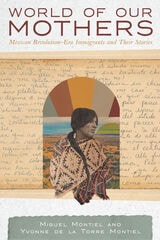
World of Our Mothers
Mexican Revolution–Era Immigrants and Their StoriesMiguel Montiel and Yvonne de la Torre Montiel
University of Arizona Press, 2022
While the women share a historic immigration journey, each story provides unique details and circumstances that testify to the diversity of the immigrant experience. The oral histories, a project more than forty years in the making, let these women speak for themselves, while historical information is added to support and illuminate the women’s voices.
The book, which includes a foreword by Irasema Coronado, director of the School of Transborder Studies, and Chris Marin, professor emeritus, both at Arizona State University, is divided into four parts. Part 1 highlights the salient events of the Revolution; part 2 presents an overview of what immigrants inherited upon their arrival to the United States; part 3 identifies challenges faced by immigrant families; and part 4 focuses on stories by location—Arizona mining towns, Phoenix barrios, and Midwestern colonias—all communities that immigrant women helped create. The book concludes with ideas on how readers can examine their own family histories. Readers are invited to engage with one another to uncover alternative interpretations of the immigrant experience and through the process connect one generation with another.

World-Systems Analysis
An IntroductionImmanuel Wallerstein
Duke University Press, 2004
Wallerstein explains the defining characteristics of world-systems analysis: its emphasis on world-systems rather than nation-states, on the need to consider historical processes as they unfold over long periods of time, and on combining within a single analytical framework bodies of knowledge usually viewed as distinct from one another—such as history, political science, economics, and sociology. He describes the world-system as a social reality comprised of interconnected nations, firms, households, classes, and identity groups of all kinds. He identifies and highlights the significance of the key moments in the evolution of the modern world-system: the development of a capitalist world-economy in the sixteenth-century, the beginning of two centuries of liberal centrism in the French Revolution of 1789, and the undermining of that centrism in the global revolts of 1968. Intended for general readers, students, and experienced practitioners alike, this book presents a complete overview of world-systems analysis by its original architect.

World-Wide-Walks
Peter d'Agostino: Crossing Natural-Cultural-Virtual FrontiersEdited by Peter d'Agostino and David Tafler
Intellect Books, 2018
World
An Anthropological ExaminationJoão de Pina-Cabral
HAU, 2016

Worlding
Finding a Way in Broken TimesKathleen Stewart
Duke University Press, 2027
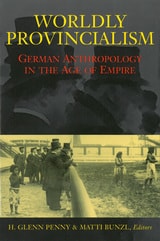
Worldly Provincialism
German Anthropology in the Age of EmpireH. Glenn Penny and Matti Bunzl, Editors
University of Michigan Press, 2003
Furthermore, this volume calls for a more nuanced understanding of Germany's standing in postcolonial studies. In contrast to the prevailing view of German imperialism as a direct precursor to Nazi atrocities, this volume proposes a key insight that goes to the heart of German historiography: There is no clear trajectory to be drawn from the complex ideologies of imperial anthropology to the race science embraced by the Nazis. Instead of relying on a nineteenth-century explanation for twentieth-century crimes, this volume ultimately illuminates German ethnology and anthropology as local phenomena, best approached in terms of their own worldly provincialism.
H. Glenn Penny is Assistant Professor of History at the University of Missouri, Kansas City.
Matti Bunzl Assistant Professor of Anthropology and History at the University of Illinois at Urbana-Champaign.
Worldmaking
Race, Performance, and the Work of CreativityDorinne Kondo
Duke University Press, 2018

Worlds Beyond Bios
The Life of Matter and the Matter of LifeSophie Chao, Christine J. Winter, and David Schlosberg, editors
Duke University Press, 2026

Worlds at the End
Los Angeles, Infrastructure, and the Apocalyptic ImaginationPacharee Sudhinaraset
Temple University Press, 2024
Worlds at the End analyzes destruction, rupture, and continuance through texts ranging from Karen Tei Yamashita’s Tropic of Orange, which considers racial colonial infrastructure, to the work of Diné poet Esther Belin, which illuminates how the separation between the Indian reservation and LA is part of a broader infrastructural network of termination. And she unpacks Octavia Butler’s post-apocalyptic novel, Parable of the Sower, where LA’s freeways and roadways are routes of forced migration, colonization, and flight.
Tearing down existing institutions that marginalize people of color and moving past them, Worlds at the End highlights the imaginaries of those subjugated, racialized, and made other, for whom modernity, freedom, and progress meant violence, brutality, and relegation to the status of devalued surplus populations. As Sudhinaraset deftly shows, the apocalypse marks moments of historical and spatial transition, offering stories of doomsdays that will give rise to resurgence and regeneration.
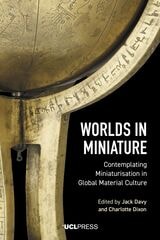
Worlds in Miniature
Contemplating Miniaturisation in Global Material CultureEdited by Jack Davy and Charlotte Dixon
University College London, 2019
Beginning with an introduction by the editors, which offers a guide to studying and comparing miniatures, the following chapters include studies of miniature Neolithic stone circles on Exmoor, Ancient Egyptian miniature assemblages, miniaturization under colonialism as practiced by the Makah People of Washington State, miniature watercraft from India, miniaturized contemporary tourist art of the Warao people of Venezuela, and dioramas on display in the Science Museum. Interspersing the chapters are interviews with miniature-makers, including two miniature boat builders at the National Maritime Museum, Cornwall and a freelance architectural model maker. The interdisciplinary nature of the volume makes it suitable reading for anthropologists, historians, archaeologists, artists, and researchers in related fields across the social sciences.
Worlds of Autism
Across the Spectrum of Neurological DifferenceJoyce Davidson
University of Minnesota Press, 2013
Since first being identified as a distinct psychiatric disorder in 1943, autism has been steeped in contestation and controversy. Present-day skirmishes over the potential causes of autism, how or even if it should be treated, and the place of Asperger’s syndrome on the autism spectrum are the subjects of intense debate in the research community, in the media, and among those with autism and their families. Bringing together innovative work on autism by international scholars in the social sciences and humanities, Worlds of Autism boldly challenges the deficit narrative prevalent in both popular and scientific accounts of autism spectrum disorders, instead situating autism within an abilities framework that respects the complex personhood of individuals with autism.
A major contribution to the emerging, interdisciplinary field of critical autism studies, this book is methodologically and conceptually broad. Its authors explore the philosophical questions raised by autism, such as how it complicates neurotypical understandings of personhood; grapple with the politics that inform autism research, treatment, and care; investigate the diagnosis of autism and the recognition of difference; and assess representations of autism and stories told by and about those with autism.
From empathy, social circles, and Internet communities to biopolitics, genetics, and diagnoses, Worlds of Autism features a range of perspectives on autistic subjectivities and the politics of cognitive difference, confronting society’s assumptions about those with autism and the characterization of autism as a disability.
Contributors: Dana Lee Baker, Washington State U; Beatrice Bonniau, Paris Descartes U; Charlotte Brownlow, U of Southern Queensland, Australia; Kristin Bumiller, Amherst College; Brigitte Chamak, Paris Descartes U; Kristina Chew, Saint Peter’s U, New Jersey; Patrick McDonagh, Concordia U, Montreal; Stuart Murray, U of Leeds; Majia Holmer Nadesan, Arizona State U; Christina Nicolaidis, Portland State U; Lindsay O'Dell, Open U, London; Francisco Ortega, State U of Rio de Janeiro; Mark Osteen, Loyola U, Maryland; Dawn Eddings Prince; Dora Raymaker; Sara Ryan, U of Oxford; Lila Walsh.
Worldviews And The American West
The Life of the Place ItselfPolly Stewart, Steve Siporin, C. W. Sullivan III, and Suzi Jones
Utah State University Press, 2003
A diverse group of writers and scholars follow the lead of noted folklorist Barre Toelken and consider, from the inside, the ways in which varied cultures in the American West understand and express their relations to the world around them. As Barre Toelken puts it in The Dynamics of Folklore, "'Worldview' refers to the manner in which a culture sees and expresses its relation to the world around it." In Worldviews and the American West, seventeen notable authors and scholars, employing diverse approaches and styles, apply Toelken's ideas about worldview to the American West. While the contributors represent a range of voices, methods, and visions, they are integrated through their focus on the theme of worldview in one region. Worldviews and the American West includes essays by Margaret K. Brady, Hal Cannon, Nora Marks Dauenhauer and Richard Dauenhauer, James S. Griffith, Barry Lopez, Robert McCarl, Elliott Oring, Twilo Scofield, Steve Siporin, Kim Stafford, C. W. Sullivan III, Jeannie B. Thomas, George Venn, George B. Wasson, and William A. Wilson. Each of the authors in this collection attempts to get inside one or more of the worldviews of the many cultures that have come to share and interpret the American West. The result is a lively mix of styles and voices as the authors' own worldviews interact with the multiple perspectives of the diverse peoples (and, in Barry Lopez's "The Language of Animals," other species) of the West. This diversity matches the geography of the region they all call home and gives varied life and meaning to its physical and cultural landscape.

Worldviews of the Greenlanders
An Inuit Arctic PerspectiveBirgitte Sonne
University of Alaska Press, 2017
Worldviews of the Greenlanders draws upon extensive Danish and Greenlandic research on Inuit arctic peoples—as well as Birgitte Sonne’s own decades of scholarship and fieldwork—to present in rich detail the key symbols and traditional beliefs of Greenlandic Natives, as well as the changes brought about by contact with colonial traders and Christian missionaries. It includes critical updates to our knowledge of the Greenlanders’ pre-colonial world and their ideas on space, time, and other worldly beings. This expansive work will be a touchstone of Arctic Native studies for academics who wish to expand their knowledge past the boundaries of North America.
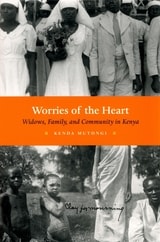
Worries of the Heart
Widows, Family, and Community in KenyaKenda Mutongi
University of Chicago Press, 2007
Throughout the twentieth century and into the twenty-first, rates of widowhood have been remarkably high in Kenya. Yet despite their numbers, widows and their families exist at the margins of society, and their lives act as a barometer for the harsh realities of rural Kenya. Mutongi here argues that widows survive by publicly airing their social, economic, and political problems, their “worries of the heart.” Initially aimed at the men in their community, and then their colonial rulers, this strategy changed after independence as widows increasingly invoked the language of citizenship to demand their rights from the new leaders of Kenya—leaders whose failure to meet the needs of ordinary citizens has led to deep disenchantment and altered Kenyans’ view of their colonial past. An innovative blend of ethnography and historical research, Worries of the Heart is a poignant narrative rich with insights into postcolonial Africa.
Worship, Women and War
Essays in Honor of Susan NiditchJohn J. Collins
SBL Press, 2015
Celebrate the career of an inspirational scholar and teacher concerned with revealing voices from the margins
This volume of essays honors Susan Niditch, author of War in the Hebrew Bible: A Study in the Ethics of Violence (1993), “My Brother Esau Is a Hairy Man”: Hair and Identity in Ancient Israel (2008), and most recently, The Responsive Self: Personal Religion in Biblical Literature of the Neo-Babylonian and Persian Periods (forthcoming), among other influential publications. Essays touch on topics such as folklore, mythology, and oral history, Israelite religion, ancient Judaism, warfare, violence, and gender.
Features:
- Essays from nineteen scholars, all experts in their fields
- Exploration of texts from Mesopotamia, the Hebrew Bible, and the New Testament
- Bibliography of Niditch's scholarly contributions
Worst Cases
Terror and Catastrophe in the Popular ImaginationLee Clarke
University of Chicago Press, 2005
We consider the few who live in fear of such scenarios to be alarmist or even paranoid. But Worst Cases shows that such individuals—like Cassandra foreseeing the fall of Troy—are more reasonable and prescient than you might think. In this book, Lee Clarke surveys the full range of possible catastrophes that animate and dominate the popular imagination, from toxic spills and terrorism to plane crashes and pandemics. Along the way, he explores how the ubiquity of worst cases in everyday life has rendered them ordinary and mundane. Fear and dread, Clarke argues, have actually become too rare: only when the public has more substantial information and more credible warnings will it take worst cases as seriously as it should.
A timely and necessary look into how we think about the unthinkable, Worst Cases will be must reading for anyone attuned to our current climate of threat and fear.