Results by title
3369 books match the query 'Cultural & Social' and 108 start with w
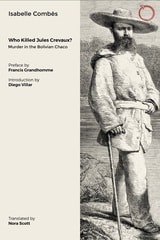
Who Killed Jules Crevaux?
Murder in the Bolivian ChacoIsabelle Combès
HAU, 2023
In 1882, the celebrated French explorer Jules Crevaux and his crew were killed by Indigenous people in the Bolivian Chaco, a fiercely contested region on the border between Bolivia, Argentina, and Paraguay. The event sparked an international uproar. The scene of the crime was embroiled in clashes among various Indigenous peoples, rubber tappers, and missionaries. Official investigators sent from France and competing newspapers ended up mired in a morass of equivocal, ambiguous, false, and contradictory information.
To make sense of this event, Isabelle Combès is the first researcher to consult the local archives and to include the perspective of Indigenous peoples. In search of who killed Crevaux and why, Combès unearths the power struggles and social imaginaries behind the incident and its aftermath. Readers will find not only an engrossing story in these pages but also an exemplar of historical inquiry that questions the very nature of truth-telling.

Whoosh Goes the Market
Algorithms, Automation, and AlienationDaniel Scott Souleles
University of Chicago Press, 2024
Markets are messy, and no one knows this better than traders who work tirelessly to predict what they will do next. In Whoosh Goes the Market, Daniel Scott Souleles takes us into the day-to-day experiences of a team at a large trading firm, revealing what it’s actually like to make and lose money on contemporary capital markets.
The traders Souleles shadows have mostly moved out of the pits and now work with automated, glitch-prone computer systems. They remember the days of trading manually, and they are suspicious of algorithmically driven machine-learning systems. Openly musing about their own potential extinction, they spend their time expressing fear and frustration in profanity-laced language. With Souleles as our guide, we learn about everything from betting strategies to inflated valuations, trading swings, and market manipulation. This crash course in contemporary finance vividly reveals the existential anxiety at the evolving front lines of American capitalism.

Whose Lives Are They Anyway?
The Biopic as Contemporary Film GenreBingham, Dennis
Rutgers University Press, 2010
Whose Lives Are They Anyway? boldly proves a critical point: The biopic is a genuine, dynamic genre and an important one—it narrates, exhibits, and celebrates a subject's life and demonstrates, investigates, or questions his or her importance in the world; it illuminates the finer points of a personality; and, ultimately, it provides a medium for both artist and spectator to discover what it would be like to be that person, or a certain type of person.
Through detailed analyses and critiques of nearly twenty biopics, Dennis Bingham explores what is at their core—the urge to dramatize real life and find a version of the truth within it. The genre's charge, which dates back to the salad days of the Hollywood studio era, is to introduce the biographical subject into the pantheon of cultural mythology and, above all, to show that he or she belongs there. It means to discover what we learn about our culture from the heroes who rise and the leaders who emerge from cinematic representations.
Bingham also zooms in on distinctions between cinematic portrayals of men and women. Films about men have evolved from celebratory warts-and-all to investigatory to postmodern and parodic. At the same time, women in biopics have been burdened by myths of suffering, victimization, and failure from which they are only now being liberated.
To explore the evolution and lifecycle changes of the biopic and develop an appreciation for subgenres contained within it, there is no better source than Whose Lives Are They Anyway?
Why Those Who Shovel Are Silent
A History of Local Archaeological Knowledge and LaborAllison Mickel
University Press of Colorado, 2020
Why Those Who Shovel Are Silent is based on six years of in-depth ethnographic work with current and former site workers at two major Middle Eastern archaeological sites—Petra, Jordan, and Çatalhöyük, Turkey—combined with thorough archival research. Author Allison Mickel describes the nature of the knowledge that locally hired archaeological laborers exclusively possess about artifacts, excavation methods, and archaeological interpretation, showing that archaeological workers are experts about a wide range of topics in archaeology. At the same time, Mickel reveals a financial incentive for site workers to pretend to be less knowledgeable than they actually are, as they risk losing their jobs or demotion if they reveal their expertise.
Despite a recent proliferation of critical research examining the history and politics of archaeology, the topic of archaeological labor has not yet been substantially examined. Why Those Who Shovel Are Silent employs a range of advanced qualitative, quantitative, and visual approaches and offers recommendations for archaeologists to include more diverse expert perspectives and produce more nuanced knowledge about the past. It will appeal to archaeologists, science studies scholars, and anyone interested in challenging the concept of “unskilled” labor.
Why We Play
An Anthropological StudyRoberte Hamayon
HAU, 2015
Hamayon begins by zeroing in on Mongolia and Siberia, where communities host national holiday games similar to the Olympics. Within these events Hamayon explores the performance of ethical values and local identity, and then she draws her analysis into larger ideas examinations of the spectrum of play activities as they can exist in any culture. She explores facets of play such as learning, interaction, emotion, strategy, luck, and belief, and she emphasizes the crucial ambiguity between fiction and reality that is at the heart of play as a phenomenon. Revealing how consistent and coherent play is, she ultimately shows it as a unique modality of action that serves an invaluable role in the human experience.

Why Would Anyone Wear That?
Fascinating Fashion FactsCelia E. Stall-Meadows
Intellect Books, 2013
With a blend of wisdom and wit, Why Would Anyone Wear That? explores extreme fashions from around the world. The Victorian era was by no means alone in strange sartorial choices. Throughout history, men and women have turned to clothing and accessories to adorn and accentuate parts of the body. Some of the fashions, like bloomers, were surprisingly functional. Others, like powdered wigs and hobble skirts, were inconvenient and uncomfortable. And a few particularly painful practices could even permanently disfigure the wearer, like brass coils worn in Burma to lengthen the neck and the custom of binding of women’s feet to fit tiny lotus slippers in Song dynasty China. Presenting dozens of the most peculiar fashions, including shoes, hats, jewelry, undergarments, and outerwear, the book provides insightful commentary, placing the garments and accessories in the proper historical, social, and cultural context.
If you’ve ever wondered why the codpiece was created or the leisure suit went out of style, this book will answer that question and many more. Fully illustrated and packed with fun facts, Why Would Anyone Wear That? introduces readers to the fascinating stories behind some of the world’s weirdest fashions.

Wild Thought
A New Translation of “La Pensée sauvage”Claude Lévi-Strauss
University of Chicago Press, 2021
Controversially titled The Savage Mind when it was first published in English in 1966, the original translation nevertheless sparked a fascination with Lévi-Strauss’s work among Anglophone readers. Wild Thought rekindles that spark with a fresh and accessible new translation. Including critical annotations for the contemporary reader, it restores the accuracy and integrity of the book that changed the course of intellectual life in the twentieth century, making it an indispensable addition to any philosophical or anthropological library.
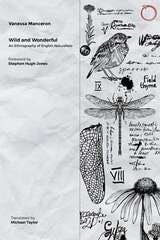
Wild and Wonderful
An Ethnography of English NaturalistsVanessa Manceron
HAU, 2025
In Wild and Wonderful, social anthropologist Vanessa Manceron investigates an understudied but indispensable scientific practice: getting to know and recognize the living worlds around us. Her research takes her to England, where a longstanding naturalist tradition brings together professionals, academics, and amateurs to study the world around them. Observing the natural world here is regarded not as a simple hobby, but as a necessary activity. This is participatory science, an itinerant brand of scholarship that immerses itself in a specific and delimited territory, meticulously documenting the species living there and how they develop and expand their domain or regress and disappear. Manceron leads us through woods and fields, showing us another way of looking, of paying attention to minute differences, sounds, and variations of color. Her book is both a contribution to the anthropology of science and an opportunity to take a fresh look at our relationship with nature, affording us a glimpse of another way of living and living with.

Wind and Power in the Anthropocene
Dominic Boyer and Cymene Howe
Duke University Press, 2019
In his volume, Energopolitics, Boyer examines the politics of wind power and how it is shaped by myriad factors, from the legacies of settler colonialism and indigenous resistance to state bureaucracy and corporate investment. Drawing on interviews with activists, campesinos, engineers, bureaucrats, politicians, and bankers, Boyer outlines the fundamental impact of energy and fuel on political power. Boyer also demonstrates how large conceptual frameworks cannot adequately explain the fraught and uniquely complicated conditions on the Isthmus, illustrating the need to resist narratives of Anthropocenic universalism and to attend to local particularities.
In her volume, Ecologics, Howe narrates how an antidote to the Anthropocene became both failure and success. Tracking the development of what would have been Latin America's largest wind park, Howe documents indigenous people's resistance to the project and the political and corporate climate that derailed its renewable energy potential. Using feminist and more-than-human theories, Howe demonstrates how the dynamics of energy and environment cannot be captured without understanding how human aspirations for energy articulate with nonhuman beings, technomaterial objects, and the geophysical forces that are at the heart of wind and power.
Winners and Losers
Social and Political Polarities in AmericaIrving Louis Horowitz
Duke University Press, 1984

Winterthur Portfolio, Volume 11
Edited by Ian M. G. Quimby
University of Chicago Press, 1978
Winterthur Portfolio, Volume 3
Edited by Milo M. Naeve
University of Chicago Press, 1978
Winterthur Portfolio, Volume 4
Edited by Richard K. Doud
University of Chicago Press, 1978
Winterthur Portfolio, Volume 6
Edited by Ian M. G. Quimby
University of Chicago Press, 1978
Winterthur Portfolio, Volume 7
Edited by Ian M. G. Quimby
University of Chicago Press, 1978
Winterthur Portfolio, Volume 8
Edited by Ian M. G. Quimby
University of Chicago Press, 1978
Winterthur Portfolio, Volume 9
Edited by Ian M. G. Quimby
University of Chicago Press, 1978
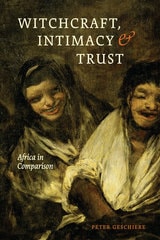
Witchcraft, Intimacy, and Trust
Africa in ComparisonPeter Geschiere
University of Chicago Press, 2013
Geschiere begins in the forests of southeast Cameroon with the Maka, who fear “witchcraft of the house” above all else. Drawing a variety of local conceptions of intimacy into a global arc, he tracks notions of the home and family—and witchcraft’s transgression of them—throughout Africa, Europe, Brazil, and Oceania, showing that witchcraft provides powerful ways of addressing issues that are crucial to social relationships. Indeed, by uncovering the link between intimacy and witchcraft in so many parts of the world, he paints a provocative picture of human sociality that scrutinizes some of the most prevalent views held by contemporary social science.
One of the few books to situate witchcraft in a global context, Witchcraft, Intimacy, and Trust is at once a theoretical tour de force and an empirically rich and lucid take on a difficult-to-understand spiritual practice and the private spaces throughout the world it so greatly affects.

With Good Heart
Yaqui Beliefs and Ceremonies in Pascua VillageMuriel Thayer Painter
University of Arizona Press, 1986
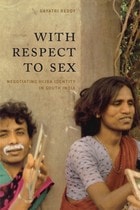
With Respect to Sex
Negotiating Hijra Identity in South IndiaGayatri Reddy
University of Chicago Press, 2005
Hijras are men who sacrifice their genitalia to a goddess in return for the power to confer fertility on newlyweds and newborn children, a ritual role they are respected for, at the same time as they are stigmatized for their ambiguous sexuality. By focusing on the hijra community, Gayatri Reddy sheds new light on Indian society and the intricate negotiations of identity across various domains of everyday life. Further, by reframing hijra identity through the local economy of respect, this ethnography highlights the complex relationships among local and global, sexual and moral, economies.
This book will be regarded as the definitive work on hijras, one that will be of enormous interest to anthropologists, students of South Asian culture, and specialists in the study of gender and sexuality.
With the Lapps in the High Mountains
A Woman among the Sami, 1907–1908Emilie Demant Hatt; Edited and translated by Barbara Sjoholm; Foreword by Hugh Beach
University of Wisconsin Press, 2013
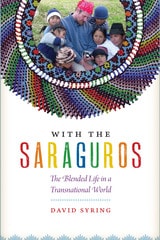
With the Saraguros
The Blended Life in a Transnational WorldBy David Syring
University of Texas Press, 2014
Highlighting globalization’s effects on humanity through the lens of Ecuador’s indigenous Saraguro people, With the Saraguros marks a compelling departure from conventional approaches to ethnography. While documenting and exploring the social patterns among the Saraguro, with an emphasis on the role of women beadworkers, David Syring blends storytelling, dialogue, poetry, and memoir to describe his own realm as a fieldworker in anthropology. As he considers the influence of women’s labor in a community in which the artistry of beadwork is richly symbolic, he also considers how the Saraguro view their observers—the anthropologists.
Probing the role of researchers in a time when basic humanistic questions now often reflect a critical balance between commerce and sustainability, With the Saraguros asks, “What does it mean to live ‘the good life’ in different cultural contexts, and how does our work life relate to this pursuit?” For those who have chosen a work life of anthropology, Syring captures the impact of fieldwork—which uproots the researcher from his or her daily routine—and its potential to deliver new levels of consciousness. The result constitutes more than just the first English-language book dedicated to the dynamic creativity of the Saraguro, contextualized by their social and political history; Syring’s work, which ranges from the ecological imagination to the metaphors of trade, is also a profound meditation on the ways we experience boundaries now that borders no longer create sharply drawn divides between cultural worlds, and “distant” no longer means “separate.”
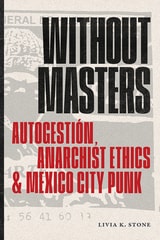
Without Masters
Autogestión, Anarchist Ethics, and Mexico City PunkLivia K. Stone
Duke University Press, 2026
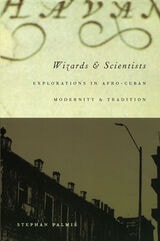
Wizards and Scientists
Explorations in Afro-Cuban Modernity and TraditionStephan Palmié
Duke University Press, 2002
Highlighting the ways that Afro-Cuban discourses serve as a means of moral analysis of social action, Palmié suggests that the supposedly irrational premises of Afro-Cuban religious traditions not only rival Western rationality in analytical acumen but are integrally linked to rationality itself. Afro-Cuban religion is as “modern” as nuclear thermodynamics, he claims, just as the Caribbean might be regarded as one of the world’s first truly “modern” locales: based on the appropriation and destruction of human bodies for profit, its plantation export economy anticipated the industrial revolution in the metropolis by more than a century. Working to prove that modernity is not just an aspect of the West, Palmié focuses on those whose physical abuse and intellectual denigration were the price paid for modernity’s achievement. All cultures influenced by the transcontinental Atlantic economy share a legacy of slave commerce. Nevertheless, local forms of moral imagination have developed distinctive yet interrelated responses to this violent past and the contradiction-ridden postcolonial present that can be analyzed as forms of historical and social analysis in their own right.
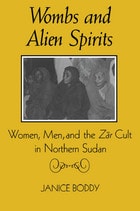
Wombs and Alien Spirits
Women, Men, and the Zar Cult in Northern SudanJanice Boddy
University of Wisconsin Press, 1989
Based on nearly two years of ethnographic fieldwork in a Muslim village in northern Sudan, Wombs and Alien Spirits explores the zâr cult, the most widely practiced traditional healing cult in Africa. Adherents of the cult are usually women with marital or fertility problems, who are possessed by spirits very different from their own proscribed roles as mothers. Through the woman, the spirit makes demands upon her husband and family and makes provocative comments on village issues, such as the increasing influence of formal Islam or encroaching Western economic domination. In accommodating the spirits, the women are able metaphorically to reformulate everyday discourse to portray consciousness of their own subordination.
Janice Boddy examines the moral universe of the village, discussing female circumcision, personhood, kinship, and bodily integrity, then describes the workings of the cult and the effect of possession on the lives of men as well as women. She suggests that spirit possession is a feminist discourse, though a veiled and allegorical one, on women's objectification and subordination. Additionally, the spirit world acts as a foil for village life in the context of rapid historical change and as such provides a focus for cultural resistance that is particularly, though not exclusively, relevant to women.
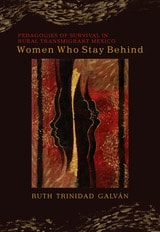
Women Who Stay Behind
Pedagogies of Survival in Rural Transmigrant MexicoRuth Trinidad Galván
University of Arizona Press, 2015
The book studies women’s and families’ use of cultural knowledge, community activism, and teaching and learning spaces. Throughout, Trinidad Galván provides answers to these questions: How does the migration of loved ones alter community, familial, and gender dynamics? And what social relations (convivencia), cultural knowledge, and women-centered pedagogies sustain women’s survival (supervivencia)?
Researchers, educators, and students interested in migration studies, gender studies, education, Latin American studies, and Mexican American studies will benefit from the ethnographic approach and theoretical insight of this groundbreaking work.

Women among Women
Anthropological Perspectives on Female Age HierarchiesEdited by Jeanette Dickerson-Putman and Judith K. Brown: Foreword by Nancy Foner
University of Illinois Press, 1994
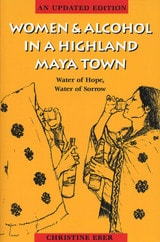
Women and Alcohol in a Highland Maya Town
Water of Hope, Water of SorrowBy Christine Eber
University of Texas Press, 1995
Healing roles and rituals involving alcohol are a major source of power and identity for women and men in Highland Chiapas, Mexico, where abstention from alcohol can bring a loss of meaningful roles and of a sense of community. Yet, as in other parts of the world, alcohol use sometimes leads to abuse, whose effects must then be combated by individuals and the community.
In this pioneering ethnography, Christine Eber looks at women and drinking in the community of San Pedro Chenalhó to address the issues of women’s identities, roles, relationships, and sources of power. She explores various personal and social strategies women use to avoid problem drinking, including conversion to Protestant religions, membership in cooperatives or Catholic Action, and modification of ritual forms with substitute beverages.
The book’s women-centered perspective reveals important data on women and drinking not reported in earlier ethnographies of Highland Chiapas communities. Eber’s reflexive approach, blending the women’s stories, analyses, songs, and prayers with her own and other ethnographers’ views, shows how Western, individualistic approaches to the problems of alcohol abuse are inadequate for understanding women’s experiences with problem and ritual drinking in a non-Western culture.
In a new epilogue, Christine Eber describes how events of the last decade, including the Zapatista uprising, have strengthened women's resolve to gain greater control over their lives by controlling the effects of alcohol in the community.
Women and Power in Zimbabwe
Promises of FeminismCarolyn Martin Shaw
University of Illinois Press, 2015
Using history, literature, participant observation, and interviews, Carolyn Martin Shaw surveys Zimbabwean feminisms from the colonial era to today. She examines how actions as clearly disparate as baking scones for self-protection, carrying guns in the liberation, and feeling morally superior to men represent sources of female empowerment. She also presents the ways women across Zimbabwean society--rural and urban, professional and domestic--accommodated or confronted post-independence setbacks. Finally, Shaw offers perspectives on the ways contemporary Zimbabwean women depart from the prevailing view that feminism is a Western imposition having little to do with African women.
The result of thirty years of experience, Women and Power in Zimbabwe addresses the promises of feminism and femininity for generations of African women.
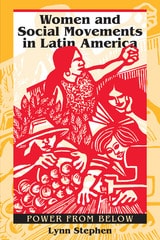
Women and Social Movements in Latin America
Power from BelowBy Lynn Stephen
University of Texas Press, 1997
Women's grassroots activism in Latin America combines a commitment to basic survival for women and their children with a challenge to women's subordination to men. Women activists insist that issues such as rape, battering, and reproductive control cannot be divorced from women's concerns about housing, food, land, and medical care.
This innovative, comparative study explores six cases of women's grassroots activism in Mexico, El Salvador, Brazil, and Chile. Lynn Stephen communicates the ideas, experiences, and perceptions of women who participate in collective action, while she explains the structural conditions and ideological discourses that set the context within which women act and interpret their experiences. She includes revealing interviews with activists, detailed histories of organizations and movements, and a theoretical discussion of gender, collective identity, and feminist anthropology and methods.
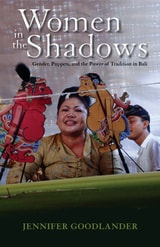
Women in the Shadows
Gender, Puppets, and the Power of Tradition in BaliJennifer Goodlander
Ohio University Press, 2016
Wayang kulit, or shadow puppetry, connects a mythic past to the present through public ritual performance and is one of most important performance traditions in Bali. The dalang, or puppeteer, is revered in Balinese society as a teacher and spiritual leader. Recently, women have begun to study and perform in this traditionally male role, an innovation that has triggered resistance and controversy.
In Women in the Shadows, Jennifer Goodlander draws on her own experience training as a dalang as well as interviews with early women dalang and leading artists to upend the usual assessments of such gender role shifts. She argues that rather than assuming that women performers are necessarily mounting a challenge to tradition, “tradition” in Bali must be understood as a system of power that is inextricably linked to gender hierarchy.
She examines the very idea of “tradition” and how it forms both an ideological and social foundation in Balinese culture. Ultimately, Goodlander offers a richer, more complicated understanding of both tradition and gender in Balinese society. Following in the footsteps of other eminent reflexive ethnographies, Women in the Shadows will be of value to anyone interested in performance studies, Southeast Asian culture, or ethnographic methods.
Women's Seclusion and Men's Honor
Sex Roles in North India, Bangladesh, and PakistanDavid G. Mandelbaum
University of Arizona Press, 1988
Women, Family, and Ritual in Renaissance Italy
Christiane Klapisch-Zuber
University of Chicago Press, 1987
Women, Power, and Dissent in the Hills of Carolina
Mary K. Anglin
University of Illinois Press, 2002
Women, Power, and Dissent in the Hills of Carolina is a unique and impassioned exploration of gender, labor, and resistance in western North Carolina. Based on eight months of field research in a mica manufacturing plant and the surrounding rural community, as well as oral histories of women who worked in mica houses in the early twentieth century, this landmark study canvasses the history of the mica industry and the ways it came to be organized around women's labor.
Mary K. Anglin's investigation of working women's lives in the plant she calls "Moth Hill Mica Company" reveals the ways women have contributed to household and regional economies for more than a century. Without union support or recognition as skilled laborers, these women developed alternate strategies for challenging the poor working conditions, paltry wages, and corporate rhetoric of Moth Hill. Utilizing the power of memory and strong family and community ties, as well as their own interpretations of gender and culture, the women have found ways to "boss themselves."
Women, the Family, and Peasant Revolution in China
Kay Ann Johnson
University of Chicago Press, 1983
Johnson's primary focus is on reforms of marriage and family because traditional marriage, family, and kinship practices have had the greatest influence in defining and shaping women's place in Chinese society. Conversant with current theory in political science, anthropology, and Marxist and feminist analysis, Johnson writes with clarity and discernment free of dogma. Her discussions of family reform ultimately provide insights into the Chinese government's concern with decreasing the national birth rate, which has become a top priority. Johnson's predictions of a coming crisis in population control are borne out by the recent increase in female infanticide and the government abortion campaign.
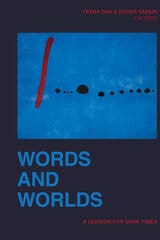
Words and Worlds
A Lexicon for Dark TimesVeena Das and Didier Fassin, editors
Duke University Press, 2021
Contributors. Banu Bargu, Veena Das, Alex de Waal, Didier Fassin, Peter Geschiere, Behrooz Ghamari-Tabrizi, Caroline Humphrey, Ravi Kanbur, Julieta Lemaitre, Uday S. Mehta, Jan-Werner Müller, Jonathan Pugh, Elizabeth F. Sanders, Todd Sanders
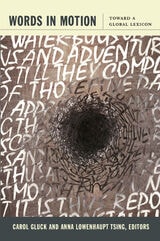
Words in Motion
Toward a Global LexiconCarol Gluck and Anna Lowenhaupt Tsing, eds.
Duke University Press, 2009
Such words as security in Brazil, responsibility in Japan, community in Thailand, and hijāb in France changed the societies in which they moved even as the words were changed by them. Some words threatened to launch wars, as injury did in imperial Britain’s relations with China in the nineteenth century. Others, such as secularism, worked in silence to agitate for political change in twentieth-century Morocco. Words imposed or imported from abroad could be transformed by those who wielded them to oppose the very powers that first introduced them, as happened in Turkey, Indonesia, and the Philippines. Taken together, this selection of fourteen essays reveals commonality as well as distinctiveness across modern societies, making the world look different from the interdisciplinary and transnational perspective of “words in motion.”
Contributors. Mona Abaza, Itty Abraham, Partha Chatterjee, Carol Gluck, Huri Islamoglu, Claudia Koonz, Lydia H. Liu, Driss Maghraoui, Vicente L. Rafael, Craig J. Reynolds, Seteney Shami, Alan Tansman, Kasian Tejapira, Anna Lowenhaupt Tsing
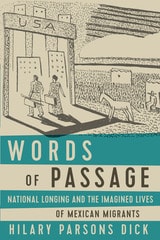
Words of Passage
National Longing and the Imagined Lives of Mexican MigrantsBy Hilary Parsons Dick
University of Texas Press, 2018
Migration fundamentally shapes the processes of national belonging and socioeconomic mobility in Mexico—even for people who never migrate or who return home permanently. Discourse about migrants, both at the governmental level and among ordinary Mexicans as they envision their own or others’ lives in “El Norte,” generates generic images of migrants that range from hardworking family people to dangerous lawbreakers. These imagined lives have real consequences, however, because they help to determine who can claim the resources that facilitate economic mobility, which range from state-sponsored development programs to income earned in the North.
Words of Passage is the first full-length ethnography that examines the impact of migration from the perspective of people whose lives are affected by migration, but who do not themselves migrate. Hilary Parsons Dick situates her study in the small industrial city of Uriangato, in the state of Guanajuato. She analyzes the discourse that circulates in the community, from state-level pronouncements about what makes a “proper” Mexican to working-class people’s talk about migration. Dick shows how this migration discourse reflects upon and orders social worlds long before—and even without—actual movements beyond Mexico. As she listens to men and women trying to position themselves within the migration discourse and claim their rights as “proper” Mexicans, she demonstrates that migration is not the result of the failure of the Mexican state but rather an essential part of nation-state building.

Working Out in Japan
Shaping the Female Body in Tokyo Fitness ClubsLaura Spielvogel
Duke University Press, 2003
Fitness clubs have proliferated in Japanese cities over the past decade. Yet, despite the pervasive influence of a beauty industry that values thinness above all else, they have met with only mixed success . Exploring this paradox, Spielvogel focuses on the tensions and contradictions within the world of Japanese fitness clubs and on the significance of differences between Japanese and North American philosophies of mind and body. Working Out in Japan explores the ways spaces and bodies are organized and regulated within the clubs, the frustrations of female instructors who face various gender inequities, and the difficult demands that the ideal of slimness places on Japanese women. Spielvogel’s vivid investigation illuminates not only the fitness clubs themselves, but also broader cultural developments including the growth of the service industry and the changing character of work and leisure in Japan.
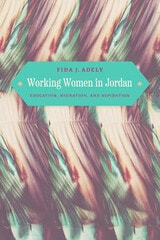
Working Women in Jordan
Education, Migration, and AspirationFida J. Adely
University of Chicago Press, 2024
Jordan has witnessed tremendous societal transformation in its relatively short history. Today it has one of the most highly educated populations in the region, and women have outnumbered and outperformed their male counterparts for more than a decade. Yet, despite their education and professional status, many women still struggle to build a secure future and a life befitting of their aspirations.
In Working Women in Jordan anthropologist Fida J. Adely turns to college-educated women in Jordan who migrate from rural provinces to Amman for employment opportunities. Building on twelve years of ethnographic research and extensive interviews with dozens of women, as well as some of their family members, Adely analyzes the effects of developments such as expanded educational opportunities, urbanization, privatization, and the restructuring of the labor market on women’s life trajectories, gender roles, the institution of marriage, and kinship relations. Through these rich narrative accounts and the analysis of broader socio-economic shifts, Adely explains how educational structures can act as both facilitators and obstacles to workforce entry—along with cascading consequences for family and social life. Deeply thorough and compelling, Working Women in Jordan asks readers to think more critically about what counts as development, and for whom.
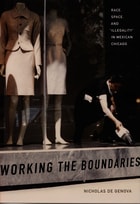
Working the Boundaries
Race, Space, and "Illegality" in Mexican ChicagoNicholas De Genova
Duke University Press, 2005
De Genova worked for two and a half years as a teacher of English in ten industrial workplaces (primarily metal-fabricating factories) throughout Chicago and its suburbs. In Working the Boundaries he draws on fieldwork conducted in these factories, in community centers, and in the homes and neighborhoods of Mexican migrants. He describes how the meaning of “Mexican” is refigured and racialized in relation to a U.S. social order dominated by a black-white binary. Delving into immigration law, he contends that immigration policies have worked over time to produce Mexicans as the U.S. nation-state’s iconic “illegal aliens.” He explains how the constant threat of deportation is used to keep Mexican workers in line. Working the Boundaries is a major contribution to theories of race and transnationalism and a scathing indictment of U.S. labor and citizenship policies.
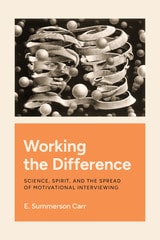
Working the Difference
Science, Spirit, and the Spread of Motivational InterviewingE. Summerson Carr
University of Chicago Press, 2023
Motivational interviewing (MI) is a professional practice, a behavioral therapy, and a self-professed conversation style that encourages clients to talk themselves into change. Originally developed to treat alcoholics, MI quickly spread into a variety of professional fields including corrections, medicine, and sanitation. In Working the Difference, E. Summerson Carr focuses on the training and dissemination of MI to explore how cultural forms—and particularly forms of expertise—emerge and spread. The result is a compelling analysis of the American preoccupations at MI’s core, from democratic autonomy and freedom of speech to Protestant ethics and American pragmatism.
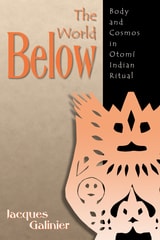
World Below
Body and Cosmos in Otomí Indian RitualJacques Galinier
University Press of Colorado, 2004
Drawing upon both Freud and theories of the carnivalesque, Galinier argues that the "world below" (the lower half of the body) provides the foundation for an indigenous metapsychology that is at once very close to and very far away from the Freudian conceptual apparatus.

World Flutelore
Folktales, Myths, and Other Stories of Magical Flute PowerDale A. Olsen
University of Illinois Press, 2013
Describing and interpreting many examples of flutes as they are found in mythology, poetry, lyrics, and other narrative and literary sources from around the world, veteran ethnomusicologist Dale Olsen seeks to determine what is singularly distinct or unique about flutes, flute playing, and flute players in a global context. He shows how and why flutes are important for personal, communal, religious, spiritual, and secular expression and even, perhaps, existence. This is a book for students, scholars, and any reader interested in the cultural power of flutes.
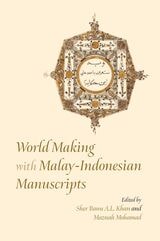
World Making with Malay-Indonesian Manuscripts
Circulation, Contestation and ConnectionEdited by Maznah Mohamad and Sher Banu Khan
National University of Singapore Press, 2026
What new framings emerge when we revisit the vibrant world of Malay-Indonesian manuscripts, looking beyond the boundaries imposed by colonial and nationalist scholarship? This volume revitalizes manuscript studies by using texts in entirely fresh ways, situating them as dynamic instruments of knowledge and cultural transformation. Through contextual readings, it uncovers multiple historical and cultural narratives within and between manuscripts, challenging established understandings of power, identity, and authorship. Chapters explore themes ranging from the origins of kingdoms and intellectual traditions to the reinvention of contemporary lives through politicized readings of older texts.
By foregrounding the diversity and versatility of Malay-Indonesian textual traditions, this book recenters manuscripts as vital agents in shaping Southeast Asian histories, decenters fixed notions of a singular “Malay” worldview, and reveals the fluidity of cultural memory across time and place.
Worlding
Finding a Way in Broken TimesKathleen Stewart
Duke University Press, 2027
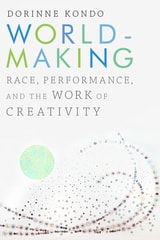
Worldmaking
Race, Performance, and the Work of CreativityDorinne Kondo
Duke University Press, 2018

Worlds Beyond Bios
The Life of Matter and the Matter of LifeSophie Chao, Christine J. Winter, and David Schlosberg, editors
Duke University Press, 2026
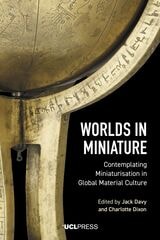
Worlds in Miniature
Contemplating Miniaturisation in Global Material CultureEdited by Jack Davy and Charlotte Dixon
University College London, 2019
Beginning with an introduction by the editors, which offers a guide to studying and comparing miniatures, the following chapters include studies of miniature Neolithic stone circles on Exmoor, Ancient Egyptian miniature assemblages, miniaturization under colonialism as practiced by the Makah People of Washington State, miniature watercraft from India, miniaturized contemporary tourist art of the Warao people of Venezuela, and dioramas on display in the Science Museum. Interspersing the chapters are interviews with miniature-makers, including two miniature boat builders at the National Maritime Museum, Cornwall and a freelance architectural model maker. The interdisciplinary nature of the volume makes it suitable reading for anthropologists, historians, archaeologists, artists, and researchers in related fields across the social sciences.
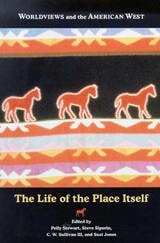
Worldviews And The American West
The Life of the Place ItselfPolly Stewart, Steve Siporin, C. W. Sullivan III, and Suzi Jones
Utah State University Press, 2003
A diverse group of writers and scholars follow the lead of noted folklorist Barre Toelken and consider, from the inside, the ways in which varied cultures in the American West understand and express their relations to the world around them. As Barre Toelken puts it in The Dynamics of Folklore, "'Worldview' refers to the manner in which a culture sees and expresses its relation to the world around it." In Worldviews and the American West, seventeen notable authors and scholars, employing diverse approaches and styles, apply Toelken's ideas about worldview to the American West. While the contributors represent a range of voices, methods, and visions, they are integrated through their focus on the theme of worldview in one region. Worldviews and the American West includes essays by Margaret K. Brady, Hal Cannon, Nora Marks Dauenhauer and Richard Dauenhauer, James S. Griffith, Barry Lopez, Robert McCarl, Elliott Oring, Twilo Scofield, Steve Siporin, Kim Stafford, C. W. Sullivan III, Jeannie B. Thomas, George Venn, George B. Wasson, and William A. Wilson. Each of the authors in this collection attempts to get inside one or more of the worldviews of the many cultures that have come to share and interpret the American West. The result is a lively mix of styles and voices as the authors' own worldviews interact with the multiple perspectives of the diverse peoples (and, in Barry Lopez's "The Language of Animals," other species) of the West. This diversity matches the geography of the region they all call home and gives varied life and meaning to its physical and cultural landscape.