Results by title
681 books match the query 'English language' and 57 start with w
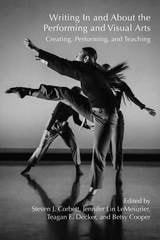
Writing in and about the Performing and Visual Arts
Creating, Performing, and TeachingSteven J. Corbett
University Press of Colorado, 2020
Writing in the Academic Disciplines, Second Edition
A Curricular HistoryDavid R. Russell. Foreword by Elaine P. Maimon
Southern Illinois University Press, 2002
“To understand the ways students learn to write, we must go beyond the small and all too often marginalized component of the curriculum that treats writing explicitly and look at the broader, though largely tacit traditions students encounter in the whole curriculum,” explains David R. Russell, in the introduction to this singular study. The updated edition provides a comprehensive history of writing instruction outside general composition courses in American secondary and higher education, from the founding public secondary schools and research universities in the 1870s, through the spread of the writing-across-the-curriculum movement in the 1980s, through the WAC efforts in contemporary curriculums.
Writing in the Devil's Tongue
A History of English Composition in ChinaXiaoye You
Southern Illinois University Press, 2010
Winner, CCCC Outstanding Book Award
Until recently, American composition scholars have studied writing instruction mainly within the borders of their own nation, rarely considering English composition in the global context in which writing in English is increasingly taught. Writing in the Devil’s Tongue challenges this anachronistic approach by examining the history of English composition instruction in an East Asian country. Author Xiaoye You offers scholars a chance to observe how a nation changed from monolingual writing practices to bilingual writing instruction in a school setting.
You makes extensive use of archival sources to help trace bilingual writing instruction in China back to 1862, when English was first taught in government schools. Treating the Chinese pursuit of modernity as the overarching theme, he explores how the entry of Anglo-American rhetoric and composition challenged and altered the traditional monolithic practice of teaching Chinese writing in the Confucian spirit. The author focuses on four aspects of this history: the Chinese negotiation with Anglo-American rhetoric, their search for innovative approaches to instruction, students’ situated use of English writing, and local scholarship in English composition.
Unlike previous composition histories, which have tended to focus on institutional, disciplinary, and pedagogical issues, Writing in the Devil’s Tongue brings students back to center stage by featuring several passages written by them in each chapter. These passages not only showcase rhetorical and linguistic features of their writings but also serve as representative anecdotes that reveal the complex ways in which students, responding to their situations, performed multivalent, intercultural discourses. In addition, You moves out of the classroom and into the historical, cultural, and political contexts that shaped both Chinese writing and composing practices and the pedagogies that were adopted to teach English to Chinese in China. Teachers, students, and scholars reading this book will learn a great deal about the political and cultural impact that teaching English composition has had in China and about the ways in which Chinese writing and composition continues to be shaped by rich and diverse cultural traditions and political discourses.
In showcasing the Chinese struggle with teaching and practicing bilingual composition, Writing in the Devil’s Tongue alerts American writing scholars and teachers to an outdated English monolingual mentality and urges them to modify their rhetorical assumptions, pedagogical approaches, and writing practices in the age of globalization.
Writing on the Social Network
Digital Literacy Practices in Social Media's First DecadeAmber M. Buck
Utah State University Press, 2023
Through qualitative case study research, Buck explores how literate activities on social network sites coalesced around three areas crucial for writing in digital environments: (1) a heightened awareness of audience and an ability to tailor messages to specific audiences; (2) an understanding of how personal data is collected and circulated in online spaces; and (3) a means through which to use the first two skills for self-promotion and self-presentation in both personal and professional settings. She identifies several distinct literacy practices and strategies used by participants to communicate effectively and addresses how these strategies can help writing researchers and internet scholars understand the impact of social media’s first decade and can inform the ways they will research and understand social media’s second decade.
Social media platforms represent important locations where the different influences on writing become visible. Writing on the Social Network is a close study of the rich literate practices individuals have engaged in on social network sites over the last ten years that allows for a better understanding of the role social media plays in shaping digital literacy.
Writing on the Wall
Writing Education and Resistance to Isolationismedited by David S. Martins, Brooke R. Schreiber & Xiaoye You
Utah State University Press, 2022
The collection extends existing scholarship and research about the ways racist and colonial rhetorics impact writing education; the impact of translingual, transnational, and cosmopolitan ideologies on student learning and student writing; and the role international educational partnerships play in pushing back against isolationist ideologies. Established and early-career scholars who work in a broad range of institutional contexts highlight the historical connections among monolingualism, racism, and white nationalism and introduce community- and classroom-based practices that writing teachers use to resist isolationist beliefs and tendencies.
“Writing on the wall” serves as a metaphor for the creative, direct action writing education can provide and invokes border spaces as sites of identity expression, belonging, and resistance. The book connects transnational writing education with the fight for racial justice in the US and around the world and will be of significance to secondary and postsecondary writing teachers and graduate students in English, linguistics, composition, and literacy studies.
Contributors: Olga Aksakalova, Sara P. Alvarez, Brody Bluemel, Tuli Chatterji, Keith Gilyard, Joleen Hanson, Florianne Jimenez Perzan, Rebecca Lorimer Leonard, Layli Maria Miron, Tony D. Scott, Kate Vieira, Amy J. Wan
Writing the Classroom
Pedagogical Documents as Rhetorical Genresedited by Stephen E. Neaderhiser
Utah State University Press, 2022
The contributors to this unique collection employ a wide range of methodological frameworks to demonstrate how pedagogical genres—even ones as seemingly straightforward as the class syllabus—have lives extending well beyond the classroom as they become part of how college teachers represent their own academic identities, advocate for pedagogical values, and negotiate the many external forces that influence the act of teaching. Writing the Classroom shines a light on genres that are often treated as two-dimensional, with purely functional purposes, arguing instead that genres like assignment prompts, course proposals, teaching statements, and policy documents play a fundamental role in constructing the classroom and the broader pedagogical enterprise within academia.
Writing the Classroom calls on experienced teachers and faculty administrators to critically consider their own engagement with pedagogical genres and offers graduate students and newer faculty insight into the genres that they may only now be learning to inhabit as they seek to establish their personal teacherly identities. It showcases the rhetorical complexity of the genres written in the service of pedagogy not only for students but also for the many other audiences within academia that have a role in shaping the experience of teaching.
Contributors: Michael Albright, Lora Arduser, Lesley Erin Bartlett, Logan Bearden, Lindsay Clark, Dana Comi, Zack K. De Piero, Matt Dowell, Amy Ferdinandt Stolley, Mark A. Hannah, Megan Knight, Laura R. Micciche, Cindy Mooty, Dustin Morris, Kate Navickas, Kate Nesbit, Jim Nugent, Lori A. Ostergaard, Cynthia Pengilly, Jessica Rivera-Mueller, Christina Saidy, Megan Schoen, Virginia Schwarz, Christopher Toth
Writing-Intensive
Becoming W-Faculty in a New Writing CurriculumWendy Strachan
Utah State University Press, 2008
Wendy Strachan documents this campus cultural transformation, exploring successes and impasses with equal interest. The study identifies factors to be considered to avoid isolating the teaching of writing in writing-intensive courses; to engender a university-wide culture that naturalizes writing as a vital part of learning across all disciplines; and to keep the teaching of writing organic and reflected upon in a scholarly manner across campus.
A valuable case history for scholars in writing studies, WAC/WID, and curricular change studies.