Results by title
1832 books match the query 'Essays' and 100 start with w
Wild Delicate Seconds
29 Wildlife EncountersCharles Finn
Oregon State University Press, 2012
In Wild Delicate Seconds, Charles Finn captures twenty-nine chance encounters with the everyday—and not so everyday—animals, birds, and insects of North America.
Wild Fictions
Essays on Literature, Empire, and the EnvironmentAmitav Ghosh
University of Chicago Press, 2025
A collection of essays on themes central to Ghosh’s work: imperialism and decolonization, climate change, and the stories of ordinary people making lives amid these historical forces.
Wild Fictions brings together Amitav Ghosh’s extraordinary writings on subjects that have obsessed him over the last twenty-five years: literature and language; climate change and the environment; and human lives, travel, and discoveries. Threaded throughout the collection are his reflections on the spaces that we inhabit and how we occupy them. From the significance of the commodification of the clove to the diversity of the mangrove forests in Bengal and the radical fluidity of multilingualism, Wild Fictions is a powerful refutation of imperial violence, a fascinating exploration of the fictions we weave to absorb history, and a reminder of the importance of sensitivity and empathy.
With the combination of moral passion, intellectual curiosity, and literary elegance that defines his writing, Ghosh makes readers understand the world in new and urgent ways. Together, the pieces in Wild Fictions chart a course that allows us to heal our relationships and restore the delicate balance with the volatile landscapes to which we all belong.
Wild Moments
Adventures with Animals of the NorthEdited by Michael Engelhard
University of Alaska Press, 2009
It is nearly impossible to live in Alaska without being influenced by its natural environment. Residents have no choice but to coexist with the Alaska wilderness and its animal inhabitants, and this extraordinary experience—along with the stunning landscape—is what often draws people to Alaska. Wild Moments offers a fascinating range of creative nonfiction essays that describe the chance meetings that bring Alaska residents face to face with their animal neighbors. These imaginative accounts speak to the ability of nature to transform the human experience, and the authors urge us through their works to protect these often threatened creatures who share our planet.
The contributors to this collection include some of Alaska’s most prestigious nature writers, such as Peggy Shumaker, Ned Rozell, Nick Jans, Debbie S. Miller, Craig Childs, Richard Nelson, and Drew Pogge. Wild Moments presents some of the best and most innovative nonfiction writing in an environmental context, and it will be of interest to all readers with a passion and concern for the natural world.
Wild Nevada
Testimonies on Behalf of the DesertRoberta Moore
University of Nevada Press, 2005
Wildbranch
An Anthology of Nature, Environmental, and Place-based WritingEdited by Florence Caplow and Susan A. Cohen. Foreword by H. Emerson Blake
University of Utah Press, 2010
Wildbranch: An Anthology of Nature, Environmental, and Place-based Writing is a powerful collection of mostly unpublished essays and poetry by both prominent American environmental writers and exciting new voices. The poetry and essays by more than fifty contributors offer the reader glimpses into places as diverse as a forest in West Africa, the moors of Ireland, the canyons of the Sonoran desert mountains, and the fields of New England, and they reflect the varied perspectives of field biologists, hunters, farmers, environmental educators, wilderness guides, academics, writers, and artists.
The collection is an intimate portrait of the natural world drawn through the wisdom, ecological consciousness, and open hearts of these exceptional contributors. The Wildbranch Writing Workshop, cosponsored by Orion magazine and Sterling College, has encouraged thoughtful natural history, outdoor, and environmental writing for more than twenty years. The Wildbranch faculty has included its founder E. Anne Proulx, the essayists Edward Hoagland, Janisse Ray, and Scott Russell Sanders, the poet Alison Hawthorne Deming, and many other notable authors. Many have work included in the anthology.
Winner of the New Mexico Book Association's Southwest Book Design & Production Awards for Excellence in the category Trade Books: Non-illustrated.
Wilderness Days
Sigurd F. Olson
University of Minnesota Press, 2012
In the evocative words of one of America’s best-loved nature writers, Wilderness Days brings together the essence of the magnificent wilderness with which he so deeply identifies. Sigurd F. Olson collects from his writings those moments that most vividly depict the turn of the seasons in the great woodlands and waters of the legendary Quetico–Superior region overlapping the Ontario–Minnesota border.
Wilderness Tapestry
An Eclectic Approach To PreservationVause Zeveloff
University of Nevada Press, 1992
To further understanding of the meanings and values of wilderness, this volume explores wilderness and its significance to humans from myriad viewpoints, based on a meeting of the North American Interdisciplinary Wilderness Conference.
William S. Burroughs At the Front
Critical Reception, 1959 - 1989Jennie Skerl
Southern Illinois University Press, 1991
Jennie Skerl and Robin Lydenberg have selected twenty-five critical essays on Burroughs that reflect the historical reception of his work, both positive and negative, decade by decade, and that represent the best essays written about him.
The essays cover Burroughs’ major novels—including the cut-up and new trilogies—the censorship issue, and his work in film and painting. The chronological organization brings into critical focus the shift from moral questions raised by the novels’ content, through examinations of Burroughs’ relationship to humanism and modernism, and finally to more focused literary and linguistic issues. In their introduction, the editors survey the progress of Burroughs’ critical reception and examine the reasons for the varied and intense responses to the work and the theoretical assumptions behind those responses.
The reviewers include prominent figures such as Mary McCarthy and Marshall McLuhan as well as major academic critics such as Cary Nelson, Tony Tanner, and Ihab Hassan.
Wind in the Rock
The Canyonlands of Southeastern UtahAnn Zwinger
University of Arizona Press, 1978
Wingbeats and Heartbeats
Essays on Game Birds, Gun Dogs, and Days AfieldDave Books; Illustrations by Christopher Smith
University of Wisconsin Press, 2013
Winning the Dust Bowl
Carter Revard
University of Arizona Press, 2001
Winnowing
Suzanne Matson
Duke University Press, 2026

Winter Sign
Jim Dale Huot-Vickery
University of Minnesota Press, 1998
A journey into the soul of the coldest season.
The locus of Jim dale Huot-Vickery’s life is a remote cabin in the northern wilderness of Minnesota’s Boundary Waters region. More often than not, it is winter here, a fierce, beautiful season that dominates all living things with its relentless cold grip. This is the inspiration for Winter Sign, the profound story of fifteen years of surviving the seven-month-long odyssey of winter in the far north.
“We know parkas, mukluks, mittens, snowshoes, skis, and sled dogs,” Huot-Vickery writes. “Snow sparkles gold on cloudless winter mornings. There are shell-pink sunsets. Stars glimmer among northern lights. . . . For those of us who know this land, however, beauty is only part of the winter story. There are those long nights, those we rarely speak about, that surely and irrevocably shift the soul.”Against this backdrop, Huot-Vickery writes authoritatively on the ecology of the area and philosophically about winter’s probing of the human spirit. He explores the world of nature and the constant struggle for survival, including his own interactions with white-tailed deer and wolves.Huot-Vickery circles around paradoxes and themes that invade the land and his life: nature’s beauty and bounty pitted against danger and death; the challenge of self-reliance and the depths of isolation; loss and restoration. And always there is the unrelenting winter, filled with wonder and terror. At turns poignant and harrowing, Winter Sign explores the solitude of the dark night of the soul, and the sustenance and inspiration winter’s wild beauty provides. ISBN 0-8166-2969-2 Paper $15.95192 pages 5 x 8 NovemberTranslation inquiries: University of Minnesota Press
Wisconsin Idols
100 Heroes Who Changed the State, the World, and MeDean Robbins
Wisconsin Historical Society Press, 2025
Discover intriguing true tales of legends and trailblazers with Wisconsin connections who left their mark on the world, including the Beatles, Georgia O’Keeffe, Kareem Abdul-Jabbar, Harrison Ford, Joni Mitchell, Abraham Lincoln, Oprah Winfrey, Bob Dylan, Jackie Robinson, Orson Welles, and many more. Marvel at Elvis Presley’s miracle on the streets of Madison, applaud the award-winning acting of Reedsburg’s Agnes Moorehead, follow fearless quarterback Bart Starr to the gates of hell in Green Bay, and join Joshua Glover in Racine on his daring escape from enslavers. These brief narratives—whether poignant or humorous—also offer personal reflections on the impact of each featured idol.
Author Dean Robbins has spent a lifetime researching and revering these prominent figures and visiting exhibits, shrines, historic homes, and other sites dedicated to their achievements. Wisconsin Idols gathers all of Robbins’s obsessions into one collection, enhanced by dozens of photographs. Taken together, these stories of musicians, activists, artists, athletes, actors, and great thinkers irrefutably establish Wisconsin as a crossroads for extraordinary people who changed the world.
With the Loyal You Show Yourself Loyal
Essays on Relationships in the Hebrew Bible in Honor of Saul M. OlyanT. M. Lemos
SBL Press, 2021
Contributors to this volume come together to honor the lifetime of work of Saul M. Olyan, Samuel Ungerleider Jr. Professor of Judaic Studies and Professor of Religious Studies at Brown University. Essays by his students, colleagues, and friends focus on and engage with his work on relationships in the Hebrew Bible, from the marking of status in relationships of inequality, to human family, friend, and sexual relationships, to relationships between divine beings. Contributors include Susan Ackerman, Klaus-Peter Adam, Rainer Albertz, Andrea Allgood, Debra Scoggins Ballentine, Bob Becking, John J. Collins, Stephen L. Cook, Ronald Hendel, T. M. Lemos, Nathaniel B. Levtow, Carol Meyers, Susan Niditch, Brian Rainey, Thomas Römer, Jordan D. Rosenblum, Rüdiger Schmitt, Jennifer Elizabeth Singletary, Kerry M. Sonia, Karen B. Stern, Stanley Stowers, Andrew Tobolowsky, Karel van der Toorn, Emma Wasserman, and Steven Weitzman.
Within, Without
On Two CitiesIlya Kaminsky and Piotr Florczyk
Seagull Books, 2026
Within, Without: On Two Cities presents two essays by Eastern European–born poets and translators, Ilya Kaminsky and Piotr Florczyk, now based in the United States. Revisiting their respective hometowns—Odesa and Kraków—they grapple with questions of history, identity, and belonging. What does it mean for an immigrant or refugee to return? Can one ever truly go back to a homeland that has since been transformed? Kaminsky and Florczyk chart a path forward by embracing the complexities of their transnational and translingual identities, as artists and as human beings.

Witness and Existence
Essays in Honor of Schubert M. OgdenEdited by Philip E. Devenish and George L. Goodwin
University of Chicago Press, 1989
Witness and Existence pays tribute to Ogden by bringing together essays by eminent scholars in New Testament studies and philosophical theology, two fields which directly reflect his methodological concerns and his substantive contributions. The book honors Ogden precisely by engaging the fundamental issues which Ogden himself has taken so seriously.
The first group of essays presents careful analyses of issues basic to the early Christian witness; the second group examines the credibility of the Christian claim about God in terms of human experience. The editors' introductory essay provides the first comprehensive analysis yet to appear of Ogden's theology. A complete bibliography of his published writings is included as an appendix.
Witnessing the Disaster
Essays on Representation and the HolocaustEdited by Michael Bernard-Donals and Richard Glejzer
University of Wisconsin Press, 2003
These essayists aim to move past the notion that the Holocaust as an event defies representation. They look at specific cases of Holocaust representation and consider their effect, their structure, their authenticity, and the kind of knowledge they produce. Taken together they consider the tension between history and memory, the vexed problem of eyewitness testimony and its status as evidence, and the ethical imperatives of Holocaust representation.
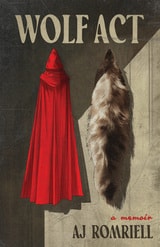
Wolf Act
AJ Romriell
University of Wisconsin Press, 2025
Through linked personal essays crafted in lyric, fabulist, and fragmented forms, Wolf Act charts a young man’s transformation. Weaving together wolfish fairy tales and mythology, Mormon theology and practice, piercings and tattoos, cave explorations, ghost stories, and more, Romriell explores a childhood of hiding, a familial reckoning, a religious exodus, and an effort to understand one’s life as worth saving—even when the meaning of the word “saving” must be reimagined.
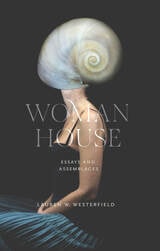
Woman House
Essays and AssemblagesLauren W. Westerfield
University of Massachusetts Press, 2026
Winner of the National Indie Excellence Award in Memoir and the National Indie Excellence Awards Juror's Choice Prize
A compelling and inventive memoir exploring how pain and pleasure are passed down through generations of women
For years, Lauren W. Westerfield looked back at her childhood as an imaginative playscape lovingly crafted by her artist mother. But in truth, theirs was always a fraught relationship, close yet turbulent. It wouldn’t be until her mid-twenties that Westerfield would learn that her mother was assaulted while living as a single woman in 1970s Los Angeles, or until her mid-thirties when caretaking for her now chronically ill mother during pandemic lockdown would reveal how that earlier incident and its ripple effects had shaped both their lives.
The essays and assemblages in this book plumb the depths of two women’s experiences, exploring the pain and pleasure they find in their bodies, in culture, and in their own art. Violence, beauty, and love reverberate and dissipate and shape the forms and psyches of these two profoundly connected family members. At once raw and refined, narrative and lyrical, nostalgic and blunt, the stories and images presented here explore Westerfield’s life—from childhood to adulthood—passing through innocence, self-discovery and familial tethers. In unpacking her mother’s history and the complexities of their relationship, Westerfield finds herself confronted with her own story: one grounded in a yearning for agency and individuation, of a body and mind groomed to be at odds with one another, of a feminist politics examining deeply rooted patriarchal understandings of beauty, control, and power.
Part memoir, part critical sense-making, part reckoning with family, identity, illness, addiction, art, and inheritance, Woman House draws on diverse inspirations in an attempt to recontextualize the female body—in danger, in pleasure, in portraiture, in proximity, in resistance—and challenge the structures that silence and restrict female expression.
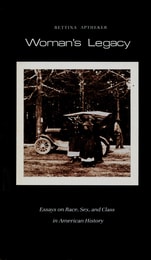
Woman's Legacy
Essays on Race, Sex, and Class in American HistoryBettina Aptheker
University of Massachusetts Press, 1982
Woman's Legacy: Essays on Race, Sex, and Class in American History is a groundbreaking collection of essays by prominent feminist scholar and historian Bettina Aptheker. Emerging from her dissertation research, this work examines the interconnected systems of racial, sexual, and class oppression that have shaped the experiences of women in American history. Through careful historical analysis and feminist scholarship, Aptheker explores how race, sex, and class work together to form complex systems of domination and resistance in the American historical context. The essays investigate women's community roles, activism, and agency while centering the lived experiences of women, particularly Black women, across different historical periods. This seminal work contributes to African American women's history and feminist historiography, bridging women's studies with critical analysis of historical structures and social movements. An essential text for those interested in intersectional approaches to American history and women's studies.
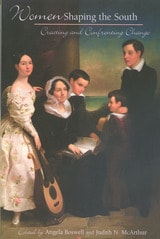
Women Shaping the South
Creating and Confronting ChangeEdited by Angela Boswell & Judith N. McArthur
University of Missouri Press, 2006
Shifting the focus to the local level, the authors demonstrate how women participated in creating change, even as they confronted conditions over which they had little power. In addition to exploring southern women’s lives, this collection shows how women shaped southern history. Using new and extensive primary research, each of these authors presents a new perspective on the important roles that women of different races and classes have played in transforming the South at some of its most crucial turning points, including post-Revolution, Civil War, Jim Crow era, World War I, and the civil rights movement.
Expanded from papers presented at the Sixth Southern Conference on Women’s History in Athens, Georgia, these essays reflect the depth and breadth of current vibrant research in southern women’s history and contribute exciting and important new scholarship to the field. Just as significant, the volume highlights the trends in southern women’s historical scholarship and points toward new directions for future scholars.
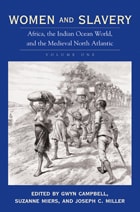
Women and Slavery, Volume One
Africa, the Indian Ocean World, and the Medieval North AtlanticGwyn Campbell
Ohio University Press, 2007
Women enslaved in the Americas came to bear highly gendered reputations among whites—as “scheming Jezebels,” ample and devoted “mammies,” or suffering victims of white male brutality and sexual abuse—that revealed more about the psychology of enslaving than about the courage and creativity of the women enslaved. These strong images of modern New World slavery contrast with the equally expressive virtual invisibility of the women enslaved in the Old—concealed in harems, represented to meddling colonial rulers as “wives” and “nieces,” taken into African families and kin-groups in subtlely nuanced fashion.
Women and Slavery presents papers developed from an international conference organized by Gwyn Campbell.
Volume 1 Contributors: Sharifa Ahjum, Richard B. Allen, Katrin Bromber, Gwyn Campbell, Catherine Coquery-Vidrovitch, Jan-Georg Deutsch, Timothy Fernyhough, Philip J. Havik, Elizabeth Grzymala Jordan, Martin A. Klein, George Michael La Rue, Paul E. Lovejoy, Fred Morton, Richard Roberts, Kirsten A. Seaver
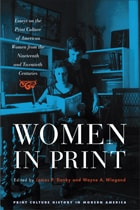
Women in Print
Essays on the Print Culture of American Women from the Nineteenth and Twentieth CenturiesEdited by James P. Danky and Wayne A. Wiegand
University of Wisconsin Press, 2006
Women readers, editors, librarians, authors, journalists, booksellers, and others are the subjects in this stimulating new collection on modern print culture. The essays feature women like Marie Mason Potts, editor of Smoke Signals, a mid-twentieth century periodical of the Federated Indians of California; Lois Waisbrooker, publisher of books and journals on female sexuality and women's rights in the decades after the Civil War; and Elizabeth Jordan, author of two novels and editor of Harper's Bazaar from 1900 to 1913. The volume presents a complex and engaging picture of print culture and of the forces that affected women's lives in the nineteenth and twentieth centuries.
Published in collaboration among the University of Wisconsin Press, the Center for the History of Print Culture in Modern America (a joint program of the University of Wisconsin–Madison and the Wisconsin Historical Society), and the University of Wisconsin–Madison General Library System Office of Scholarly Communication.
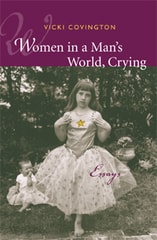
Women in a Man's World, Crying
EssaysVicki Covington
University of Alabama Press, 2002
This thoughtful, engaging collection examines resilience, identity, and inequality in the modern workplace produced by one of the nation's most observant and incisive writers.
This collection of warm, heartfelt essays from award-winning novelist Vicki Covington chronicles the multitude of "in between" moments in the writer's life. These are her stolen moments in between the writing of four novels-Gathering Home, Bird of Paradise, Night Ride Home, and The Last Hotel for Women; in between coauthoring the edgy memoir Cleaving: The Story of a Marriage with her husband Dennis Covington; in between raising two daughters; in between her husband's struggle with cancer and the author's own heart attack; in between a life full of trials and triumphs, disappointments and celebrations - moments that, as Covington demonstrates here, are always rich and revealing.
In the title essay, the author questions why all seven middle-class women who live on her street confess at a neighborhood cookout that in the past 48 hours each of them has cried. In "A Southern Thanksgiving," Covington reflects on the "family dance" that is Thanksgiving in the South: "In the North they put their crazy family members in institutions, but in the South we put them in the living room for everyone to enjoy." In "My Mother's Brain," the author recounts the onset of Alzheimer's in her mother and how, with the spread of the disease, an untapped vein of love is revealed.
Some of these essays were written as weekly newspaper columns for the Birmingham News. Others were written for specific literary occasions, such as the First Annual Eudora Welty Symposium. They are divided into six thematic sections: "Girls and Women," "Neighborhood," "Death," "The South," "Spiritual Matters," and “Writing.”
Throughout, as Covington casts her candid, attentive eye on a situation, confusion yields to comprehension, fear flourishes into faith, and anger flows into understanding. In memorializing the small moments of her life, she finds that they are far from peripheral; indeed, they are central to a life full of value and meaning.
Women with Disabilities
Essays in Psychology, Culture, and Politicsedited by Michelle Fine and Adrienne Asch
Temple University Press, 1989
Women with disabilities are women first, sharing the dreams and disappointments common to women in a male-dominated society. But because society persists in viewing disability as an emblem of passivity and incompetence, disabled women occupy a devalued status in the social hierarchy. This book represents the intersection of the feminist and disability rights perspectives; it analyzes the forces that push disabled women towards the margins of social life, and it considers the resources that enable these women to resist the stereotype.
Drawing on law, social science, folklore, literature, psychoanalytic theory, and political activism, this book describes the experience of women with disabilities. The essays consider the impact of social class, race, the age at which disability occurs, and sexual orientation on the disabled woman's self esteem as well as on her life options. The contributors focus their inquiry on the self perceptions of disabled women and ask: From what sources do these women draw positive self images? How do they resist the culture's power to label them as deviant? The essays describe the ways in which disabled women face discrimination in the workplace and the failure of the mainstream women's movement to address their concerns.
In the series Health, Society, and Policy, edited by Sheryl Ruzek and Irving Kenneth Zola.
Women, History, and Theory
The Essays of Joan KellyJoan Kelly
University of Chicago Press, 1986
Wonderful Words, Silent Truth
Essays on Poetry and a MemoirCharles Simic
University of Michigan Press, 1990
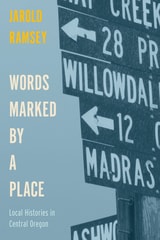
Words Marked by a Place
Local Histories in Central OregonJarold Ramsey
Oregon State University Press, 2018
While telling these local stories, Jarold Ramsey explores alternative ways of engaging history in the act of writing, breaking new ground by discovering and exploring primary sources that bear on the region’s colorful but little-known past. Throughout the collection, he interrogates “local history” as a subject. What is local history? How is it related to mainstream academic history? What are legitimate ways of doing it? How do the details of what we call local history inform “history-at-large,” and vice-versa?
From the opening narrative concerning Lieutenant Henry Larcom Abbot’s “Railroad Survey” of the region in 1855 to the concluding account of Lieutenant Robert Cranston’s last months and dramatic death, when his “Airacobra” fighter plane crashed near Madras in 1944, Words Marked by a Place sheds new light on the ongoing story of central Oregon by illuminating forgotten corners of its past. Through both theory and example, it represents an important contribution to the history of the region and the endeavors of local historians, wherever they happen to work.
Words Matter
Writing to Make a DifferenceEdited by Amanda Dahling and Mary Kay Blakely
University of Missouri Press, 2016
Newspapers and magazines have been steadily shrinking, and more and more former subscribers have gone to digital and internet sources for the news. Yet it has become increasingly clear that “short takes” don’t satisfy many readers, who still long for nuanced, long form journalism. By providing examples of classic magazine articles by professional writers, all of whom are graduates of the Missouri School of Journalism, this book fulfills the need for more sophisticated, thought-provoking essays that will resonate with both the general reader and students.
The book is divided into three broad categories: profiles, first person journalism, and personal memoirs, and includes the original articles as well as a “postscript” by the writers in which they discuss what they’ve learned about writing, journalism, and the business of getting published. Useful for students and instructors in writing programs, the book also appeals to writers interested in both the art and the craft of successful writing.
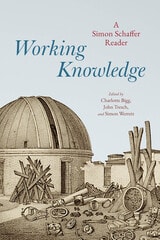
Working Knowledge
A Simon Schaffer ReaderSimon Schaffer
University of Chicago Press, 2026
Working Knowledge is the first English-language collection of essays by Simon Schaffer, coauthor of Leviathan and the Air-Pump, a landmark text in the history of science. Though the latter may be his most famous book, Schaffer is also renowned for seminal articles on Isaac Newton and the cultures of popular spectacle, nineteenth-century physics and its practices of labor discipline and standardization, the history of anthropology and collecting, and the globe-spanning cultural interactions that have shaped modern science. Working Knowledge compiles these well-known pieces alongside newer selections, making them accessible in a single place and representing the huge scope and impact of Schaffer’s oeuvre.
The Reader divides sixteen of Schaffer’s articles across five thematic sections, which take up timely issues like the turn toward global histories of science; the intersection of science and capitalism; the interaction between bodies and machines; and the connection between science, politics, and the environment. Eight new essays by notable historians such as Adrian Johns, Lissa Roberts, and Steven Shapin bring Schaffer’s pieces into discussion with current scholarship. Illustrations and brief commentaries by Schaffer and the artist Adam Lowe, a longtime collaborator, are included throughout the volume.
Bringing together essential articles that were previously scattered across several publications, Working Knowledge is an insightful introduction to Schaffer and his ever-relevant writing.
Working Time
Essays on Poetry, Culture, and TravelJane Miller
University of Michigan Press, 1992
The essays consider notions of time, duration, narrative, documentary, and history in American poetry, and view poetry in the light of developments in feminism, postmodern theory, and contemporary poetic practice. In addition to poetry, Miller investigates a range of cultural products and art forms, including film, video, photography, painting, sculpture, music, and the Madonna phenomenon.
Working on Earth
Class and Environmental JusticeChristina Robertson
University of Nevada Press, 2015
The authors challenge prevailing cultural narratives that separate ecological and human health from the impacts of modern industrial capitalism. Essay themes range from how human survival is linked to nature to how the use and abuse of nature benefit the wealthy elite at the expense of working-class people and the working poor as well as how climate change will affect cultures deeply rooted in the land.
Ultimately, Working on Earth calls for a working-class ecology as an integral part of achieving just and sustainable human development.
Working-Class America
Essays on Labor, Community, and American SocietyEdited by Michael H. Frisch and Daniel J. Walkowitz
University of Illinois Press, 1983
Worship, Women and War
Essays in Honor of Susan NiditchJohn J. Collins
SBL Press, 2015
Celebrate the career of an inspirational scholar and teacher concerned with revealing voices from the margins
This volume of essays honors Susan Niditch, author of War in the Hebrew Bible: A Study in the Ethics of Violence (1993), “My Brother Esau Is a Hairy Man”: Hair and Identity in Ancient Israel (2008), and most recently, The Responsive Self: Personal Religion in Biblical Literature of the Neo-Babylonian and Persian Periods (forthcoming), among other influential publications. Essays touch on topics such as folklore, mythology, and oral history, Israelite religion, ancient Judaism, warfare, violence, and gender.
Features:
- Essays from nineteen scholars, all experts in their fields
- Exploration of texts from Mesopotamia, the Hebrew Bible, and the New Testament
- Bibliography of Niditch's scholarly contributions
Woven Shades of Green
An Anthology of Irish Nature LiteratureTim Wenzell
Bucknell University Press, 2019
Published by Bucknell University Press. Distributed worldwide by Rutgers University Press.
Writing Anthropology
Essays on Craft and CommitmentCarole McGranahan, editor
Duke University Press, 2020
Contributors. Whitney Battle-Baptiste, Jane Eva Baxter, Ruth Behar, Adia Benton, Lauren Berlant, Robin M. Bernstein, Sarah Besky, Catherine Besteman, Yarimar Bonilla, Kevin Carrico, C. Anne Claus, Sienna R. Craig, Zoë Crossland, Lara Deeb, K. Drybread, Jessica Marie Falcone, Kim Fortun, Kristen R. Ghodsee, Daniel M. Goldstein, Donna M. Goldstein, Sara L. Gonzalez, Ghassan Hage, Carla Jones, Ieva Jusionyte, Alan Kaiser, Barak Kalir, Michael Lambek, Carole McGranahan, Stuart McLean, Lisa Sang Mi Min, Mary Murrell, Kirin Narayan, Chelsi West Ohueri, Anand Pandian, Uzma Z. Rizvi, Noel B. Salazar, Bhrigupati Singh, Matt Sponheimer, Kathleen Stewart, Ann Laura Stoler, Paul Stoller, Nomi Stone, Paul Tapsell, Katerina Teaiwa, Marnie Jane Thomson, Gina Athena Ulysse, Roxanne Varzi, Sita Venkateswar, Maria D. Vesperi, Sasha Su-Ling Welland, Bianca C. Williams, Jessica Winegar
Writing Europe
What is European about the Literatures of Europe? Essays from 33 European CountriesUrsula Keller
Central European University Press, 2004
What do we mean by Europe? Thirty-three renowned authors from 33 European countries attempt an answer-in serious, ironic, skeptical, or optimistic tones. Their essays, written for the symposium held at the Literaturhaus Hamburg in 2003, reflect the astonishing diversity of European cultures. Not only are the style and experience of the individual authors remarkable for their distinctiveness, but their perspectives and views also appear to have little in common-at first glance.
The editors have created a unique literary project, a milestone in the vitally necessary cultural discourse about Europe.
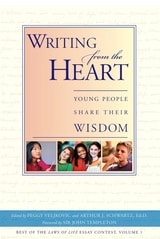
Writing From The Heart
Young People Share Their WisdomPeggy Veljkovic
Templeton Press, 2000
Writing from the Heart offers us a unique window into what young people have learned about life. This collection of essays captures the values that matter most to teens—values such as love, perseverance, family, and helping others—in their own words. As the young writers reflect on their own experience, readers of all ages will be inspired by their wisdom and hope.
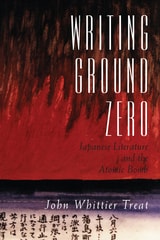
Writing Ground Zero
Japanese Literature and the Atomic BombJohn Whittier Treat
University of Chicago Press, 1994
Treat recounts the controversial history of Japanese public discourse around Hiroshima and Nagasaki—a discourse alternatively celebrated and censored—from August 6, 1945, to the present day. He includes works from the earliest survivor writers, including Hara Tamiki and Ota Yoko, to such important Japanese intellectuals today as Oe Kenzaburo and Oda Makoto. Treat argues that the insights of Japanese writers into the lessons of modern atrocity share much in common with those of Holocaust writers in Europe and the practitioners of recent poststructuralist nuclear criticism in America. In chapters that take up writers as diverse as Hiroshima poets, Tokyo critics, and Nagasaki women novelists, he explores the implications of these works for critical, literary, and cultural theory.
Treat summarizes the Japanese contribution to such ongoing international debates as the crisis of modern ethics, the relationship of experience to memory, and the possibility of writing history. This Japanese perspective, Treat shows, both confirms and amends many of the assertions made in the West on the shift that the death camps and nuclear weapons have jointly signaled for the modern world and for the future.
Writing Ground Zero will be read not only by students of Japan, but by all readers concerned with the fate of culture after the fact of nuclear war in our time.
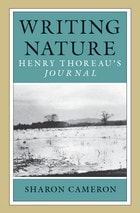
Writing Nature
Henry Thoreau's JournalSharon Cameron
University of Chicago Press, 1989
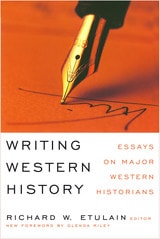
Writing Western History
Essays on Major Western HistoriansRichard W. Etulain
University of Nevada Press, 2002
Writing in America
Fischer, John
Rutgers University Press, 2018
In this newly reissued volume in the Rutgers University Press Classics Imprint, Writing in America proves to be as stimulating as it was in 1960. Here, writers including Robert Brustein, Stanley Kunitz, and C.P. Snow examine the state of writing in American novels, films, and television candidly and critically. The result is a collection of essays that showcase a first-rate and highly entertaining piece of reporting on the American literary scene that resonate in 2017.

Writing in Disguise
Academic Life in SubordinationTerry Caesar
Ohio University Press, 1998
All of these texts have in common the imperative of disguise, represented as the most crucial consequence of dominant discourse, within which subordination might speak only by knowing its place, and write only by producing hidden transcripts.
Caustic, pointed, satiric, Writing in Disguise is an engaging critique of aspects of academia involving the misuse, misappropriation, and misappreciation of verbal communication in its many guises.
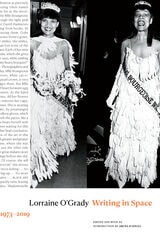
Writing in Space, 1973–2019
Lorraine O'Grady
Duke University Press, 2020
Writing in the Workplace
New Research PerspectivesEdited by Rachel Spilka
Southern Illinois University Press, 1998
Rachel Spilka brings together nineteen previously unpublished essays concerned with ways in which recent research on workplace writing can contribute to the future direction of the discipline of technical and professional writing. Hers is the first anthology on the social perspective in professional writing to feature focused discussions of research advances and future research directions.
The workplace as defined by this volume is a widely diverse area that encompasses small companies and large corporations, public agencies and private firms, and a varied population of writers—engineers, managers, nurses, social workers, government employees, and others. Because much research has been conducted on the relationship between workplace writing and social contexts since the ground~breaking 1985 publication of Odell and Goswami’s Writing in Nonacademic Settings, Spilka contends that this is an appropriate time for the professional writing community to consider what it has learned to date and where it should be heading next in light of these recent discoveries. She argues that now professional writers should try to ask better questions and to define new directions.
Spilka breaks the anthology into two parts. Part 1 is a collection of ten essays presenting textual and qualitative studies conducted by the authors in the late l980s on workplace writing. Spilka has chosen these studies as representative of the finest research being conducted in professional writing that can serve as models for current and future researchers in the field. Barbara Couture, Jone Rymer, and Barbara Mirel report on surveys they conducted relying on the social perspective both to design survey instruments and to analyze survey data. Jamie MacKinnon assesses a qualitative study describing what workplace professionals might need to learn about social contexts and workplace writing. Susan Kleimann and editor Rachel Spilka discuss multiple case studies they conducted that help explain the value during the composing process of social interaction among the participants of a rhetorical situation. Judy Z. Segal explores the negotiation between the character of Western medicine and the nature of its professional discourse. Jennie Dautermann describes a qualitative study in which a group of nurses "claimed the authority to restructure their own procedural information system." Anthony Paré finds in a case study of social workers that writing can be constrained heavily by socially imposed limitations and restrictions. Graham Smart describes a study of discourse conventions in a financial institution. Geoffrey A. Cross reports on a case study of the interrelation of genre, context, and process in the group production of an executive letter and report.
Writing the Poetic Soul of Philosophy
Essays in Honor of Michael DavisDenise Schaeffer
St. Augustine's Press, 2017
What is it about the nature of “soul” that makes it so difficult to adequately capture its complexity in a strictly discursive account? Why do some of the most profound human experiences elude our attempts to theorize them? How can a written document do justice to the dynamic activity of thinking, as opposed to merely presenting a collection of thoughts-as-artifacts? Finally, what can we learn about the activity of philosophizing, and about the human soul, by reflecting on the possibilities and limitations of writing?
These concerns, in various forms and in different registers, have preoccupied Michael Davis throughout his distinguished career. This volume is in honor of, and in dialogue with, Davis’s work, which spans ancient philosophy and literature, continental philosophy and political philosophy. It includes original essays by numerous distinguished scholars in the fields of philosophy and political science. The remarkable range and caliber of the contributions attest to the breadth and depth of Davis’s influence.
The essays in Part I of the volume explore the nature of soul through the lens of tragedy. Part II consists of three essays that explore the human longing for perfect knowledge and completion—and the obstacles to the fulfilment of that longing—in relation to the divine. In Part III, the essays address the distinctive challenges of the political sphere and philosophy’s relation to it. And while the relationship between philosophy and poetry is an implicit theme throughout the volume, the essays in Part IV focus directly on philosophy’s aestheticizing tendencies. Many different philosophical and literary works are discussed throughout these chapters, including ancient works such as Plato’s Republic, Euthydemus and Laws, Homer’s Iliad, and Euripides’ Trojan Women, as well as works by modern philosophers such as Rousseau, Kant, Hegel, Kierkegaard and Nietzsche. In addition, three essays analyze some of Shakespeare’s plays in relation to the thought of Plato and Machiavelli. All of the essays are thematically linked by a common thread as they attend to the poetic dimension of philosophical thinking.
Michael Davis is Professor of Philosophy at Sarah Lawrence College, where he has taught since 1977 and has been the Sarah Yates Exley Chair in Teaching Excellence (2003-2005). He has also taught on the graduate faculty at Fordham University and the New School for Social Research. He is the author of numerous articles and books, which include: Ancient Tragedy and the Origins of Modern Science; The Poetry of Philosophy: On Aristotle’s Poetics; The Politics of Philosophy: A Commentary on Aristotle’s Politics; The Autobiography of Philosophy; Rousseau’s The Reveries of the Solitary Walker; Wonderlust: Ruminations on Liberal Education; and The Soul of the Greeks: An Inquiry. He is also co-translator (with Seth Benardete) of Aristotle’s On Poetics.
Contributors include: Abraham Anderson, Jonathan Badger, Robert Berman, Ronna Burger, Kenneth DeLuca, Gwenda-lin Grewal, Scott Hemmenway, Paul Kirkland, Mary Nichols, Denise Schaeffer, Paul Stern, Richard Velkley, Lisa Pace Vetter, Ann Ward, Lee Ward, Catherine Zuckert and Michael Zuckert.
About the Editor: Denise Schaeffer is Professor of Political Science at the College of the Holy Cross. She is the author of Rousseau on Education, Freedom and Judgment and contributing co-editor (with Christopher Dustin) of Socratic Philosophy and Its Others. She is co-editor (with Gregory McBrayer and Mary P. Nichols) of the Focus Philosophical Library edition of Plato’s Euthydemus, for which she authored the Introduction and co-authored the Interpretive Essay.
Writings of Warner Mifflin
Forgotten Quaker Abolitionist of the Revolutionary EraGary B. Nash
University of Delaware Press, 2021
Written in the Sky
Lessons of a Southern DaughterPatricia Foster
University of Alabama Press, 2023
In Written in the Sky: Lessons of a Southern Daughter, Patricia Foster presents a double portrait of place and family, a book of deeply personal essays that interrogate the legacy of racial tensions in the South, the constriction of caste and gender, and the ways race, class, and white privilege are entwined in her family story. After interviewing girls at Booker T. Washington High School in Tuskegee, Alabama, visiting the National Memorial for Peace and Justice in Montgomery, Alabama, and exploring Africatown in Plateau, Alabama, Patricia Foster was moved to reflect on the racial scars and crossroads in her southern past as well as to reckon with the intimate places of her own wounding and grief.
The story of place, she discovers, emerges not only from family histories and cultural traditions but also from wrestling with a culture’s irreconcilable ideas: the hard push to determine what matters. What matters to her are the shadow stories beneath our mythologies, the complicated and radiant narratives that must be excavated and reckoned with, stories that have no neat or binary resolution, stories full of luminous moments and riveting facts, and stories where the secrets hide. Written in the Sky presents the best of nonfiction storytelling: searingly honest portraits, dramatic encounters, and lyrical narratives that will interest teachers and students as well as social justice advocates, policymakers, and readers compelled by stories of awakening and the white-hot beauty of language.
Wyeth People
Gene Logsdon
Ohio University Press, 2003