Results by title
1214 books match the query 'Subjects & Themes' and 59 start with w
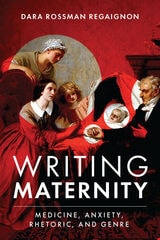
Writing Maternity
Medicine, Anxiety, Rhetoric, and GenreDara Rossman Regaignon
The Ohio State University Press, 2021
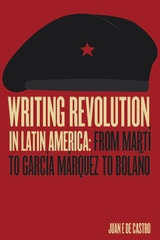
Writing Revolution in Latin America
From Martí to García Márquez to BolañoJuan E. De Castro
Vanderbilt University Press, 2019
In the politically volatile period from the 1960s through the end of the twentieth century, Latin American authors were in direct dialogue with the violent realities of their time and place. Writing Revolution in Latin America is a chronological study of the way revolution and revolutionary thinking is depicted in the fiction composed from the eye of the storm.
From Mexico to Chile, the gradual ideological evolution from a revolutionary to a neoliberal mainstream was a consequence of, on the one hand, the political hardening of the Cuban Revolution beginning in the late 1960s, and, on the other, the repression, dictatorships, and economic crises of the 1970s and beyond. Not only was socialist revolution far from the utopia many believed, but the notion that guerrilla uprisings would lead to an easy socialism proved to be unfounded. Similarly, the repressive Pinochet dictatorship in Chile led to unfathomable tragedy and social mutation.
This double-edged phenomenon of revolutionary disillusionment became highly personal for Latin American authors inside and outside Castro's and Pinochet's dominion. Revolution was more than a foreign affair, it was the stuff of everyday life and, therefore, of fiction.
Juan De Castro's expansive study begins ahead of the century with José Martí in Cuba and continues through the likes of Mario Vargas Llosa in Peru, Gabriel García Márquez in Colombia, and Roberto Bolaño in Mexico (by way of Chile). The various, often contradictory ways the authors convey this precarious historical moment speaks in equal measure to the social circumstances into which these authors were thrust and to the fundamental differences in the ways they themselves witnessed history.
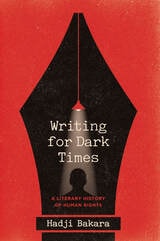
Writing for Dark Times
A Literary History of Human RightsHadji Bakara
University of Chicago Press, 2026
A history of human rights that places writers and their ideas at its center.
At Amnesty International’s headquarters in London hangs a large copy of Seamus Heaney’s “From the Republic of Conscience,” a poem that touches on neither imprisonment nor torture but instead suggests that acts of literary creation are themselves a form of human rights work, important for bringing new things into the world rather than removing evil from it. Why does a poem about the power of creation stand at the center of an organization known for publicizing atrocity? What can it tell us about human rights?
Hadji Bakara’s Writing for Dark Times tells the story of the writer’s distinct place in the history of human rights. It argues that the relationship between the creative work of writing and the pursuit of universal rights is an important but misunderstood dimension of both literary and human rights history over the past century. Following a diverse cast of writers from the First World War through the end of the Cold War, including Bertolt Brecht, Anna Seghers, Archibald MacLeish, Albert Camus, Czeslaw Milosz, Ngũgĩ wa Thiong’o, Seamus Heaney, Nadine Gordimer, and J.M. Coetzee, Bakara shows how their efforts to theorize and support human rights were bound up with changing ideas about the place of their own work in the world––the work of writing. And across the twentieth century, the book reveals, two central ideas about writing took shape around the politics of human rights. Writing creates something new and inspires the will for change.
For those who study human rights, Writing for Dark Times offers both an archive and a method for better understanding the influence of writers on the historical development of the concept. For those in literary studies, the book provides a new account of how human rights shaped the politics of twentieth-century literature. Few books have made as vivid a case for literature’s relevance to our most exalted ideals and institutions.
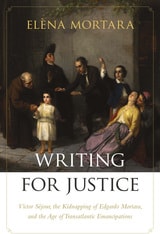
Writing for Justice
Victor Séjour, the Kidnapping of Edgardo Mortara, and the Age of Transatlantic EmancipationsElèna Mortara
Dartmouth College Press, 2015
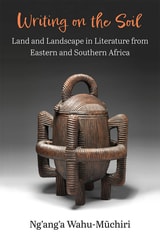
Writing on the Soil
Land and Landscape in Literature from Eastern and Southern AfricaNg’ang’a Wahu-Muchiri
University of Michigan Press, 2023
Across contiguous nation-states in Eastern Africa, the geographic proximity disguises an ideological complexity. Land has meant something fundamental in the sociocultural history of each country. Those concerns, however, have manifested into varied political events, and the range of struggles over land has spawned a multiplicity of literary interventions. While Kenya and Uganda were both British colonies, Kenya's experience of settler land alienation made for a much more violent response against efforts at political independence. Uganda's relatively calm unyoking from the colonial burden, however, led to a tumultuous post-independence. Tanzania, too, like Kenya and Uganda, resisted British colonial administration—after Germany's defeat in World War 1.
In Writing on the Soil, author Ng’ang’a Wahu-Mũchiriargues that representations of land and landscape perform significant metaphorical labor in African literatures, and this argument evolves across several geographical spaces. Each chapter's analysis is grounded in a particular locale: western Kenya, colonial Tanganyika, post-independence Tanzania, Zimbabwe, Nairobi, Dar es Salaam, Anam Ka'alakol (Lake Turkana), Kampala, and Kitgum in Northern Uganda. Moreover, each section contributes to a deeper understanding of the aesthetic choices that authors make when deploying tropes revolving around land, landscape, and the environment. Mũchiri disentangles the numerous connections between geography and geopolitical space on the one hand, and ideology and cultural analysis on the other. This book embodies a multi-layered argument in the sphere of African critical scholarship, while adding to the growing field of African land rights scholarship—an approach that foregrounds the close reading of Africa’s literary canon.
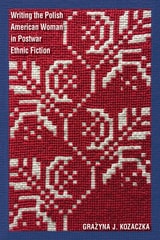
Writing the Polish American Woman in Postwar Ethnic Fiction
Grazyna J. Kozaczka
Ohio University Press, 2019
Winner of the 2019 Oskar Halecki Prize (Polish American Historical Association)
Though often unnoticed by scholars of literature and history, Polish American women have for decades been fighting back against the patriarchy they encountered in America and the patriarchy that followed them from Poland. Through close readings of several Polish American and Polish Canadian novels and short stories published over the last seven decades, Writing the Polish American Woman in Postwar Ethnic Fiction traces the evolution of this struggle and women’s efforts to construct gendered and classed ethnicity.
Focusing predominantly on work by North American born and immigrant authors that represents the Polish American Catholic tradition, Grażyna J. Kozaczka puts texts in conversation with other American ethnic literatures. She positions ethnic gender construction and performance at an intersection of social class, race, and sex. She explores the marginalization of ethnic female characters in terms of migration studies, theories of whiteness, and the history of feminist discourse. Writing the Polish American Woman in Postwar Ethnic Fiction tells the complex story of how Polish American women writers have shown a strong awareness of their oppression and sought empowerment through resistive and transgressive behaviors.
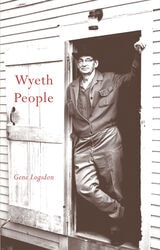
Wyeth People
Gene Logsdon
Ohio University Press, 2003
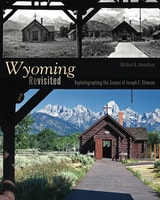
Wyoming Revisited
Rephotographing the Scenes of Joseph E. StimsonMichael A. Amundson
University Press of Colorado, 2014
The 117 locations feature street views of Wyoming towns and cities, as well as views from the state's famous natural landmarks like Yellowstone National Park, Grand Teton National Park, Devil's Tower National Monument, Hot Springs State Park, and Big Horn and Shoshone National Forests. In addition, Amundson provides six in-depth essays that explore the life of Joseph E. Stimson, the rephotographic process and how it has evolved, and how repeat photography can be used to understand history, landscape, historic preservation, and globalization.
Wyoming Revisited highlights the historic evolution of the American West over the past century and showcases the significant changes that have occurred over the past twenty-five years. This book will appeal to photographers, historians of the American West, and anyone interested in Wyoming's history or landscape.
The publication of this book is supported in part by the Wyoming Cultural Trust Fund.
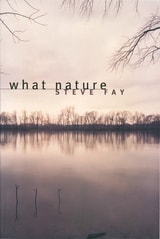
what nature
PoemsSteve Fay
Northwestern University Press, 1998