3258 books match the query 'Art' and 137 start with w

cover of World Film Locations: London

World Film Locations

London

Edited by Neil Mitchell

Intellect Books, 2011

An exciting and visually focused tour of the diverse range of films shot on location in London, World Film Locations: London presents contributions spanning the Victorian era, the swinging ’60s, and the politically charged atmosphere following the 2005 subway bombings. Essays exploring key directors, themes, and historical periods are complemented by reviews of important scenes that offer particular insight into London's relationship to cinema. The book is illustrated throughout with full-color film stills and photographs of cinematic landmarks as they appear now—as well as city maps to aid those keen to investigate them.

From Terror on the Underground to Thames Tales to Richard Curtis's affectionate portrayal of the city in Love Actually, this user-friendly guide explores the diversity and distinctiveness of films shot in location in London.

[more]
cover of World Film Locations: Los Angeles

World Film Locations

Los Angeles

Edited by Gabriel Solomons

Intellect Books, 2011

The heart of Hollywood’s star-studded film industry for more than a century, Los Angeles and its abundant and ever-changing locales—from the Santa Monica Pier to the infamous and now-defunct Ambassador Hotel—have set the scene for a wide variety of cinematic treasures, from Chinatown to Forrest Gump, Falling Down to the coming-of-age classic Boyz n The Hood. This volume marks an engaging citywide tour of the many films shot on location in this birthplace of cinema and the screen spectacle.
 
World Film Locations: Los Angeles pairs fifty incisive synopses of carefully chosen film scenes—both famous and lesser-known—with an accompanying array of evocative full-color film stills, demonstrating how motion pictures have contributed to the multifarious role of the city in our collective consciousness, as well as how key cinematic moments reveal aspects of its life and culture that are otherwise largely hidden from view. Insightful essays throughout turn the spotlight on the important directors, thematic elements, and historical periods that provide insight into Los Angeles and its vibrant cinematic culture. Rounding out this information are city maps with information on how to locate key features, as well as photographs showing featured locations as they appear now.
 
A guided tour of the City of Angels conducted by the likes of Robert Altman, Nicholas Ray, Michael Mann, and Roman Polanski, World Film Locations: Los Angeles is moreover a concise and user-friendly guide to how Los Angeles has captured the imaginations of both filmmakers and those of us sitting transfixed in theatres worldwide.
[more]
cover of World Film Locations: Madrid

World Film Locations

Madrid

Edited by Lorenzo J. Torres Hortelano

Intellect Books, 2011

From Death of a Cyclist to Open Your Eyes to The Limits of Control, Madrid has graced the big screen countless times across a wide variety of genres enacted by a similarly eclectic array of directors, including Carlos Saura, Luis Buñuel, and Pedro Almodovar. With the aim of capturing the full range of portrayals of the city onscreen, this volume pairs short synopses of scenes from fifty films with an accompanying array of dynamic full-color film stills. These scenes are set in context through a series of incisive essays that examine significant periods from Madrid’s rich film history, as well as its key industry figures and recurring themes.
 
Packed with fun facts, World Film Locations: Madrid offers a fascinating—and often surprising—tour of the many film representations of Madrid. For jetsetters planning a jaunt to this richly cinematic city, the book also includes photographs of locations as they appear now and city maps with information on how to locate key features.
[more]
cover of World Film Locations: Malta

World Film Locations

Malta

Edited by Jean Pierre Borg and Charlie Cauchi

Intellect Books, 2015

Malta has served as a beautiful backdrop for films for nearly as long as there has been a film industry. This entry in the World Film Locations series traces the history of Malta on screen, from big-budget blockbusters to modest indie pictures. The locations Malta offers range widely, from grand fortified harbors and stunning cliffs to quaint villages and Baroque palaces. That diversity has enabled the island to double for countless locations, including ancient Troy and Alexandria, as well as Greece, Israel, and other Mediterranean and Middle Eastern regions, while its well-known water tanks have proved to be perfect for shooting ocean scenes. Packed with illustrations, World Film Locations: Malta examines a number of films made in Malta to date, and will be a must-read for tourists, film buffs, and scholars alike.
[more]
cover of World Film Locations: Marseilles

World Film Locations

Marseilles

Edited by Marcelline Block

Intellect Books, 2013

As France’s oldest city, Marseilles has a significant cinematic culture, dating back to the 1890s when the Lumière brothers shot many films there. Due to its prolific film industry in the 1920s, Marseilles was referred to as “the French Los Angeles.”

World Film Locations: Marseilles examines the representations of this port city in cinema, through essays and film scene reviews devoted to an exploration of its topography as depicted by Jean Epstein, Jean-Luc Godard, Jean-Pierre Melville, Jean Renoir, Jean-Jacques Beineix, and many others. This volume showcases Marseilles’s diversity as articulated onscreen: from the winding streets of the Panier to the Old Port’s noisy markets, from the bustling Canebière to the dockyards of the Grand Port Maritime, from the cliffs of Provençal encircling the city to sun-drenched calanques leading to the dazzling cerulean sea. World Film Locations: Marseilles features maps of film scenes, high-quality screengrabs, and images of movie locations as they appear today, accompanied by original texts penned by leading international film scholars and critics and an interview with Marseillais director Robert Guédiguian. Marseilles has been named a 2013–14 European Capital of Culture and this book is a fitting and timely tribute.

[more]
cover of World Film Locations: Melbourne

World Film Locations

Melbourne

Edited by Neil Mitchell

Intellect Books, 2012

Tracing cinematic depictions of life in Melbourne from the Victorian era to the present day, World Film Locations: Melbourne serves as an illuminating and visually rich guide to films set wholly or partially in one of Australia’s most diverse and culturally important cities.
 
In a series of short analyses of iconic scenes and longer essays focusing on key directors, recurring themes, and notable locations, the contributors examine the city’s relationship to cinema from a variety of angles. Covering everything from sporting dramas to representations of the outlaw Ned Kelly to the coming-of-age films of the 1980s and beyond, this accessible trip around the birthplace of Australian cinema validates Melbourne’s reputation as a creative hotbed and reveals the true significance of the films and filmmakers associated with the city. Illustrated throughout with full-color film stills and photographs of the locations as they are now, World Film Locations: Melbourne also contains city maps for those wishing to explore Melbourne’s cinematic streets with this volume’s expert guidance.
[more]
cover of World Film Locations: Moscow

World Film Locations

Moscow

Edited by Birgit Beumers

Intellect Books, 2014

A megalopolis of more than twelve million inhabitants, Moscow is a city with a rich and varied history. In 1918, following the Revolution, Moscow became the capital of the Soviet Union, and it remained capital of the Russian Federation after 1991. Moscow’s status as capital, from 1918 to the present, more or less coincides with its life on the silver screen, since there are very few preserved filmic depictions of the city from pre-Revolutionary years. In the Soviet era, film often served propaganda purposes; therefore, the image of Moscow on celluloid echoes the political ambitions of the country, and film locations and settings reflect the cultural agenda of the times.

World Film Locations: Moscow compares and contrasts images from the past and present, giving the forty-six carefully selected scene reviews and seven spotlight essays a historical focus. With an inside look at the city’s film studio, Mosfilm, the book is essential for all armchair travelers and cinephiles alike.
[more]
cover of World Film Locations: Mumbai

World Film Locations

Mumbai

Edited by Helio San Miguel

Intellect Books, 2012

 
Mumbai, formerly known as Bombay, is a megalopolis of dramatic diversity and heartbreaking extremes, with wealthy areas located just steps away from the searing poverty of its huge slums. The home of Bollywood, Mumbai is also the epicenter of India’s film industry and its foremost film location. Through the lens of Mumbai’s manifold cinematic representations, World Film Locations: Mumbai explores the sheer complexity of this incomparable city.
 
This volume comprises insightful essays and beautifully illustrated scene analyses by leading scholars and film critics who explore the ways filmmakers from India and abroad have represented Mumbai’s astonishing urban and human landscape. Taken together, these contributions show how movies have created in the imaginations of billions of spectators the vivid image of a city that constantly tempts people to escape their dreary existence and offers them chances to fulfill their dreams. The first book to focus on cinematic representations of what is perhaps the world’s most-filmed city, World Film Locations: Mumbai will be necessary reading for scholars and film buffs alike.
[more]
cover of World Film Locations: New Orleans

World Film Locations

New Orleans

Edited by Scott Jordan Harris

Intellect Books, 2012

With more and more filmmakers taking advantage of its rich and varied settings, New Orleans has earned star-studded status as the “Hollywood of the South.” From the big-screen adaptation of the stage classic A Streetcar Named Desire to the Elvis Presley musical King Creole, many well-known films have a special connection with the Big Easy, and this user-friendly guide explores the integral role of New Orleans in American film history.
 
World Film Locations: New Orleans features essays that reflect on the city’s long-standing relationship with the film industry. Among the topics discussed are popular depictions of Hurricane Katrina on film, the prevalence of the supernatural in New Orleans cinema, and recent changes to city ordinances that have made New Orleans even more popular as a film destination. As the most frequently filmed area of New Orleans, the French Quarter is given particular attention in this volume with synopses of scenes shot or set there, including The Big Easy, Interview with the Vampire, and the much-loved Bond film Live and Let Die. Additional synopses highlight numerous other film scenes spanning the city, and all are accompanied by evocative full-color stills.
 
The historic neighborhoods and landmarks of New Orleans have provided the backdrop for some of the most memorable moments in film history, and World Film Locations: New Orleans offers fans a guided tour of the many films that made the city their home.
[more]
cover of World Film Locations: New York

World Film Locations

New York

Edited by Scott Jordan Harris

Intellect Books, 2011

Be they period films, cult classics, or elaborate directorial love letters, New York City has played—and continues to play—a central role in the imaginations of filmmakers and moviegoers worldwide. The stomping grounds of King Kong, it is also the place where young Jakie Rabinowitz of The Jazz Singer realizes his Broadway dream. Later, it is the backdrop against which taxi driver Travis Bickle exacts a grisly revenge.

The inaugural volume in an exciting new series from Intellect, World Film Locations: New York pairs incisive profiles of quintessential New York filmmakers—among them Woody Allen, Martin Scorsese, Sidney Lumet, and Spike Lee—with essays on key features of the city’s landscape that have appeared on the big screen, from the docks to Coney Island, Times Square to the Statue of Liberty. More than forty-five location-specific scenes from films made and set in New York are separately considered and illustrated with screen shots and photographs of the locations as they appear now. For film fans keen to follow the cinematic trail either physically or in the imagination, this pocket-sized guide also includes city maps with information on how to locate key features.
 
Presenting a varied and thought-provoking collage of the city onscreen—from the silent era to the present—World Film Locations: New York provides a fascinating and historic look back at the rich diversity of locations that have provided the backdrop for some of the most memorable films.
[more]
cover of World Film Locations: Paris

World Film Locations

Paris

Edited by Marcelline Block

Intellect Books, 2011

“We’ll always have Paris,” Humphrey Bogart assures Ingrid Bergman in the oft-quoted farewell scene from Casablanca in which Bogart’s character, hard-hearted restaurateur Rick Blaine, bids former lover Ilsa Lund goodbye. The backdrop against which they first fell in love, Paris later serves as a reminder of their deep mutual longings. And with a host of different realizations by filmmakers from Philip Kaufman to Julien Leclercq to Woody Allen, there is no question that Paris has likewise endured in the memories of cinephiles worldwide.
 
World Film Locations: Paris takes readers on an unforgettable tour of the City of Lights past and present through the many films that have been set there. Along the way, we revisit iconic tourist sites from the Eiffel Tower—whose stairs and crossbars inspired more than one famous chase scene—to the Moulin Rouge overlooking the famously seedy Place Pigalle. Other films explore lesser-known quartiers usually tucked away from the tourist’s admiring gaze. Handsomely illustrated with full-color film stills and contemporary photographs, more than fifty scenes are individually considered with special attention to their use of Paris’s topography as it intersects with characters, narrative, and plot. A host of important genres and cinematic movements are featured, including poetic realism, the New Wave, cinéma-verité, the literary works of the Left Bank Group, and Luc Besson’s slickly stylized cinéma du look. Meanwhile, essays foreground contributions from Francophone African directors and émigré filmmakers.
 
For centuries, Paris has reigned over the popular imagination. For those who have visited or those who have only imagined it through art, literature, and film, World Film Locations: Paris presents a wonder-filled cinematic exploration of the mythical city that fans of French cinema—and new initiates—will appreciate.
[more]
cover of World Film Locations: Prague

World Film Locations

Prague

Edited by Marcelline Block

Intellect Books, 2013

Prague, the “Hollywood of the East,” has played an important role in the history of cinema and World Film Locations: Prague traverses the city’s topography to examine an internationally diverse range of movies made in the Czech capital: landmark early films such as Ecstasy, controversial due to the female nudity that catapulted Hedy Lamarr into stardom in the United States; Steven Soderbergh’s biopic Kafka, starring Jeremy Irons; adaptations of Kafka’s literary works such as The Trial, with a screenplay by Harold Pinter and starring Anthony Hopkins; and action blockbusters like Mission Impossible, The Bourne Identity, and Casino Royale. Exploring legendary Prague landmarks as they appear onscreen—including the Charles Bridge, Old Town, Malá Strana, Liechtenstein Palace, Wenceslas Square, and Prague Castle—the book also discusses the intersection of the capital city and its cinematic representations; Prague and the Czech New Wave; the iconic Barrandov Studios; and the impact of political events such as the Prague Spring, the Soviet Invasion of 1968, and the Velvet Revolution on the city’s film industry. 
An invaluable resource for scholars, students, and aficionados of film and cinematic psychogeography, this collection will be heralded by students of East European literary, cultural, and sociopolitical history.

[more]
cover of World Film Locations: Reykjavík

World Film Locations

Reykjavík

Edited by Jez Conolly and Caroline Whelan

Intellect Books, 2012

Though the creative community of Reykjavík, Iceland, has earned a well-deserved reputation for its unique artistic output—most notably the popular music that has emerged from the city since the 1980s—Reykjavík’s filmmakers have received less attention than they merit. World Film Locations: Reykjavík corrects this imbalance, shedding new light on the role of cinema in a country that, partly because of its small population, produces more films per capita than any other in the world.
 
The contributors to this volume trace cinema in Iceland from the 1979 establishment of the Icelandic Film Fund—before which the country’s film industry barely existed—through today. In a series of illuminating scene reviews, they show how rapidly the city has changed over the past thirty years. In thematic spotlight articles, they go on to explore such topics as the relationship between Iceland and its capital city; youth culture and night life; the relationship between film and the local music community; cinematic representations of Scandinavian crime; and filmmakers’ response to the 2008 banking crisis. Together, these varied contributions show how films shot in Reykjavík have been shaped both by Iceland’s remoteness from the rest of the world and by Icelandic filmmakers’ sense that the city remains forever on the brink of desolate and harsh wilderness.
[more]
cover of World Film Locations: Rome

World Film Locations

Rome

Edited by Gabriel Solomons

Intellect Books, 2014

This volume of the World Film Locations series explores the city of Rome, a city rich in history and culture and imbued with a realism and romanticism that has captured the imaginations of filmmakers throughout the twentieth and twenty-first centuries. With over two and a half thousand years of continuing history, Rome has served as the setting for countless memorable films, creating a backdrop that spans all genres and emotions.

World Film Locations: Rome takes the reader on a cinematic journey through the city with stops at key locations that include the Pantheon, Piazza Navona, Via Veneto, Piazza del Popolo, Sant'Angelo Bridge and, of course, the Trevi Fountain, made famous worldwide in its appearances in Federico Fellini’s La Dolce Vita and Jean Negulesco’s Three Coins in the Fountain. A carefully selected compilation of forty-six key films set in Rome, including The Belly of an Architect, The Facts of Murder, The Bicycle Thief, Roman Holiday, and The Talented Mr. Ripley, is complemented by essays that further examine the relationship between the city and cinema to provide an engaging, colorful, and insightful page-turning journey for both travelers and film buffs alike.
[more]
cover of World Film Locations: San Francisco

World Film Locations

San Francisco

Edited by Scott Jordan Harris

Intellect Books, 2013

An extraordinarily beautiful city that has been celebrated, criticized, and studied in many films, San Francisco is both fragile and robust, at once a site of devastation caused by 1906 earthquake but also a symbol of indomitability in its effort to rebuild afterwards. Its beauty, both natural and manmade, has provided filmmakers with an iconic backdrop since the 1890s, and this guidebook offers an exciting tour through the film scenes and film locations that have made San Francisco irresistible to audiences and auteurs alike.
Gathering more than forty short pieces on specific scenes from San Franciscan films, this book includes essays on topics that dominate the history of filmmaking in the city, from depictions of the Golden Gate Bridge, to the movies Alfred Hitchcock, to the car chases that seem to be mandatory features of any thriller shot there. Some of America’s most famous movies—from Steven Spielberg’s Raiders of the Lost Ark to Hitchcock’s Vertigo to Don Siegel’s Dirty Harry —are celebrated alongside smaller movies and documentaries, such as The Wild Parrots of Telegraph Hill, to paint a complete picture of San Francisco in film. A range of expert contributors, including several members of the San Francisco Film Critics Circle, discuss a range of films from many genres and decades, from nineteenth-century silents to twentieth-century blockbusters

Audiences across the world, as well as many of the world’s greatest film directors—including Buster Keaton, Orson Welles, George Lucas, Francis Ford Coppola, David Fincher, and Steven Soderbergh—have been seduced by San Francisco. This book is the ideal escape to the city by the bay for arm chair travelers and cinephiles alike.

[more]
cover of World Film Locations: Shanghai

World Film Locations

Shanghai

Edited by John Berra and Wei Ju

Intellect Books, 2014

Celebrating Shanghai’s rich cinematic history, the films covered here represent a lengthy time period, from the first Golden Age of Chinese Cinema in the 1930s to the city’s status as an international production hub in 2013. Given the enduring status of Shanghai as the “Paris of the East,” World Film Locations: Shanghai emphasizes the city’s cosmopolitan glamour through locations that are steeped in cinematic exoticism, while also probing the reality behind the image by investigating its backstreets and residential zones. To facilitate this study of Shanghai’s dual identity through reference to film locations, the book includes films from both the commercial and independent sectors, with a balance between images captured by local filmmakers and the visions of Western directors who have also utilized the city for their projects.

With numerous essays that reflect Shanghai’s relationship to film and scene reviews of such iconic titles as Street Angel, Temptress Moon, Kung Fu Hustle, and Skyfall, World Film Locations: Shanghai is essential reading for all scholars of China’s urban culture.
[more]
cover of World Film Locations: Singapore

World Film Locations

Singapore

Edited by Lorenzo Codelli

Intellect Books, 2014

A vibrant city and country nestled at the foot of the Malaysian peninsula, Singapore has long been a crossroads, a stopping point, and a cultural hub where goods, inventions, and ideas are shared and traded.

Though Singapore was home to a flourishing Chinese and Malay film industry in the 1950s and 1960s, between independence in 1965 and the early 1990s, few movies were made there. A new era for cinema in the sovereign city-state started with the international recognition of Eric Khoo’s first features, followed by a New Wave comprised of graduates from local film schools. In recent years the Singapore film industry has produced commercially successful fare, such as the horror movie The Maid, as well as more artistic films like Sandcastle, the first Singaporean film to be selected for International Critic’s Week at Cannes, and Ilo Ilo, which won the Caméra d’or at Cannes in 2013.  Covering the myths that surround Singaporean film and exploring the realities of the movies that come from this exciting city, World Film Locations: Singapore introduces armchair travelers to a rich, but less known, national cinema.
[more]
cover of World Film Locations: São Paulo

World Film Locations

São Paulo

Edited by Natália Pinazza and Louis Bayman

Intellect Books, 2013

São Paulo is the largest city in South America and the powerhouse of Brazil’s economy. A multi-racial metropolis with a diverse population of Asian, Arabic, and European immigrants as well as migrants from other parts of Brazil, it is a global city with international reach. Films set in São Paulo often replace the postcard images of beautiful tropical beaches and laidback lifestyles with working environments and the search for better opportunities. Bikinis and flip flops give way to urban subcultures, sport, entertainment, and artistic movements. The ability to transcend national boundaries, and its resistance to stereotypical images of an “exotic” Brazil, make São Paulo a fascinating location in which to explore Brazil’s changing economic and cultural landscapes. 
The first comprehensive guide to filmic representations of São Paulo, this book serves as an introduction to the city for film enthusiasts, visitors, and tourists while simultaneously opening scholarly debates on global concerns such as marginalization, rapid urbanization, and child poverty.

[more]
cover of World Film Locations: Tokyo

World Film Locations

Tokyo

Edited by Chris MaGee

Intellect Books, 2011

From Tokyo Story to Godzilla, You Only Live Twice to Enter the Void, World Film Locations: Tokyo presents a kaleidoscopic view of one of the world’s most exciting cities through the lens of cinema. Illustrated throughout with dynamic screen shots, this volume in Intellect’s World Film Locations series spotlights fifty key scenes from classic and contemporary films shot in Tokyo, accompanied by insightful essays that take us from the wooden streets of pre-nineteenth-century Edo to the sprawling “what-if” megalopolis of science fiction and fantasy anime. Important themes and players—among them Akira Kurosawa, Samuel Fuller, and Sofia Coppola—are individually considered. For the film scholar, or for all those who love Japanese cinema and want to learn more, World Film Locations: Tokyo will be an essential guide.

[more]
cover of World Film Locations: Toronto

World Film Locations

Toronto

Edited by Tom Ue

Intellect Books, 2014

Toronto is a changing city that has been a source of reflection and inspiration to writers and artists whose work focuses on the conditions and prospects of human life. A city on the move, it demands policies and regulation, and it offers the pleasures and perils of the massive and the anonymous. As a site of study, the city is inherently multidisciplinary, with natural ties to history, geography, sociology, architecture, art history, literature, and many other fields.

World Film Locations: Toronto explores and reveals the relationship between the city and cinema using a predominately visual approach. The juxtaposition of the images used in combination with insightful essays helps to demonstrate the role that the city has played in a number of hit films, including Cinderella Man, American Psycho, and X-Men and encourages the reader to frame an understanding of Toronto and the world around us. The contributors trace Toronto’s emergence as an international city and demonstrate the narrative interests that it has continued to inspire among filmmakers, both Canadian and international.

With support from experts in Canadian studies, the book’s selection of films successfully shows the many facets of Toronto and also provides insider’s access to a number of sites that are often left out of scholarship on Toronto in films, such as the Toronto International Film Festival. The 2014 release of this attractive volume will be a particularly welcome addition to the international celebrations of the city’s 180th anniversary.
[more]
cover of World Film Locations: Vancouver

World Film Locations

Vancouver

Edited by Rachel Walls

Intellect Books, 2013

Vancouver, the fourth largest film and television production center in North America, has hosted Hollywood filmmakers from Robert Altman and Dennis Hopper to Jason Reitman and Brad Bird, and is home to independent talent such as Bruce Sweeney and Mina Shum. World Film Locations: Vancouver offers insight into how so-called “runaway” productions from Hollywood use Vancouver as a stand-in for other locations and it highlights the work of Canadian filmmakers who deserve more attention. Thirty-eight analyses of different film scenes reveal the cinematic city in its myriad forms, while spotlight essays provide insight into the creativity and contradictions of Vancouver’s film industry throughout the ages. The volume presents Vancouver’s rich diversity and complexity, where magnificent marine and mountain views are both showcased and masked, downtown landmarks provide the backdrop for thrilling sequences, and lesser-known neighborhoods frame intriguing characters and plotlines. This book offers new perspectives on the relationship between the movies and the metropolis.

[more]
cover of World Film Locations: Venice

World Film Locations

Venice

Edited by Michael Pigott

Intellect Books, 2013

This book explores the rich history of films that have used the floating city as evocative backdrop and integral character. Few cities are as densely packed with picturesque cinematic locations. Extensively illustrated with maps, film stills, and present-day location photos, this book provides both a colorful guide to, and an incisive examination of, Venice on film. It contains insightful film entries describing carefully chosen scenes from each film, as well as six thematic essays, written by an impressive international selection of film critics, academics, and Venice experts. The grand and familiar tourist spots take on new significances, and the book highlights less well-known spots beyond the tourist trail, including gondola repair yards and legendary, but well-hidden, restaurants. From one of the earliest mobile shots in film history—a voyage up the Grand Canal shot in 1896—to classic depictions of the city like Summertime, Death in Venice, and Don’t Look Now, as well as recent big budget productions such as The Tourist, this book spans the history of filmmaking in Venice.

[more]
cover of World Film Locations: Vienna

World Film Locations

Vienna

Edited by Robert Dassanowsky

Intellect Books, 2012

Vienna appears in cinema as, among other things, a historical crossroads, a source of great music, and a site of world-famous architecture ranging from gothic cathedrals and baroque palaces to landmark modern structures. A panorama that encompasses all these perspectives, World Film Locations: Vienna sheds new light on the movies shot in the former imperial capital—and on the city itself.

The first English-language book to explore Vienna’s relationship with film beyond the waltz fantasies once shot in studios around the world, this volume shows how specific urban sites contribute to films that, in turn, play a role in our changing ideas about the city. In addition to reviews of key scenes from forty-six films from the silent era to the present, contributors explore such wide-ranging topics as the Austro-Hungarian Empire as cinematic myth; the Viennese film and Golden Age Hollywood; Jewish filmmakers and their take on lost cultural imagery; postwar nation building through film: and the startling “other Vienna” in the New Wave films of Michael Haneke, Barbara Albert, Ulrich Seidl, and Götz Spielmann. Illuminating the rich multicultural cinematic history that eventually gave rise to the new Austrian films that began to capture international attention more than a decade ago, World Film Locations: Vienna will fascinate readers interested in film, art, architecture, literature, music, Jewish studies, or Central European history.
[more]
cover of World Film Locations: Washington D.C.

World Film Locations

Washington D.C.

Edited by Katherine Larsen

Intellect Books, 2015

Freedom and democracy. Bills and laws. Bureaucracy and red tape. Washington, DC, the capital of the United States, is known for many things, mostof them related to the inner workings of the government. But it is also a city of carefully planned parks, trees exploding with cherry blossoms in spring, and bright sunshine polishing the gleaming white of stately memorials. With no shortage of iconic American landscapes, such as the vast National Mall; buildings, from the White House and the Capitol to the Watergate Hotel and the Kennedy Center for the Performing Arts; and monuments, including the Washington Monument and the Vietnam Veterans Memorial, it is at once synonymous with the country it governs and a world apart.
This friction animates and attracts filmmakers, who use the District's landmarks as a shorthand to express and investigate contemporary ideals and concerns about American society. Films set there both celebrate and castigate the grand American experiment it symbolizes. From Frank Capra’s 1939 Mr. Smith Goes to Washington to the alien invasion blockbuster Independence Day, films set in Washington depict our most ardent hopes and bring to life our darkest fears.
World Film Locations: Washington, D.C., collects essays and articles about Washington film history and locations. Featuring explorations of carefully chosen film scenes and key historical periods, the book examines themes, directors, and depictions and is illustrated with evocative movie stills, city maps, and location photographs. Taken as a whole, this is essential reading for any cinephile who has ever wondered how a bill becomes a law.
[more]
cover of World-Wide-Walks: Peter d'Agostino: Crossing Natural-Cultural-Virtual Frontiers

World-Wide-Walks

Peter d'Agostino: Crossing Natural-Cultural-Virtual Frontiers

Edited by Peter d'Agostino and David Tafler

Intellect Books, 2018
This book presents Peter d'Agostino's World-Wide-Walks project, providing a unique perspective on walking practices across time and place considered through the framework of evolving technologies and changes in climate. Performed on six continents during the past five decades, d’Agostino’s work lays a groundwork for considering walks as portals for crossing natural, cultural, and virtual frontiers.  Broad in scope, it addresses topics ranging from historical concerns including traditional Australian Aboriginal rites of passage and the exploits of explorers such as John Ledyard, to artists’ walks and related themes covered in the mass media in recent years. D’Agostino’s work shows that the act of walking places the individual within a world of empirical awareness, statistical knowledge, expectation, and surprise through phenomena like anticipating unknown encounters around the bend. In mediating the frontiers of human knowledge, walking and other forms of exploration remain a critical means of engaging global challenges, especially notable now as environmental boundaries are undergoing radical and potential cataclysmic change.
[more]
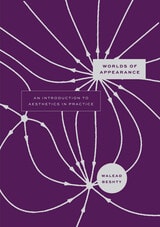
cover of Worlds of Appearance: An Introduction to Aesthetics in Practice

Worlds of Appearance

An Introduction to Aesthetics in Practice

Walead Beshty

University of Chicago Press, 2026

An accessible primer on aesthetics in art and everyday life, written by artist and scholar Walead Beshty. 

In this general guide to the foundations of aesthetics, Walead Beshty introduces the complexities of aesthetics through succinct language and real-world examples, presenting an introductory theory of how the world becomes known to us through our senses and how that knowledge in turn builds our experience of everything around us.

Considering aesthetics on both a practical and a theoretical level, Worlds of Appearance asserts that art and aesthetics are inherently political, composing a fundamental form of communication and a means by which we can imagine the very nature of what can be experienced, sensed, and expressed. Aesthetics, argues Beshty, is a corporeal and material area of study, one that reveals how we perceive the world and how we develop technologies in response. With this book, he aims to fill a gap in existing writing about aesthetics, offering a clear explanation of how it acts as a dynamic force in our daily lives, how it functions on a concrete level, and how we can understand its possibilities.

Beginning with how we transform a flood of sensations into a coherent perception of the world, the book considers the basics of aesthetic production and reception, then moves on to look at specific examples of aesthetics in practice, with a focus on art, architecture, and performance. It concludes by laying out how aesthetic literacy is key to understanding the production of wide-ranging aspects of our lives, including digitization, mass media, systems of communications, and power relations.
[more]
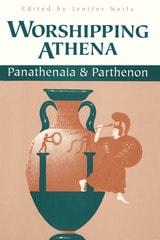
cover of Worshipping Athena: Panathenaia And Parthenon

Worshipping Athena

Panathenaia And Parthenon

Edited by Jenifer Neils

University of Wisconsin Press, 1996

The foremost religious festival of ancient Athens—the city dedicated to Athena, goddess of war, fertility, arts, and wisdom—was the Panathenaia. Challenging old assumptions and refuting new theories, Worshipping Athena addresses the many problems of interpretation and understanding that have swirled for years around the Panathenaia. Among the issues discussed is the recent sensational controversy over the Parthenon frieze, perhaps the best known but least understood work of Greek art. For centuries the frieze has been thought to represent the Panathenaia procession, but recently the argument has been advanced that it depicts the sacrifice of the daughters of the Athenian king Erechtheus. Worshipping Athena offers compelling evidence that the frieze does indeed depict the festal procession and also demonstrates that scenes of contemporary ritual were not unique to the Parthenon.
    Editor Jenifer Neils and the contributors—eminent classicists, archaeologists, and art historians—explore the role of the Panathenaia in Athenian life and compare it with similar festivals held throughout the ancient Greek world. They discuss such topics as the Panathenaia’s mythical origins, the phenomenon of the festival’s valuable prizes (oil-filled amphoras, rather than the customary laurel wreath), and the architecture, sculpture, and painting related to the festival.
    Worshipping Athena will provide valuable insights to scholars and students concerned with ancient religion, mythology, art, literature, and gender issues, as well as anyone with a keen interest in the ritual topography of the Athenian Acropolis and the iconography of the Parthenon frieze.
[more]
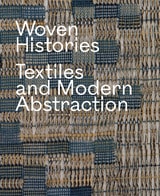
cover of Woven Histories: Textiles and Modern Abstraction

Woven Histories

Textiles and Modern Abstraction

Edited by Lynne Cooke

University of Chicago Press, 2023

Richly illustrated volume exploring the inseparable histories of modernist abstraction and twentieth-century textiles.
 
Published on the occasion of an exhibition curated by Lynne Cooke, Woven Histories offers a fresh and authoritative look at textiles—particularly weaving—as a major force in the evolution of abstraction. This richly illustrated volume features more than fifty creators whose work crosses divisions and hierarchies formerly segregating the fine arts from the applied arts and handicrafts.
 
Woven Histories begins in the early twentieth century, rooting the abstract art of Sophie Taeuber-Arp in the applied arts and handicrafts, then features the interdisciplinary practices of Anni Albers, Sonia Delaunay, Liubov Popova, Varvara Stepanova, and others who sought to effect social change through fabrics for furnishings and apparel. Over the century, the intersection of textiles and abstraction engaged artists from Ed Rossbach, Kay Sekimachi, Ruth Asawa, Lenore Tawney, and Sheila Hicks to Rosemarie Trockel, Ellen Lesperance, Jeffrey Gibson, Igshaan Adams, and Liz Collins, whose textile-based works continue to shape this discourse. Including essays by distinguished art historians as well as reflections from contemporary artists, this ambitious project traces the intertwined histories of textiles and abstraction as vehicles through which artists probe urgent issues of our time.
 
[more]
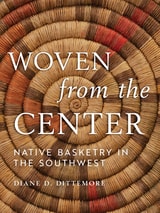
cover of Woven from the Center: Native Basketry in the Southwest

Woven from the Center

Native Basketry in the Southwest

Diane D. Dittemore

University of Arizona Press, 2024

In the beginning was basketry. Around the world, the intertwining of fibers by hand to form a container is a most ancient of crafts. It is older than pottery and metalwork, older than loom weaving.

Woven from the Center presents breathtaking basketry from some of the greatest weavers in the Southwest. Each sandal and mat fragment, each bowl and jar, every water bottle and whimsy is infused with layers of aesthetic, cultural, and historical meanings. This book offers stunning photos and descriptions of woven works from Tohono O’odham, Akimel O’odham, Hopi, Western Apache, Yavapai, Navajo, Pai, Paiute, New Mexico Pueblo, Eastern Apache, Seri, Yaqui, Mayo, and Tarahumara communities.

This richly illustrated volume stands on its own as a definitive look at basketry of the Greater Southwest, including northern Mexico. It also serves as a companion to the peerless collection of U.S. Southwest and Northwest Mexican Native American basketry curated at the Arizona State Museum in Tucson, Arizona. Comprehensive in its coverage, this work is based on decades of research on weavers, collectors, and donors. It includes ample illustrations of basket weavers, past and present, bringing to life the people behind these wonderful woven treasures.
[more]
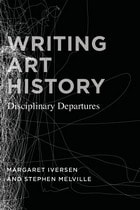
cover of Writing Art History: Disciplinary Departures

Writing Art History

Disciplinary Departures

Margaret Iversen and Stephen Melville

University of Chicago Press, 2010

Faced with an increasingly media-saturated, globalized culture, art historians have begun to ask themselves challenging and provocative questions about the nature of their discipline. Why did the history of art come into being? Is it now in danger of slipping into obsolescence? And, if so, should we care?

In Writing Art History, Margaret Iversen and Stephen Melville address these questions by exploring some assumptions at the discipline’s foundation. Their project is to excavate the lost continuities between philosophical aesthetics, contemporary theory, and art history through close readings of figures as various as Michael Baxandall, Martin Heidegger, Jacques Lacan, and Alois Riegl. Ultimately, the authors propose that we might reframe the questions concerning art history by asking what kind of writing might help the discipline to better imagine its actual practices—and its potential futures.
[more]
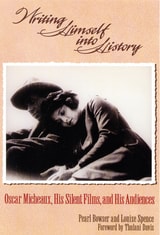
cover of Writing Himself Into History: Oscar Micheaux, His Silent Films, and His Audiences

Writing Himself Into History

Oscar Micheaux, His Silent Films, and His Audiences

Bowser, Pearl

Rutgers University Press, 2000

Winner of the 2001 Kraszna-Krausz Moving Image Book Awards | Winner of the Theatre Library Association Award

Writing Himself Into History is an eagerly anticipated analysis of the career and artistry surrounding the legendary Black filmmaker Oscar Micheaux. With the exception of Spike Lee, Micheaux is the most famous—and prolific—African American film director. Between 1918 and 1948 he made more than 40 “race pictures,” movies made for and about African Americans. A man of immense creativity, he also wrote seven novels.

Pearl Bowser and Louise Spence concentrate here on the first decade of Micheaux’s career, when Micheaux produced and directed more than twenty silent features and built a reputation as a controversial and maverick entrepreneur. Placing his work firmly within his social and cultural milieu, they also examine Micheaeux’s family and life. The authors provide a close textual analysis of his surviving films (including The Symbol of the Unconquered, Within Our Gates, and Body and Soul), and highlight the rivalry between studios, dilemmas of assimilation versus separatism, gender issues, and class. In Search of Oscar Micheaux also analyzes Micheaux’s career as a novelist in relation to his work as a filmmaker.

This is a much-awaited book that is especially timely as interest in Micheaux’s work increases.
[more]
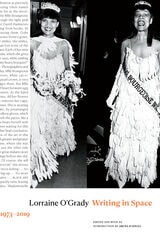
cover of Writing in Space, 1973–2019

Writing in Space, 1973–2019

Lorraine O'Grady

Duke University Press, 2020

Writing in Space, 1973-2019 gathers the writings of conceptual artist Lorraine O'Grady, who for over forty years has investigated the complicated relationship between text and image. A firsthand account of O'Grady's wide-ranging practice, this volume contains statements, scripts, and previously unpublished notes charting the development of her performance work and conceptual photography; her art and music criticism that appeared in the Village Voice and Artforum; critical and theoretical essays on art and culture, including her classic "Olympia's Maid"; and interviews in which O'Grady maps, expands, and complicates the intellectual terrain of her work. She examines issues ranging from black female subjectivity to diaspora and race and representation in contemporary art, exploring both their personal and their institutional implications. O'Grady's writings—introduced in this collection by critic and curator Aruna D'Souza—offer a unique window into her artistic and intellectual evolution while consistently plumbing the political possibilities of art.
[more]
cover of Writing on Drawing: Essays on Drawing Practice and Research

Writing on Drawing

Essays on Drawing Practice and Research

Edited by Steve Garner

Intellect Books, 2008

Increased public and academic interest in drawing and sketching, both traditional and digital, has allowed drawing research to emerge recently as a discipline in its own right. In light of this development, Writing on Drawing presents a collection of essays that reveal a provocative agenda for the field, analyzing the latest work on creativity, education, and thinking from a variety of perspectives. Bringing together contributions by leading artists and researchers, this volume offers consolidation, discussion, and guidance for a previously fragmented discipline. Available for the first time in paperback, it will be an essential resource for artists, scientists, designers, and engineers.
[more]
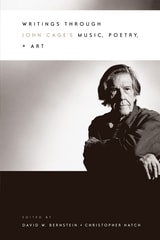
cover of Writings through John Cage's Music, Poetry, and Art

Writings through John Cage's Music, Poetry, and Art

Edited by David W. Bernstein and Christopher Hatch

University of Chicago Press, 2001

This volume looks at the creative work of the great avant-gardist John Cage from an exciting interdisciplinary perspective, exploring his activities as a composer, performer, thinker, and artist.

The essays in this collection grew out of a pivotal gathering during which a spectrum of participants including composers, music scholars, and visual artists, literary critics, poets, and filmmakers convened to examine Cage's extraordinary artistic legacy. Beginning with David Bernstein's introductory essay on the reception of Cage's music, the volume addresses topics ranging from Cage's reluctance to discuss his homosexuality, to his work as a performer and musician, and his forward-looking, provocative experimentation with electronic and other media. Several of the essays draw upon previously unseen sketches and other source materials. Also included are transcripts of lively panel discussions among some of Cage's former colleagues. Taken together, this collection is a much-needed contribution to the study of one of the most significant American artists of the twentieth century.
[more]
cover of Writings/Interviews

Writings/Interviews

Richard Serra

University of Chicago Press, 1994
One of the most important sculptors of this century, Richard Serra has been a spokesman on the nature and status of art in our day. Best known for site-specific works in steel, Serra has much to say about the relation of sculpture to place, whether urban, natural, or architectural, and about the nature of art itself, whether political, decorative, or personal. In interviews with writers including Douglas and Davis Sylvester, he discusses specific installations and offers insights into his approach to the problem each presents. Interviews by Peter Eisenman and Alan Colquhoun elicit Serra's thoughts on the relation of architecture to contemporary sculpture, a primary component in his own work. From essays like "Extended Notes from Sight Point Road" to Serra's extended commentary on the Tilted Arc fiasco, the pieces in this volume comprise a document of one artist's engagement with the practical, philosophical, and political problems of art.
[more]
cover of Written on Bamboo and Silk: The Beginnings of Chinese Books and Inscriptions, Second Edition

Written on Bamboo and Silk

The Beginnings of Chinese Books and Inscriptions, Second Edition

Tsuen-Hsuin Tsien

University of Chicago Press, 2004
Paleography, which often overlaps with archaeology, deciphers ancient inscriptions and modes of writing to reveal the knowledge and workings of earlier societies. In this now-classic paleographic study of China, Tsuen-Hsuin Tsien traces the development of Chinese writing from the earliest inscriptions to the advent of printing, with specific attention to the tools and media used. This edition includes material that treats the many major documents and ancient Chinese artifacts uncovered over the forty years since the book’s first publication, as well as an afterword by Edward L. Shaughnessy.
Written on Bamboo and Silk has long been considered a landmark in its field. Critical in this regard is the excavation of numerous sites throughout China, where hundreds of thousands of documents written on bamboo and silk—as well as other media—were found, including some of the earliest copies of historical, medical, astronomical, military, and religious texts that are now essential to the study of early Chinese literature, history, and philosophy. Discoveries such as these have made the amount of material evidence on the origins and evolution of communication throughout Chinese history exceedingly broad and rich, and yet Tsien succeeds in tackling it all and building on the earlier classic work that changed
[more]
cover of Wyeth People

Wyeth People

Gene Logsdon

Ohio University Press, 2003

In the 1960s, just beginning his career as a writer, Gene Logsdon read a magazine article about Andrew Wyeth in which the artist commented at length on his own creative impulse. What he said seemed so true and right and so directly applicable to writing as well as to painting that the young writer was transfixed. He was resolved to talk to Andrew Wyeth, even though warned that the artist could be as elusive as a wild rabbit. Not quite by accident, the writer and the painter met in a roadside diner, and what happened from then on is what Wyeth People is about—an effort to explain a famous artist, his work, and the people who love it, by an intrigued outsider. Wyeth People is the result of Gene Logsdon’s search to find the colorful people Wyeth painted and to interview them. Originally published in 1969, Wyeth People describes how the author solved the mystery of the creative impulse, at least to his own satisfaction. As Logsdon writes: “The story of my search for why I (and millions of other people) find Wyeth’s art among the greatest that human culture has produced, is ongoing. I may never fully end my quest. But this I know. I was lucky enough to have participated in some small way in the cultural process by which an artist and his work became a classic part of American tradition. "That I was able to talk to people like Karl Kuerner and Forrest Wall produced in me the same kind of knowledge and exhilaration that I would gain if I were viewing Michelangelo’s David and David came alive and spoke to me.”
[more]