Results by title
4127 books match the query 'Science' and 128 start with w
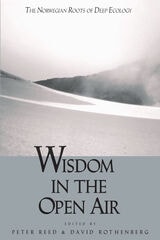
Wisdom In The Open Air
The Norwegian Roots of Deep EcologyPeter Reed
University of Minnesota Press, 1992
Wisdom in the Open Air traces the Norwegian roots of the strain of thinking called “deep ecology”—the search for the solutions to environmental problems by examining the fundamental tenets of our culture. Although Arne Naess coined the term in the 1970s, the insights of deep ecology actually reflect a tradition of thought that can be seen in the history of Norwegian culture, from ancient mountain myths to the radical ecoactivism of today.
Beginning with an introduction to Norway’s emphasis on nature and the wild, Reed and Rothenberg explore the birth of the environmental movement in the 1960s and 1970s. What follows is a collection of writings by prominent Norwegian thinkers on humanity and nature, most never before published in English. From Peter Wessel Zapffe, a twentieth-century Kierkegaardian figure, the list goes on to include Norwegian philosopher Arne Naess, activist-critic-artist Sigmund Kvaloy, wilderness educator Nils Faarland, novelist Finn Alneas, sociologist Johan Galtung, and social reformer Erik Dammann. Their fascinating points of view offer thoughts on the significance of modern life and what it means to be human in the face of the deteriorating global environment of the twentieth century. Wisdom in the Open Air asks and answers a fundamental question concerning the ecomovement: what is the role of deep, often abstract, thinking in the attempt to avert a very real ecological crisis?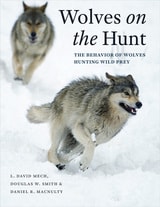
Wolves on the Hunt
The Behavior of Wolves Hunting Wild PreyL. David Mech, Douglas W. Smith, and Daniel R. MacNulty
University of Chicago Press, 2015
Combining behavioral data, thousands of hours of original field observations, research in the literature, a wealth of illustrations, and—in the e-book edition and online—video segments from cinematographer Robert K. Landis, the authors create a compelling and complex picture of these hunters. The wolf is indeed an adept killer, able to take down prey much larger than itself. While adapted to hunt primarily hoofed animals, a wolf—or especially a pack of wolves—can kill individuals of just about any species. But even as wolves help drive the underlying rhythms of the ecosystems they inhabit, their evolutionary prowess comes at a cost: wolves spend one-third of their time hunting—the most time consuming of all wolf activities—and success at the hunt only comes through traveling long distances, persisting in the face of regular failure, detecting and taking advantage of deficiencies in the physical condition of individual prey, and through ceaseless trial and error, all while risking injury or death.
By describing and analyzing the behaviors wolves use to hunt and kill various wild prey—including deer, moose, caribou, elk, Dall sheep, mountain goats, bison, musk oxen, arctic hares, beavers, and others—Wolves on the Hunt provides a revelatory portrait of one of nature’s greatest hunters.
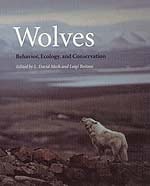
Wolves
Behavior, Ecology, and ConservationEdited by L. David Mech and Luigi Boitani
University of Chicago Press, 2003
As wolf populations have rebounded, scientific studies of them have also flourished. But there hasn't been a systematic, comprehensive overview of wolf biology since 1970. In Wolves, many of the world's leading wolf experts provide state-of-the-art coverage of just about everything you could want to know about these fascinating creatures. Individual chapters cover wolf social ecology, behavior, communication, feeding habits and hunting techniques, population dynamics, physiology and pathology, molecular genetics, evolution and taxonomy, interactions with nonhuman animals such as bears and coyotes, reintroduction, interactions with humans, and conservation and recovery efforts. The book discusses both gray and red wolves in detail and includes information about wolves around the world, from the United States and Canada to Italy, Romania, Saudi Arabia, Israel, India, and Mongolia. Wolves is also extensively illustrated with black and white photos, line drawings, maps, and fifty color plates.
Unrivalled in scope and comprehensiveness, Wolves will become the definitive resource on these extraordinary animals for scientists and amateurs alike.

Women and Health in America, 2nd Ed.
Historical ReadingsJudith W. Leavitt
University of Wisconsin Press, 1999

Women and Science
Social Impact and InteractionSuzanne Le-May Sheffield
Rutgers University Press, 0
For generations, aspiring women scientists have looked to Marie Curie, the famed Nobel Prize–winning chemist, for inspiration. But what lesson, exactly, are they to draw from her example? Marie Curie was exceptional, but she was ordinary as well. She faced all the trials and tribulations shared by women of her time; furthermore, she had to contend with the barriers against women’s wider participation in educational institutions, in scientific practice, and professional attainments and rewards. Indeed, her struggles and failures tell us more about the fate of women in the sciences, historically, than her achievements ever will.
From Maria Winkelman’s discovery of the comet of 1702 to the Nobel Prize–winning work of twentieth-century scientist Barbara McClintock, women have played a central role in modern science. Their successes have not come easily, nor have they been consistently recognized. This important book examines the challenges and barriers women scientists have faced and chronicles their achievements as they struggled to attain recognition for their work in the male-dominated world of modern science. As the only comprehensive textbook to examine women’s participation in, and portrayal by, Western science from the scientific revolution to the present, Women and Science is an essential teaching and reference tool for students in both the history of science and women’s studies.
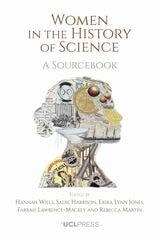
Women in the History of Science
A SourcebookEdited by Hannah Wills, Sadie Harrison, Erika Lynn Jones, Rebecca Martin, Farrah Lawrence-Mackey
University College London, 2023
Women in the History of Science brings together primary sources that highlight women’s involvement in scientific knowledge production around the world. Including texts, images, and objects, the primary sources are each accompanied by an explanatory text, questions to prompt discussion, and a bibliography to aid further research. Arranged by time period, from 1200 BCE to the twenty-first century, and covering twelve inclusive and far-reaching themes, this book is an invaluable companion to students and lecturers alike in exploring women’s history in the fields of science, technology, mathematics, medicine, and culture.

Wonder Shows
Performing Science, Magic, and Religion in AmericaNadis, Fred
Rutgers University Press, 2005
Imagine a stage full of black cats emitting electrical sparks, a man catching bullets with his teeth, or an evangelist jumping on a transformer to shoot bolts of lightning through his fingertips. These and other wild schemes were part of the repertoire of showmen who traveled from city to city, making presentations that blended science with myth and magic.
In Wonder Shows, Fred Nadis offers a colorful history of these traveling magicians, inventors, popular science lecturers, and other presenters of “miracle science” who revealed science and technology to the public in awe-inspiring fashion. The book provides an innovative synthesis of the history of performance with a wider study of culture, science, and religion from the antebellum period to the present.
It features a lively cast of characters, including electrical “wizards” Nikola Tesla and Thomas Alva Edison, vaudeville performers such as Harry Houdini, mind readers, UFO cultists, and practitioners of New Age science. All of these performers developed strategies for invoking cultural authority to back their visions of science and progress. The pseudo-science in their wonder shows helped promote a romantic worldview that called into question the absolute authority of scientific materialism while reaffirming the importance of human spirituality. Nadis argues that the sensation that these entertainers provided became an antidote to the alienation and dehumanization that accompanied the rise of modern America.
Although most recent defenders of science are prone to reject wonder, considering it an ally of ignorance and superstition, Wonder Shows demonstrates that the public’s passion for magic and meaning is still very much alive. Today, sales continue to be made and allegiances won based on illusions that products are unique, singular, and at best, miraculous. Nadis establishes that contemporary showmen, corporate publicists, advertisers, and popular science lecturers are not that unlike the magicians and mesmerists of years ago.
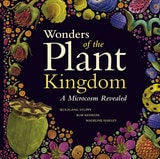
Wonders of the Plant Kingdom
A Microcosm RevealedWolfgang Stuppy, Rob Kesseler, and Madeline Harley
University of Chicago Press, 2015
With Wonders of the Plant Kingdom, the naked eye gets an unforgettable boost. A stunning collaboration between science and art, this gorgeous book presents hundreds of images of plants taken with a scanning electron microscope and hand-colored by artist Rob Kesseler to reveal the awe-inspiring adaptations all around us. The surface of a peach—with its hairs, or trichomes, and sunken stomata, or breathing pores—emerges from these pages in microscopic detail. The dust-like seeds of the smallest cactus species in the world, the Blossfeldia liliputana—which measures just twelve millimeters fully grown—explode here with form, color, and character, while the flower bud of a kaffir lime, cross-sectioned, reveals the complex of a flower bud with the all-important pistil in the center.
Accompanying these extraordinary images are up-to-date explanations of the myriad ways that these plants have ensured their own survival—and, by proxy, our own. Gardeners and science buffs alike will marvel at this wholly new perspective on the world of plant diversity.
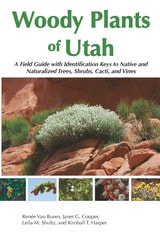
Woody Plants of Utah
A Field Guide with Identification Keys to Native and Naturalized Trees, Shrubs, Cacti, and VinesRenée Van Buren, Janet G. Cooper, Leila M. Shultz, and Kimball T. Harper
Utah State University Press, 2011
A comprehensive guide that includes a vast range of species and plant communities and employs thorough, original keys. Based primarily on vegetative characteristics, the keys don't require that flowers or other reproductive features be present, like many plant guides. And this guide's attention to woody plants as a whole allows one to identify a much greater variety of plants. That especially suits an arid region such as Utah with less diverse native trees. Woody plants are those that have stems that persist above ground even through seasons that don't favor growth, due to low precipitation or temperatures.
Woody Plants of Utah employs dichotomous identification keys that are comparable to a game of twenty questions. They work through a process of elimination by choosing sequential alternatives.
Detailed, illustrated plant descriptions complement the keys and provide additional botanical and environmental information in relation to a useful introductory categorization of Utah plant communities. Supplementary tools include photos, distribution maps, and an illustrated glossary.
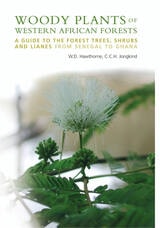
Woody Plants of Western African Forests
A Guide to the Forest Trees, Shrubs and Lianes from Senegal to GhanaWilliam Hawthorne, and Carel Jongkin
Royal Botanic Gardens, Kew, 2006
Laid out as keys and with short descriptions of each species, it contains over 5,600 photographs, line drawings and maps. And, while many guides only offer hints to naming plants when they are not in flower, here the authors have based identification on leaves, bark, shoots, scent ,taste and other characters easily observed at most times.
Funded by the European Union, through its ECOSYN project (based at Wageningen University), which supports forest biodiversity and management in Upper Guinea, this magnificent, beautiful book is an indispensable reference for everyone committed to the conservation and sustainable development of Africa’s forest.
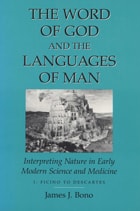
Word Of God & The Languages Of Man
Interpreting Nature In Early Modern Science And Medicine Volume I, Ficino To DescartesJames J. Bono
University of Wisconsin Press, 1995
James J. Bono shows how the new interpretive principles and scientific practices of the sixteenth and seventeenth centuries evolved in response to new views of the relationship between the “Word of God” and the “Languages of Man” fostered by Renaissance Humanism, Neoplatonism, magic, and both the reformed and radical branches of Protestantism. He traces the cultural consequences of these ideas in the thought and work of major and minor actors in the scientific revolution—from Ficino and Paracelsus to Francis Bacon and Descartes. By considering these natural philosophers in light of their own intellectual, religious, philosophical, cultural, linguistic, and especially narrative frameworks, Bono suggests a new way of viewing the sociocultural dynamics of scientific change in the pre–modern period—and ultimately, a new way of understanding the nature and history of scientific thought. The narrative configuration he proposes provides a powerful alternative to the longstanding “revolutionary” metaphor of the history of the scientific revolution.
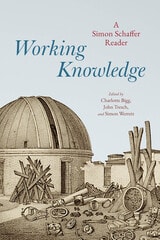
Working Knowledge
A Simon Schaffer ReaderSimon Schaffer
University of Chicago Press, 2026
Working Knowledge is the first English-language collection of essays by Simon Schaffer, coauthor of Leviathan and the Air-Pump, a landmark text in the history of science. Though the latter may be his most famous book, Schaffer is also renowned for seminal articles on Isaac Newton and the cultures of popular spectacle, nineteenth-century physics and its practices of labor discipline and standardization, the history of anthropology and collecting, and the globe-spanning cultural interactions that have shaped modern science. Working Knowledge compiles these well-known pieces alongside newer selections, making them accessible in a single place and representing the huge scope and impact of Schaffer’s oeuvre.
The Reader divides sixteen of Schaffer’s articles across five thematic sections, which take up timely issues like the turn toward global histories of science; the intersection of science and capitalism; the interaction between bodies and machines; and the connection between science, politics, and the environment. Eight new essays by notable historians such as Adrian Johns, Lissa Roberts, and Steven Shapin bring Schaffer’s pieces into discussion with current scholarship. Illustrations and brief commentaries by Schaffer and the artist Adam Lowe, a longtime collaborator, are included throughout the volume.
Bringing together essential articles that were previously scattered across several publications, Working Knowledge is an insightful introduction to Schaffer and his ever-relevant writing.
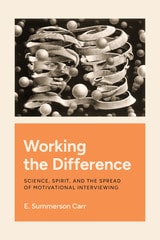
Working the Difference
Science, Spirit, and the Spread of Motivational InterviewingE. Summerson Carr
University of Chicago Press, 2023
Motivational interviewing (MI) is a professional practice, a behavioral therapy, and a self-professed conversation style that encourages clients to talk themselves into change. Originally developed to treat alcoholics, MI quickly spread into a variety of professional fields including corrections, medicine, and sanitation. In Working the Difference, E. Summerson Carr focuses on the training and dissemination of MI to explore how cultural forms—and particularly forms of expertise—emerge and spread. The result is a compelling analysis of the American preoccupations at MI’s core, from democratic autonomy and freedom of speech to Protestant ethics and American pragmatism.
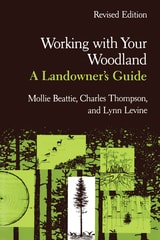
Working with Your Woodland
A Landowner’s GuideMollie Beattie, Charles Thompson, and Lynn Levine
University Press of New England, 1993
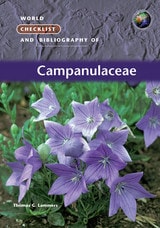
World Checklist and Bibliography of Campanulaceae
Thomas G. Lammers
Royal Botanic Gardens, Kew, 2007
World Checklist of Cyperaceae
Rafael Govaerts and Simpon David
Royal Botanic Gardens, Kew, 2007

World Checklist of Dioscoreales
Rafael Govaerts, Paul Wilkin, and Richard M. K. Saunders
Royal Botanic Gardens, Kew, 2000
The World Checklist of Dioscoreales lists all validly published names of yams and their allies, providing the source of their publication and indication of which names are currently accepted and which are synonyms, making it a standard nomenclatural reference for further research into this important family.
World Checklist of Myrtaceae
Rafael Govaerts, Marcos Sobral, Peter Ashton, and Fred Barrie
Royal Botanic Gardens, Kew, 2008
The World Checklist of Myrtaceae is a much needed work that lists all validly published names in the family, providing the source of their publication and indicating which names are currently accepted and which are synonyms. It will be respected as the standard nomenclatural reference for further research into this important family.
World Checklist of Palms
Rafaël Govaerts and John Dransfield
Royal Botanic Gardens, Kew, 2005

World Deforestation in the Twentieth Century
John F. Richards and Richard P. Tucker
Duke University Press, 1988
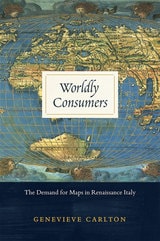
Worldly Consumers
The Demand for Maps in Renaissance ItalyGenevieve Carlton
University of Chicago Press, 2015
Drawing on a variety of sixteenth-century sources, including household inventories, epigrams, dedications, catalogs, travel books, and advice manuals, Worldly Consumers studies how individuals displayed different maps in their homes as deliberate acts of self-fashioning. One citizen decorated with maps of Bruges, Holland, Flanders, and Amsterdam to remind visitors of his military prowess, for example, while another hung maps of cities where his ancestors fought or governed, in homage to his auspicious family history. Renaissance Italians turned domestic spaces into a microcosm of larger geographical places to craft cosmopolitan, erudite identities for themselves, creating a new class of consumers who drew cultural capital from maps of the time.
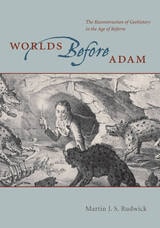
Worlds Before Adam
The Reconstruction of Geohistory in the Age of ReformMartin J. S. Rudwick
University of Chicago Press, 2008
The first detailed account of the reconstruction of prehuman geohistory, Martin J. S. Rudwick’s Worlds Before Adam picks up where his celebrated Bursting the Limits of Time leaves off. Here, Rudwick takes readers from the post-Napoleonic Restoration in Europe to the early years of Britain’s Victorian age, chronicling the staggering discoveries geologists made during the period: the unearthing of the first dinosaur fossils, the glacial theory of the last ice age, and the meaning of igneous rocks, among others. Ultimately, Rudwick reveals geology to be the first of the sciences to investigate the historical dimension of nature, a model that Charles Darwin used in developing his evolutionary theory.
Featuring an international cast of colorful characters, with Georges Cuvier and Charles Lyell playing major roles and Darwin appearing as a young geologist, Worlds Before Adam is a worthy successor to Rudwick’s magisterial first volume. Completing the highly readable narrative of one of the most momentous changes in human understanding of our place in the natural world, Worlds Before Adam is a capstone to the career of one of the world’s leading historians of science.

Worlds in the Sky
Planetary Discovery from Earliest Times Through Voyager and MagellanWilliam Sheehan
University of Arizona Press, 1992
In Worlds in the Sky, William Sheehan gives us a history of this long fascination, weaving together scientific history, anecdotes surrounding planetary discoveries, and the personal reflections of an incurable amateur astronomer. He describes how we arrived at our current understanding of the Moon and the planets and shows how certain individuals in history shaped the world’s knowledge about the Solar System.
Wrestling with Nature
From Omens to ScienceEdited by Peter Harrison, Ronald L. Numbers, and Michael H. Shank
University of Chicago Press, 2011
When and where did science begin? Historians have offered different answers to these questions, some pointing to Babylonian observational astronomy, some to the speculations of natural philosophers of ancient Greece. Others have opted for early modern Europe, which saw the triumph of Copernicanism and the birth of experimental science, while yet another view is that the appearance of science was postponed until the nineteenth century.
Rather than posit a modern definition of science and search for evidence of it in the past, the contributors to Wrestling with Nature examine how students of nature themselves, in various cultures and periods of history, have understood and represented their work. The aim of each chapter is to explain the content, goals, methods, practices, and institutions associated with the investigation of nature and to articulate the strengths, limitations, and boundaries of these efforts from the perspective of the researchers themselves. With contributions from experts representing different historical periods and different disciplinary specializations, this volume offers a fresh perspective on the history of science and on what it meant, in other times and places, to wrestle with nature.
Writing Ethnographic Fieldnotes
Robert M. Emerson, Rachel I. Fretz, and Linda L. Shaw
University of Chicago Press, 1995
Drawing on years of teaching and field research experience, the authors develop a series of guidelines, suggestions, and practical advice about how to write useful fieldnotes in a variety of settings, both cultural and institutional. Using actual unfinished, "working" notes as examples, they illustrate options for composing, reviewing, and working fieldnotes into finished texts. They discuss different organizational and descriptive strategies, including evocation of sensory detail, synthesis of complete scenes, the value of partial versus omniscient perspectives, and of first person versus third person accounts. Of particular interest is the author's discussion of notetaking as a mindset. They show how transforming direct observations into vivid descriptions results not simply from good memory but more crucially from learning to envision scenes as written. A good ethnographer, they demonstrate, must learn to remember dialogue and movement like an actor, to see colors and shapes like a painter, and to sense moods and rhythms like a poet.
The authors also emphasize the ethnographer's core interest in presenting the perceptions and meanings which the people studied attach to their own actions. They demonstrate the subtle ways that writers can make the voices of people heard in the texts they produce. Finally, they analyze the "processing" of fieldnotes—the practice of coding notes to identify themes and methods for selecting and weaving together fieldnote excerpts to write a polished ethnography.
This book, however, is more than a "how-to" manual. The authors examine writing fieldnotes as an interactive and interpretive process in which the researcher's own commitments and relationships with those in the field inevitably shape the character and content of those fieldnotes. They explore the conscious and unconscious writing choices that produce fieldnote accounts. And they show how the character and content of these fieldnotes inevitably influence the arguments and analyses the ethnographer can make in the final ethnographic tale.
This book shows that note-taking is a craft that can be taught. Along with Tales of the Field and George Marcus and Michael Fisher's Anthropology as Cultural Criticism, Writing Ethnographic Fieldnotes is an essential tool for students and social scientists alike.

Writing Science in Plain English
Anne E. Greene
University of Chicago Press, 2013

Writing Science in Plain English, Second Edition
Anne E. Greene
University of Chicago Press, 2025
Scientific writing is often dry, wordy, and difficult to understand. But, as biologist and experienced teacher of scientific writing Anne E. Greene shows in Writing Science in Plain English, writers from all scientific disciplines can learn to produce clear, concise prose by mastering just a few simple principles. This short, focused guide presents roughly a dozen such principles based on what readers need to understand complex information, including concrete subjects, strong verbs, consistent terms, organized paragraphs, and correct sentence structure. Greene illustrates each principle with real-life examples of both good and bad writing and shows how bad writing might be improved. She ends each chapter with revision exercises (and provides suggested answers in a separate key) so that readers can come away with new writing skills after just one sitting. To help readers understand the grammatical terms used in the book, an appendix offers a refresher course on basic grammar.
For this second edition, Greene has incorporated the latest research on what makes writing effective and engaging and has revised or replaced exercises and exercise keys where needed. She has also added new features that make it easier to navigate the book. A new resource for instructors who use Writing Science in Plain English in their classes is a free, online teacher’s guide. Drawn from Greene’s long experience teaching students how to write science clearly, the teacher’s guide provides additional lectures, assignments, and activities that will inform and enliven any class.
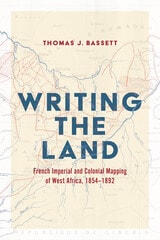
Writing the Land
French Imperial and Colonial Mapping of West Africa, 1854–1892Thomas J. Bassett
University of Chicago Press, 2027
Reveals the intertwined nature of imperial mapping and map history through the making of the colony of French Soudan in nineteenth-century West Africa.
Thomas J. Bassett’s Writing the Land argues that mapping played a key role in France’s territorial conquest of Africa, and that the process of imperial expansion and colonization shaped map history by influencing how maps were constructed, circulated, and used. Analyzing military and surveying campaigns over half a century in an area that became the colony of French Soudan, Bassett focuses on the social and spatial problems that surveyors and mapmakers tried to solve in the process of territorial conquest, as well as the conflicts that arose as they pursued their goals.
In their efforts to obtain this territory, French military leaders, cartographers, and expedition members came into continual contact with local Africans, with whom they negotiated and clashed. Often, imperial officers relied on intermediaries to navigate West African geography, drawing on the knowledge of political authorities, interpreters, guides, and long-distance traders; the maps they produced are inextricable from these interactions. Ultimately, Bassett claims, examining the processes of mapping in the context of these encounters leads us to understand these maps anew as Euro-African constructions, ones that emerge from a complex process of exchange and domination.