Results by title
3064 books match the query 'Social conditions' and 133 start with w
Women of the Storm
Civic Activism after Hurricane KatrinaEmmanuel David
University of Illinois Press, 2017
Women on Their Own
Interdisciplinary Perspectives on Being SingleEdited by Rudolph M. Bell and Virginia Yans
Rutgers University Press, 2007
Modern American culture has raised generations of women who believed that their true and most important role in society was to get married and have children. Anything short of this role was considered abnormal, unfulfilling, and suspect. This female stereotype has been exploited and perpetuated by some key films in the late 40's and early 50's. But more recently we have seen a shift in the cultural view of the spinster. The erosion of the traditional nuclear family, as well as a larger range of acceptable life choices, has caused our perceptions of unmarried women to change. The film industry has reflected this shift with updated stereotypes that depict this cultural trend. The shift in the way we perceive spinsters is the subject of current academic research which shows that a person's perception of particular societal roles influences the amount of stress or depression they experience when in that specific role. Further, although the way our culture perceives spinsters and the way the film industry portrays them may be evolving, we still are still left with a negative stereotype.
Themes of choice and power have informed the lives of single women in all times and places. When considered at all in a scholarly context, single women have often been portrayed as victims, unhappily subjected to forces beyond their control. This collection of essays about "women on their own" attempts to correct that bias, by presenting a more complex view of single women in nineteenth- and twentieth-century United States and Europe.
Topics covered in this book include the complex and ambiguous roles that society assigns to widows, and the greater social and financial independence that widows have often enjoyed; widow culture after major wars; the plight of homeless, middle-class single women during the Great Depression; and comparative sociological studies of contemporary single women in the United States, Britain, Ireland, and Cuba.
Composed of papers presented to the Rutgers Center for Historical Analysis project on single women, this collection incorporates the work of specialists in anthropology, art history, history, and sociology. It is deeply connected with the emerging field of singleness studies (to which the RCHA has contributed an Internet-based bibliography of more than 800 items). All of the essays are new and have not been previously published.
Women on the Verge
Japanese Women, Western DreamsKaren Kelsky
Duke University Press, 2001
In exploring the promises, limitations, and contradictions of these “occidental longings,” Women on the Verge exposes the racial and erotic politics of transnational mobility. Kelsky shows how female cosmopolitanism recontextualizes the well-known Western male romance with the Orient: Japanese women are now the agents, narrating their own desires for the “modern” West in ways that seem to defy Japanese nationalism as well as long-standing relations of power not only between men and women but between Japan and the West. While transnational movement is not available to all Japanese women, Kelsky shows that the desire for the foreign permeates many Japanese women’s lives. She also reveals how this feminine allegiance to the West—and particularly to white men—can impose its own unanticipated hegemonies of race, sexuality, and capital.
Combining ethnography and literary analysis, and bridging anthropology and cultural studies, Women on the Verge will also appeal to students and scholars of Japan studies, feminism, and global culture.
Women's Activism in Latin America and the Caribbean
Engendering Social Justice, Democratizing CitizenshipEdited and with an introduction by Elizabeth Maier and Nathalie Lebon
Rutgers University Press, 2010
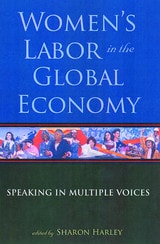
Women's Labor in the Global Economy
Speaking in Multiple VoicesHarley, Sharon
Rutgers University Press, 2007
Globalization is not a new phenomenon; women throughout the world have been dealing with the circumstances and consequences of an international economy long before the advent of the transnational corporate conglomerate. However, in a mercenary example of the tried clich "the more things change, the more they stay the same," women-particularly those of color-continue to be relegated to the lowest rung of the occupational ladder, where their indispensable contributions to global market capitalism are downplayed or invalidated completely through the perpetuation of stereotypes and the denial of access to better job opportunities and resources.
How women of color around the world adapt and challenge the economic, political, and social effects of globalization is the subject of this broad-minded and incisive anthology. From Mexico, Jamaica, Ghana, Zimbabwe, and Sri Lanka, to immigrant and non-immigrant communities in the United States-the women documented in these essays are agricultural and factory workers, artists and entrepreneurs, mothers and activists. Their stories bear stark witness to how globalization continues to develop new sites and forms of exploitation, while its apparent victims continue to be women, men, and children of color.
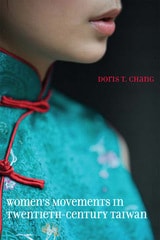
Women's Movements in Twentieth-Century Taiwan
Doris Chang
University of Illinois Press, 2008
This book is the first in English to consider women's movements and feminist discourses in twentieth-century Taiwan. Doris T. Chang examines the way in which Taiwanese women in the twentieth century selectively appropriated Western feminist theories to meet their needs in a modernizing Confucian culture. She illustrates the rise and fall of women's movements against the historical backdrop of the island's contested national identities, first vis-à-vis imperial Japan (1895-1945) and later with postwar China (1945-2000).
In particular, during periods of soft authoritarianism in the Japanese colonial era and late twentieth century, autonomous women's movements emerged and operated within the political perimeters set by the authoritarian regimes. Women strove to replace the "Good Wife, Wise Mother" ideal with an individualist feminism that meshed social, political, and economic gender equity with the prevailing Confucian family ideology. However, during periods of hard authoritarianism from the 1930s to the 1960s, the autonomous movements collapsed.
The particular brand of Taiwanese feminism developed from numerous outside influences, including interactions among an East Asian sociopolitical milieu, various strands of Western feminism, and even Marxist-Leninist women's liberation programs in Soviet Russia. Chinese communism appears not to have played a significant role, due to the Chinese Nationalists' restriction of communication with the mainland during their rule on post-World War II Taiwan.
Notably, this study compares the perspectives of Madame Chiang Kai-shek, whose husband led as the president of the Republic of China on Taiwan from 1949 to 1975, and Hsiu-lien Annette Lu, Taiwan's vice president from 2000 to 2008. Delving into period sources such as the highly influential feminist monthly magazine Awakening as well as interviews with feminist leaders, Chang provides a comprehensive historical and cross-cultural analysis of the struggle for gender equality in Taiwan.
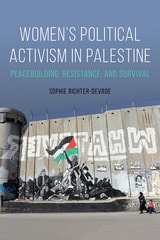
Women's Political Activism in Palestine
Peacebuilding, Resistance, and SurvivalSophie Richter-Devroe
University of Illinois Press, 2018
Richter-Devroe's ethnographic approach draws from revealing in-depth interviews and participant observation in Palestine. The result: a forceful critique of mainstream conflict resolution methods and the failed woman-to-woman peacebuilding projects so lauded around the world. The liberal faith in dialogue as core of "the political" and the assumption that women's "nurturing" nature makes them superior peacemakers, collapse in the face of past and ongoing Israeli state violences.
Instead, women confront Israeli settler colonialism directly and indirectly in their popular and everyday acts of resistance. Richter-Devroe's analysis zooms in on the intricate dynamics of daily life in Palestine, tracing the emergent politics that women articulate and practice there. In shedding light on contemporary gendered "politics from below" in the region, the book invites a rethinking of the workings, shapes, and boundaries of the political.
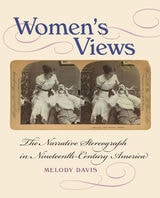
Women's Views
The Narrative Stereograph in Nineteenth-Century AmericaMelody Davis
University of Massachusetts Press, 2015
In this remarkable book, Melody Davis analyzes the underexamined genre of narrative stereoviews and their audiences. Because stereoviews were created for and marketed primarily to middle-class women in domestic settings, Davis argues that they represent one of the best sources for addressing the flow of historical change in women's lives. By analyzing dozens of stereoviews—including depictions of gender stereotypes, power dynamics, comical or sentimental situations, and scenes of both serious and playful innuendo—Davis energetically spins a broad history of the real social, sexual, and economic changes in the lives of American women. Her close reading and rich contextualization of these compelling vernacular objects bridge the gaps between the private viewing that took place within the home and the outside world of consumption and power that women were gradually entering.
Illustrated with more than one hundred stereographs and including a three-dimensional viewer, this book will appeal to readers with an interest in U.S. women's history, the history of photography, visual and cultural studies, and American studies.
Women's Work?
American Schoolteachers, 1650-1920Joel Perlmann and Robert A. Margo
University of Chicago Press, 2001
In Women's Work the authors blend newly available quantitative evidence with historical narrative to show that distinctive regional school structures and related cultural patterns account for the initial regional difference, while a growing recognition that women could handle the work after they temporarily replaced men during the Civil War helps explain this widespread shift to female teachers later in the century. Yet despite this shift, a significant gender gap in pay and positions remained. This book offers an original and thought-provoking account of a remarkable historical transition.

Women, Mysticism, and Hysteria in Fin-de-Siècle Spain
Jennifer Smith
Vanderbilt University Press, 2021
Author Jennifer Smith also directs modern historians to the writings of Emilia Pardo Bazán (1851-1921) as a thinker whose work points out mysticism's subversive potential in terms of the patriarchal order. Pardo Bazán, unlike her male counterparts, rejected the hysteria diagnosis and promoted mysticism as a path for women's personal development and self-realization.
Women, Power, and Dissent in the Hills of Carolina
Mary K. Anglin
University of Illinois Press, 2002
Women, Power, and Dissent in the Hills of Carolina is a unique and impassioned exploration of gender, labor, and resistance in western North Carolina. Based on eight months of field research in a mica manufacturing plant and the surrounding rural community, as well as oral histories of women who worked in mica houses in the early twentieth century, this landmark study canvasses the history of the mica industry and the ways it came to be organized around women's labor.
Mary K. Anglin's investigation of working women's lives in the plant she calls "Moth Hill Mica Company" reveals the ways women have contributed to household and regional economies for more than a century. Without union support or recognition as skilled laborers, these women developed alternate strategies for challenging the poor working conditions, paltry wages, and corporate rhetoric of Moth Hill. Utilizing the power of memory and strong family and community ties, as well as their own interpretations of gender and culture, the women have found ways to "boss themselves."
Women, Work, and Worship in Lincoln's Country
The Dumville Family LettersEdited by Anne M. Heinz and John P. Heinz
University of Illinois Press, 2016
Women’s Work
How Culinary Cultures Shaped Modern SpainRebecca Ingram
Vanderbilt University Press, 2022
We are living in a moment in which famous chefs, Michelin stars, culinary techniques, and gastronomical accolades attract moneyed tourists to Spain from all over the world. This has prompted the Spanish government to declare its cuisine as part of Spanish patrimony. Even with this widespread global attention, we know little about how Spanish cooking became a litmus test for demonstrating Spain's modernity and, relatedly, the roles ascribed to the modern Spanish women responsible for daily cooking.
Efforts to articulate a new, modern Spain infiltrated writing in multiple genres and media. Women's Work offers a sharp reading of diverse sources, placed in their historical context, that yields a better understanding of the roles of food within an inherently uneven modernization process. Further, author Rebecca Ingram's perceptive critique reveals the paradoxical messages women have navigated, even in texts about a daily practice that shaped their domestic and work lives. Women's Work posits that this is significant because of the degree to which domestic activities, including cooking, occupied women's daily lives, even while issues like their fitness as citizens and participation in the public sphere were hotly debated. At the same time, progressive intellectuals from diverse backgrounds began to invoke Spanish cooking and eating as one measure of Spanish modernity.
Women's Work shows how culinary writing engaged these debates and reached women at the site of much of their daily labor—the kitchen—and, in this way, shaped their thinking about their roles in modernizing Spain.
Words like Water
Queer Mobilization and Social Change in ChinaFugazzola, Caterina
Temple University Press, 2023
Words like Water explores the nonconfrontational strategies the tongzhi movement uses in contemporary China. Caterina Fugazzola analyzes tongzhi organizers’ conceptualizations of, and approaches to, social change, explaining how they avoid the backlash that meets Western tactics, such as protests, confrontation, and language about individual freedoms. In contrast, the groups’ intentional use of community and family-oriented narratives, discourses, and understandings of sexual identity are more effective, especially in situations where direct political engagement is not possible.
Providing on-the-ground stories that examine the social, cultural, and political constraints and opportunities, Words like Water emphasizes the value of discursive flexibility that allows activists to adapt to changing social and political conditions.
Words to Our Now
Imagination and DissentThomas Glave
University of Minnesota Press, 2007
In these lyrical and powerful essays, Thomas Glave draws on his experiences as a politically committed, gay Jamaican American to deliver a condemnation of the prejudices, hatreds, and inhumanities that persist in the United States and elsewhere. Exposing the hypocrisies of liberal multiculturalism, Glave offers instead a politics of heterogeneity in which difference informs the theory and practice of democracy. At the same time, he experiments with language to provide a model of creative writing as a tool for social change. From the death of black gay poet Essex Hemphill to the revelations of abuse at Abu Ghraib, Glave puts forth an ethical understanding of human rights to make vital connections across nations, races, genders, and sexualities.
Thomas Glave is assistant professor of English at SUNY Binghamton. He is author of Whose Song? and Other Stories.
Work Requirements
Race, Disability, and the Print Culture of Social WelfareTodd Carmody
Duke University Press, 2022
Work in Black and White
Striving for the American DreamEnobong Hannah Branch
Russell Sage Foundation, 2022
The ability to achieve economic security through hard work is a central tenet of the American Dream, but significant shifts in today’s economy have fractured this connection. While economic insecurity has always been a reality for some Americans, Black Americans have historically long experienced worse economic outcomes than Whites. In Work in Black and White, sociologists Enobong Hannah Branch and Caroline Hanley draw on interviews with 80 middle-aged Black and White Americans to explore how their attitudes and perceptions of success are influenced by the stories American culture has told about the American Dream – and about who should have access to it and who should not.
Branch and Hanley find that Black and White workers draw on racially distinct histories to make sense of today’s rising economic insecurity. White Americans have grown increasingly pessimistic and feel that the American Dream is now out of reach, mourning the loss of a sense of economic security which they took for granted. But Black Americans tend to negotiate their present insecurity with more optimism, since they cannot mourn something they never had. All educated workers bemoaned the fact that their credentials no longer guarantee job security, but Black workers lamented the reality that even with an education, racial inequality continues to block access to good jobs for many.
The authors interject a provocative observation into the ongoing debate over opportunity, security, and the American Dream: Among policymakers and the public alike, Americans talk too much about education. The ways people navigate insecurity, inequality, and uncertainty rests on more than educational attainment. The authors call for a public policy that ensures dignity in working conditions and pay while accounting for the legacies of historical inequality.
Americans want the game of life to be fair. While the survey respondents expressed common ground on the ideal of meritocracy, opinions about to achieve economic security for all diverge along racial lines, with the recognition – or not – of differences in current and past access to opportunity in America.
Work in Black and White is a call to action for meaningful policies to make the premise of the American Dream a reality.

Workin' It
Women Living Through Drugs and CrimeLeon Pettiway
Temple University Press, 1997
These are the words with which Margaret, a thirty-three-year-old cocaine-using prostitute, begins her story. In this book, she and four other women, all inner-city hustlers, describe their lives, how they came to be where they are, and where they hope to go.
Margaret, Charlie, Virginia, Tracy, and Laquita are all drug users who are involved in regular criminal activity: prostitution, burglary, shoplifting, robbery, drug selling, petty theft, and various kinds of fraud. Four of the women are black; one is white and Puerto Rican. While all five have been involved in same-sex relationships, three are primarily straight and two are primarily lesbian. They come from working-class or welfare families; some women characterize their mothers as strict, abusive, intolerant, and distant while other mothers are characterized as being concerned, religious, and loving. The women talk frankly about their drug use, their sexual and criminal activities, their childhoods, their personal relationships with their families of origin, children, partners, their fears and future goals, and the ordinary trappings of their lives.
While these accounts describe lives lived at the margins of society, they also reveal women who practice self-evaluation. These are women who have a deep understanding of individual accountability and responsibility. These accounts are connected by themes of violence and poverty, but they are also connected by the variety and richness of these women's lives. The women also assert a control over their activities and talk of independent judgment in terms that we imagine are reserved for men. There is a tendency in criminology to treat the data generated by research on men as fundamentally true for women as well. By allowing female law-breakers to describe their lives in their own way, Pettiway underlines not only their differences from men but also their differences from each other.
However, their stories also reveal their common humanity and their profound will to survive despite all obstacles. These women manage to live self-defined and self-validated lives in a world even more turbulent than that of their mainstream sisters. They share a web of experiences created out of race and ethnicity, sexual orientation, drug use, and urbanization that provides them with meaning and courage. They speak movingly about guilt and responsibility, about rape and intimacy, and about ambition and despair. Through their stories we can grasp the traumas and turning points that lead us all to make bad decisions as well as those ideals and inspirations that can help to redeem us.
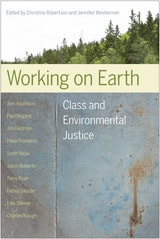
Working on Earth
Class and Environmental JusticeChristina Robertson
University of Nevada Press, 2015
The authors challenge prevailing cultural narratives that separate ecological and human health from the impacts of modern industrial capitalism. Essay themes range from how human survival is linked to nature to how the use and abuse of nature benefit the wealthy elite at the expense of working-class people and the working poor as well as how climate change will affect cultures deeply rooted in the land.
Ultimately, Working on Earth calls for a working-class ecology as an integral part of achieving just and sustainable human development.
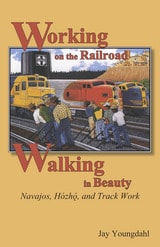
Working on the Railroad, Walking in Beauty
Navajos, Hozho, and Track WorkJay Youngdahl
Utah State University Press, 2011
For over one hundred years, Navajos have gone to work in significant numbers on Southwestern railroads. As they took on the arduous work of laying and anchoring tracks, they turned to traditional religion to anchor their lives.
Jay Youngdahl, an attorney who has represented Navajo workers in claims with their railroad employers since 1992 and who more recently earned a master's in divinity from Harvard, has used oral history and archival research to write a cultural history of Navajos' work on the railroad and the roles their religious traditions play in their lives of hard labor away from home.
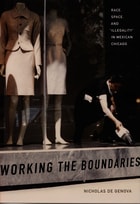
Working the Boundaries
Race, Space, and "Illegality" in Mexican ChicagoNicholas De Genova
Duke University Press, 2005
De Genova worked for two and a half years as a teacher of English in ten industrial workplaces (primarily metal-fabricating factories) throughout Chicago and its suburbs. In Working the Boundaries he draws on fieldwork conducted in these factories, in community centers, and in the homes and neighborhoods of Mexican migrants. He describes how the meaning of “Mexican” is refigured and racialized in relation to a U.S. social order dominated by a black-white binary. Delving into immigration law, he contends that immigration policies have worked over time to produce Mexicans as the U.S. nation-state’s iconic “illegal aliens.” He explains how the constant threat of deportation is used to keep Mexican workers in line. Working the Boundaries is a major contribution to theories of race and transnationalism and a scathing indictment of U.S. labor and citizenship policies.
Working-Class America
Essays on Labor, Community, and American SocietyEdited by Michael H. Frisch and Daniel J. Walkowitz
University of Illinois Press, 1983
Working-Class Women in the Academy
Laborers in the Knowledge FactoryMichelle M. Tokarczyk
University of Massachusetts Press, 1993
The voices of 20 women from working-class backgrounds are heard in this collection of essays. Each of the women has lived through the process of academic socialization—as both student and teacher—and each has thought long and deeply about her experiences from an explicitly feminist perspective.
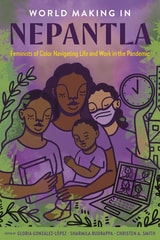
World Making in Nepantla
Feminists of Color Navigating Life and Work in the PandemicGloria González-LópezSharmila RudrappaChristen A. Smith
University of Texas Press, 2025
Writings from feminist scholars of color about their experiences during the pandemic.
Bringing uncertainty, fear, and change, the COVID-19 pandemic shook the world, altered people’s lives, and sparked a wave of introspection. Underserved communities—people of color, women, and queer people among them—were affected the most, and their experiences, in turn, reflected hope and opportunities to reinvent themselves individually and collectively. Drawing on Gloria Anzaldúa’s use of nepantla—the Náhuatl word meaning “in-between space,” the en medio and a liminal space between worlds imbued with change—World Making in Nepantla collects writings about the hurdles feminist scholars of color faced during the pandemic years.
Contributors explore how COVID affected feminist scholars of color while recognizing the ways in which inequality influences experience and also celebrating the resilience of communities all over the world. Dispatches from classrooms and quarantined homes and introspective essays on disability, mutual aid, and borders are included among the essays here. These pieces serve as a concrete record, capturing an ephemeral time already being lost to memory. Created during the heart of the pandemic, World Making in Nepantla is an honest and intimate recording of how feminist scholars of color navigated struggles and found strength during an era that forever changed the modern world.
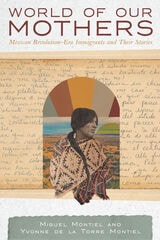
World of Our Mothers
Mexican Revolution–Era Immigrants and Their StoriesMiguel Montiel and Yvonne de la Torre Montiel
University of Arizona Press, 2022
While the women share a historic immigration journey, each story provides unique details and circumstances that testify to the diversity of the immigrant experience. The oral histories, a project more than forty years in the making, let these women speak for themselves, while historical information is added to support and illuminate the women’s voices.
The book, which includes a foreword by Irasema Coronado, director of the School of Transborder Studies, and Chris Marin, professor emeritus, both at Arizona State University, is divided into four parts. Part 1 highlights the salient events of the Revolution; part 2 presents an overview of what immigrants inherited upon their arrival to the United States; part 3 identifies challenges faced by immigrant families; and part 4 focuses on stories by location—Arizona mining towns, Phoenix barrios, and Midwestern colonias—all communities that immigrant women helped create. The book concludes with ideas on how readers can examine their own family histories. Readers are invited to engage with one another to uncover alternative interpretations of the immigrant experience and through the process connect one generation with another.
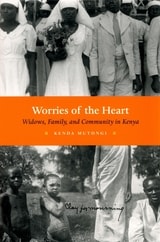
Worries of the Heart
Widows, Family, and Community in KenyaKenda Mutongi
University of Chicago Press, 2007
Throughout the twentieth century and into the twenty-first, rates of widowhood have been remarkably high in Kenya. Yet despite their numbers, widows and their families exist at the margins of society, and their lives act as a barometer for the harsh realities of rural Kenya. Mutongi here argues that widows survive by publicly airing their social, economic, and political problems, their “worries of the heart.” Initially aimed at the men in their community, and then their colonial rulers, this strategy changed after independence as widows increasingly invoked the language of citizenship to demand their rights from the new leaders of Kenya—leaders whose failure to meet the needs of ordinary citizens has led to deep disenchantment and altered Kenyans’ view of their colonial past. An innovative blend of ethnography and historical research, Worries of the Heart is a poignant narrative rich with insights into postcolonial Africa.
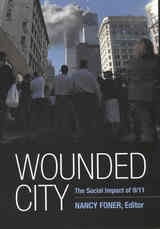
Wounded City
The Social Impact of 9/11 on New York CityNancy Foner
Russell Sage Foundation, 2005
Writing Maternity
Medicine, Anxiety, Rhetoric, and GenreDara Rossman Regaignon
The Ohio State University Press, 2021
Writing Their Bodies
Restoring Rhetorical Relations at the Carlisle Indian SchoolSarah Klotz
Utah State University Press, 2020
This approach tracks the relationship between curriculum and resistance and enumerates an anti-assimilationist methodology for teachers and scholars of writing in contemporary classrooms. From the Carlisle archive emerges the concept of a rhetoric of relations, a set of Native American communicative practices that circulates in processes of intercultural interpretation and world-making. Klotz explores how embodied and material practices allowed Indigenous rhetors to maintain their cultural identities in the off-reservation boarding school system and critiques the settler fantasy of benevolence that propels assimilationist models of English education.
Writing Their Bodies moves beyond language and literacy education where educators standardize and limit their students’ means of communication and describes the extraordinary expressive repositories that Indigenous rhetors draw upon to survive, persist, and build futures in colonial institutions of education.
Writing for Dark Times
A Literary History of Human RightsHadji Bakara
University of Chicago Press, 2026
A history of human rights that places writers and their ideas at its center.
At Amnesty International’s headquarters in London hangs a large copy of Seamus Heaney’s “From the Republic of Conscience,” a poem that touches on neither imprisonment nor torture but instead suggests that acts of literary creation are themselves a form of human rights work, important for bringing new things into the world rather than removing evil from it. Why does a poem about the power of creation stand at the center of an organization known for publicizing atrocity? What can it tell us about human rights?
Hadji Bakara’s Writing for Dark Times tells the story of the writer’s distinct place in the history of human rights. It argues that the relationship between the creative work of writing and the pursuit of universal rights is an important but misunderstood dimension of both literary and human rights history over the past century. Following a diverse cast of writers from the First World War through the end of the Cold War, including Bertolt Brecht, Anna Seghers, Archibald MacLeish, Albert Camus, Czeslaw Milosz, Ngũgĩ wa Thiong’o, Seamus Heaney, Nadine Gordimer, and J.M. Coetzee, Bakara shows how their efforts to theorize and support human rights were bound up with changing ideas about the place of their own work in the world––the work of writing. And across the twentieth century, the book reveals, two central ideas about writing took shape around the politics of human rights. Writing creates something new and inspires the will for change.
For those who study human rights, Writing for Dark Times offers both an archive and a method for better understanding the influence of writers on the historical development of the concept. For those in literary studies, the book provides a new account of how human rights shaped the politics of twentieth-century literature. Few books have made as vivid a case for literature’s relevance to our most exalted ideals and institutions.
Writing the Black Diasporic City in the Age of Globalization
Carol Bailey
Rutgers University Press, 2023
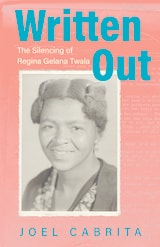
Written Out
The Silencing of Regina Gelana TwalaJoel Cabrita
Ohio University Press, 2023
Written in the Sky
Lessons of a Southern DaughterPatricia Foster
University of Alabama Press, 2023
In Written in the Sky: Lessons of a Southern Daughter, Patricia Foster presents a double portrait of place and family, a book of deeply personal essays that interrogate the legacy of racial tensions in the South, the constriction of caste and gender, and the ways race, class, and white privilege are entwined in her family story. After interviewing girls at Booker T. Washington High School in Tuskegee, Alabama, visiting the National Memorial for Peace and Justice in Montgomery, Alabama, and exploring Africatown in Plateau, Alabama, Patricia Foster was moved to reflect on the racial scars and crossroads in her southern past as well as to reckon with the intimate places of her own wounding and grief.
The story of place, she discovers, emerges not only from family histories and cultural traditions but also from wrestling with a culture’s irreconcilable ideas: the hard push to determine what matters. What matters to her are the shadow stories beneath our mythologies, the complicated and radiant narratives that must be excavated and reckoned with, stories that have no neat or binary resolution, stories full of luminous moments and riveting facts, and stories where the secrets hide. Written in the Sky presents the best of nonfiction storytelling: searingly honest portraits, dramatic encounters, and lyrical narratives that will interest teachers and students as well as social justice advocates, policymakers, and readers compelled by stories of awakening and the white-hot beauty of language.