Results by title
3703 books match the query '19th century' and 7 start with y
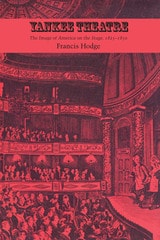
Yankee Theatre
The Image of America on the Stage, 1825–1850By Francis Hodge
University of Texas Press, 1964
The famous "Stage Yankees," with their eccentric New England dialect comedy, entertained audiences from Boston to New Orleans, from New York to London in the years between 1825 and 1850. They provided the creative energy for the development of an American-type character in early plays of native authorship. This book examines the full range of their theatre activity, not only as actors, but also as playmakers, and re-evaluates their contribution to the growth of the American stage.
Yankee theatre was not an oddity, a passing fad, or an accident of entertainment; it was an honest exploitation of the materials of American life for an audience in search of its own identification. The delineation of the American character—a full-length realistic portrait in the context of stage comedy—was its projected goal; and though not the only method for such delineation, the theatre form was the most popular and extensive way of disseminating the American image.
The Yankee actors openly borrowed from what literary sources were available to them, but because of their special position as actors, who were required to give flesh-and-blood imitations of people for the believable acceptance of others viewing the same people about them, they were forced to draw extensively on their actors' imaginations and to present the American as they saw him. If the image was too often an external one, it still revealed the Yankee as a hardy individual whose independence was a primary assumption; as a bargainer, whose techniques were more clever than England's sharpest penny-pincher; as a country person, more intelligent, sharper and keener in dealings than the city-bred type; as an American freewheeler who always landed on top, not out of naive honesty but out of a simple perception of other human beings and their gullibility.
Much new evidence in this study is based on London productions, where the view of English audiences and critics was sharply focused on what Americans thought about themselves and the new culture of democracy emerging around them. The shift from America, the borrower, to America, the original doer, can be clearly seen in this stager activity.
Yankee theatre, then, is an epitome of the emerging American after the Second War for Independence. Emerging nationalism meant emerging national definition. Yankee theatre thus led to the first cohesive body of American plays, the first American actors seen in London, and to a new realistic interpretation of the American in the "character" plays of the 1870s and 1880s.
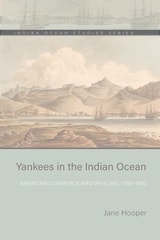
Yankees in the Indian Ocean
American Commerce and Whaling, 1786–1860Jane Hooper
Ohio University Press, 2022
The history of US imperialism remains incomplete without this consideration of long-overlooked nineteenth-century American commercial and whaling ventures in the Indian Ocean.
Yankees in the Indian Ocean shows how nineteenth-century American merchant and whaler activity in the Indian Ocean shaped the imperial future of the United States, influenced the region’s commerce, encouraged illegal slaving, and contributed to environmental degradation. For a brief time, Americans outnumbered other Western visitors to Mauritius, Madagascar, Zanzibar, and the East African littoral. In a relentless search for commodities and provisions, American whaleships landed at islands throughout the ocean and stripped them of resources. Yet Americans failed to develop a permanent foothold in the region and operated instead from a position of weakness relative to other major colonizing powers, thus discouraging the development of American imperial holdings there.
The history of American concerns in the Indian Ocean world remains largely unwritten. Scholars who focus on the region have mostly ignored American involvement, despite arguments for the ocean’s importance in powering global connections during the late eighteenth and early nineteenth centuries. Historians of the United States likewise have failed to examine the western Indian Ocean because of a preoccupation with US interests in Asia and the Pacific. Failing to understand the scale of American trade in the Indian Ocean has led to a fixation on European commercial strength to the exclusion of other maritime networks. Instead, this book reveals how the people of Madagascar and East Africa helped the United States briefly dominate commerce and whaling.
This book investigates how and why Americans were drawn to the western Indian Ocean years before the United States established a formal overseas empire in the late nineteenth century. Ship logs, sailor journals, and travel narratives reveal how American men transformed foreign land- and seascapes into knowable spaces that confirmed American conceptions of people and natural resources; these sources also provide insight into the complex social and ecological worlds of the Indian Ocean during this critical time.
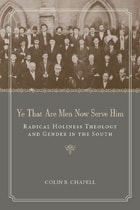
Ye That Are Men Now Serve Him
Radical Holiness Theology and Gender in the SouthColin B. Chapell
University of Alabama Press, 2016
Examines how religious belief reshaped concepts of gender during the New South period that took place from 1877 to 1915 in ways that continue to manifest today
Modernity remade much of the world in the late nineteenth and early twentieth centuries and was nowhere more transformational than in the American South. In the wake of the Civil War, the region not only formed new legal, financial, and social structures, but citizens of the South also faced disorienting uncertainty about personal identity and even gender itself. Ye That Are Men Now Serve Him traces the changes in southern gender roles during the New South period of 1877–1915 and demonstrates that religion is the key to perceiving how constructions of gender changed.
The Civil War cleaved southerners from the culture they had developed organically during antebellum decades, raising questions that went to the very heart of selfhood: What does it mean to be a man? How does a good woman behave? Unmoored from traditional anchors of gender, family, and race, southerners sought guidance from familiar sources: scripture and their churches. In Ye That Are Men Now Serve Him, Colin Chapell traces how concepts of gender evolved within the majority Baptist and Methodist denominations as compared to the more fluid and innovative Holiness movement.
Grounded in expansive research into the archives of the Southern Baptist Convention; Methodist Episcopal Church, South; and the Holiness movement, Chapell’s writing is also enlivened by a rich trove of primary sources: diaries, sermons, personal correspondence, published works, and unpublished memoirs. Chapell artfully contrasts the majority Baptist and Methodist view of gender with the relatively radical approaches of the emerging Holiness movement, thereby bringing into focus how subtle differences in belief gave rise to significantly different ideas of gender roles.
Scholars have explored class, race, and politics as factors that contributed to contemporary southern identity, and Chapell restores theology to its intuitive place at the center of southern identity. Probing and illuminating, Ye That Are Men Now Serve Him offers much of interest to scholars and readers of the South, southern history, and religion.
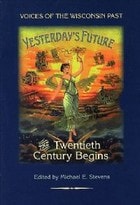
Yesterday's Future
The Twentieth Century BeginsMichael E. Stevens
Wisconsin Historical Society Press, 1999
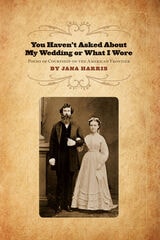
You Haven't Asked About My Wedding or What I Wore
Poems of Courtship on the American FrontierJana Harris
University of Alaska Press, 2014
For thirty years poet Jana Harris researched the diaries and letters of North American pioneer women. While the names and experiences of the authors varied, Harris found one story often connected them: their most powerful memories were of courtships and weddings. They dreamed of having a fine wedding while they spent their lives hauling water, scrubbing floors, and hoping for admirers. Many married men they hardly knew.
Based on primary research of nineteenth-century frontier women, Harris uses her compelling poetry to resurrect a forgotten history. She captures the hope, anxiety, anger, and despair of these women through a variety of characters and poetic strategies, while archival photographs give faces to the names and details to the settings. Harris’s meticulous research and stirring words give these pioneer women a renewed voice that proves the timelessness of the hopes and fears of love and marriage.
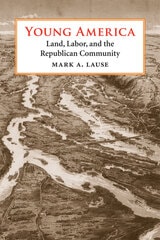
Young America
Land, Labor, and the Republican CommunityMark A. Lause
University of Illinois Press, 2005
Rooting the movement in contemporary economic structures and social ideology, Young America examines this urban and working-class "agrarianism," demonstrating how the political preoccupations of this movement transformed socialism by drawing its adherents from communitarian preoccupations into political action. The alliance of the NRA's land reformers and radical abolitionists led unprecedented numbers to petition Congress and established the foundations of what became the new Republican Party, promising "Free Soil, Free Labor, Free Men."
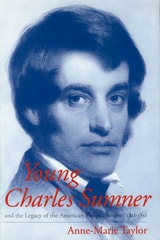
Young Charles Sumner and the Legacy of the American Enlightenment, 1811-1851
Anne-Marie Taylor
University of Massachusetts Press, 2001
In this book, Anne-Marie Taylor challenges that long-standing view, offering in its stead the portrait of a man animated more by principle than by impulse or ambition. According to Taylor, Sumner's reform-minded politics, including his fervent commitment to put an end to slavery, must be understood in the context of a young nation still struggling to live up to the Enlightenment ideals embraced by its founders and embodied in its Constitution.
Focusing on the first forty years of Sumner's life, before he took public office, Taylor traces the evolution of his character and thought among Boston's cultural elite. His belief in the virtues of cosmopolitanism, in the dignity of the human intellect and conscience, and in the possibility of a cultivated and just society, all find their roots in an education steeped in Enlightenment principles. At the same time, as a child of New England Puritanism and Revolutionary republicanism, Sumner was raised to believe in the moral obligation of the individual to work for the common good.
As Taylor shows in this richly drawn biography, much of the triumph and tragedy of Sumner's story—the energy of his idealism as well as the poignancy of his eventual disappointment— derives from the overpowering sense of duty and national destiny imbued by his upbringing.