Results by title
8642 books match the query '20th century' and 36 start with y
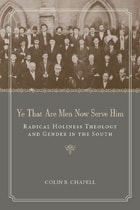
Ye That Are Men Now Serve Him
Radical Holiness Theology and Gender in the SouthColin B. Chapell
University of Alabama Press, 2016
Examines how religious belief reshaped concepts of gender during the New South period that took place from 1877 to 1915 in ways that continue to manifest today
Modernity remade much of the world in the late nineteenth and early twentieth centuries and was nowhere more transformational than in the American South. In the wake of the Civil War, the region not only formed new legal, financial, and social structures, but citizens of the South also faced disorienting uncertainty about personal identity and even gender itself. Ye That Are Men Now Serve Him traces the changes in southern gender roles during the New South period of 1877–1915 and demonstrates that religion is the key to perceiving how constructions of gender changed.
The Civil War cleaved southerners from the culture they had developed organically during antebellum decades, raising questions that went to the very heart of selfhood: What does it mean to be a man? How does a good woman behave? Unmoored from traditional anchors of gender, family, and race, southerners sought guidance from familiar sources: scripture and their churches. In Ye That Are Men Now Serve Him, Colin Chapell traces how concepts of gender evolved within the majority Baptist and Methodist denominations as compared to the more fluid and innovative Holiness movement.
Grounded in expansive research into the archives of the Southern Baptist Convention; Methodist Episcopal Church, South; and the Holiness movement, Chapell’s writing is also enlivened by a rich trove of primary sources: diaries, sermons, personal correspondence, published works, and unpublished memoirs. Chapell artfully contrasts the majority Baptist and Methodist view of gender with the relatively radical approaches of the emerging Holiness movement, thereby bringing into focus how subtle differences in belief gave rise to significantly different ideas of gender roles.
Scholars have explored class, race, and politics as factors that contributed to contemporary southern identity, and Chapell restores theology to its intuitive place at the center of southern identity. Probing and illuminating, Ye That Are Men Now Serve Him offers much of interest to scholars and readers of the South, southern history, and religion.
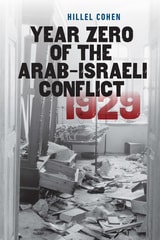
Year Zero of the Arab-Israeli Conflict 1929
Hillel Cohen
Brandeis University Press, 2015
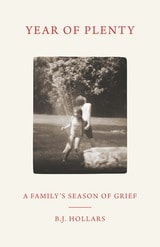
Year of Plenty
A Family's Season of GriefB.J. Hollars
University of Wisconsin Press, 2024
So began the Hollars family’s year of plenty—a cancer diagnosis on top of the ongoing COVID pandemic, then feelings of falling short as parents, partners, and people. While Hollars traces his family’s daily devastations alongside his father-in-law’s decline, he recounts the small mercies along the way: birthdays, campfires, fishing trips, kayaking, and fireflies. As he, his wife, Meredith, and their three young children grapple with how best to say goodbye to the person they love, they are forced to reassess their own lives. How can we make the most of our time, they wonder, when time feels so short?
Written in vignettes and accompanied by photographs and family interviews, Year of Plenty provides a poignant and unflinching account of how death separates us not only from the people we love but from places and memories too. Hollars explores how death’s all-consuming weight has the potential to fracture—rather than strengthen—even those relationships we think we know the best. Ultimately, he cracks wide personal moments from his own life and allows the world to peer in.

Yellow Future
Oriental Style in Hollywood CinemaJane Chi Hyun Park
University of Minnesota Press, 2010
Park provides a genealogy of oriental style through contextualized readings of popular films-from the multicultural city in Blade Runner and the Japanese American mentor in The Karate Kid to the Afro-Asian reworking of the buddy genre in Rush Hour and the mixed-race hero in The Matrix. Throughout these analyses Park shows how references to the Orient have marked important changes in American popular attitudes toward East Asia in the past thirty years, from abjection to celebration, invisibility to hypervisibility.
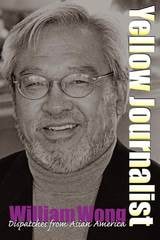
Yellow Journalist
Dispatches from Asian AmericaWilliam Wong
Temple University Press, 2001

Yellow Light
The Flowering of Asian American ArtsAmy Ling
Temple University Press, 2000
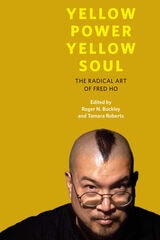
Yellow Power, Yellow Soul
The Radical Art of Fred HoEdited by Roger N. Buckley and Tamara Roberts
University of Illinois Press, 2013

Yellow Steel
The Story of the Earthmoving Equipment IndustryWilliam R. Haycraft
University of Illinois Press, 2000
Haycraft traces the efforts of manufacturers such as Caterpillar, Allis-Chalmers, International Harvester, J. I. Case, Deere, and Massey-Ferguson to diversify from farm equipment to specialized earthmoving equipment and the important contributions of LeTourneau, Euclid, and others in meeting the needs of the construction and mining industries. He shows how postwar economic and political events, especially the creation of the interstate highway system, spurred the development of more powerful and more agile machines. He also relates the precipitous fall of several major American earthmoving machine companies and the rise of Japanese competitors in the early 1980s.
Extensively illustrated and packed with detailed information on both manufacturers and machines, Yellow Steel knits together the diverse stories of the many companies that created the earthmoving equipment industry—how they began, expanded, retooled, merged, succeeded, and sometimes failed. Their history, a step-by-step linking of need and invention, provides the foundation for virtually all modern transportation, construction, commerce, and industry.
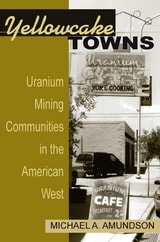
Yellowcake Towns
Uranium Mining Communities in the American WestMichael A. Amundson
University Press of Colorado, 2002
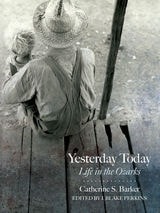
Yesterday Today
Life in the OzarksCatherine S. Barker
University of Arkansas Press, 2020
Catherine S. Barker's 1941 book Yesterday Today: Life in the Ozarks sought to illuminate another side of these “remnants of eighteenth-century life and culture”: poverty and despair. Drawing on her encounters and experiences as a federal social worker in the backwoods of the Ozarks in the 1930s, Barker described the mountaineers as “lovable and pathetic and needy and self-satisfied and valiant,” declaring that the virtuous and independent people of the hills deserved a better way and a more abundant life. Barker was also convinced that there were just as many contemptible facets of life in the Ozarks that needed to be replaced as there were virtues that needed to be preserved.
This reprinting of Yesterday Today—edited and introduced by historian J. Blake Perkins—situates this account among the Great Depression-era chronicles of the Ozarks.

Yesterday's Faces, Volume 1
Glory FiguresRobert Sampson
University of Wisconsin Press, 1983
This book and its companion volumes are concerned with the slow shaping of many literary conventions over many decades. This volume begins the study with the dime novels and several early series characters who influenced the direction of pulp fiction at its source.
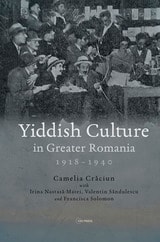
Yiddish Culture in Greater Romania (1918-1940)
Camelia Craciun
Central European University Press, 2025
In the newly created Greater Romania, the Jewish community included more than half a million individuals still speaking Yiddish. Building on pre-war trends, the new nation-state faced an antisemitism problem since its inception. This continued in the period that followed, culminating in the horrors of the Holocaust, which destroyed most of the Yiddish-language community. Most survivors were discouraged from continuing to use a language that reminded them of a painful past.
This volume examines the socio-cultural mechanisms responsible for restructuring the Yiddish cultural life after the changes brought about by the end of World War I and the creation of Greater Romania. It describes how this process evolved until the political regimes banned the activity of Yiddish theaters, press and, ultimately, the usage of Yiddish, thus making cultural life impossible.
The four authors identify the main institutions, individuals and projects that promoted Yiddish cultural life in interwar Romania. They also trace the impact of Yiddish within Romanian society through joint projects, events, and initiatives. Special attention is given to Yiddish theater, which played a key role both within the community and in its interaction with the Romanian-speaking public.
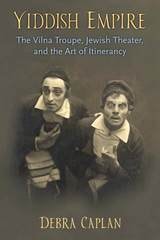
Yiddish Empire
The Vilna Troupe, Jewish Theater, and the Art of ItinerancyDebra Caplan
University of Michigan Press, 2018
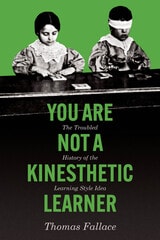
You Are Not a Kinesthetic Learner
The Troubled History of the Learning Style IdeaThomas Fallace
University of Chicago Press, 2025
The widely embraced notion that we all process information in one of three distinct modes—visual, auditory, or kinesthetic—has informed educational practices for decades. In recent years, however, numerous studies have questioned the effectiveness of aligning instruction with the alleged learning styles of individual students. So, why is it still commonplace in the literature on beneficial teaching at all levels of education?
In You Are Not a Kinesthetic Learner: The Troubled History of a Dangerous Idea, historian Thomas Fallace traces the origins, evolution, and history of the learning style idea, demonstrating its relationship to a legacy of unequal education for children of color. Fallace argues that the research supporting the learning style idea was problematic from its inception in the 1910s and that it was used to label and justify a diminished curriculum for many Black and Latine students, whose cultural differences were perceived as weaknesses. In recent years, numerous empirical studies have not found the approach to be effective. This fascinating history clearly shows the danger of sorting and labeling students with permanent style identities and makes a strong case for removing learning styles as the basis for any educators’ instructional toolkit.
The first book-length history of learning styles, You Are Not a Kinesthetic Learner encourages us all to consider the research, be open to future developments and updates, and question even our most intuitive assumptions.
You Are Not a Kinesthetic Learner
The Troubled History of the Learning Style IdeaThomas Fallace
University of Chicago Press, 2025
A compelling history of the learning style concept and how it was shaped by shifting ideas in psychology, anthropology, and education.
The widely embraced notion that we all process information in one of three distinct modes—visual, auditory, or kinesthetic—has informed educational practices for decades. In recent years, however, numerous studies have questioned the effectiveness of aligning instruction with the alleged learning styles of individual students. So, why is it still commonplace in the literature on beneficial teaching at all levels of education?
In You Are Not a Kinesthetic Learner: The Troubled History of a Dangerous Idea, historian Thomas Fallace traces the origins, evolution, and history of the learning style idea, demonstrating its relationship to a legacy of unequal education for children of color. Fallace argues that the research supporting the learning style idea was problematic from its inception in the 1910s and that it was used to label and justify a diminished curriculum for many Black and Latine students, whose cultural differences were perceived as weaknesses. In recent years, numerous empirical studies have not found the approach to be effective. This fascinating history clearly shows the danger of sorting and labeling students with permanent style identities and makes a strong case for removing learning styles as the basis for any educators’ instructional toolkit.
The first book-length history of learning styles, You Are Not a Kinesthetic Learner encourages us all to consider the research, be open to future developments and updates, and question even our most intuitive assumptions.
You Must Revise Your Life
William Stafford
University of Michigan Press, 1987
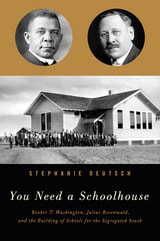
You Need a Schoolhouse
Booker T. Washington, Julius Rosenwald, and the Building of Schools for the Segregated SouthStephanie Deutsch
Northwestern University Press, 2011
Washington, though widely admired, had weathered severe crises both public and private in his fifty-six years. He had dined with President Theodore Roosevelt and drunk tea with Queen Victoria, but he had also been assaulted on a street in New York City. He had suffered personal heartbreak, years of overwork, and the discouraging knowledge that, despite his optimism and considerable success, conditions for African Americans were not improving as he had assumed they would. From within his own community, Washington faced the bitter charge of accommodationism that haunts his legacy to this day. Despite their differences, the two men would work together well and their collaboration would lead to the building of five thousand schoolhouses. By the time segregation ended, the “Rosenwald Schools” that sprang from this unlikely partnership were educating one third of the South’s African American children. These schoolhouses represent a significant step in the ongoing endeavor to bring high quality education to every child in the United States—an ideal that remains to be realized even today.
You Shall Tell Your Children
Holocaust Memory in American Passover RitualGubkin, Liora
Rutgers University Press, 2007
Passover is among the most widely observed holidays for American Jews. During this festival of redemption, Jewish families retell the biblical story of Exodus using a ritual book known as a haggadah, often weaving modern tales of oppression through the biblical narrative. References to the Holocaust are some of the most common additions to contemporary haggadot. However, the parallel between ancient and modern oppression, which seems obvious to some, raises troubling questions for many others. Is it possible to find any redemptive meaning in the Nazi genocide? Are we adding value to this unforgivable moment in history?
Liora Gubkin critiques commemorations that violate memory by erasing the value of everyday life that was lost and collapse the diversity of responses both during the Shoah and afterward. She recounts oral testimonies from Holocaust survivors, cites references to the holiday in popular American culture, and analyzes examples of actual haggadot. Ultimately, Gubkin concludes that it is possible and important to make a space for Holocaust commemoration, all the time recognizing that haggadot must be constantly revisited and “performed.”
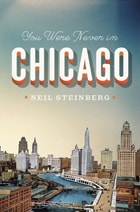
You Were Never in Chicago
Neil Steinberg
University of Chicago Press, 2012
In 1952 the New Yorker published a three-part essay by A. J. Liebling in which he dubbed Chicago the "Second City." From garbage collection to the skyline, nothing escaped Liebling's withering gaze. Among the outraged responses from Chicago residents was one that Liebling described as the apotheosis of such criticism: a postcard that read, simply, "You were never in Chicago."
Neil Steinberg has lived in and around Chicago for more than three decades—ever since he left his hometown of Berea, Ohio, to attend Northwestern—yet he remains fascinated by the dynamics captured in Liebling's anecdote. In You Were Never in Chicago Steinberg weaves the story of his own coming-of-age as a young outsider who made his way into the inner circles and upper levels of Chicago journalism with a nuanced portrait of the city that would surprise even lifelong residents.
Steinberg takes readers through Chicago's vanishing industrial past and explores the city from the quaint skybridge between the towers of the Wrigley Building, to the depths of the vast Deep Tunnel system below the streets. He deftly explains the city's complex web of political favoritism and carefully profiles the characters he meets along the way, from greats of jazz and journalism to small-business owners just getting by. Throughout, Steinberg never loses the curiosity and close observation of an outsider, while thoughtfully considering how this perspective has shaped the city, and what it really means to belong. Intimate and layered, You Were Never in Chicago will be a welcome addition to the bookshelves of all Chicagoans, be they born in the city or forever transplanted.
You Will Hear Thunder
Anna Akhmatova
Ohio University Press, 2017
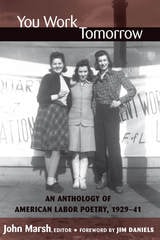
You Work Tomorrow
An Anthology of American Labor Poetry, 1929-41John Marsh, Editor
University of Michigan Press, 2007
---Nicholas Coles, University of Pittsburgh
---Alan Wald, University of Michigan
Young Lions
How Jewish Authors Reinvented the American War NovelLeah Garrett
Northwestern University Press, 2015
Finalist, 2015 National Jewish Book Awards in the American Jewish Studies category
Winner, 2017 AJS Jordan Schnitzer Book Award in the category of Modern Jewish History and Culture: Africa, Americas, Asia, and Oceania
Young Lions: How Jewish Authors Reinvented the American War Novel shows how Jews, traditionally castigated as weak and cowardly, for the first time became the popular literary representatives of what it meant to be a soldier and what it meant to be an American. Revisiting best-selling works ranging from Norman Mailer’s The Naked and the Dead to Joseph Heller’s Catch-22, and uncovering a range of unknown archival material, Leah Garrett shows how Jewish writers used the theme of World War II to reshape the American public’s ideas about war, the Holocaust, and the role of Jews in postwar life. In contrast to most previous war fiction these new “Jewish” war novels were often ironic, funny, and irreverent and sought to teach the reading public broader lessons about liberalism, masculinity, and pluralism.
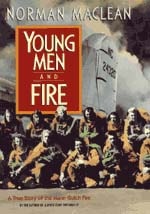
Young Men and Fire
Norman Maclean
University of Chicago Press, 1992
Young Men and Fire won the National Book Critics Circle Award in 1992.
"A magnificent drama of writing, a tragedy that pays tribute to the dead and offers rescue to the living.... Maclean's search for the truth, which becomes an exploration of his own mortality, is more compelling even than his journey into the heart of the fire. His description of the conflagration terrifies, but it is his battle with words, his effort to turn the story of the 13 men into tragedy that makes this book a classic."—from New York Times Book Review Editor's Choice, Best Books of 1992
"A treasure: part detective story, part western, part tragedy, part elegy and wholly eloquent ghost story in which the dead and the living join ranks cheerfully, if sometimes eerily, in a search for truth and the rest it brings."—Joseph Coates, Chicago Tribune
"An astonishing book. In compelling language, both homely and elegant, Young Men and Fire miraculously combines a fascinating primer on fires and firefighting, a powerful, breathtakingly real reconstruction of a tragedy, and a meditation on writing, grief and human character.... Maclean's last book will stir your heart and haunt your memory."—Timothy Foote, USA Today
"Beautiful.... A dark American idyll of which the language can be proud."—Robert M. Adams, The New York Review of Books
"Young Men and Fire is redolent of Melville. Just as the reader of Moby Dick comes to comprehend the monstrous entirety of the great white whale, so the reader of Young Men and Fire goes into the heart of the great red fire and comes out thoroughly informed. Don't hesitate to take the plunge."—Dennis Drabelle, Washington Post Book World
"Young Men and Fire is a somber and poetic retelling of a tragic event. It is the pinnacle of smokejumping literature and a classic work of 20th-century nonfiction."—John Holkeboer, The Wall Street Journal
"Maclean is always with the brave young dead. . . . They could not have found a storyteller with a better claim to represent their honor. . . . A great book."—James R. Kincaid, New York Times Book Review
Young Men and Fire
Twenty-fifth Anniversary EditionNorman Maclean
University of Chicago Press, 2017
Alongside Maclean’s now-canonical A River Runs through It and Other Stories, Young Men and Fire is recognized today as a classic of the American West. This twenty-fifth anniversary edition of Maclean’s later triumph—the last book he would write—includes a powerful new foreword by Timothy Egan, author of The Big Burn and The Worst Hard Time. As moving and profound as when it was first published, Young Men and Fire honors the literary legacy of a man who gave voice to an essential corner of the American soul.
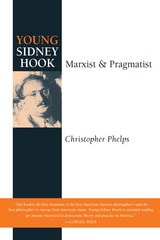
Young Sidney Hook
Marxist and PragmatistChristopher Phelps
University of Michigan Press, 2005
"This book is the best treatment of the best American Marxist philosopher-and the best philosopher to emerge from American slums. Young Sidney Hook is essential reading for anyone interested in democratic theory and practice in America."
---Cornel West
"A very detailed, and fascinating account of Hook's formative years . . . [a] first-rate contribution to the history of American leftist intellectual life."
---Richard Rorty, Raritan
"Fascinating . . . well researched and packed with information."
---Times Literary Supplement
"Succeeds in establishing the young Hook as a dedicated revolutionary Marxist."
---Amos Perlmutter, Washington Times
"A brilliant, lucid portrait of a scholar, adversarial by temperament, who turned his extraordinary powers of analysis and polemic successively against capitalism, Stalinism, and the New Left."
---Alan Wald, Monthly Review
"The best study of Hook's thought. . . . Supersedes all earlier treatments."
---David A. Hollinger and Charles Capper, The American Intellectual Tradition
"A major contribution to our understanding of Hook and the American Marxist tradition. . . . Extremely insightful."
---American Studies
"Persuasive. . . . Discovers not just a brilliant interpreter of Marx and the Russian Revolution, but a remarkable advocate and practitioner of the Americanization of Marxism."
---In These Times
"Phelps's effort to uncover, explore, and analyze Hook's forgotten leftism must be judged an unqualified success."
---Left History
"Penetrating, closely argued, and lucid. . . . An important contribution to the history of American radicalism in the 1930s."
---Labor History
One of the most controversial figures in the history of American philosophy, Sidney Hook was "an intellectual street fighter," who began his career as a brilliant Marxist thinker and "probably the greatest polemicist of [the 20th] century" (Edward Shils) before breaking with the Communist Party in the late 1930s. Turning in his later years to an allegiance with American conservatives including Richard Nixon and Ronald Reagan, Hook is now widely known as an intellectual father of the neoconservative movement.
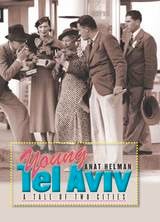
Young Tel Aviv
A Tale of Two CitiesAnat Helman
Brandeis University Press, 2012
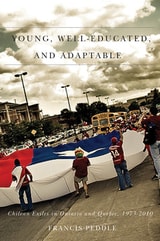
Young, Well-Educated, and Adaptable
Chilean Exiles in Ontario and Quebec, 1973-2010Francis Peddie
University of Manitoba Press, 2014
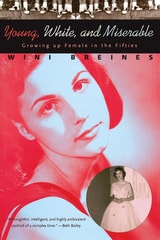
Young, White, and Miserable
Growing Up Female in the FiftiesWini Breines
University of Chicago Press, 2001
Younger Than That Now
The Politics of Age in the 1960sHolly V. Scott
University of Massachusetts Press, 2016
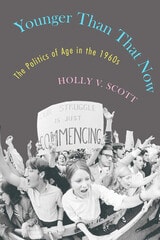
Retrospectives of the 1960s routinely include the face of youth rebellion: long-haired students occupying campus buildings, young men burning draft cards, hippies dancing at Woodstock. In Younger Than That Now, Holly V. Scott explores how the idea of “youth” served as a tactic in the political and social activism of these years. In the early part of that decade, young white activists began to learn from the civil rights movement's defiance of racism. They examined their own lives and concluded that campus rules and the draft were repression as well. As a group, they were ripe for revolution, and their age gave them a unique perspective for understanding and protesting against injustice. In short, young people began to use their youth as a political strategy.
Some in the New Left were dubious of this strategy and asked how it might damage long-term progress. Young feminists and people of color were particularly quick to question the idea that age alone was enough to sustain a movement. And the media often presented young people as impulsive and naive, undermining their political legitimacy. In tracing how “youth” took on multiple meanings as the 1960s progressed, Scott demonstrates the power of this idea to both promote and hinder social change.
Your Own Will Leave You
My Mother's DementiaManash Firaq Bhattacharjee
Temple University Press, 2026
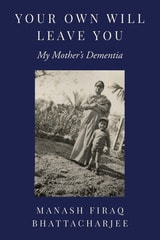
“Memory’s barriers are without barriers,” writes Manash Firaq Bhattacharjee in the opening of his touching and thoughtful memoir, Your Own Will Leave You. Bhattacharjee eloquently reflects on family, care, and memory as he chronicles his experiences with his elderly mother who suffers from dementia. Working from his journal, Bhattacharjee ruminates on the ways we understand dementia and memory as well as end-of-life issues. He is not only a loving son, but also an Indian with a universal sensibility who turns to ancient and contemporary thinkers that inform his perspective.
Bhattacharjee focuses on the last months of his mother’s life and her changing demeanor—her stubbornness, humor, and vulnerability. He traces her interactions with family members, neighbors, and caregivers, while also addressing burden-of-care issues. Recounting his moments of grief and guilt with candor, Bhattacharjee also re-evaluates how Western culture prejudices popular perceptions of mental illness.
Lyrical, penetrating, occasionally aphoristic, and full of insights, Your Own Will Leave You is a heartfelt, and at times heartbreaking, memoir and a warm elegy for the author’s late mother.
Yours for Liberty
Selections from Abigail Scott Duniway's Suffrage NewspaperJean M. Ward
Oregon State University Press, 2000
Youth Without Youth
Mircea Eliade
University of Chicago Press, 2007
Bucharest, 1938: while Hitler gains power in Germany, the Romanian police start arresting students they suspect of belonging to the Iron Guard. Meanwhile, a man who has spent his life studying languages, poetry, and history—a man who thought his life was over—lies in a hospital bed, inexplicably alive and miraculously healthy, trying to figure out how to conceal his identity.
At the intersection of the natural and supernatural, myth and history, dream and science, lies Mircea Eliade’s novella. The psychological thriller features Dominic Matei, an elderly academic who experiences a cataclysmic event that allows him to live a new life with startling intellectual capacity. Sought by the Nazis for their medical experiments on the potentially life-prolonging power of electric shocks, Matei is helped to flee through Romania, Switzerland, Malta and India. Newly endowed with prodigious powers of memory and comprehension, he finds himself face to face with the glory and terror of the supernatural. In this surreal, philosophy-driven fantasy, Eliade tests the boundaries of literary genre as well as the reader’s imagination.
Suspenseful, witty, and poignant, Youth Without Youth illuminates Eliade’s longing for past loves and new texts, his erotic imagination, and his love of a thrilling mystery. It was adapted for the screen in 2007 by Francis Ford Coppola
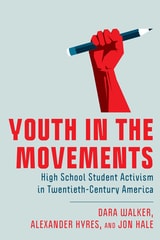
Youth in the Movements
High School Student Activism in Twentieth-Century AmericaDara Walker
Rutgers University Press, 2027
Youth in the Movements documents the history of the rise of American high school and youth activism in the United States since the Second World War. Spaces within high schools and the adults at them provided support or inspiration – both negative and positive – for youth engaged in protest, organizing, and activism. Through rich research of archival sources and oral histories, contributors reveal new perspectives on American high school and youth activism. Viewed through the eyes of high school-aged youth around the United States – in familiar locations such as Boston, New York City, and Detroit, as well as less familiar locales in the historiography, such as Salt Lake City and the Navajo Reservation – we extend our understanding of high school and how it has been experienced by youth activists in the post-World War II period.

Yrs. Ever Affly
The Correspondence of Edith Wharton and Louis BromfieldDaniel Bratton
Michigan State University Press, 2000
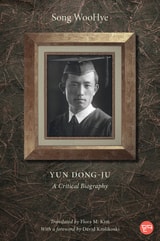
Yun Dong-ju
A Critical BiographySong WooHye
Rutgers University Press, 2026
Historian and novelist Song WooHye chronicles the life of Yun Dong-ju (1917-1945), one of the most beloved and important poets in the modern Korean literary canon, widely considered Korea's "National Poet". Beginning with the history of the North Gando region (now Yanbian, China), where Yun was born, and ending with facts behind the publication of his only and posthumous poetry collection, Sky, Wind, Star, and Poem, this critical biography elucidates who Yun Dong-ju really was, with factual descriptions of the bleak and turbulent period of Japan’s colonization of Korea.
While first working on the book in the 1980s, Song had interviewed the poet’s surviving relatives and friends, most of whom have since passed away. Without her interviews, these important first-hand accounts would have been lost. Song had an added advantage of an “insider,” as she is a niece of Song Mong-gyu, who was the poet’s first cousin and inseparable friend for life. Incorporating newly discovered materials and using interviews with the beloved poet's family and friends, this biography is the most comprehensive, definitive biography of Yun Dong-ju to date, now available in English for the first time.
This book is published with the support of the Literature Translation Institute of Korea (LTI Korea).
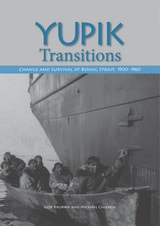
Yupik Transitions
Change and Survival at Bering Strait, 1900-1960Igor Krupnik and Michael Chlenov
University of Alaska Press, 2013